

Why Production Line Operators Lose Motivation
Monotonous work on a production line quickly becomes tedious. Day after day, the operator performs the same operations, does not see their contribution to the overall result, and stops feeling the value of their work. Staff motivation declines, attentiveness drops, and with it — product quality.
Low employee engagement translates into concrete losses for the business: staff turnover rises, training costs for new hires increase, and disruptions and defects become more frequent.
Finding a replacement for an experienced operator is not easy, and the time it takes for a newcomer to reach the required pace is expensive. At the same time, the problem itself is not solved — neither by bonuses nor by strict control.
Routine and lack of feedback kill interest faster than it seems. When a person does not understand where they were yesterday and what they achieved today, work turns into an endless conveyor.
That is why transparent goals, clear rules, and tangible progress are so important on production lines.
A well-designed motivation system restores operators' enthusiasm and engagement. Introducing game mechanics into work processes makes it possible to connect daily tasks with team results, reduce turnover, and improve quality. How this works in practice is covered in the following sections.
What Gamification of Business Processes Will Give Your Company
Growth in operational efficiency directly depends on how engaged people are on the line. Monotonous tasks dull attention, increasing the number of errors and wasted time.
Gamification turns routine into a manageable game with clear rules, where each employee sees their contribution to the company's overall result.
What the business and the team get:
- Higher productivity without expanding headcount. Employees themselves strive to perform more operations with quality in order to earn points, statuses, and get into the shift leaders. You get output growth without additional staffing costs.
- Fewer losses from the human factor. When the result of work is visible in the game interface rather than lost in reports, operators develop a personal interest in reducing defects and following procedures. This directly affects the cost of production.
- Greater loyalty and lower turnover. Work stops being a "conveyor" with no room for growth. A transparent motivation system with levels and rewards retains valuable employees who would otherwise leave for a small pay bump elsewhere.
- Reduced burden on the supervisor. Instead of manual control and endless reminders, you have an automatic system. Line staff become self-sufficient, and the supervisor gains time to manage processes rather than "forcing" results.
Game mechanics solve a problem that neither bonuses nor fines can address: it gives the operator a sense of mastery and belonging to the team.
Through healthy competition between shifts, overall production efficiency increases, and initiative comes from below — from the employees themselves.
This is not a one-off motivational campaign but a systemic tool. Our team use proven approaches and professional development tools, so implementation goes smoothly without production stoppages.
You get a working system that starts delivering measurable results in the first months, not a "toy" for show.
Gamification Formats for Operators
Monotonous shifts and repetitive operations reduce attention by the middle of the working day. This leads to defects, loss of pace, and imperceptible but regular equipment downtime.
Gamification turns routine into a manageable system with clear rules, where the operator has a goal, feedback, and a reason to engage with enthusiasm.
Game mechanics are selected not "for decoration" but for a specific production task — speed, quality, or mastering new equipment. Below are the formats we most often use when working with production line operators.
| Format | What task it addresses | What it gives the client |
|---|---|---|
| Individual shift rating | Increasing operator speed and attentiveness | Transparent competition, growth of each employee's personal efficiency |
| Team challenges between shifts | Reducing defects and downtime | Team involvement, experience sharing between shifts, healthy competition |
| Levels and roles ("trainee-master-expert") | Training new employees and mentoring | Fast onboarding of newcomers to target metrics, retention of experienced staff |
| Time-limited events and challenges | Peak loads and urgent orders | Mobilization without coercion, quick response to plan changes |
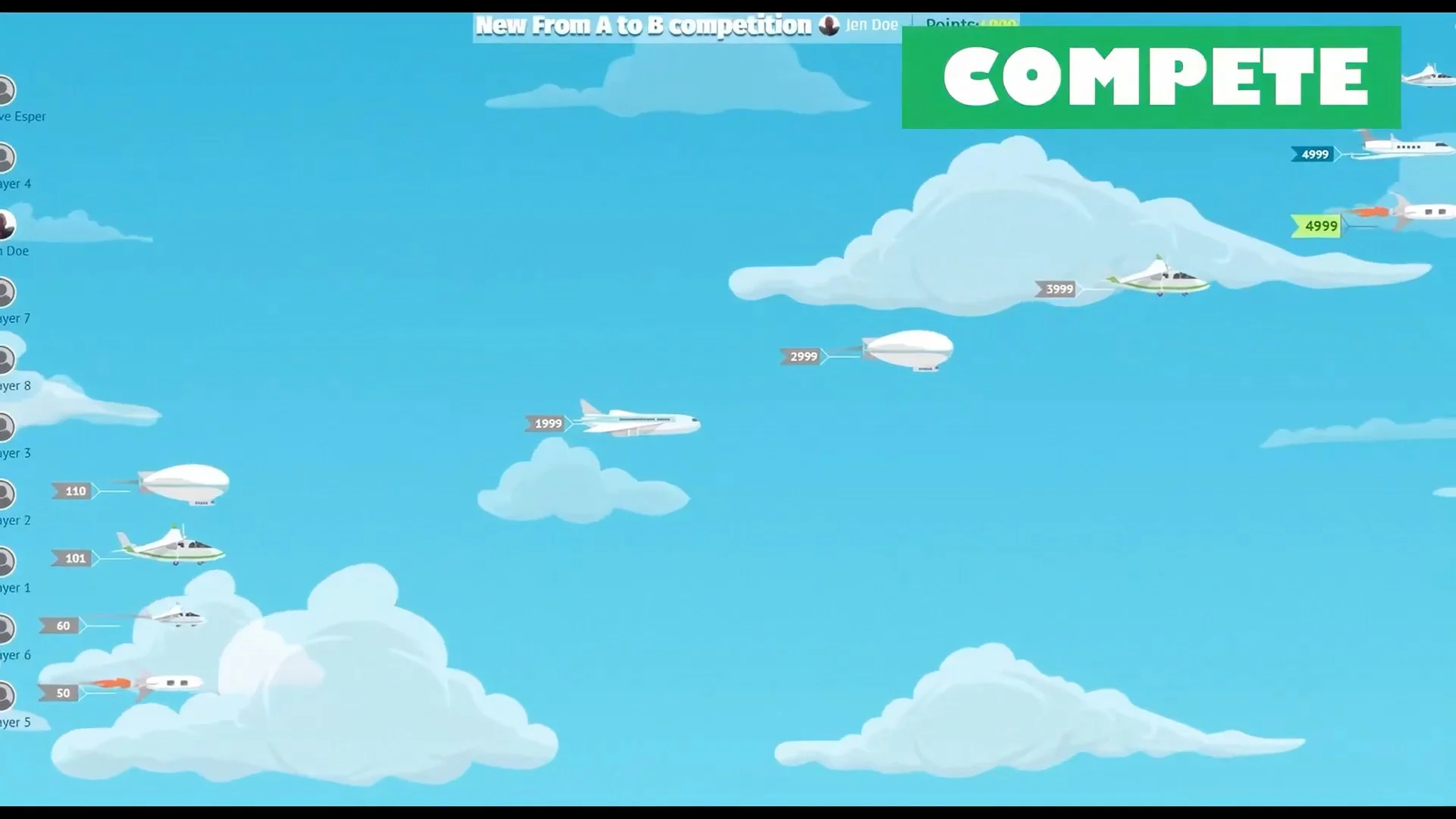
| Online progress board | Maintaining long-term engagement | Visible results for the whole team, sustained motivation throughout the week |
Each of these formats runs on professional equipment and integrates into existing production processes.
We do not create a separate game for entertainment — we change attitudes toward tasks, and the business gets a measurable result: increased output, reduced defects and turnover.
Which format suits your specific area? Tell us about your task, and we will suggest mechanics that will address it with minimal changes to your processes.
How the Development of a Gamified Motivation System Works
We do not just "make a game" — we build a system that changes operator behavior and increases production efficiency.
So that you understand what happens at each step, we have divided the work into transparent stages — from the first discussion to full launch and ongoing support.
- Brief and audit. We study your current motivation system, key line metrics, and points where speed or quality is lost. You get an objective picture: what already works and what is holding back results.
- Scenario design. We determine which operator actions should be encouraged: meeting standards, reducing defects, fast onboarding of new hires. Based on this, we create game mechanics that every employee understands.
- Mechanics approval. We show a prototype of the future system using real data from your site. You see how tasks, points, and rewards will look and can make edits before development starts.
- Turnkey development. Our specialists build the system, seamlessly integrating it with your equipment and accounting systems. For employees, everything works simply: see your result, understand what to do, get a reward.
- Pilot launch. We implement gamification on one line or area. We collect feedback from operators and supervisors and adjust settings so the system motivates rather than distracts.
- Full launch and training. We roll out the project across all lines and conduct a short training session for the team. Operators quickly get accustomed, and managers receive a dashboard with clear performance dynamics.
- Support. After launch, we stay in touch: we regularly analyze results, update scenarios, and add new goals. If metrics dip, we quickly identify the cause and propose a solution.
As a result, you get a turnkey project with clear stages, timeline control, and post-launch support. Gamification is implemented without stopping production, and the effect is measured in numbers: increased output, fewer defects, operator engagement.
What Is Included in the Turnkey Solution
The delivery includes not an abstract program but a working solution that immediately becomes part of your line's process. We have put together a package so that launch proceeds without involving your developers and without disrupting shift operations. Each delivery element addresses a specific task — from operator motivation to performance control.
- Configured gamified motivation system for production line operators — levels, points, and rewards tied to your metrics: speed, quality, standard adherence.
- Supervisor dashboard — clear ratings and dynamics for each operator. You see team progress without diving into technical details.
- Clear documentation — instructions for setup, daily use, and changing rules by your own staff.
- Staff training — a training session for operators and shift supervisors: how to participate, read ratings, and earn points.
- Customization to your process — the system accounts for shift schedules, procedures, and key metrics of your line.
- Post-launch support — during the first weeks we stay in touch, help stabilize operations, and answer team questions.
- Backups and updates — data is protected, and rules can be adjusted without stopping the production process.
Thus, you get a turnkey solution: after the system is handed over, you simply use the tool and watch operator engagement grow.
Case Study: Productivity Growth in Manufacturing
For production line operators, monotonous work quickly becomes tedious: attention wanders, pace drops, and the share of defects increases. A supervisor sees the numbers, but targeted bonuses cannot solve the problem — you need a system that engages employees in results every day.
We built such a system for the manufacturing company Vector. Operators received tasks, points for speed and quality, and saw shift rankings and team goals. This is not a "factory KPI" but game mechanics: competition, levels, rewards.
Implementation Results
Over three months, line output increased by 27%, and the defect rate fell by 18%. The average response time to equipment failures was cut in half — teams now notice deviations themselves and engage in the process faster.
The supervisor received a dashboard: it shows which operators consistently maintain pace and which are lagging. Based on this data, he allocates workload and training instead of acting blindly.
The project proved successful: after six months, the plant ordered a second phase — the neighboring workshop was connected and mentoring mechanics were added. Today, this model is being replicated at two more company sites.
This case shows that gamified motivation delivers measurable business impact: increased output, reduced losses, and team stability. We measure metrics before and after implementation so the result is obvious not "by eye" but in numbers.
How to Choose the Right Gamification Format?
The choice of format starts not with mechanics but with the production task. First, we determine what exactly needs improvement: the speed of production line operators, the defect rate, engagement during monotonous shifts, or line turnover.
The answer determines the type of competition, the frequency of feedback, and how clearly employees can see their results.
The selection criteria are simple: the format must fit the rhythm of the line and not interfere with the operator's work. For short-cycle operations, fast competitions with instant results are effective — they create excitement without interrupting the process.
For long shifts with monotonous work, an accumulation system that shows progress over the shift and week is more suitable.
Gamification for a task means each mechanic is tied to a specific production metric. If quality is the priority, the system is built around reducing defects rather than speed.
If the goal is rapid onboarding of newcomers to full productivity, the foundation is progress and mentoring. There is no universal template: a copied solution becomes entertainment and stops delivering business value.
That is why we choose a format not by picture but by data from your line. We analyze where efficiency is lost and propose mechanics that close exactly that gap. As a result, operators get clear motivation, and production gets growth in metrics without stopping the process.
Answers to Frequent Questions About Implementation
Before implementing gamification in production, managers tend to have the same doubts. We have collected typical questions and honestly answer how we mitigate risks at each stage — from brief to post-launch support.
Will this turn into a game that distracts from work?
The gamified motivation system is built around real operator metrics: quality, speed, absence of defects.
Employees earn points and levels for useful actions, not for "extra clicks." The plan and logic are coordinated with your technologist — gamification integrates into the process rather than replacing it.
The format itself holds attention: short achievement cycles, instant feedback, and clear competition between shifts. As a result, engagement grows, and the time to complete the standard does not increase — confirmed across dozens of projects in manufacturing companies.
What if employees are hostile to the game?
There is a risk of skepticism with any new system. That is why we start with a pilot on one line or team: we show the mechanics, collect feedback, and adjust the scenario. Operators see personal benefits — clear goals, rewards, status. Competitive spirit usually outweighs initial distrust.
We include training for supervisors and team leads in the launch; they become ambassadors of the system. In our cases, the share of actively engaged employees exceeded 70% by the end of the first month.
Who will maintain the system after launch?
We do not abandon the project after release. The basic contract includes a support period: mechanic updates, difficulty level adjustments, technical support, and analytics on request. You always have a dedicated manager who responds during the working day.
If internal processes change, we adapt the game scenario to new tasks — expansion of production, changes in standards, launch of new products. Gamification remains a living tool, not a static "shell."
When will measurable results appear?
The first effects are visible within 2–4 weeks: higher KPI achievement, fewer defects, interest from operators. We record sustained dynamics after a full cycle — usually after a quarter. We identify the metrics that matter to you in advance and show the dynamics for each in the report.
Operators are motivated not once, but systematically: gamification provides a constant incentive to improve results. As a result, projects pay off through increased productivity and lower quality-control costs.
If you still have your own question, ask it during a free consultation. We will review your situation and show how gamification can address your specific tasks.Order Gamification Development for Your Production
Leave a request, and we will call you back within 15 minutes to discuss your task. You do not need to prepare a technical specification or understand game mechanics: we will propose a solution tailored to your production specifics.
Immediately after your inquiry, you will receive:
- Consultation with a specialized gamification expert: we will determine which area or process should be motivated first.
- Preliminary cost estimate: we will give you a budget range before design, with no hidden fees or "surprises" on the final invoice.
- Format recommendations: quests, levels, competitions between shifts, cumulative bonuses — what suits your team.
- Examples of solutions for production lines: we will show cases where gamification increased operator engagement and reduced turnover.
- Pilot project plan: we will propose launching the mechanics on one line or area so you can evaluate the effect on your own numbers before scaling.
- Timeline and work stages: a transparent schedule, who does what, when you get the first prototypes and the result measurement point.
The entire consultation is free and non-binding. You will get a clear scheme: how gamification fits into your process, which metrics we will track, and how the implementation will pay off. All that remains is to click the button and order gamification — we will take care of the rest.