

Why Maintenance Technicians and Engineers Lose Interest
Maintenance technicians and engineers are the people who keep production running. But their workday often turns into an endless string of repetitive tasks: scheduled maintenance, replacements, inspections.
The result is invisible — the equipment just works, and that triggers no response. There is no feedback, no recognition, and no clear career path. This is exactly why routine becomes the main enemy of motivation.
Managers know the consequences well: the best specialists burn out and leave for places where they are valued, while those who remain work on autopilot. Engineer turnover rises, discipline suffers, and service quality drops.
Equipment starts breaking down more often, planned work drags on, and new employees require training time. our team encounters this problem every day in companies where maintenance is the backbone of the business.
A motivation system for repair personnel is built on the same principles that work in any strong team: clear goals, measurable progress, and a sense of personal contribution.
When routine turns into a game with levels, bonuses, and visible achievements, technicians regain interest. That is exactly the task gamification of business processes solves — it does not just entertain, it reduces turnover and brings service quality back to a high level.
What Game-Based Motivation Will Give the Repair Service and Production
The repair service is a cost center that most often remains a black box: work orders drag on, crews work by mood, and the best employees burn out. Equipment downtime quietly eats away at profit, and tightening control only increases resistance.
At our team we turn routine into a game: technicians and engineers become personally interested in working faster and more carefully — without orders or penalties.
Engagement — Employees Get Involved in the Process
When instead of being reprimanded for a long work order an employee earns points, levels, and a visible rating, work stops being a chore. Technicians start competing, suggesting improvements, and taking on complex tasks — service quality grows, and turnover falls.
Downtime — Fewer Line Stoppages
Game mechanics speed up the response to a breakdown: the crew sees the work order, assesses its complexity, and closes it faster, while the manager watches the process in real time. As a result, equipment downtime is reduced, and the production plan is fulfilled more consistently.
Loyalty and Employer Brand
Employees stay where they can see their results and receive recognition. Ratings, badges, and team rewards create a sense of achievement, and a progressive motivation system becomes part of the employer's image.
The company is talked about as a modern place to work — vacancies attract specialists who want to grow rather than just sit through their shift.
Implementing game-based motivation is not window dressing for processes but a working management tool for the repair service. It strengthens team engagement, reduces downtime, and builds loyalty among key employees — and that directly affects production results.
Game-Based Motivation Formats for Different Business Tasks
Each business task has its own game format. A crew competition lifts overall morale, a maintenance quest reduces the number of missed scheduled tasks, and an educational game reinforces skills without pulling people away from production. The key is to match the mechanics to the specific team and understand when to expect the effect.
The table below shows four basic formats that we combine to fit your task. Time-to-result figures assume regular employee participation — usually two or three game sessions per week.
| Format | When to Use | Which Team It Suits | Time to Result |
|---|---|---|---|
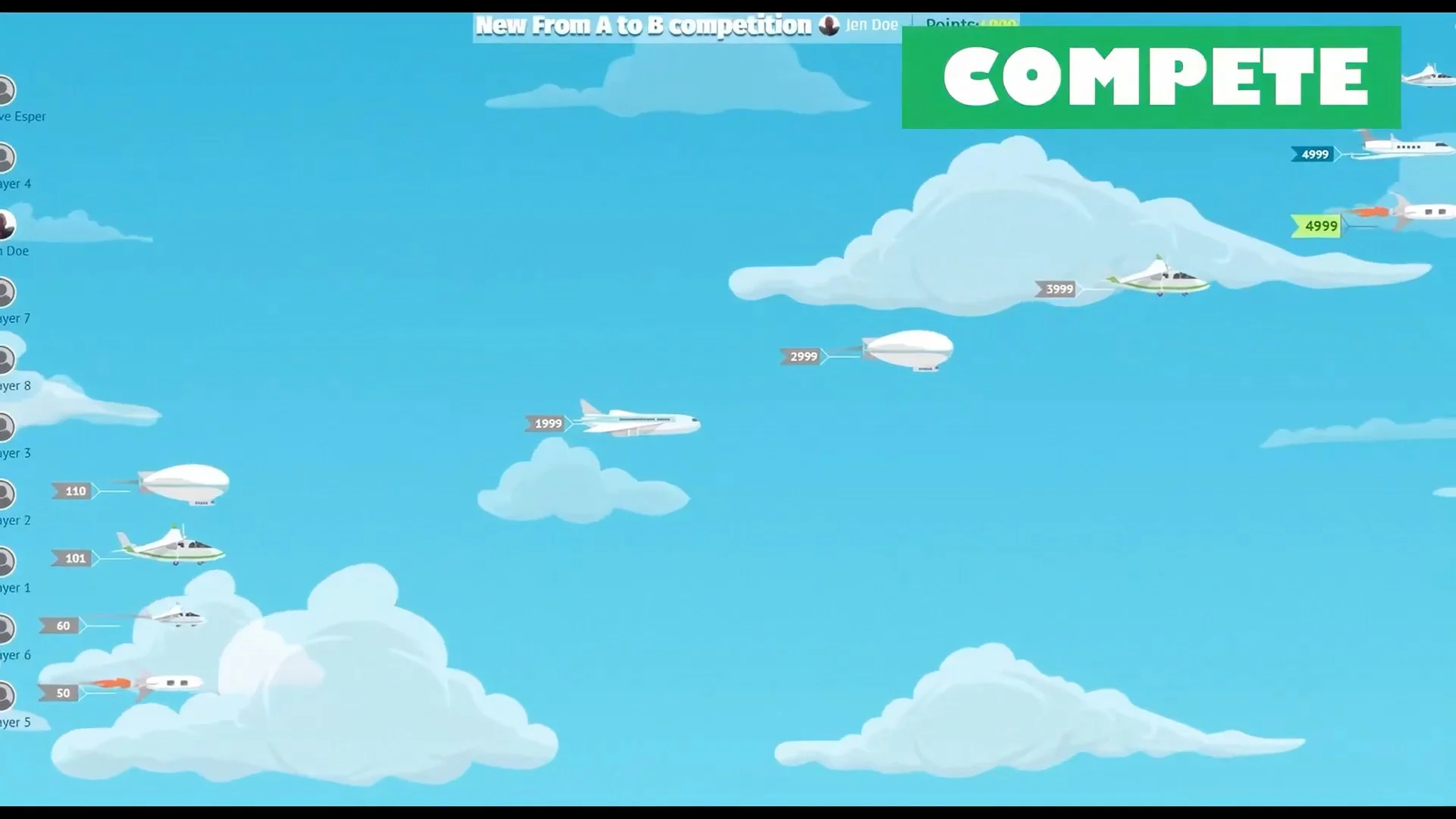
| Crew competition | To boost overall engagement | Crews with similar tasks | 2–4 weeks |
| Maintenance quest | To teach compliance with procedures | Technicians working from checklists | 1–2 months |
| Educational game | To quickly teach new procedures | New employees, process changes | Immediately after completion |
| Pilot format | To test mechanics on a small group | Any team | 2–3 weeks for the test |
The pilot format is not a separate game but a way to launch any of the mechanics without large upfront investment. We select one crew, set up a scenario for them, and within a couple of weeks see whether the approach works. If it does, we scale it to the whole service; if not, we adjust the mechanics before launch.
This approach lets you start small and build excitement gradually: first a competition within a crew, then between crews, and then a full-scale motivation system. In the end, you get a tool that lives with the business and adapts to new tasks.
If you need long-term engagement, we rotate formats — this keeps interest alive and prevents the game from turning into routine.
How Gamification Implementation Works: From Brief to Launch
Gamification implementation is a clear process in which we guide the client from the first conversation to stable operation. No magic: every stage is agreed upon and transparent, and decisions are made together with you.
- Brief and immersion in the task. We gather information: how technicians and engineers currently work, what motivates them, and where failures and delays occur. We clarify goals — to speed up work orders, reduce downtime, or improve service quality.
- Designing mechanics. Based on the brief, we propose a game system: points, levels, rewards, and competition between crews. We explain how it will affect employee behavior and show you options — you choose what fits your culture best.
- Agreeing on the plan and timeline. We lock in the selected mechanics, work stages, and control checkpoints. You always understand what is happening and when you will get the result — no surprises and no vague promises.
- Implementation and setup. We build the system, connect it to your workflows, and test it on real data. At this stage, the first results are already visible, and we show them to you.
- Training and launch. We run a short session for managers and the team and bring in technical specialists. The launch happens without stopping operations — with support and clear instructions from day one.
- Support and development. We review results, collect employee feedback, and adjust settings. If the mechanics need fine-tuning, we make changes quickly so that motivation keeps working continuously.
This approach gives the client not a boxed product but a working motivation tool that pays off and remains a living process inside the company.
What Is Included in the Game System Delivery Package
The delivery package is not just code and rules — it is a ready-made solution for engaging technicians and engineers. You get everything needed to launch the system from day one: mechanics, instructions, training, and control tools.
- Game scenarios and mechanics. Ready-made formats for your site's tasks: competitions between crews, personal quality ratings, and team challenges focused on speed and safety. The scenarios are described so they can be implemented immediately without further work.
- Manager's guide. A practical manual: how to announce the start of the game, how to handle disputes, and how to keep the team interested. You will not have to invent rules on the fly — all the answers are already in the document.
- Metrics dashboard. A clear control panel: participant activity, task completion, and engagement dynamics. You see which crews have pulled ahead and where the team is lagging — this helps you make management decisions quickly.
- Team training. We run a short training session for technicians and engineers: we explain the rules, show the interface, and walk through typical situations. Employees immediately understand how to work with the game and do not lose motivation because of unclear conditions.
- Support regulation. We define the update procedure, the people responsible for the system, and the algorithm for resolving disputes. You know who is responsible for what and how quickly an issue will be resolved — the system never goes unattended.
This package covers all tasks — from launch to daily operation. You get not a boxed product with code but a working mechanism that raises employee engagement and reduces the manager's workload. All that is left is to announce the start — everything else is already ready.
Case Study: How Game-Based Motivation Reduced Turnover in Production
A production site is a constant race: a delayed repair stops the line, urgent work orders burn time, and turnover prevents building a stable team.
A maintenance technician or engineer feels that their work goes unnoticed — and leaves for a place with a clear career path and recognition. The business loses money on this: every new employee takes months to reach full speed, and equipment sits idle the whole time.
We close this gap with a game-based motivation system. Our team developed a project for a manufacturing enterprise: technicians earned points for service quality, accident-free work, mastering new components, and submitting process improvement suggestions.
A shared rating appeared on the shop floor display, and top employees received not only status but also real bonuses. The goal was to make actions useful to the business become genuinely interesting in themselves.
Results
| Metric | Before Implementation | After 6 Months |
|---|---|---|
| Turnover among technicians and engineers | one in three left within a year | fell by a third |
| Process improvement suggestions | 2–3 per month | 12–15 per month |
After six months, we measured the effect: turnover fell by a third, and the number of process improvement suggestions rose fourfold. Engineers stopped seeing idea submission as a useless formality — it became a way to climb the rating and earn a bonus.
The chief engineer's department began receiving ready-made solutions that had previously stayed locked in drawers.
After the first results, the plant owner ordered the system scaled to a neighboring workshop. That repeat order is the best proof that gamification works not as a one-off campaign but as a management tool for a production site.
How to Choose a Gamification Format for Your Team
There is no universal gamification: what engages a newcomer may not interest an experienced engineer, and a team quest does not always strengthen personal accountability.
So the first step is to identify the business task you are solving: training employees, speeding up maintenance, reducing errors, or boosting engagement. The format and game mechanics should work specifically toward that goal.
If the goal is learning through play, we choose scenario-based simulators: a technician encounters a typical abnormal situation, makes a decision, and sees its consequences.
This approach reduces the risk of expensive mistakes on real sites and builds skills faster than reading a manual.
If the goal is motivation for business tasks, levels, points, and public ratings tied to compliance with procedures, response speed, and quality of completed work work best.
We do not push a single format; we match it to the team after a short audit. We look at where efficiency drops, what prevents employees from acting faster, and what kind of culture the team has.
Some teams suit healthy competition, others need a joint project with shared goals to maintain cohesion.
It is important that the game fits into the work process rather than existing separately. An employee sees progress in the familiar task system or on a screen next to the workstation — this does not distract but guides.
That is why we launch a pilot on one crew or site, measure changes over two to four weeks, and only then scale the format to the whole team.
Over 10+ years of working with technical services, we have run dozens of such launches and know where the most common mistakes happen. You get not just an interesting game but a tool with measurable results: faster maintenance, fewer errors, lower turnover.
That is the right format choice — one that solves your task and that your team feels comfortable using.
Frequently Asked Questions About Implementing Game-Based Motivation
Managers often hesitate before introducing game mechanics into the work process. The main fears are unpredictable results, difficulty measuring impact, and the need for ongoing support. Below are answers to the questions most often asked before a project starts.
What will a game system give specifically to our technicians and engineers?
Game elements turn routine into clear tasks with quick feedback. Employees see their contribution and receive recognition for quality work, while the manager sees faster service and reduced downtime. Transparent statistics help spot overload in time and prevent burnout.
What if the mechanics do not work?
We launch a pilot on one team and adjust the scenario based on real data. If something does not land, we change the rules or rewards before the full launch, so the risk to your business is minimal.
How is effectiveness measured?
We measure the numbers before and after: the share of work orders completed on time, response time to calls, the number of repeated requests, and staff turnover. All changes are visible in the report one month after launch, and we adjust the plan if needed.
Who will provide system support?
We support the project after launch: we train a responsible employee and update the rules and motivation elements. You do not need to keep a developer on staff — support is already included in the agreement, and you are always in touch with our team.
Tell Us About Your Task — We Will Find a Solution for Your Business
It is clear that there is no universal gamification: what motivates some technicians leaves other engineers indifferent. So we start not with a ready-made template but with your task — and only then choose the format, mechanics, and level of complexity around it.
That way, you get a system that will work specifically within your business processes, not just a game for the sake of a game.
Leave a request for gamification, and within one business day we will prepare a package for your situation:
- 2–3 game-based motivation options suited to the specifics of how your technicians and engineers work;
- an assessment of implementation timelines and launch stages without fluff;
- a preliminary cost estimate with a clear structure — from development to support;
- a free consultation with an engineer who will ask the right questions about your processes;
- recommendations on how to embed the game into current procedures without disrupting work schedules;
- a proposal for a pilot launch on one team — so you can see results before scaling.
There is no obligation on your side: the decision is yours, and we simply show what results are realistic in your case.
Tell us about your task through the form on this page — we will find a solution for your business, calculate the timelines, and come back with specifics within one business day. We want you to feel confident at every stage — from the first discussion to launch and support.