

Examples of Gamification in Loyalty Programs That Retain Customers
Most loyalty programs today are just discounts and point accumulation, which don't create emotional attachment. Customers quickly get used to the benefits and switch to a competitor that offers slightly more.
Customer churn is the main revenue loss: acquiring a new customer costs several times more than retaining an existing one, and many companies don't even track this metric.
Game mechanics solve the churn problem. A purchase becomes an engaging process with goals, rewards, and unexpected bonuses.
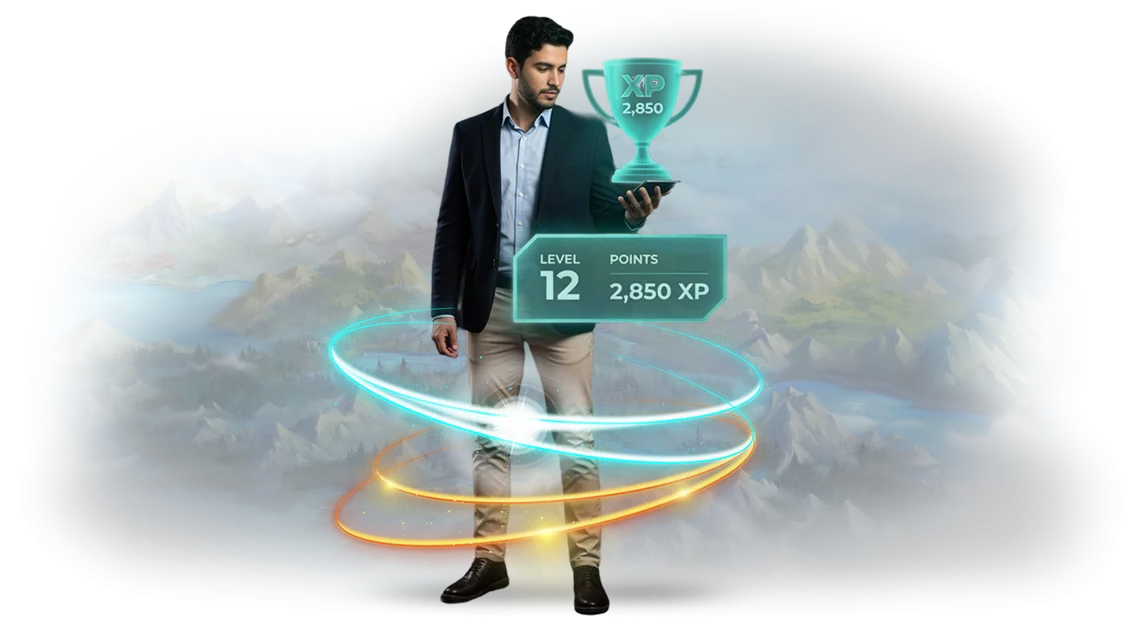
Examples of gamification in loyalty programs that retain customers include levels and statuses that grant privileges, virtual rewards for completed actions, and personal challenges that encourage return visits within the coming week.
These mechanics increase repeat order frequency and average order value — the customer returns not because they have to, but because they're interested.
The key is that game elements are designed for specific business objectives, not copied from competitors. We analyze customer behavior, find the points where they lose interest, and implement mechanics that gently push them toward the next step.
An additional bonus is that game scenarios are worth sharing: customers showcase their achievements on social media, and brand reach grows without an advertising budget.
In our practice, such programs delivered measurable results within the first few months: the share of repeat orders increased by tens of percent, churn decreased, and participants brought in friends.
We handle the entire cycle: strategy, mechanics development, integration into your loyalty system, and ongoing performance analysis.
Tell us about your business — we'll find game mechanics that turn occasional buyers into regular customers.
What Business Gets from Game Mechanics for Engagement
Customer engagement today is a key growth point for business: competitors are ramping up marketing, while audience attention is scattered. Ordinary discounts and bonuses no longer generate the same response.
Game mechanics shift the relationship with the customer from a "buy-sell" plane into a game people want to return to again and again.
Customer Engagement Growth
Game mechanics turn routine actions into an engaging process. Users return to the app or website not out of necessity, but because they enjoy it: accumulating points, unlocking new levels, earning rewards.
Visit frequency and time spent interacting with the brand increase — that's a direct path to stronger loyalty and stable repeat sales.
Elements of competition and status further motivate customers to complete target actions: leaving reviews, filling out a profile, participating in promotions. The company gets more touchpoints with the customer without increasing the advertising budget.
Higher Average Order Value
When a customer sees progress and proximity to the next reward, they're more willing to add items to reach the required cart total. Mechanics like "collect the set," personal tasks, and achievement bonuses gently push toward a purchase without aggressive discounts.
Programs built on this principle show a noticeable increase in average order value within the first months of operation.
Growth is achieved not through coercion, but through the customer's own desire to finish the game. This allows revenue to grow without losing margin and without price dumping.
Improved Net Promoter Score (NPS)
A customer who enjoys the interaction is more likely to recommend the brand to friends and colleagues. Game achievements give people a reason to share emotions and stories — this amplifies word of mouth and increases the willingness to give high ratings.
The product is remembered through feelings, so organic growth of new customers becomes a natural result.
Satisfied customers become brand advocates: they return themselves and bring acquaintances. A systematic rise in NPS indicates that the program builds long-term relationships, not one-off promotions.
Formats of Game Solutions for Different Objectives
Loyalty today is not just discounts and bonuses, but also the emotions customers get from interacting with the brand.
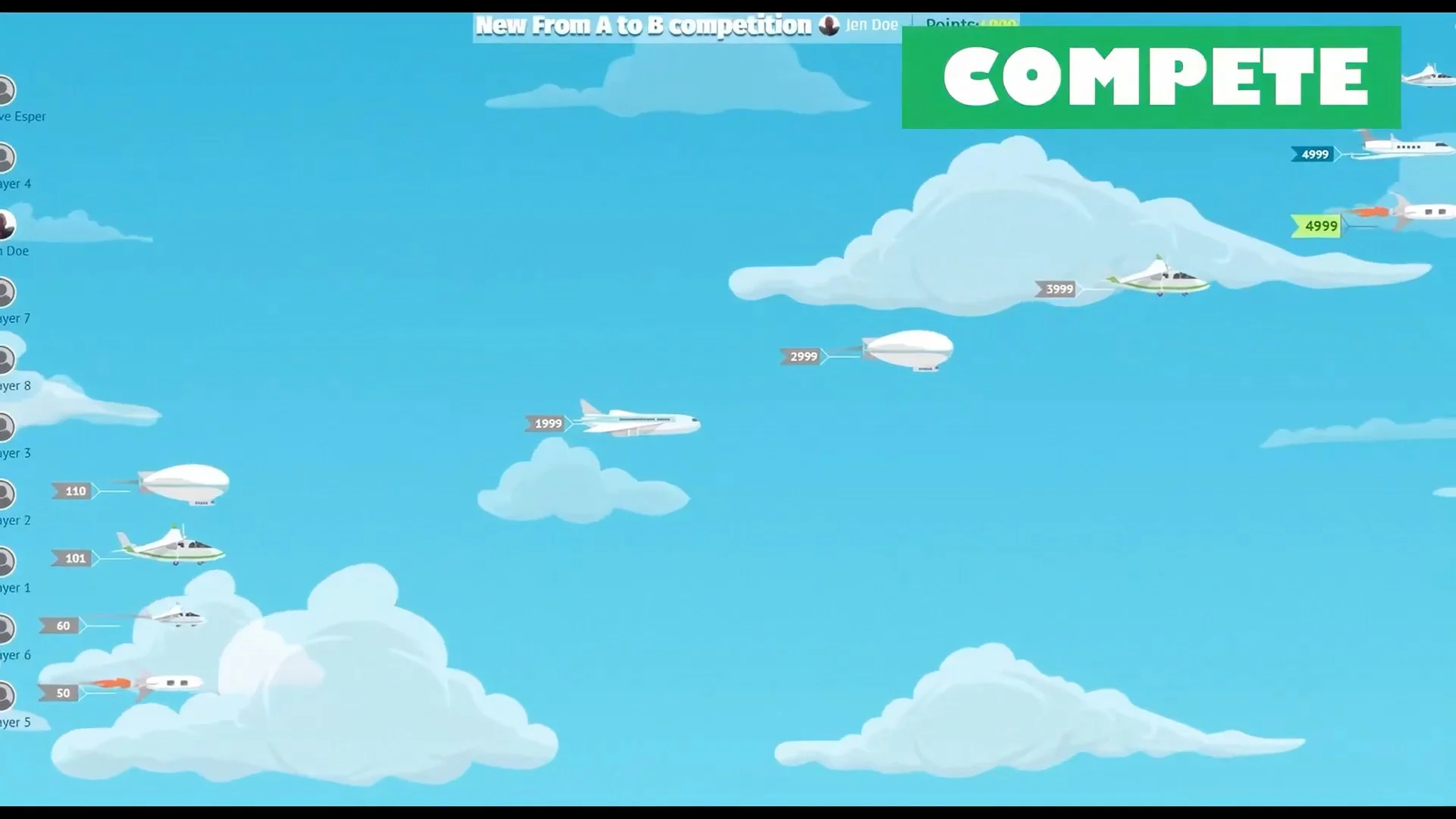
Game formats help turn routine purchases into an engaging process, but each one solves a specific task: some quickly increase purchase frequency, others retain customers and build a community.
We don't offer one-size-fits-all templates: we choose a format based on your product line, budget, and customer expectations. Compare the main options — from a simple points system to a full-featured game platform — and pick what best fits your objective.
| Format | Who it's for | What it gives the customer |
|---|---|---|
| Points system | Companies that want to launch a loyalty program quickly without complex setup | Transparent points accumulation, higher repeat purchase rate, and simple start |
| Quest with levels and rewards | Mid-sized businesses that need to engage customers in a new product line or seasonal promotion | Excitement and interest, higher average order value through upsells, emotional attachment to the brand |
| Game platform with competitions | Large brands interested in retention and community | Long-term loyalty, regular returns, competitive engagement, and data on customer preferences |
| Hybrid format (points + levels + personalized offers) | Companies that develop loyalty step by step and test different mechanics | Ability to change rules without restarting, adaptation to customer behavior, flexibility |
These are just basic scenarios: in practice, we combine mechanics and scale the project gradually. For example, start with a points system, then add levels and competitions after a few months — customers will discover new possibilities and stay with you longer.
Stages of Implementing Game Mechanics into Business Processes
Every business process is unique, so we don't sell "boxed" solutions. Launching game mechanics starts with your goals, not a ready-made template, and goes through a short cycle of stages, at each of which you understand what you're getting and what it costs. Below is our working process, proven across dozens of projects.
-
Brief and task immersion. We study how your processes work, where customers and employees are lost, and which metrics you want to improve. The output is an understanding of which mechanics will deliver measurable value, not just "be fun."
-
Concept and work plan approval. We document the game scenario, timelines, cost, and launch order. You see all the stages in advance and can align them internally — no surprises in the middle of a project.
-
Prototype and design mockup. We create an interactive image of the future mechanic: how it looks, how the reward logic works. This stage lets you "feel" the solution before development starts and make quick adjustments.
-
Development and integration. Our engineers carefully embed the mechanic into your server systems and interfaces. You get a stable product that doesn't "crash" during peak hours and works correctly alongside the rest of your business.
-
Testing and launch. We test the mechanic against real scenarios: how users will behave, whether the system can handle the load. Then we launch the project and track initial metrics to ensure the goal is being achieved.
-
Support and evolution. We analyze results and make improvements based on customer behavior. You get not a "one-off site," but a living mechanic that learns and drives repeat order growth.
This approach removes common risks: unnecessary approvals, "finish-line" rework, and long waits for results. Each stage is short — you always know where you are and what comes next.
What Is Included in the Game Solution Delivery Package
Once the game is designed, we deliver not just "source files for developers" but a ready-to-launch package. You get clear documents, settings, and materials so your team can launch the program without our daily help and without losing quality.
The delivery package includes:
- Game mechanic scenarios — descriptions of rules, levels, rewards, and participant actions. Your managers understand how the program works and can explain it to customers or staff.
- Analytics dashboard — a view of key metrics: reach, activity, repeat purchases, conversion. You see the program's effect in numbers, not guesses.
- Administrator instructions — step-by-step guides: how to onboard a participant, adjust a reward, or close a promotion. Training your team takes hours, not weeks.
- Participation rules for customers — a short document in plain language that reduces support questions and disputes when awarding bonuses.
- Integration settings for your accounting systems — the program accounts for real orders and actions, so rewards are awarded automatically and without errors.
- Activity calendar and communication templates — ready-made emails, push notifications, and launch scenarios for new levels. You don't need to invent ways to keep participants engaged.
- Final setup report — what was configured, what data is collected, who is responsible for support. You get transparency and a clear entry point for your team.
The entire package is organized in a project personal account: documents, settings, and analytics in one place. This lets you quickly onboard new employees and hand the program between departments without losing accumulated experience.
Case Study: How Game Mechanics Increased Customer Return Rate
We built a loyalty program for the coffee shop chain «Утро». With a regular points card, it was no better than the competition. The chain owner asked for a measurable result: guests who visit once a month should come twice as often.
So instead of discounts, we built a game: levels, goals, and unexpected rewards that hook customers and boost repeat visits.
First, we studied guest behavior: what they buy, when they come, how quickly they lose interest. Based on that, we set up a mechanic that engages without complex instructions or excessive notifications.
The guest enjoys unlocking new levels, while the establishment gets a predictable rhythm of repeat purchases and a higher average order value.
Numbers the Client Saw
After four months, the share of guests returning within two weeks grew by 37%. Repeat purchases increased 1.5 times, and the average order value rose by 12–15%.
The program reached 40,000 regular visitors — and nearly half of them completed at least one game goal in the first month.
The investment paid off in the first quarter. The program requires no manual management: rules work automatically, and the client's team sees the dynamics in a simple dashboard. It's convenient for the business owner — control without involving programmers or analysts.
After the initial results, the client ordered us to scale the program to new locations. That's what a manager expects: not flashy mechanics, but growth in return rate, repeat orders, and revenue.
Answers to Common Questions About Implementing Game Mechanics
Implementing game mechanics into loyalty programs raises the same concerns: will a game scare off regular customers, what happens to the current program, and how predictable are the results. We answer directly — showing risks, guarantees, and timelines.
What if customers don't like gamification?
We don't launch mechanics blindly. First, we test a prototype with a group of customers. If engagement drops, we adjust the scenario before launch. You get mechanics that enhance the product's value rather than annoy people.
Are we risking our current loyalty program?
We don't rewrite the system from scratch: we add game elements gradually. At each stage, you see the results and can return to the previous scheme — the regular customer base is preserved.
What guarantees, timelines, and support do you provide?
We work under a contract: we set metrics — repeat purchase growth, customer retention — and timelines from 2–3 weeks to 1–3 months. If we miss deadlines due to our fault, we refund part of the payment. After launch, we stay involved: we update mechanics and track engagement.
If you want to assess in advance how game mechanics will fit your audience, tell us about your task, and we'll show examples for your industry. It takes one short conversation and will remove most of your doubts.Launch Your Project and Get a Measurable Result
Gamification pays off when it's embedded in a business process, not when it exists on its own. We design a loyalty program around your sales model: we calculate the economics at the start, define engagement scenarios, and show the payback point.
No abstract "points" — only mechanics that increase purchase frequency, average order value, and customer return rate.
Over time, we've launched dozens of programs for retail, restaurants, online services, and corporate clients. Each project starts with an audit and calculation, and ends with clear numbers: repeat order growth, completion of target actions, and share of program participants. Leave a request — and at a free consultation, we'll show how gamification works in your niche.
What you get when you order a project from us:
- Calculation of economics and payback timelines before development begins — you understand the budget and impact at the start.
- Custom mechanics for your audience: quests, statuses, accumulation levels, team competitions.
- Integration of the program into your processes: website, app, POS, or offline sales points.
- Turnkey launch and employee training so the program works from day one.
- Transparent analytics: you see which mechanics deliver results and can reinforce them.
- Support and evolution after launch — we adapt the program to market changes and customer behavior.
We're accountable for results, so we set goals in the contract and support the project after release. Launch your loyalty program with clear indicators and growing revenue.
Leave a request for a project calculation — we'll call you back within one business day, ask a few questions, and propose a data-backed solution. The consultation is free and non-binding.
Where Can You Find Proven Examples of Game Mechanics?
Business owners often look for proven examples of game mechanics in open sources — and fall into a trap: flashy cases without numbers, foreign industries, and mechanics that can't be integrated into their own process.
The result is not loyalty growth but a one-off promotion that doesn't pay off and disappoints customers.
Working examples should be sought where there are real metrics and experience.
Industry reports show overall trends, conferences and webinars provide live figures from practitioners, and a contractor's case base offers ready-made "mechanics + business result" combinations.
It's also important that the team has projects not just in gamification, but specifically in your field: retail, food service, services, B2B sales. We've collected dozens of such solutions and continually expand the base.
But even the best example from someone else is a starting point, not a ready-made solution. Mechanics that worked in a coffee shop may fail in an auto repair service or clinic: the purchase cycle, average order value, and customer emotions are different.
Our analysts adapt working mechanics to your business process — factoring in your specifics, customer journey, and desired outcome. Only then does gamification become a loyalty program that pays off.
That's why at a meeting we show not abstract slides, but two or three examples from your industry or adjacent niches — with clear conditions and business outcomes.
You see what the mechanic looks like, what the customer gets, and what effect it has for the owner: growth in repeat visits, higher average order value, and increased program engagement. And after launch, we continue to support the project and adjust mechanics based on data.
This is the answer to the question: proven examples are not the ones available to everyone, but the ones validated on your audience. We help you assemble and launch such a program so that gamification delivers measurable results to your business.