

Why Classic Motivation Methods Stop Working
Familiar motivation methods—bonuses, awards, and annual reviews—are gradually losing their power. Employees take them for granted rather than as a reason to work better: engagement drops, turnover rises, and businesses spend budget on programs that deliver no measurable result.
This is especially acute in a generation that grew up with games and instant feedback—they need not abstract promises but a clear system of achievements and progress.
The same story plays out with customers: discounts and sales attract one-time attention but do not build loyalty. A shopper switches to a competitor in one click because there is no emotional connection to the brand.
Traditional loyalty programs with accumulating points no longer surprise—they are perceived as routine, not as a game you want to return to. As a result, companies lose both repeat sales and recommendations, even as they invest more in marketing.
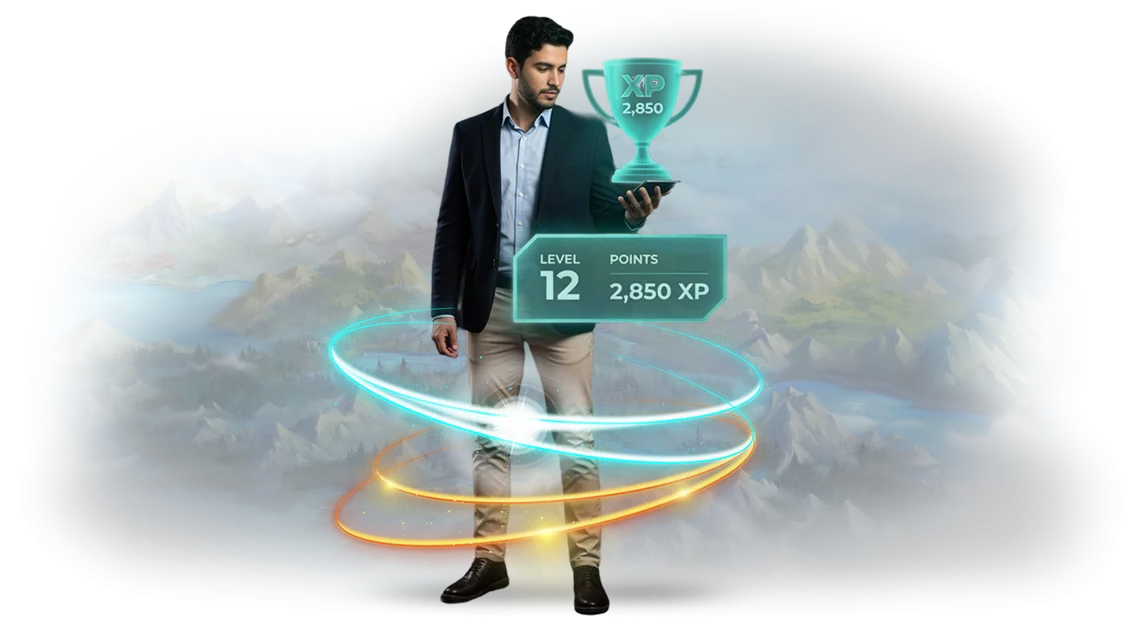
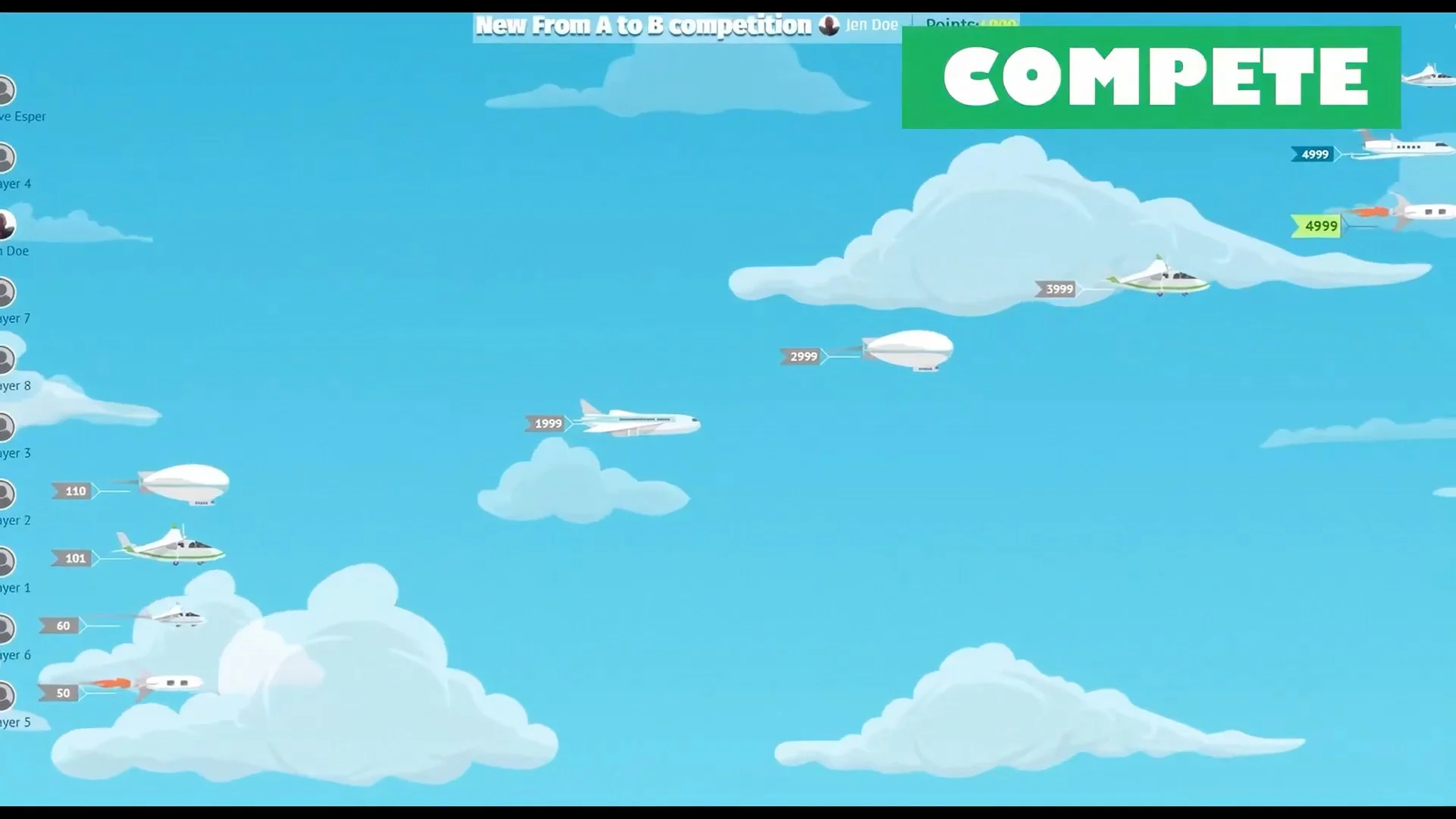
The answer is business gamification: bringing game mechanics into workflows and the customer journey. We help turn routine into a game with levels, rewards, and competition—so employees want to reach goals on their own, and customers return for a new experience.
In our projects, this multiplies engagement, but the main thing is it restores interest in a process that once seemed boring. That is exactly what we discuss below—how game mechanics systematically solve the problem of falling motivation.
What Gamification of Business Processes Delivers
Gamification changes the attitude toward routine actions: the user or employee sees not a "duty" but a goal with a clear reward. When a business process is accompanied by game mechanics, people begin performing the actions you want on their own, without reminders.
Loyalty is built on emotions and benefit. Non-material motivation—statuses, levels, rewards—works no worse than money, forming a habit and a sense of progress.
In the Play-to-Earn format of crypto games in Telegram, this mechanic is amplified: every step brings a tangible result, and that keeps the user engaged.
Such dynamics directly affect revenue. Engaged users are more likely to complete a purchase, return again, and increase the average check.
Game tasks nudge them toward the desired actions: place an order, invite a friend, leave a review—without a discount race that devalues the product.
In addition, this format saves the advertising budget: customers absorbed in the game share links themselves, and the base grows through recommendations. This means gamification solves two business tasks at once—it increases sales and expands reach without one-off promotions.
We put business processes on game rails with a clear economy: you get a tool that motivates customers and employees over the long term. In the next sections we show specific formats that are already paying off for our clients.
Play-to-Earn Crypto Games in Telegram: Formats for Business
Game mechanics in Telegram are no longer just entertainment: they help businesses retain audiences, increase return frequency, and build long-term customer relationships.
For projects working with tokens, this channel has become one of the most accessible ways to involve users in the product economy—without installing apps or complex registrations.
We develop gamification for specific client tasks—from lightweight mini-apps to full-fledged Play-to-Earn crypto games in Telegram. The formats we implement can be divided into three directions.
| Format | For whom | What it gives the client |
|---|---|---|
| Mini-app with game mechanics | Services and platforms that need to increase user activity | Growth in number of sessions, audience retention, collection of behavior data through game scenarios |
| Play-to-Earn crypto game | Crypto projects, exchanges, NFT communities | Attracting a new audience of token holders, a clear economic model with rewards, increased token utility |
| Hybrid solution | Traditional brands entering web3 | A smooth transition for users from ordinary mechanics to crypto assets, stronger loyalty through points convertible into digital assets |
The choice of format depends on your business model and the stage of your audience relationship. We help you determine the right scenario, design the economy, and implement it in a short time—from idea to launch.
How a Gamification Project Works: 7 Steps
Gamification produces a measurable effect only when each stage is aligned with business goals. That is why we structured the process into 7 steps—from the first brief to launch and support. You always understand what is happening and what result you will get at each step.
Work Stages
- Gamification brief. We record the task: what audience we are engaging, what actions we want to strengthen, what metrics we consider success. As a result, you get a clear plan and a time estimate.
- Prototype and mechanics. We propose the game concept: scenario, rewards, visual style. You see how it works before development starts.
- Project approval. We approve the technical specification, designs, and budget. After that we work without unexpected edits or re-estimates.
- Game development stages. We build the functionality and connect your internal systems and payment tools. Every few days we show a working prototype.
- Testing. We test the scenario on real users: find bugs, improve the reward balance. You get a stable version.
- Gamification launch. We deploy the solution, onboard customers or employees, and monitor the first results. We quickly fix any issues.
- Support and development. We analyze data, add new levels, promotions, and rewards to keep interest alive. You get long-term growth in key metrics.
What’s Included in the Gamification Delivery
The delivery includes not just code but a ready-made tool for your business. We hand over a package that allows you to launch the game, manage it, and get results—without constant dependence on developers.
- Scenarios and game mechanics. We develop them for your tasks: employee engagement, training, KPI achievement. For Play-to-Earn we add reward economics and balancing so participants stay active.
- Game admin panel. A clear control panel where you change levels, rewards, tasks, and rules. No programmer needed for changes—an administrator from your team is enough.
- Gamification documentation. Instructions, rules, and descriptions of all mechanics. Employees quickly understand the system, and new participants can be onboarded without additional costs.
- Team training. We conduct a training session for administrators and managers: we show on real scenarios how to configure the game and respond to player actions.
- Integration with your processes. We connect the game to Telegram, the corporate chat, and CRM—everything works within the familiar environment, without switching between services.
- Analytics and reporting. You see activity, progress, and participant results. You understand how the game affects business indicators: conversion, task completion speed, loyalty.
- Post-launch support. We help at the start, adjust mechanics, and ensure the game runs stably. You get not a one-time delivery but a working tool with support.
Case Study: How Gamification Increased Sales by 40%
We took on the retail chain «Мегаполис» — 12 stores in three cities and a base of 45,000 customers. The main pain: competition for attention and a low share of repeat visits.
Ordinary discounts were working worse and worse, so we decided to turn shopping into a game where every step brings the customer visible benefit.
Our team developed the game mechanics: for a purchase, review, or friend invitation, the user earns points and unlocks new levels.
Integration with the cash register system made the process simple—the customer just shows their phone and accumulates progress without thinking about the rules.
Results after three months of work
- Revenue growth across the chain — 40% compared to the same period before launch.
- The share of repeat purchases grew from 18% to 31% — every third customer began returning on their own.
- The cost of customer acquisition dropped by 22%: players brought friends without extra advertising investment.
- Project payback period — 7 months, after which the mechanic works as a constant source of loyalty.
These numbers are not a marketing report but data from cash register systems and CRM over the pilot period. After a successful launch, the chain expanded gamification to all sales channels, making it part of the strategy rather than a one-off promotion.
The secret of the result is not in "grinding" points but in psychology: the customer sees how much is left until the next reward and returns on their own. These are exactly the mechanics we embed into businesses—from ideas and scenarios to launch and analytics. Tell us about your task—we’ll calculate the effect gamification can bring specifically for you.
How to Choose a Gamification Format for Non-Standard Tasks
Choosing a gamification format starts not with a trendy mechanic but with the answer to the question: what specific action do you want to strengthen? If the task is to keep employees in training, short cycles with point accumulation will work.
If you need to bring customers back more often—competitive mechanics with visible progress and prizes. The more specific the business process, the more precise the game rules must be: that is the main selection criterion.
We evaluate the task by three parameters. First, we look at the audience: employees, customers, or subscribers of the Telegram channel have different motivations, and we match difficulty levels and reward types to them.
The second criterion is participation frequency: a one-time event needs bright "hooks" immediately, while an ongoing process is built around gradual status growth. The third is a measurable result: growth in lead count, repeat purchases, or completed lessons. Without that, gamification turns into entertainment that does not pay off.
We often hear non-standard tasks as an objection: "our process is too complex to turn into a game." In practice, it is precisely complex and routine processes that deliver the maximum effect—a game translates them into a clear scenario with defined steps and fast feedback.
We break the process into stages, find engagement points, and test the prototype on a small group of participants.
And if the process lives in a messenger, the format choice becomes even more flexible: participants don’t need to install anything, and the game logic, rewards, and statuses work right in the chat.
The right format doesn’t have to look like a classic game. It must change behavior: reduce training time, increase the share of completed stages, or turn a one-time customer action into a habit.
We design mechanics for your specifics and test them on real data so you see the benefit from the first weeks. For us, a non-standard task is a reason to create a solution without typical templates—one that strengthens your business.
Frequently Asked Questions About Business Gamification
We are often asked how gamification differs from a simple promotion and whether it’s worth getting into a game. We answer honestly, in the language of business.
What if gamification doesn’t work?
We build measurement points in from day one: you immediately see engagement and returns. If the mechanic doesn’t land, we quickly adjust it before full launch.
What guarantees do you provide on development?
We fix deadlines, budget, and final results in the contract. After launch, a warranty period applies—we fix errors and support the game free of charge.
How long does game development take?
It depends on complexity. A simple mechanic takes about a month. A full-fledged Play-to-Earn game in Telegram with a crypto reward takes one and a half to three months. We’ll give the exact timeframe after the brief.
What happens after launch?
We analyze player behavior and suggest improvements: new levels, prizes, mechanics. If you want, we’ll hand over the documentation and train your team.
Will we be able to change the mechanics after launch?
Yes. We collect data from the first days and use it to understand what players like. If needed, we add levels, change prizes, simplify onboarding. We plan any changes together with you.
Order Gamification Development Today
Gamification with a play-to-earn economy in Telegram retains audiences and turns their activity into revenue. But launching a crypto game requires a well-calculated mechanic: rewards, withdrawal of funds, and a balance between player interests and your revenue. We help you navigate this path without unnecessary costs—from idea to launch and growth.
Leave a request—at a free consultation on games we’ll review your task and give you a transparent cost estimate, with no hidden fees.
What you get after your request
- An assessment of the idea and potential of play-to-earn: which mechanic will deliver maximum retention and revenue.
- Development cost calculation: clear stages, timelines, and the final figure before you start.
- Monetization recommendations: rewards, in-game assets, and withdrawal options—so the game pays for itself.
- Team selection—analysts, game designers, and developers have already worked on similar projects.
- A step-by-step plan: from the first version to launch in Telegram with checkpoints.
- Post-release support: economy balancing, refinements, and maintenance.
Each item is an answer to the question “what do I get for my money.” You see the scope of work, the result, and the schedule before you start.
To order gamification, leave a request on the website. A manager will contact you within one business day and send an action plan. Even if you are not ready to launch the project, the consultation will help you evaluate the idea and avoid mistakes.