


Medical Terminology Games for Adults: From Boredom to Engagement
Adult medical professionals are practitioners with no time for rote memorization. After a shift, it's hard to force yourself to review hundreds of flashcards, and the cost of a mistake in real work is too high.
Medical terminology for adults stops being a problem only when learning is connected to real situations, not abstract lists.
This is exactly what adult learners' motivation is built on: they get engaged when they see immediate benefit and results.
Interactive training for medical professionals turns memorization into a scenario: a doctor solves a task, gets quick feedback, competes with colleagues, or progresses level by level.
Attention is held without external pressure — because it's interesting, not because it's "required."
We develop such medical terminology games for adults based on real work situations. Not abstract tests, but game mechanics that help memorize terminology faster and use it more confidently in practice.
Gamification is embedded into existing training or works standalone — on an employee's phone, tablet, or computer.
The result for a manager is clear: less time spent on retraining, higher staff engagement, and noticeably more confident employees. Which means — fewer errors in documentation and patient communication. We solve the problem where standard courses no longer work.
What You Get from Gamifying Medical Knowledge
Introducing game formats into medical training solves three tasks at once: holds adult learners' attention, reduces dropout rates, and saves the retraining budget.
Instead of passive lectures, employees get a competitive format — and they return to reviewing complex terms on their own.
Here's what you get:
- Increased engagement. Short 5–10 minute game sessions fit into the work schedule. Learners complete modules voluntarily, not "under duress."
- Improved knowledge retention. Game mechanics — repetition, associations, instant feedback — cement terminology until it becomes automatic. After a month, employees remember 30–40% more than after a standard test.
- Reduced learner dropout. When training feels like a game, fewer people abandon the course halfway. You preserve your investment in staff.
- Training cost savings. One developed module is replicated across all branches and departments. No need to bring in an instructor each time — the system checks knowledge and exports results on its own.
- Quick start for different departments. Ready-made templates are adapted for surgery, pediatrics, pharmacy, or administrative staff. Launch takes weeks, not months.
We use our own educational game builder MedGames — it's already helping clinics and training centers cut training costs and boost staff certification scores. Shall we test it on your content?
Gamification Formats for Your Audience
For adult medical facility employees, terminology is a working tool, not something to memorize by rote. That's why the game must deliver practical value: help navigate documents faster, communicate confidently with patients and colleagues, and make fewer prescription errors. To achieve this effect, the format is chosen for a specific learner group and learning objective.
We don't do "game for game's sake": first we determine what exactly employees need to learn to do, then we choose the mechanics. Quizzes work for quick topic onboarding, quests and simulations for complex clinical cases, and mobile training for regular repetition. Below are typical scenarios we use in projects.
| Format | For Whom | What It Gives the Client |
|---|---|---|
| Quiz | New employees, nurses, administrative staff | Quick term memorization, knowledge check before starting a shift, fewer documentation errors |
| Quest | Physicians, paramedics, specialized specialists | Practicing action sequences in non-standard situations, developing clinical thinking |
| Simulation | Operating room teams, resuscitation specialists | Experience with emergency scenarios without risk to the patient, confidence in real-world response |
| Mobile training | Employees with field schedules | Access to training anytime, short 5–10 minute sessions, high training regularity |
After the format is chosen, our engineers develop content with your specifics in mind: typical errors, complex cases, internal regulations. Training is embedded into the familiar workflow — on a tablet in the doctors' lounge, on a phone on the go, or in a computer lab. You get not just a game, but a tool that measurably raises staff proficiency.
How the Terminology Game Is Developed
We start with a brief, because a game for adults on medical terminology delivers value only when it precisely hits the objective.
Our specialists will ask about your audience, training format, and desired outcomes — you don't need to prepare a technical specification; just describing your task is enough.
- Gamification brief. We lock in the goals: what students or employees need to remember, what format suits them best, and what outcome counts as success. You receive a document capturing expectations and evaluation criteria.
- Prototyping. Within one to two weeks, we assemble a working sample of the mechanics and visual style. You see how the game feels and suggest edits before full-scale development begins — this saves time and budget.
- Project approval. After the prototype, we approve timelines, scope of work, and budget. You know exactly what you'll get and when — no hidden stages or unexpected surcharges.
- Game development. We build the full version: fill it with your terminology, configure difficulty levels, and provide clear feedback for the learner. We select a convenient task format for each module.
- Testing with real users. We show the game to a group of adults — the future players — and check how easy the training is to complete. Then we make final adjustments so the game runs smoothly.
- Launch and support. We help integrate the game into the training process: prepare instructions, train instructors, and stay in touch after launch. If you need to update terms or add a module — just let us know.
Each stage ends with a clear deliverable, so you always see where the project stands and what happens next. The entire journey typically takes four to eight weeks — the timeline depends on the volume of terminology and the complexity of game mechanics.
What's Included in the Delivery Package
You get not just a game, but a complete turnkey solution — with all materials, settings, and support. Our team handles everything: from the scenario and medical content to training your employees and post-launch support.
The delivery package includes:
- Game scenario — adapted to your specifics and adult medical terminology. A storyline, levels, tasks, and a reward system that holds attention and motivates staff to return to training regularly.
- Instructional materials — ready-made guides for instructors and managers: how to integrate the game into the training process, how to track employee progress, and how to interpret results.
- Content and tasks — filled with real medical terms, situations, and protocols. Content can be updated — we'll advise on how to keep the knowledge base current.
- Platform setup — we install the game on your infrastructure (or cloud), connect corporate accounts, and configure access and roles for employees and administrators.
- Instructions and documentation — simple guides in Russian for users and administrators: how to log in, complete the game, view statistics, and add new content.
- Administrator training — we hold an online session for your team: showing how to manage the game, configure difficulty levels, and analyze staff engagement.
- Warranty support — we stay in touch after launch. We help resolve any questions, fix bugs, and provide recommendations for expanding gamification in your company.
All elements are ready to use on launch day. All you need to do is appoint a person in charge and invite employees — we take care of the rest.
Case Study: Improved Retention of Medical Terms
At the training center МедПрофі, more than 200 nurses were trained each year, and every course faced the same problem: terms were forgotten a week after the topic was covered.
Instructors spent up to 30% of classes on review, but test results stayed low — about half the group couldn't correctly match a symptom name with a diagnosis code. In this line of work, an error isn't just a low grade; it's a risk to the patient and to the clinic's reputation.
We proposed not "yet another presentation," but a game mechanic familiar to adults: levels, a timer, and mistakes as learning opportunities.
Employees completed tasks right at the workplace for 10–15 minutes a day — without leaving their shifts or adding extra study hours.
After 2 months, the average test score rose from 62% to 91%. Classroom review time nearly halved — instead of 6 hours a week, 2–3 hours sufficed. And the time for a new employee to start working independently dropped from three weeks to one.
"We expected relief for the instructors, but we also got a boost in staff motivation. Nurses stayed after their shifts on their own to level up in the game," noted the head of the training center.
This format proved useful for other directions too: a year later, the center ordered two more modules from us — for pharmacology and emergency care courses. The manager estimates the project pays for itself within six months — thanks to faster onboarding of new employees.
How to Choose the Right Format for Your Objective?
The right game format is determined not by trends but by the objective: what should change after training — term memorization, skill practice, or verifying an employee's readiness to apply knowledge. The mechanics, degree of competition, and scenario length all depend on this.
At the start of negotiations, we always lock in the goal first — and only then propose a suitable option.
If you need to quickly introduce adult specialists to a large volume of medical terminology, the best choice is short interactive quizzes and flashcards with a repetition system.
They help memorize up to 80% of new terms over a few short sessions, and built-in statistics show which terms are the hardest — this can inform program improvements.
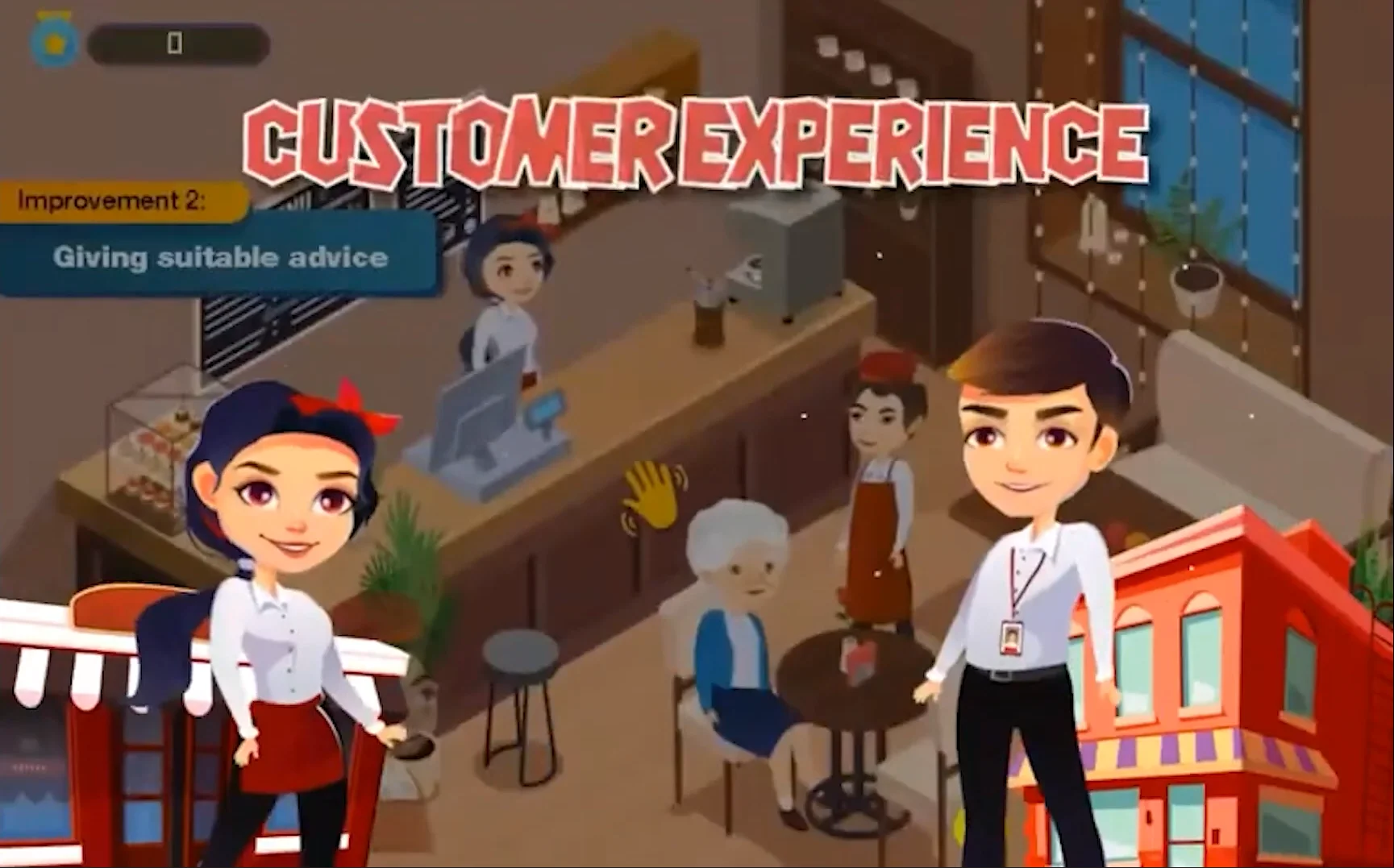
When the task is deeper — teaching an employee to apply terms in real work situations (patient communication, completing documents, selecting medications) — scenario-based simulation games are needed.
In them, a person makes decisions in a safe environment, makes mistakes, and immediately sees the consequences, rather than just guessing the answer. This format builds confidence before moving to live practice and reduces the number of errors after training.
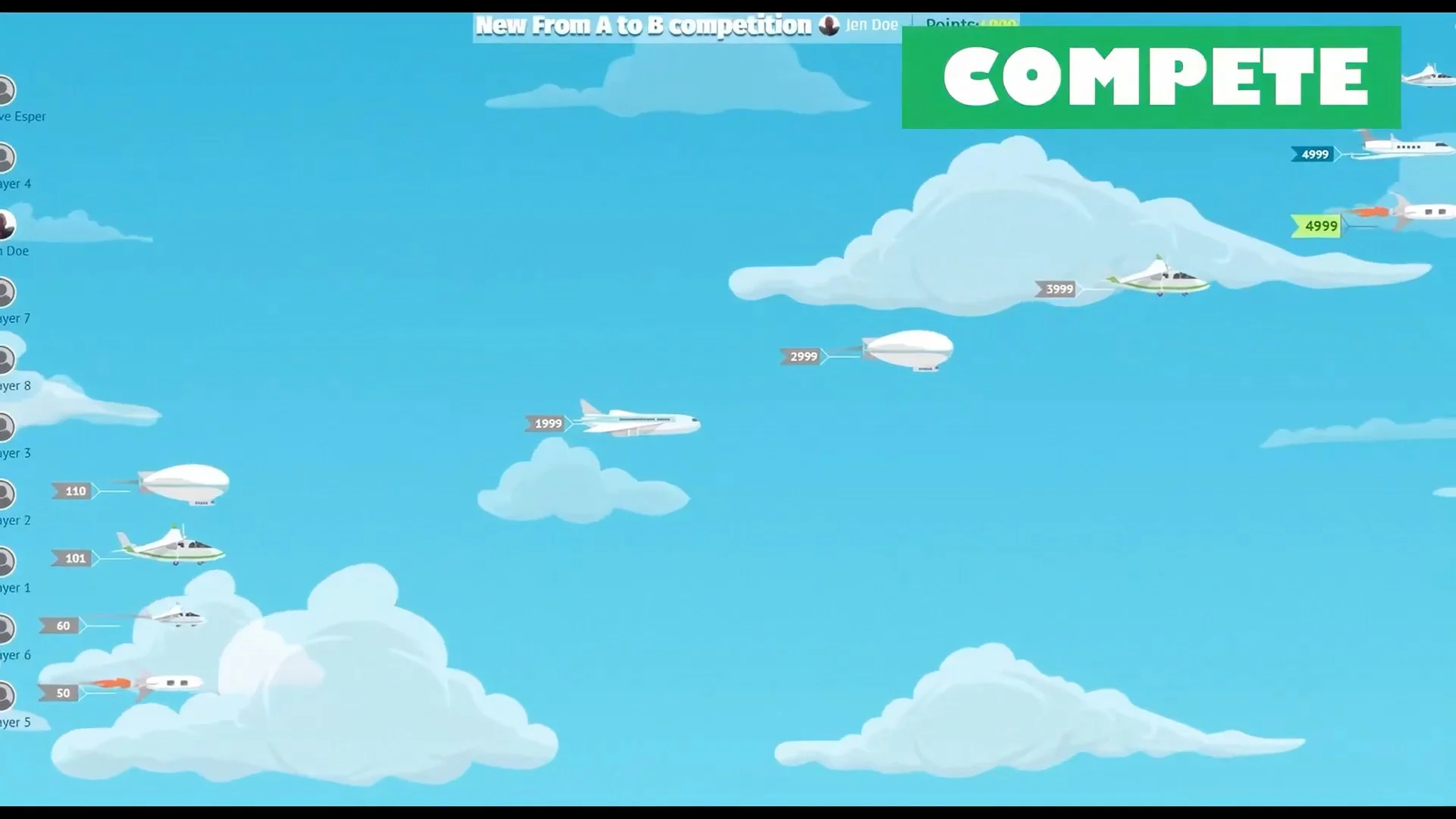
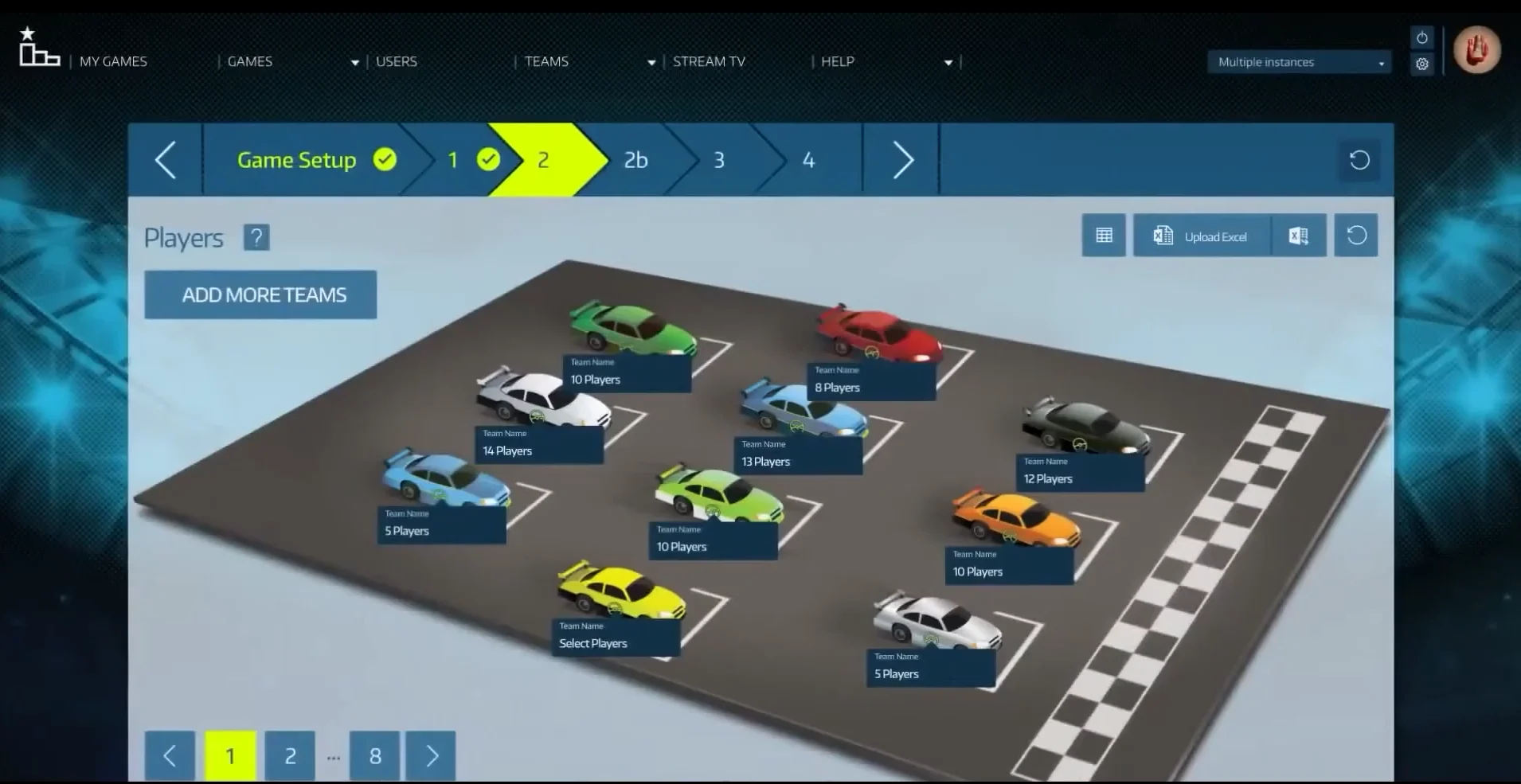
For knowledge control and motivation, competitive formats with rankings and team scores work well. Adult audiences respond well to healthy competition when it's presented correctly — without pressure, with a focus on personal progress.
This lets a manager see an objective picture of material comprehension for each employee, while participants gain recognition for their achievements.
We don't sell "game for game's sake": at the brief stage, we determine which scenario will deliver exactly your result — the fastest memorization, skill practice, or transparent knowledge assessment.
Then we adapt the mechanics to the age, experience, and corporate culture of the adult audience. The result is a format that works for your business objective — it doesn't require additional training and doesn't cause resistance among employees.
Common Concerns: Breaking Down Barriers
Doubts before launching a medical terminology game for adults are normal. We break down barriers so you see not risks, but results.
We — a development team with experience in business process gamification — have already walked this path with dozens of clients and know which questions most often hold back a decision.
What if employees don't like the game?
We start the rollout with a test group: a pilot launch among your specialists, collecting feedback, and tuning the mechanics to their work style.
The competitive element, points, and rewards keep interest high, and we adjust the difficulty so the game stays engaging rather than becoming routine.
What if technical issues arise?
The game runs on a proven server architecture that we configure for your company's load. Before launch, we conduct load testing and plan fallback scenarios. In case of a failure — fast diagnostics and recovery so the training process isn't interrupted.
Who will support the game after launch?
We take on ongoing maintenance: performance monitoring, content updates, addition of new terms and scenarios. Support is included in the contract for a long term — your employees won't have to deal with technical details.
Are employee and patient data secure?
We work with anonymized data and separate access by role. Information is stored on secure servers, and access is controlled. If necessary, we adapt the solution to your organization's internal regulations.
Each answer addresses a specific risk — from engagement to security. After launch, you get not a game for game's sake, but a working tool that improves staff qualifications and reduces the number of errors. Ready to discuss your scenario? Contact us — we'll address your concerns in a consultation.Let's Discuss Your Gamification Project
Adult audiences are skeptical of boring tables and rote memorization — especially when it comes to medical terminology. Physicians, residents, nurses, and pharmacists face dozens of new names every day, and simple memorization doesn't provide the required level of retention.
That's why gamifying processes helps hold attention, increase engagement, and turn training into an understandable game — this is confirmed by our projects for clinics, training centers, and pharmaceutical companies.
Now we invite you to the conversation: tell us about your task in the form below — and we'll propose a solution with a guaranteed result.
Our team specializes in developing game mechanics for professional adult training, so you'll get not an abstract concept, but a working tool for your goals.
- Submit a gamification request — describe your task, audience, and expected result.
- Get an expert consultation: we'll analyze which game mechanics suit medical staff and offer options.
- We'll clarify the requirements and prepare a concept with clear timelines and implementation stages.
- We'll agree on the budget — you'll receive a cost calculation without hidden surcharges or paying for unnecessary functionality.
- You'll start the project with a proven team: we'll formalize the tasks, take responsibility for the result, and provide support after launch.
The average launch timeline for gamification is from four weeks, and the final solution is always tested on your audience. Fill out the form, indicate approximate timelines and contact details — we'll quickly prepare preliminary proposals and reach out at a convenient time.