

Employees Don't Absorb Instructions: It's Costing You Money
Every day, employees make the same mistakes: they fill out documents incorrectly, miss deadlines, and violate regulations. The cause isn't carelessness—it's that instructions never reach the person.
Text-based regulations get skimmed over, presentations are forgotten within a day, and training is completed just for show.
The cost of such mistakes includes lost time, damaged materials, failed deals, and constant rework. Managers spend hours explaining the same thing, while employees continue to work their own way.
Over the course of a year, this turns into substantial lost profit—money leaks away due to plain misunderstanding.
The problem with employee training is that standard formats don't account for how adults process information.
Long texts are tiring, abstract slides don't answer the question "how exactly to do this." Short videos with real-life examples are absorbed far better: they show the process step by step and remain accessible at any time.
Video instructions let a newcomer get up to speed quickly, and an experienced employee refresh their knowledge without stopping work. This reduces the frequency of errors, speeds up task completion, and shortens onboarding time. Training stops being a formality and becomes a working tool that pays off from the very first use.
We develop corporate video instructions that solve this problem. Our engineers break business processes down to the details and turn them into clear videos that employees actually watch and apply. You get a working training system, not just a set of files for show.
3D Creative Icon Advertising: How to Improve Instruction Retention
A 3D icon is not just a decorative element, but a tool that helps employees remember an action algorithm faster. People process visual information many times faster than text, and three-dimensional images hold attention longer than flat pictures.
This technique relies on the well-known picture superiority effect—what we see is remembered better than what we read.
Here's what a creative 3D icon brings to corporate video instructions:
-
Instant recognition. A three-dimensional icon is immediately read as a symbol of an action: "save," "check," "hand off." Employees don't need to read the caption—they react to the image.
-
Attention retention. Dynamic 3D elements highlight key steps on the screen. The eye naturally stops at what's important, and concentration doesn't fade by the end of the video.
-
Easy sequence recall. When each step of the instruction is tied to a memorable icon, employees build a visual route. This technique reduces the number of errors when carrying out new tasks.
-
Consistent brand style. Creative icons follow corporate colors and shapes. This reinforces company recognition even within training materials.
-
Training engagement. Unusual three-dimensional images trigger emotions, and emotions are what make people return to the material. Employees complete the course with much greater interest.
Consider this: if your instructions use flat arrows and standard pictograms, replacing them with 3D creative elements can multiply retention.
3D Graphics in Video Instructions: Choosing the Format
An employee remembers an instruction differently depending on how it's presented. The video format directly affects the speed of learning, the number of errors, and the cost of repeated explanations.
We select a format for the specific task and add 3D graphics where hidden details or a complex process need to be shown—without placing an extra technical burden on the viewer.
| Format | Use cases | What it gives the client |
|---|---|---|
| 3D animation | Complex devices, mechanisms, internal processes | Fast onboarding, fewer errors in maintenance and repair |
| Live-action video with an expert | Work on real equipment, corporate standards | Trust in the instruction, employees replicate the shown actions |
| Screen recording with explanations | CRM, internal systems, software | Fewer support tickets, self-paced learning |
| 2D infographics | Regulations, safety rules, short guidelines | High retention, easy distribution |
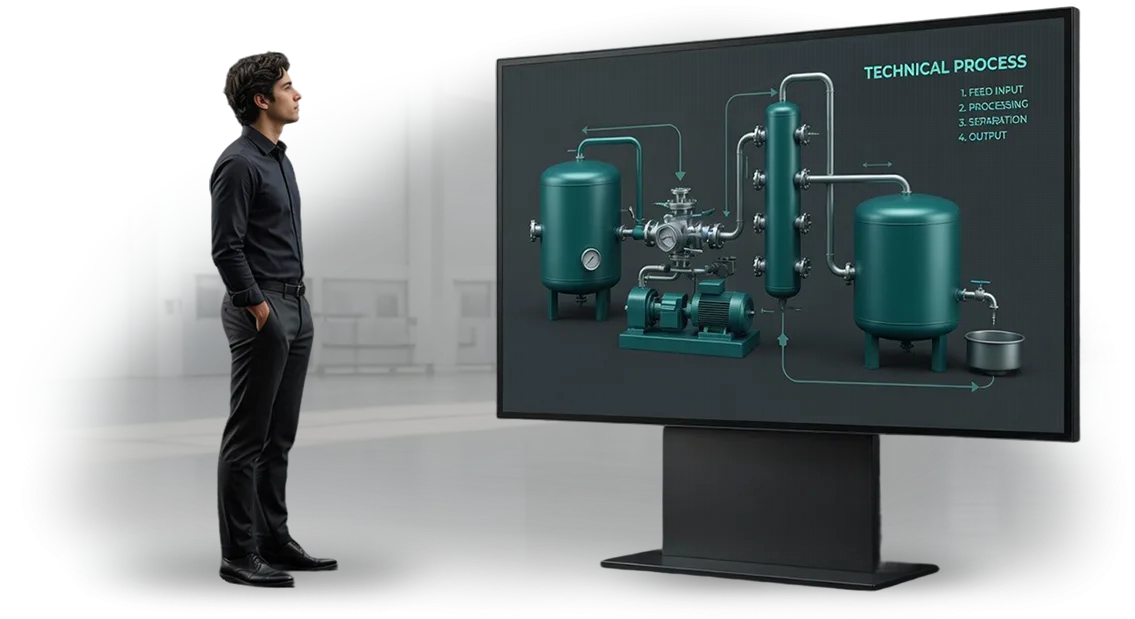
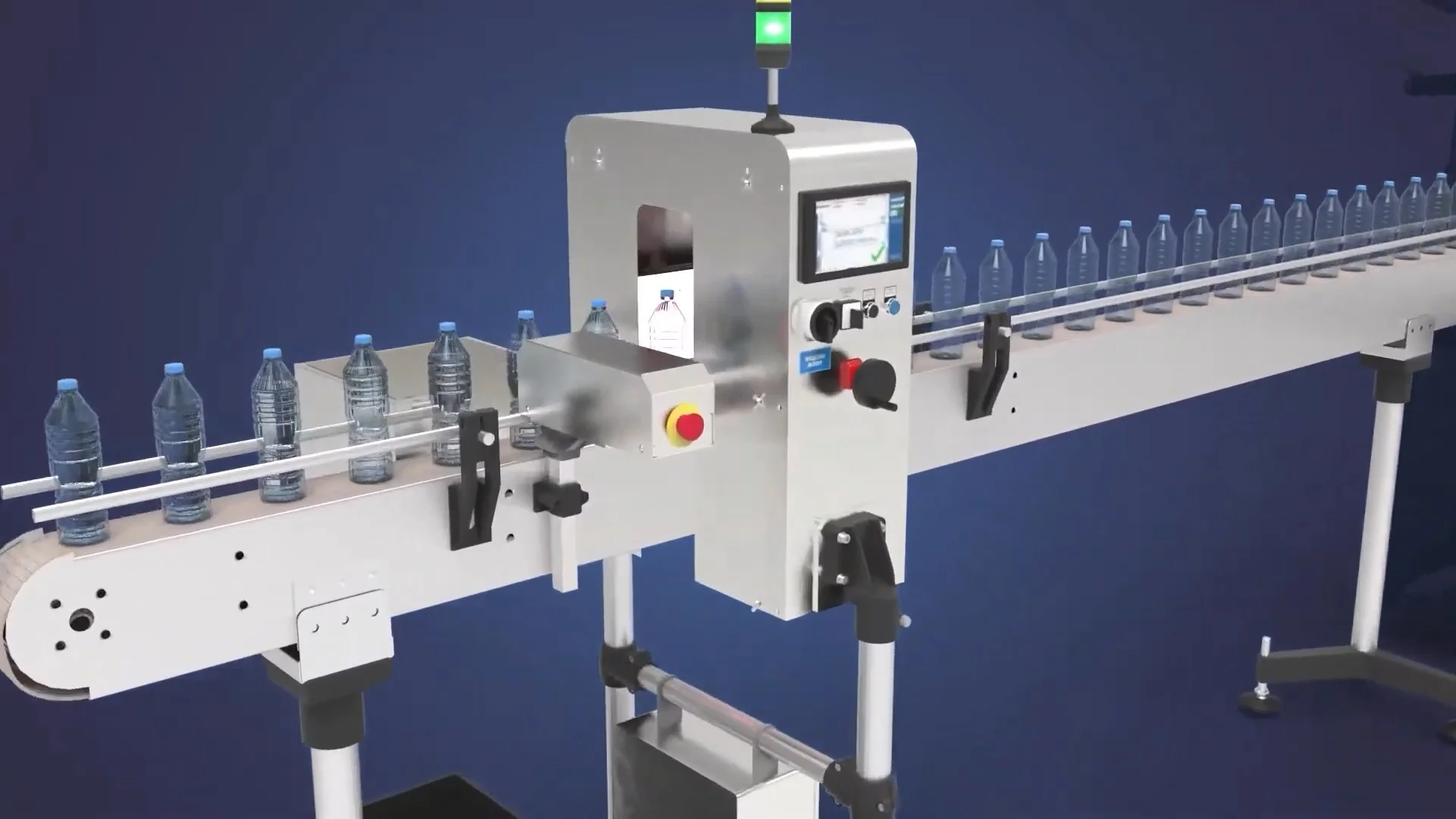
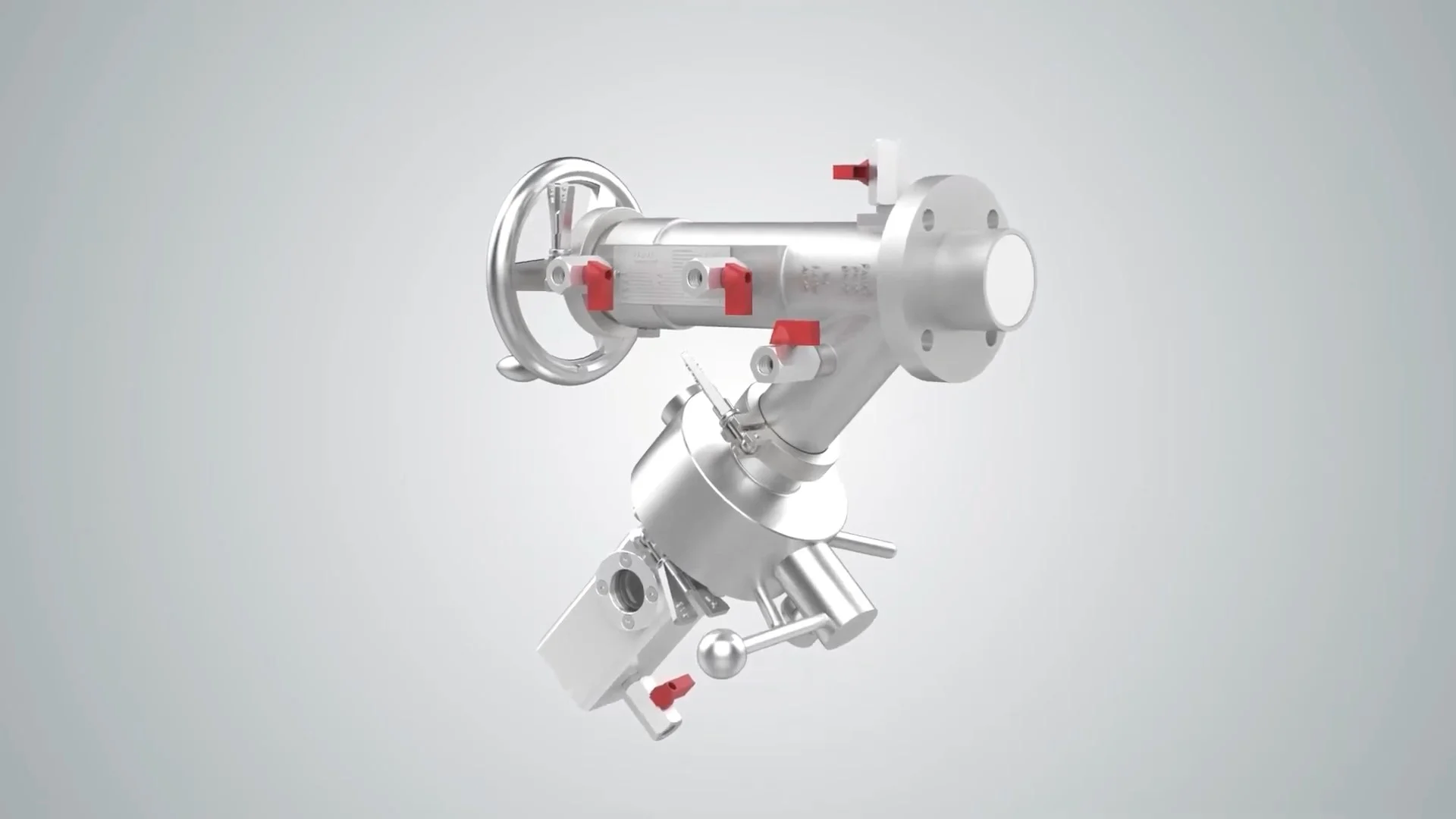
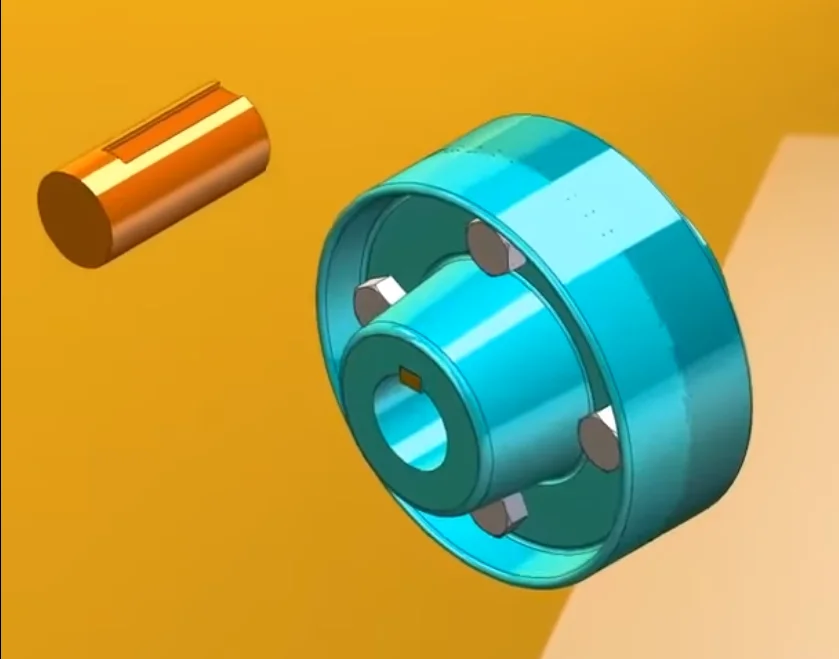
Choosing a format is not a matter of taste but a matter of effectiveness. For production operations, 3D animation works well: it shows the equipment without stopping machinery or putting a newcomer at risk.
For software, a screen recording with a voiceover is enough; for regulations, concise infographics work best.
We help choose the format at the start, include it in the estimate, and produce a turnkey video. As a result, employees get up to speed faster, ask fewer questions, and make fewer mistakes.
The finished corporate video stays in the company and trains every new employee without a mentor's involvement.
How We Create Video Instructions: Stages from Brief to Launch
We've structured the process so you can see results at every stage and influence the final product. No "black boxes": clear deadlines, understandable versions, and a dedicated project manager.
On average, the journey from brief to launch takes 2–4 weeks—as on the project for StroyKomplekt, where we met the four-week deadline and adapted the videos to their training standards.
- Brief and task immersion — we analyze who the instruction is for, what actions need to be shown, and which employee errors most often block work.
- Script and plan — we describe every shot in words, you approve the logic, we remove unnecessary steps.
- Storyboard approval — we show how the video will look: stills, text, accents. Revisions are made before production—this saves the budget.
- Production — we create all scenes, add voiceover and subtitles.
- Interim review — we send a working version, you comment in a convenient format, we make changes.
- Launch and integration — we deliver files in formats for the learning management system, corporate portal, and internal messengers.
- Post-launch support — we update instructions when processes or regulations change, so videos don't become outdated.
Thus you get not a "raw video" but a ready-made tool for quickly onboarding newcomers. Transparent stages and checkpoints are our guarantee that the project will be delivered on time and won't require rework six months later.
What's Included in the Delivery: A Complete Training Package
After the work is completed, you receive not just finished videos but a full package for systematic training. It contains everything you need to launch the program with your own team and quickly bring new employees up to speed.
- Final videos — each video instruction is ready for publication in your learning management system or on the corporate portal, in the required formats and with subtitles.
- Source materials — all scenes, graphics, audio tracks, and used assets. If a regulation changes, you can make edits without reshooting, and we'll help with final editing as a separate task.
- Scripts and text transcripts — each video comes with scene-by-scene text. This simplifies checking compliance with internal standards and lets you create text instructions for employees.
- Video update guide — a step-by-step guide on how to edit content yourself, change voiceover, add new blocks, and update video versions.
- Methodological recommendations — how to integrate the videos into the onboarding process, what tests or assignments to give after viewing, and how to track employee progress.
- Technical documentation — player setup, access rights for different roles, and integration with your platform so videos open directly for the right specialists.
Such a package covers the entire training need: from the first day of onboarding to scheduled professional development. All source files and documentation remain with you—you're not dependent on us in day-to-day work and can grow the program using the videos as a foundation.
Case Study: How 3D Visualization Cut Training Time by 40%
A major retail chain (TechnoMarket) needed to train 4,000 employees on new standards for handling merchandise and serving customers. The old videos were 20 minutes long, employees stopped halfway, and two weeks later they forgot key operations.
Every new batch of staff meant hours of downtime—until an employee mastered the instruction, they couldn't go out on the floor.
Instead of another lecture, we proposed 3D visualization: each process is broken into short interactive scenes—how to set up a display, how to serve a customer, where merchandise is stored.
Employees see the result of their actions immediately, and errors are highlighted on screen and explained right away. Training became game-like, so it was completed more willingly.
After launch, training time dropped by 40%: from three weeks to two, and the share of employees who passed the test on the first attempt rose from 62% to 91%.
The department head noted that new employees start working fully five days earlier—this saves cost calculated after audit per year on payroll. In addition, we reduced the burden on mentors: they no longer have to explain the same operation ten times. According to the client's calculations, the project paid for itself in three months.
The case study became the basis for three more training programs in the same chain—from safety procedures to working with the cash register. We continue to support the courses: we update scenes when regulations change, so the content doesn't become outdated.
The client came back to us just two months after the first version launched. We completed all the work in six weeks without disrupting operational activity.
How to Select a Training Video Format for Your Task?
The choice of format depends not on technical trends but on what exactly employees need to remember and how they'll apply the knowledge in practice.
For simple operations, a short screen recording is enough; for complex processes, 3D animations and interactive scenarios are better.
So first we clarify where an employee will watch the instruction—in the office, on the shop floor, or on a phone—and what level of detail they need.
Specific requirements are most often related to safety, regulations, or work with expensive equipment. In such cases, the instruction must be clear from the first viewing, and key steps must be visually highlighted to prevent mistakes.
We match the format to your scenario: from short 1-2 minute videos to a full training course with knowledge checks.
During a consultation, we analyze your audience, the complexity of the topic, and distribution channels, and then propose the optimal solution.
It's important that you pay only for the level of graphics and detail that truly affects the result—without overpaying for unnecessary visuals. This approach helps our clients onboard new employees faster and reduce the number of errors in critical tasks.
If you're not sure which format fits your company, come to a consultation. We'll analyze your task, show examples of similar solutions, and suggest an option that will be convenient for you and your employees. It will take no more than an hour and comes with no obligation.
Frequently Asked Questions About Developing Corporate Video Instructions
We understand that before ordering, you want to mitigate risks and understand how we work after project delivery. We answer the five most common questions—no marketing, just to the point.
What guarantees do you provide for the result?
We specify key quality indicators in the contract: clarity of instructions, compliance with your training standards, and absence of technical errors. If a shortcoming is found after acceptance, we fix it at our own expense within the agreed timeframe.
We're responsible for the result, not for the "process." So the guarantee is not a formality—it's our responsibility for ensuring that employees actually begin working according to the new instructions.
What if revisions are needed after delivery?
Revisions are normal, and we build them into the process. At every stage, you see intermediate versions and comment before the final version is approved.
After the first version is released, we continue supporting the material for a while: if the script "drifts" or employees raise new questions, we promptly update the videos within the agreed scope.
Who is responsible for updating videos if a regulation changes?
We understand that business processes change, and video instructions must stay aligned. We offer two options: you update the materials yourself using our simple toolkit, or you order the update from us. The second option is more convenient when changes are large-scale.
In that case, we quickly reshoot the changed scenes without touching what works—you get an up-to-date package without paying for "everything at once."
How quickly will you produce the first version of the instruction?
Deadlines depend on the complexity of the script and the number of employees to be covered. For a typical 3–5 minute instruction, the first working version is ready within a few weeks. Then the approval cycle kicks in: you provide feedback, we make revisions. The faster you respond, the sooner you get the final videos and launch the training.
Do you help only with the videos, or also with implementation?
We support you all the way to the result: we don't just hand over videos—we help organize viewing for employees, collect feedback, and assess how much learning speed has improved. If needed, we adapt instructions for different roles and skill levels.
In the end, you get not "files on a disk" but a working tool that actually reduces errors and speeds up onboarding.
Order Video Instruction Development: What You Get
You get a result, not a process: after you reach out, we assign a manager, capture the task in a short brief, and show a work plan with dates.
The first drafts of the script and visual style are ready within a few days—you immediately see the direction and make edits without extra approvals.
After the plan is approved, your next steps are script approval, production, and editing. Each stage runs on a transparent schedule: filming or graphics, voiceover, subtitles.
The finished video is adapted to your formats: for the internal portal, messengers, and in-person training.
What you get immediately after ordering:
- A personal manager and a direct line of communication with the team.
- A brief that captures the goals, deadlines, and video format.
- An estimate with no hidden payments and stage-by-stage payment.
- A script and storyboard for approval before production begins.
- Intermediate versions of the video—track progress at your own pace.
- A final package: source files, finished files in the required resolutions, and usage recommendations.
Bonuses that stay with you: a training guide on integrating the videos into the onboarding program and a template for assessing employee knowledge after viewing. One month after launch, we check back to collect feedback and, if necessary, offer small revisions free of charge.
All you need to do now is leave a request—we'll get in touch within 15 minutes, clarify the details, and send a plan with the exact cost. It's free and without obligation.