

3D Video Instructions: How to Cut Training Time and Reduce Errors
Every new employee starts training with paper instructions and the mentor's words. But text is remembered worst of all: regulations are re-read several times, and the real production process still looks different than on a diagram.
As a result, mistakes repeat, adaptation timelines stretch out, and experienced specialists spend time on endless explanations instead of their own work.
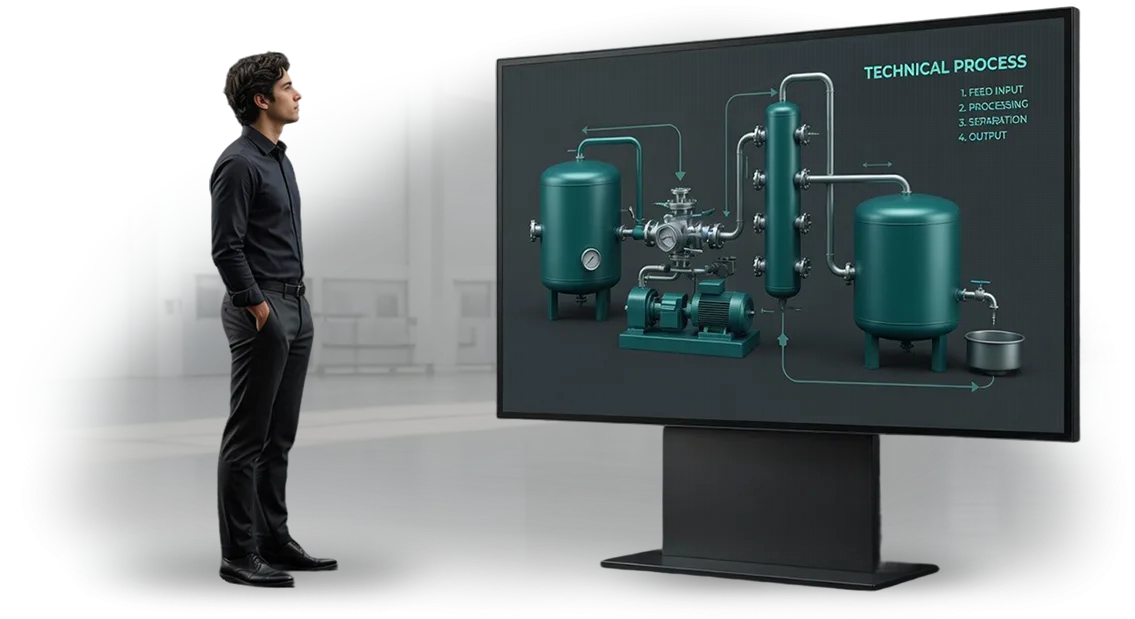
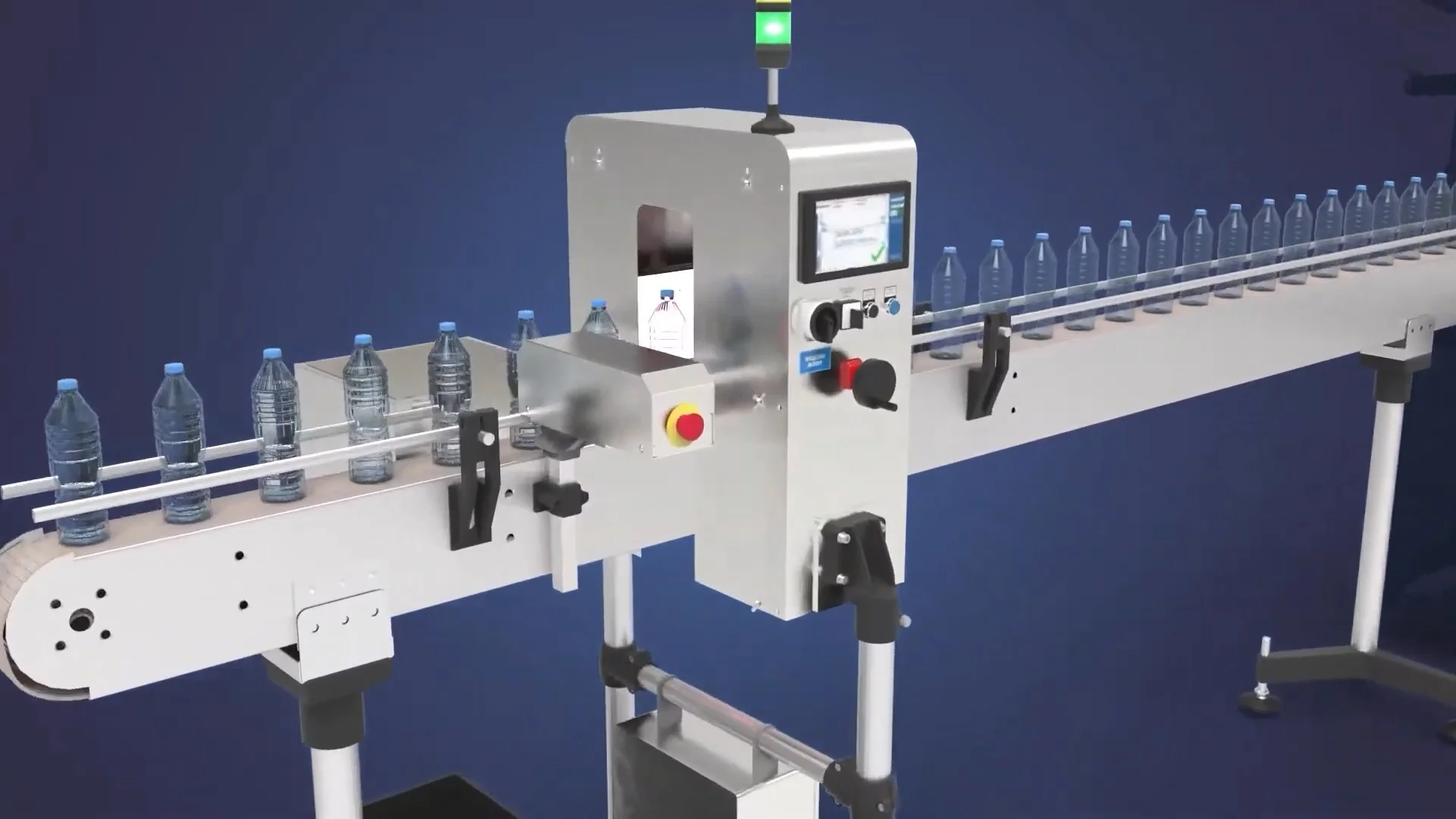
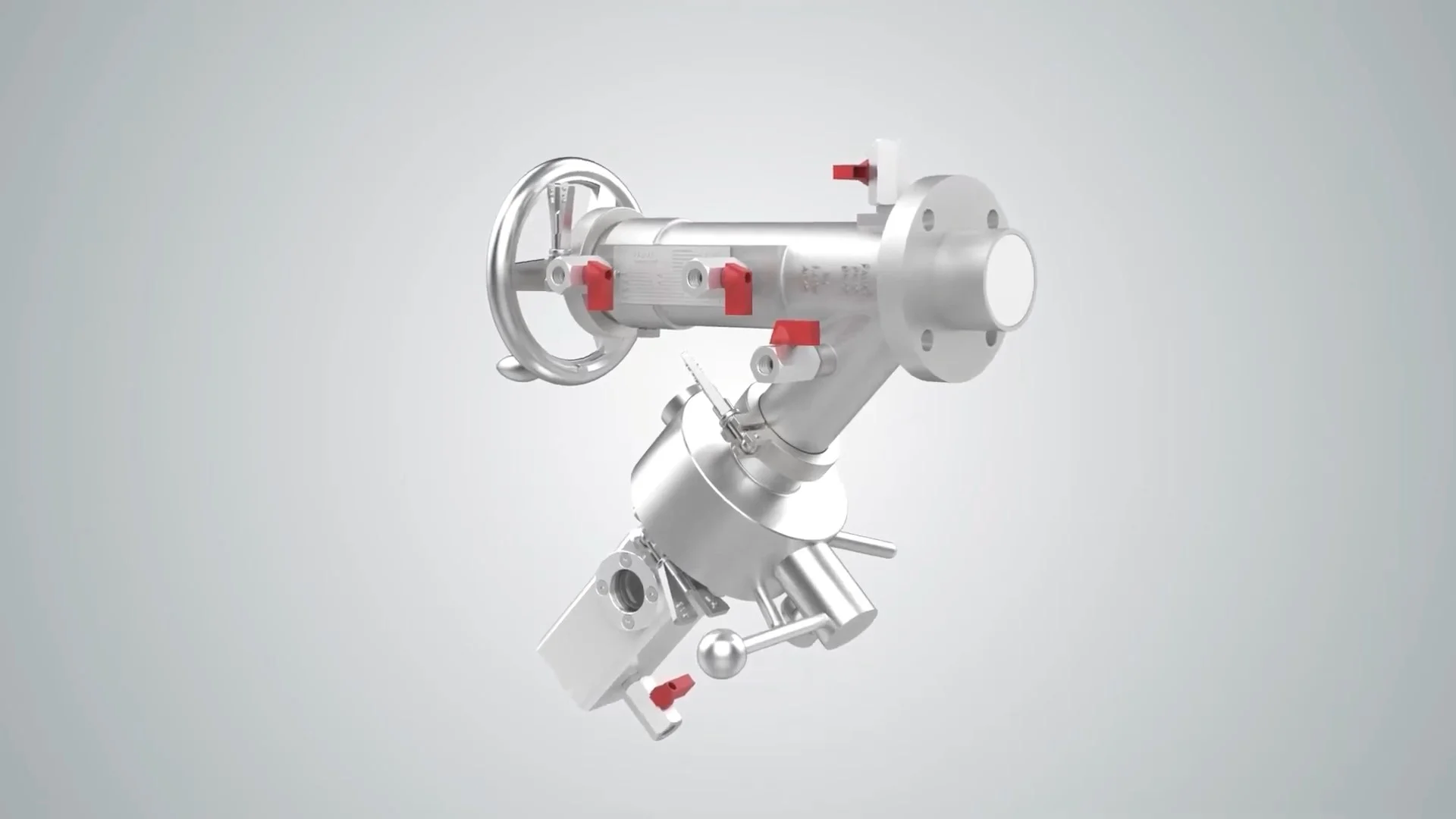
That is why companies increasingly switch to video-based staff training. 3D video instructions for employees show each step from the right angle: how to hold a tool correctly, in what order to perform operations, and what typical mistakes look like.
A newcomer sees the entire process rather than a distorted text summary—so information is absorbed faster and stays in memory longer.
The video format directly affects the reduction of production errors. When an employee knows exactly the sequence of actions, the number of defective operations drops almost from the first shift.
New employee adaptation goes more smoothly: a person starts working independently faster and distracts colleagues with fewer questions.
We create 3D video instructions for your production's key operations. We write scenarios together with technologists, choose the right angles, and align the visuals with your regulations.
As a result, you get a ready-made training tool that is easy to update and use both for hiring and for upskilling existing specialists.
What a Modern Training Video Gives Your Business
Classic employee training means dozens of hours of lectures, lengthy instructions, and scattered cheat sheets. A newcomer spends weeks getting into processes, and the cost of a mistake in production or service can be high.
Modern training videos for business turn knowledge into clear 3D scenarios that any employee can understand from the first viewing.
Fast Ramp-Up to Work Rhythm
People perceive visual information faster than text. A 3D video shows the sequence of actions from the first to the last step, so a new employee reaches work rhythm in days rather than weeks.
Fewer Errors and Defects
Everyone reads text instructions in their own way, while 3D animation eliminates ambiguity. An employee sees the correct sequence of operations and repeats it without deviations—the defect rate falls and work quality rises.
Uniform Training Standard
A video instruction reinforces a single standard: every employee works according to the same model. This is especially important in chains and manufacturing, where consistency determines the outcome. The brand becomes predictable and reliable in the eyes of customers.
Brand Recognition
High-quality 3D animation shapes a modern employer image. Such videos are pleasant to share; they strengthen the company's positioning and attract new specialists.
Training videos for business pay off through fast staff ramp-up and fewer errors. For example, for TechnoProm we created a series of equipment setup videos—newcomer adaptation time halved and the number of breakdowns decreased by a third.
The benefits of 3D animation are clear: it accelerates training, standardizes processes, and strengthens the brand.
What Kinds of 3D Video Instructions Exist for Production Tasks
Different production tasks require different learning depths. An operator needs a quick answer to “how to correctly perform this operation,” while a newcomer needs a full course from scratch.
That's why we create instructions in several formats—each one covers its own business task: from a short onboarding to standardization of complex service repairs.
Below are the 3D video instruction formats most often requested for production staff training.
| Format | For Whom | What It Gives the Client |
|---|---|---|
| Short operation breakdowns | Operators, setup technicians, warehouse staff | Fast onboarding: the employee watches for 1-2 minutes and immediately performs the task without errors |
| Full training course for newcomers | New employees, trainees | Systematic training from scratch: less mentor time, stable knowledge across the whole shift |
| Service regulation | Service engineers, repair teams | A single service and repair standard—fewer downtime events and repeat calls |
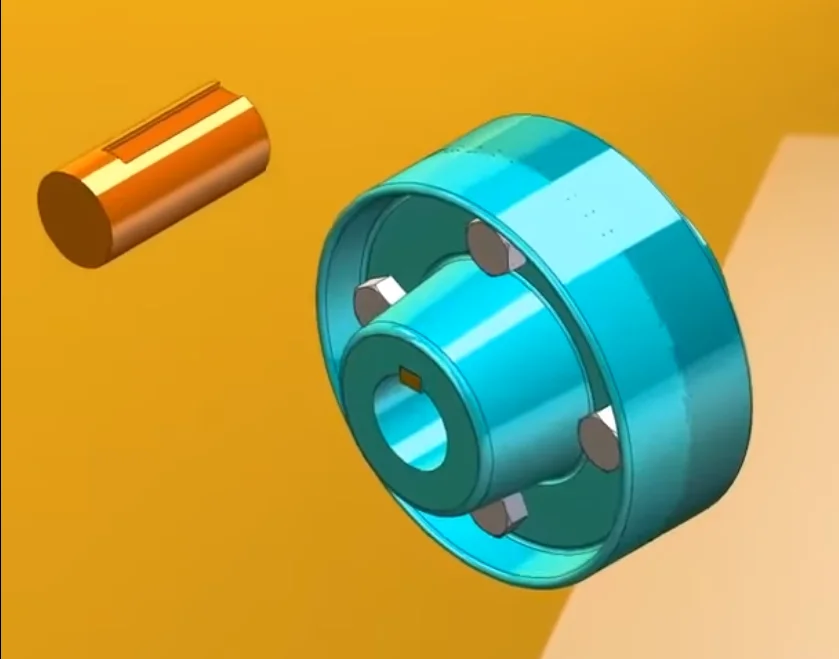
| 3D assembly of a unit or product | Technologists, fitters, quality department | A visual assembly benchmark without reading drawings—lower defect rate in work |
Each format is built around a real work task, not a “pretty picture.” We break down the technological process, highlight key operations, and show them in three dimensions, exactly as they happen in reality.
Therefore such a video instruction works as a training element rather than a promotional video—employees remember the sequence of actions faster and make fewer mistakes.
How Video Instruction Creation Works: 6 Steps from Brief to Launch
We structure the work so you don't have to dive into technical details. You get a clear project with transparent stages, deadlines, and approval points—from the first brief to the finished video that can be immediately uploaded to your training system.
- Brief and task. We record exactly what operation an employee must master, who the audience is, and what result you expect. At this stage we determine the video format and timeline.
- Script for the 3D video. Our engineers break the process down step by step and write the script in plain language—without complex terms. You receive text that is easy to check and approve.
- Layout approval. We show key frames of the future video: what the equipment, interface, or workstation will look like. You see the style and make edits before production begins.
- 3D animation and filming. Specialists assemble the video: they model the environment, refine movements and details. If real objects need to be filmed, we arrange that on professional equipment.
- Voiceover and editing. We add narrator text, subtitles, and emphasis on important actions. The video becomes clear even to new employees.
- Launch and support. We hand over the final file in the required format, help integrate it into your learning system, and make edits after the first reviews if needed.
At every stage you receive an intermediate result and can influence the progress. This prevents situations where the outcome is “not what we expected”—the final video meets expectations, and the process takes from a few days to a couple of weeks depending on complexity.
What Is Included in the Delivery: A Complete Package for the Training Department
Ordinary video instructions become a problem when equipment or regulations change: reshooting is expensive, and using an outdated video is dangerous.
That's why the delivery is designed so the training department can work with the materials independently—without new investments or lengthy approvals.
- Script and methodological note — video logic, checkpoints, analysis of typical mistakes, and recommendations for the instructor. These materials make it easy to create post-viewing tests.
- Source 3D models — when equipment is modernized, you update individual frames instead of reshooting the entire instruction. This saves budget and time.
- Professional voiceover — a narrator with polished speech and a calm tone. The instruction sounds confident, and employees perceive it as an official regulation rather than an amateur video.
- Subtitles in Russian and additional languages — convenient for noisy workshops, for hearing-impaired workers, and for branches where another language is spoken. The training department doesn't need to translate or edit anything.
- Final video in the required formats — for a learning management system, internal portal, workshop TVs, or offline sessions. All versions are ready to publish without transcoding.
- Usage rights — a perpetual license for all content: video, models, graphics. You can use the materials inside the company, distribute, and adapt them without approvals or royalties.
- Update recommendations — a simple guide: how to replace an outdated block, add a new process, and reassemble the video with your own team.
In summary: the training department gets a ready-made educational product, not a “raw” file. You can change details, adapt the instruction to new regulations, and keep employees' knowledge up to date without budgeting for a reshoot.
Case Study: A Manufacturing Company Cut Errors by 40%
The manufacturing company “Vektor-Pribor” produces complex equipment where an assembly error leads to expensive defects.
New employees took a long time to get up to speed, mentors were distracted from their own tasks, and work quality depended on each specialist's personal experience. Only a few people read text regulations, and in-person training took weeks.
We proposed replacing part of the instructions with 3D video instructions. Instead of abstract diagrams and photos, the employee sees the exact sequence of operations from the right angle, with emphasis on critical moments.
This format is clear to a newcomer from day one and doesn't require an experienced mentor to be present.
Two months after launch, the number of assembly errors fell by 40%. At the same time, onboarding time decreased: newcomers began working independently two weeks earlier.
The workshop supervisor noted that the video instructions became the main working reference for the whole team, not just a one-time training material.
The effect turned out to be systemic: the company revised its own quality standards and ordered a similar set of videos for another production area.
We received a repeat order—the main indicator that 3D video instructions bring measurable value to a business, not just a “nice presentation.”
How to Choose the Right Training Video Format?
When deciding how to choose a format, don't look for a one-size-fits-all solution: what works well for introducing a new accounting system will fail when training for work on complex equipment.
So selecting a video instruction starts not with the video length, but with the question of what task the training solves and what consequences an employee's mistake has.
If the task is frequent and simple—placing an order, filling out a report, or working in a standard program—a short 1-2 minute video is enough. It quickly brings a newcomer up to speed and allows reviewing the algorithm right during work.
Such a task-specific training video saves mentors' time and reduces the number of errors already in the first week.
For rare and complex operations—starting an aggregate unit, setting up a machine, handling an abnormal situation—a complete video instruction is needed with an explanation of each step and emphasis on typical mistakes.
It can be completed at your own pace, revisited at difficult fragments, and used as a reference. Here speed isn't important; completeness and clarity are.
When it comes to systematic training for an entire department or an introductory course for newcomers, a series of short lessons works best: each module covers one skill and ends with a comprehension check.
This format is easy to integrate into an adaptation plan and to track which topics cause difficulties.
In practice, formats rarely compete—they complement each other. We help you choose a structure for your task: we analyze processes, audience, and error frequency, then suggest a format that will deliver results without overpaying for unnecessary features. As a rule, this means one or two formats, not "everything at once."
Common Concerns: What If the Video Instruction Becomes Outdated or Breaks?
The fear that “the instruction will become outdated” is usually related to the fact that reshooting old videos is long, expensive, and painful. But we design content to live alongside your production, not die after the first regulation change.
We build 3D video instructions from separate semantic blocks. If one machine component or the sequence of steps changes, we replace a fragment rather than reshooting the whole video.
The employee still sees a complete picture, and you get an up-to-date instruction in just a few days without an extra budget.
What if the technological process changes?
Just send us the new regulation. We will recalculate the 3D scene, reshoot the needed fragment, and edit the updated version. The rest of the video instruction remains unchanged—that's how your time and money are saved.
How quickly do you update videos?
The speed depends on the scope of changes. It usually takes several days: from making changes to the 3D model to final rendering and editing. Urgent edits are handled on a priority basis.
What guarantees do you provide for the result?
We support the project after launch and fix errors for free if they arise due to our fault—for example, a discrepancy with the regulation or visual artifacts. Technical support is available while you work with the instruction.
What if the server or system where the video is stored fails?
We hand over the source files to your ownership. You can store the instructions on any corporate resource, in the cloud, or on a secure disk—you will always have a working copy that does not depend on us.
Ultimately, you get not a one-off video but a long-term training tool. The instruction stays accurate when standards change and keeps working when equipment is updated. And your employees always follow the current process.Let's Discuss Your Task: Get a Quote and Plan in 2 Days
Training video instructions for employees are not “just another video,” but a tool that shortens onboarding time and reduces the number of errors.
But before ordering a 3D video instruction, it's important to understand: how much it costs, how it will fit into your processes, and what result you will get. That's exactly what we propose to discuss.
Leave a request—and within 2 days we will prepare a video cost calculation, a training project plan, and show you specific solution examples for your production task. No obligations and no unnecessary presentations: only what you need to make a decision.
What you will receive after contacting us:
- Video cost calculation for your scenario: format, duration, detail level—without hidden surcharges.
- Training project plan with stages, deadlines, and checkpoints—you will understand what is happening at every step.
- Format selection for your employees: if you need to show fine assembly or hidden mechanisms, we will suggest 3D animation; if a general overview is enough, we will simplify it without losing value.
- Examples of similar solutions from your industry: you will see what finished instructions look like and how they are integrated into training.
- Integration recommendations: how to use video instructions in an existing training system—from onboarding to re-certification.
- Direct consultation on video instructions—we will answer questions about timelines, content rights, and post-launch revisions.
We work remotely, so you don't need to be tied to a location. Our engineers handle the entire cycle: from script to final render, and you get a finished result that can be integrated into an LMS or shown on the production floor.
Fill out the form—in the reply email we will send you brief questions (it will take 10 minutes) and schedule a short call to discuss the details. In just 2 days, the calculation and plan will be on your desk—all that's left is to make a decision.