

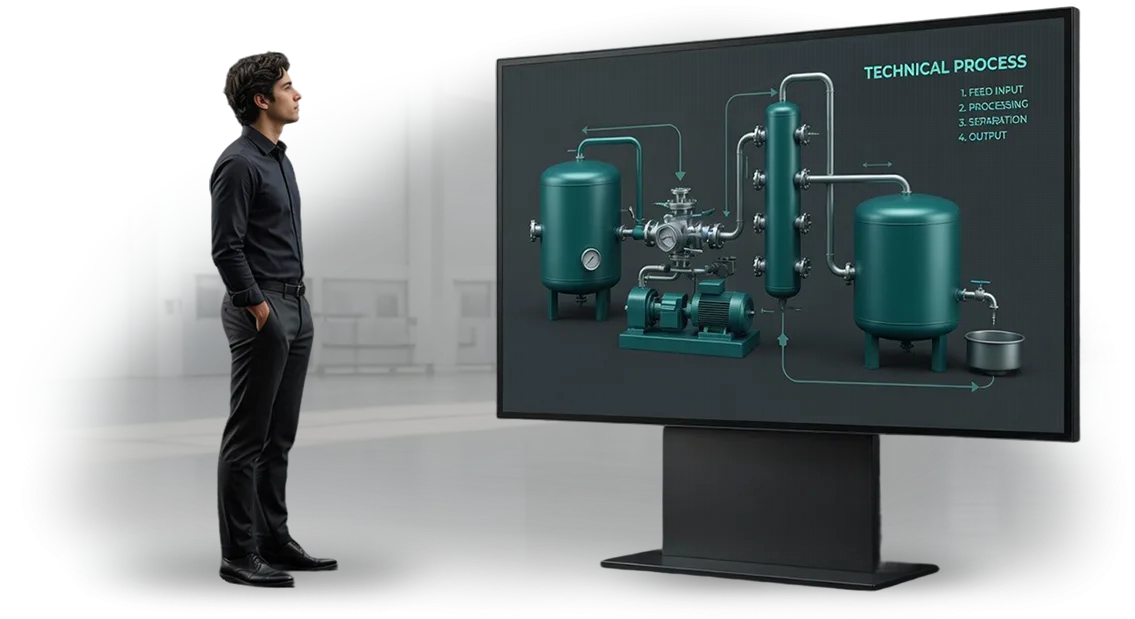
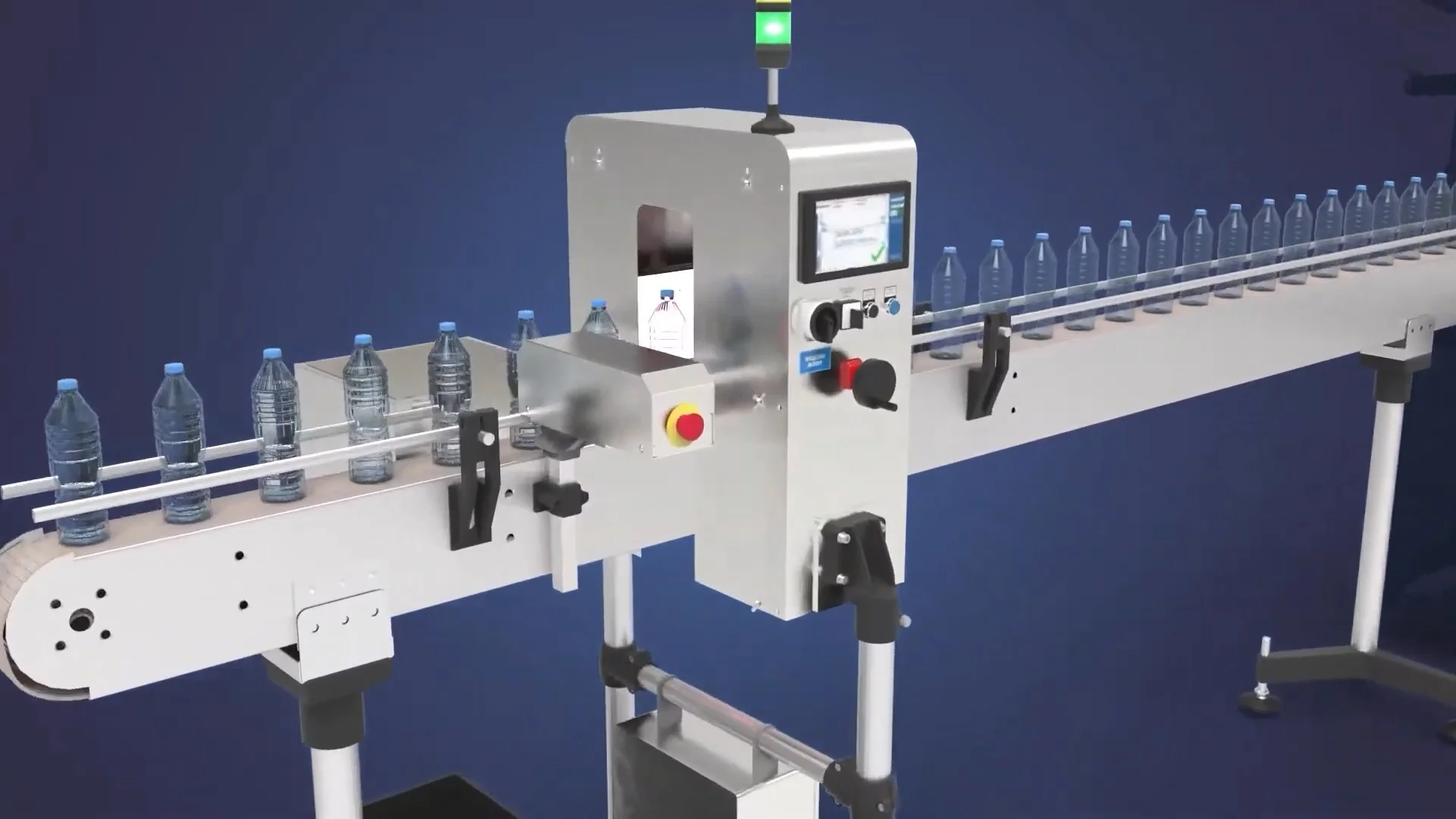
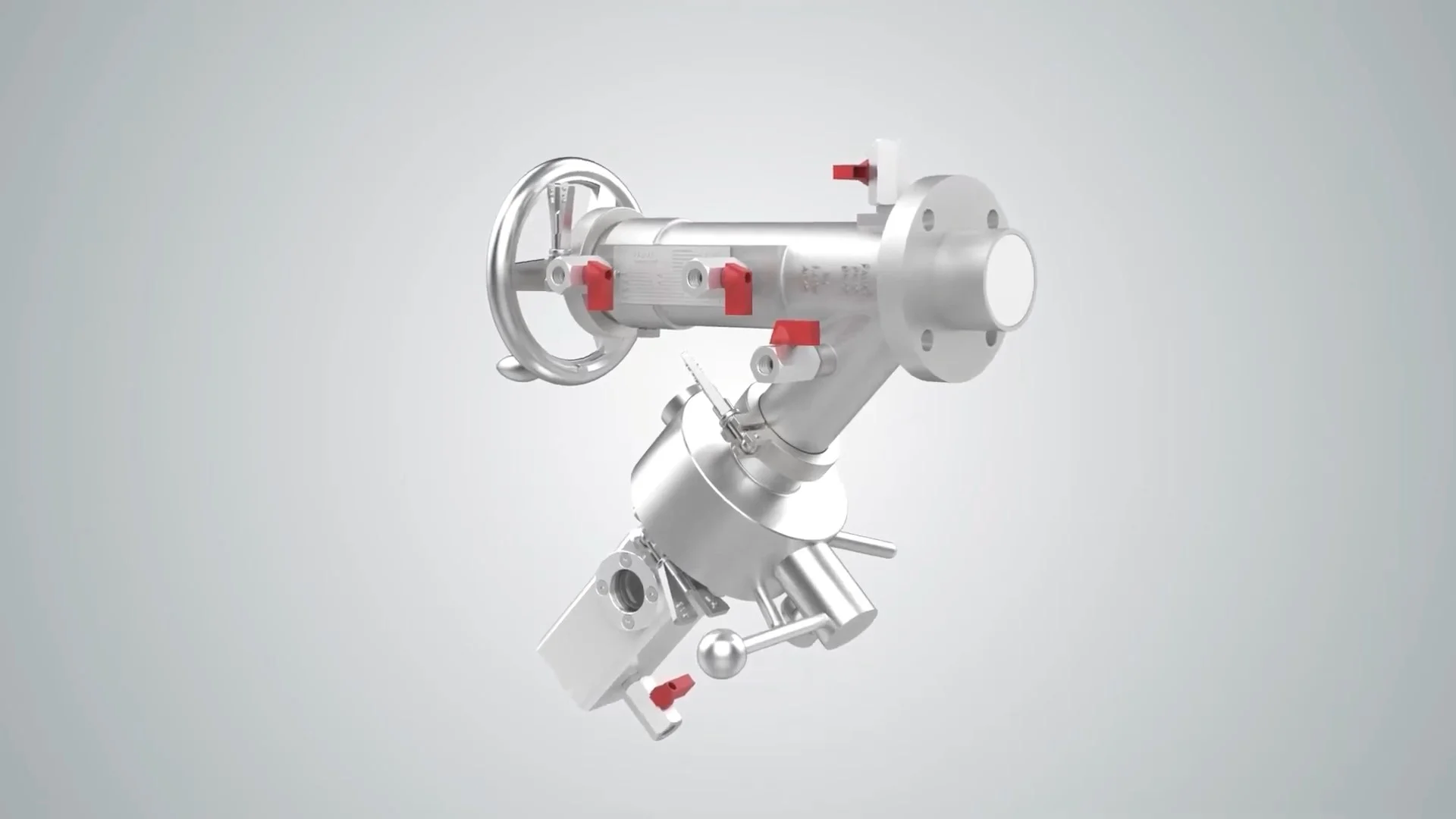
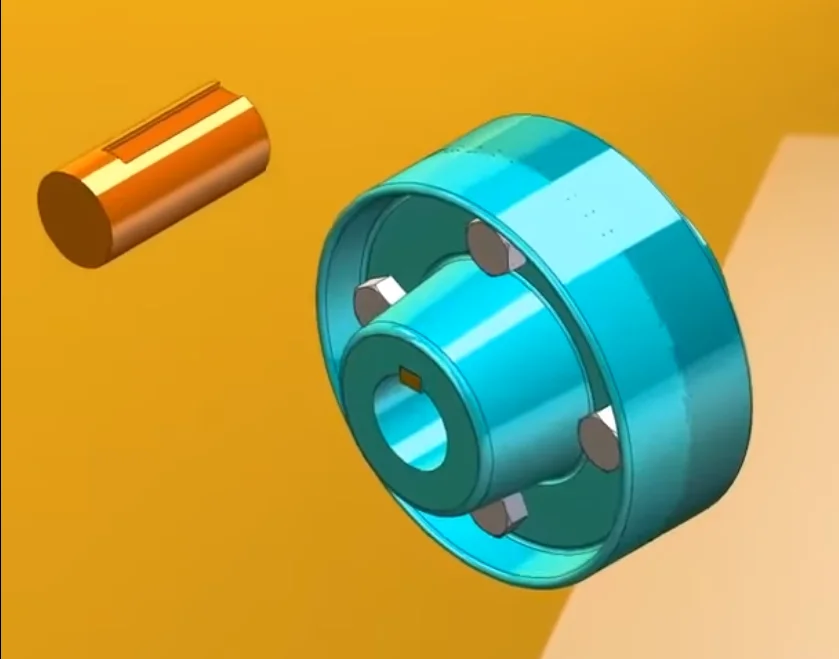
Safety and Equipment CGI: How to Train Employees Without Risk
Every occupational safety briefing turns into a formality: the employee listens to a lecture, signs the log, and within a week forgets half the rules. This is especially dangerous when it comes to working with equipment — an error costs not only money but also health.
Traditional posters and presentations fail to show the dynamics of a process or demonstrate the consequences of violations, so they do not build lasting safe-behavior skills.
CGI animation solves this problem. Instead of abstract instructions, employees get realistic scenarios: they see exactly how an emergency develops, where the risk arises, and which action helps avoid it.
All dangerous moments are shown visually, without any real risk to people or equipment, so employee training becomes safe and effective.
Video instructions based on CGI animation make it possible to create a single training standard for all departments.
Even a new employee with no experience understands the sequence of operations faster, while the manager gains confidence that everyone has received equally high-quality training. This reduces injuries, cuts downtime caused by breakdowns, and lowers the cost of repeated briefings.
At our team we develop CGI video instructions tailored to your production processes: we model your equipment, break down typical errors, and package them into a clear scenario.
The client receives a ready-made training material that can be used for onboarding briefings, scheduled checks, and work authorization. Workplace safety stops being a set of formal rules — it becomes visual and memorable.
What Benefits Does Business Get from Occupational Safety Video Instructions?
Every new employee goes through an initial safety briefing — often hours of reading regulations, after which less than half is remembered. Within a week the knowledge fades, and the business incurs hidden losses: mistakes, minor injuries, and inspector fines.
Video instructions solve the problem systematically: a video recorded once delivers the same knowledge to everyone. Briefing time is cut by 2–3 times — instead of a monologue, the employee sees real scenarios on the equipment. Knowledge retention improves because visual examples work better than text.
Unified knowledge reduces risk: when everyone follows a single standard, safety violations become fewer. A culture of safety becomes part of the corporate style, protecting the business from accidents and the associated reputational and financial losses.
Video instructions save budget: a video can be used unlimited times — for new employees, repeated briefings, and branch training. There is no need to pay an instructor and rent a room every time; you simply update the material when regulations change.
At our team we produce such video instructions with professional equipment, so the result looks polished and earns staff trust.
For over 10 years, we have shown safe processes in production and offices without unnecessary filler — you get a ready-made tool that works for training every day.
Table of Video Instruction Formats for Employee Training
Different training tasks require different formats: occupational safety is one thing, equipment assembly is another. If you take a universal template, employees either miss the key points or receive unnecessary information.
That is why we organized typical scenarios and created a table to make it easy to choose the right CGI format.
| CGI Video Instruction Format | Target Audience | What It Gives the Client |
|---|---|---|
| Full occupational safety course | New employees, production workers | The employee remembers the safe operational sequence from the first viewing; injuries and fines decrease; onboarding briefing time is reduced |
| Modular videos on equipment assembly and setup | Technical staff, engineers | Visual display of components and step-by-step actions; fewer assembly errors; faster onboarding for new specialists |
| Series of short videos on regulations and standards | All personnel | Unified work rules across all departments; instructions are easy to update when changes occur |
| Interactive instruction with knowledge check | Employees after training | The manager sees the actual level of material comprehension; knowledge gaps are closed precisely |
Formats can be easily combined and expanded. For example, you can create one general safety course and then separate videos for each workshop covering specific equipment.
This gives you a coherent training system that grows with your business and does not require reshooting all materials when processes change.
How Video Instruction Development Works: Stages and Timelines
Corporate video instructions on safety and equipment operation are not just videos, but a working tool that reduces errors and training time. That is why the development process is fully transparent: you see what happens at every stage and approve key decisions. This eliminates surprises and gives you a video that truly solves your problem.
Development and Approval Stages
- Task review and audit — we get familiar with your specifics, equipment, and current safety regulations.
- Script and storyboard — we prepare the text and frame-by-frame plan and align it with you to lock in the vision.
- Approval and revisions — you add comments, and we refine the script to its final version.
- Video production — we shoot or create CGI graphics according to the approved storyboard using professional equipment.
- Editing and voiceover — we assemble the video, adding narration, subtitles, and visual emphasis on key actions.
- Final approval and implementation — you approve the finished video, receive files in all required formats, and get help embedding it into your learning management system.
Timelines depend on the complexity of the script and the scope of shooting. A basic video typically takes 2–3 weeks including all approvals. Before the start, you receive a calendar plan with dates and control points — no unexpected delays.
After launch, we do not disappear: we answer questions and help update the video if regulations change. You can always reach out for further adjustments.
What Is Included in Video Instruction Delivery: The Complete Package
Employee training often hits the same wall: instructions are written "just for show," while real actions when working with equipment are left to experience.
A complete video instruction package closes this gap — you get not just individual videos, but a systematic result that can be integrated into your training program as early as tomorrow.
We assemble a full turnkey delivery: from script to usage rights. No "then order editing separately" — every stage is inside a single project.
What is included in the delivery package:
- Script and storyboard. The text of every scene, the flow logic, and visual emphasis. You see in advance what the employee will learn after watching, and you can approve the material before animation begins.
- 3D process animation. Modeled equipment operations and actions in emergency situations — complex scenarios become clear and understandable without an instructor present.
- Professional editing. A finished video with narration, subtitles, and highlights of key steps. The employee does not get distracted by anything extra and remembers what matters.
- Versions for different formats. A full lesson for your LMS, short videos for pre-shift review, and clips for messengers. One production covers all points of contact with staff.
- Test questions based on the video. Knowledge checks immediately after viewing — you see real training results, not just formal views.
- Usage rights. You receive rights to the content with no restrictions on duration or number of employees. You can reuse the video in other departments and update it as changes arise.
The result is a transparent project with clear outcomes: you know what is included in the delivery, control every stage, and get a tool that genuinely reduces the number of staff errors.
Case Study: How CGI Instructions Reduced Workplace Injuries in Production
Situation and Solution
A manufacturing company approached us with a typical pain point: injuries while working with press equipment kept repeating year after year.
New employees did not read paper instructions, and verbal briefings failed to hold attention — in practice, people made mistakes in the sequence of actions. Each incident resulted in workshop downtime and missed order deadlines.
We developed a series of CGI video instructions for the three most dangerous areas. In the videos, every operator step is shown clearly: correct stance, part grip, force control — plus typical mistakes and their consequences.
Short 3–5 minute modules fit easily into pre-shift briefings: the employee watches the video without being distracted by long lectures.
Results and Repeat Order
Six months later, the measurable effect was recorded: the number of accidents dropped threefold, and equipment downtime related to injuries fell by 70%. New employee onboarding accelerated from two weeks to five days — new hires reached full shifts faster.
The Promtekhnika plant valued the result so highly that it ordered a second series of CGI instructions for an adjacent workshop.
The occupational safety department noted that employees now review the videos on their own before each shift, although they never opened the paper regulations. For business, this means predictable workshop operations and lower costs — safety becomes part of production efficiency.
How to Choose the Right Video Instruction Format for Your Task?
There is no universal video instruction format: what works perfectly for an initial safety briefing may be useless for training on assembling a complex machine.
So the right answer to "which format do I need" starts not with technology, but with your task: what exactly you want to teach the employee, which risks to eliminate, and how quickly they need to start working.
For general safety topics — such as workshop conduct rules or fire response — short modular videos of up to two or three minutes work best. They fit easily into a learning management system and do not take employees away from work for long.
But for working at height or operating complex equipment, you need detailed step-by-step instructions that show every element: how to secure the harness, which unit to tighten, in what order to start the machine.
Here CGI graphics are indispensable: they reveal internal structure and minute details that cannot be seen in regular footage or on a drawing.
The choice of format also depends on the specifics of your equipment. If you use unique or rarely seen machines and mechanisms, capturing real work processes is not always possible, but building an accurate CGI copy is entirely realistic.
The employee will see your exact components and your exact sequence of actions, not an abstract example from generic materials. This removes the main objection — "we do things differently here" — and speeds up skill development.
We always start a project by analyzing individual requirements: audience, employee skill levels, hazard zones, and typical errors. Based on that, we propose not a single video but a training program structure — which format suits which block and how the formats combine.
This gives you a set of instructions that addresses exactly your tasks: reduces injuries, accelerates onboarding, and makes training understandable for every employee, regardless of experience.
Frequently Asked Questions About Video Instructions: Guarantees and Support
When ordering video instructions, many people have doubts: what if the video is not suitable, how quickly can edits be made, and who is responsible for the final result? We answer directly so you can feel confident at every stage.
What if the video does not fit? Are there guarantees?
We work according to an approved technical specification: you approve the script and key frames before production begins. If the final video does not match the approved spec, we redo it free of charge within the agreed timeframe.
How do I submit revisions, and how long does it take?
After the project is delivered, we make free revisions based on your feedback within two weeks. We accept comments as text or directly by timecode. Reworking scenes usually takes 2–3 business days so your training process does not stop.
Can videos be updated when regulations or equipment change?
Yes. We design videos with possible changes in mind: we replace individual scenes and adjust the voiceover and text without a full reshoot. To do this, we sign a maintenance agreement and quickly adapt the video to new requirements.
Who is responsible for the result and deadlines?
Guarantees and deadlines are fixed in the contract. Your personal manager is responsible for the project: they oversee production and keep you informed.
We have dozens of corporate video instructions for various industries, and most clients return for updates — that is the best indicator of reliability.
Leave a Request for Video Instruction Development for Your Production
To get video instructions for your production, simply leave a request — we will handle the rest. You describe the task: which area, which operations need to be covered with your employees, and which safety requirements are already in place at the company.
After a short discussion, we prepare a project estimate: timelines, stages, and scope of work — with no hidden items.
The collaboration follows a transparent scheme. You participate at key points but do not waste time on technical details. Every step is clear in advance, and you see the result at each stage.
The steps look like this:
- Brief and audit — we clarify goals, audience, and briefing requirements.
- Script and storyboard — we show what each video will look like.
- Video production — shooting at your site or CGI animation of complex mechanisms.
- Editing, voiceover, and subtitles — we assemble the material into finished video instructions.
- Approval and revisions — you review drafts, we make changes.
- File delivery — we export the videos in the required format, including for your learning management system.
- Post-launch support — we update instructions if regulations change.
This way you get a ready-made package that can be used for initial briefings, when hiring new employees, and during scheduled knowledge checks. To start the project, all you need is a request — we take care of the rest.