

Employee Errors in the Automotive Industry: 3D Video Instructions
Every assembly error is not just a damaged part — it is a stopped assembly line, missed delivery deadlines, and a blow to reputation in front of the dealer.
When employee training is built on text-based regulations and verbal handovers, knowledge gets distorted, and on complex components employees waste time guessing.
In the automotive industry, the price of such uncertainty is measured not in minutes, but in millions of lost revenue.
Staff turnover on the production floor only makes the problem worse: every new specialist learns for weeks, and the first shifts are accompanied by the fear of making a mistake.
Without a clear visual standard, a worker memorizes the operation in their own way, and defects become the norm. That is why factories are moving from verbal instructions to visual scenarios that eliminate misinterpretation.
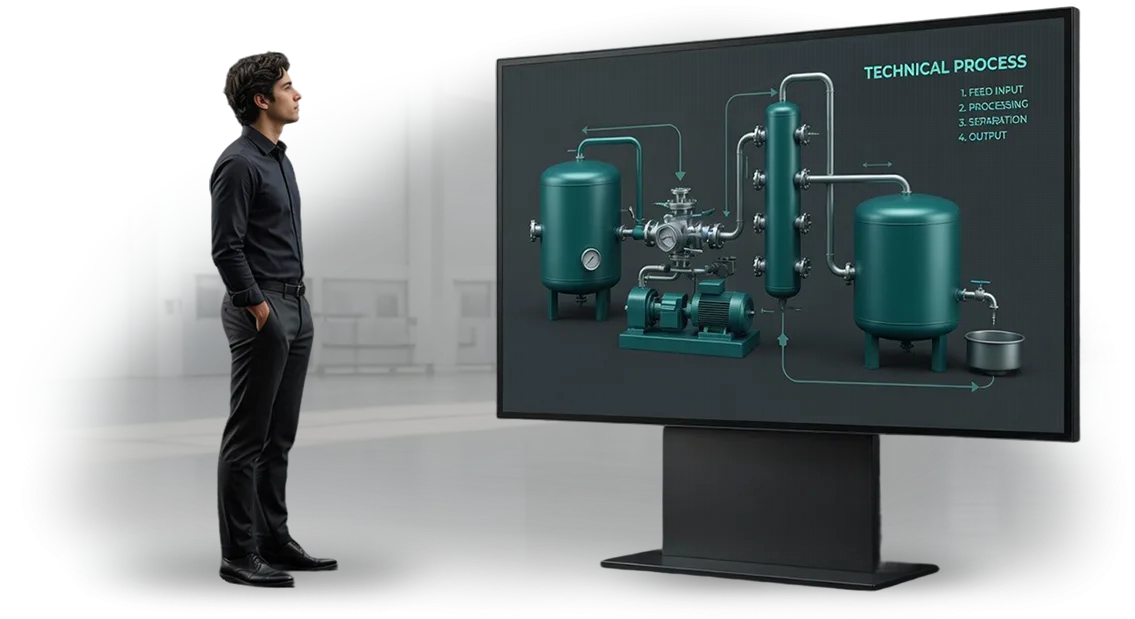
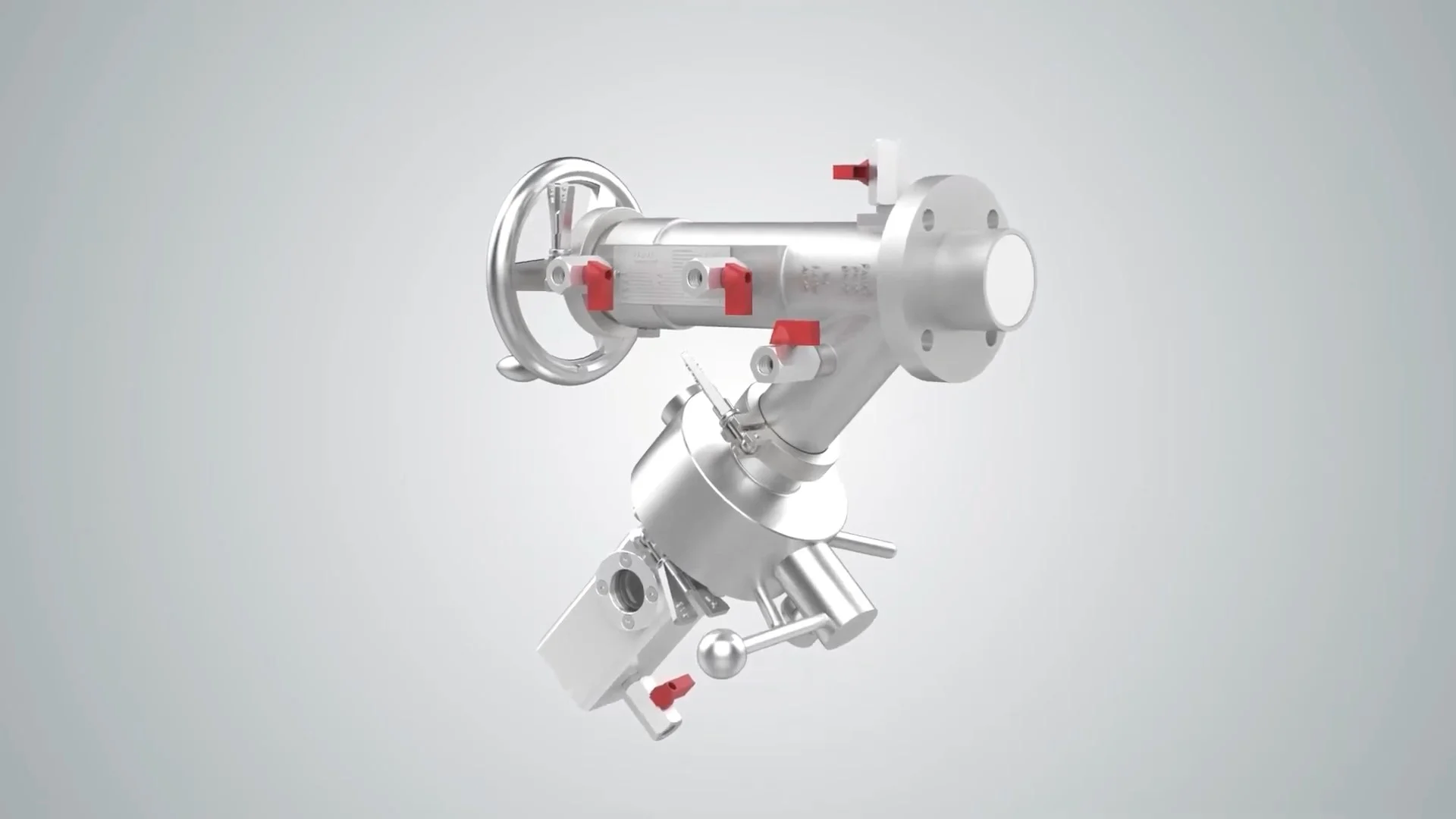
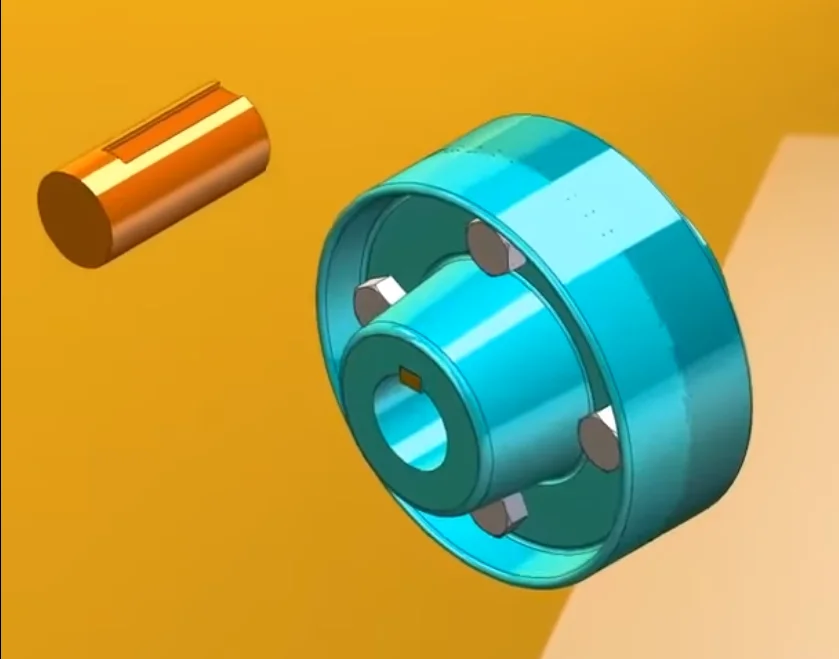
3D video instructions show every component in cross-section: sequence, torque, installation order — exactly as an experienced mentor would show, but without their physical presence.
After a single viewing, the employee understands the entire logic of the operation and repeats it accurately. For personnel training, this means a shorter onboarding period and a lower defect rate from the very first shift.
This is exactly the problem we solve: we create video standards for automotive production that become the single source of truth for the assembler. Instead of “from memory” — a clear standard available on any device right at the workstation.
Production losses become a thing of the past, because every employee sees the process exactly as the process engineer intended.
What benefits do 3D video instructions bring to production?
3D video instructions reduce the time needed to bring a new employee up to speed several times over: instead of reading regulations and long explanations, the employee immediately sees the sequence of operations and the relative position of components in a clear exploded view.
This is especially important in the automotive industry, where each shift assembles hundreds of similar components, and turnover on the line requires rapid preparation of new people.
Thanks to a unified visual presentation, the number of errors and defects decreases. When all employees see the reference sequence of actions rather than retelling it in their own words, rework and material losses are reduced.
Plus safety: the instruction shows hazardous areas and correct work techniques in advance, so there are fewer injuries and fewer stoppages for that reason.
Process standardization is another business benefit. A 3D instruction sets a single reference standard for all workshops and shifts, which means the result no longer depends on the experience of a particular mentor.
At the same time, training happens without interrupting production — the employee masters the operation by pausing the video at the needed step and immediately reinforces the skill at the workstation.
As a result, the company saves on mentor pay and reduces indirect losses from defects, and untrained staff no longer slow down output. Video instructions pay for themselves through reduced adaptation time and improved assembly quality almost from the very first launches.
Formats of 3D video instructions for the automotive industry
In the automotive sector, personnel training directly affects safety, assembly speed, and service quality.
Paper regulations and flat diagrams force employees to spend time reading and guessing, and without a clear visual demonstration of complex components, the risk of errors on real equipment increases.
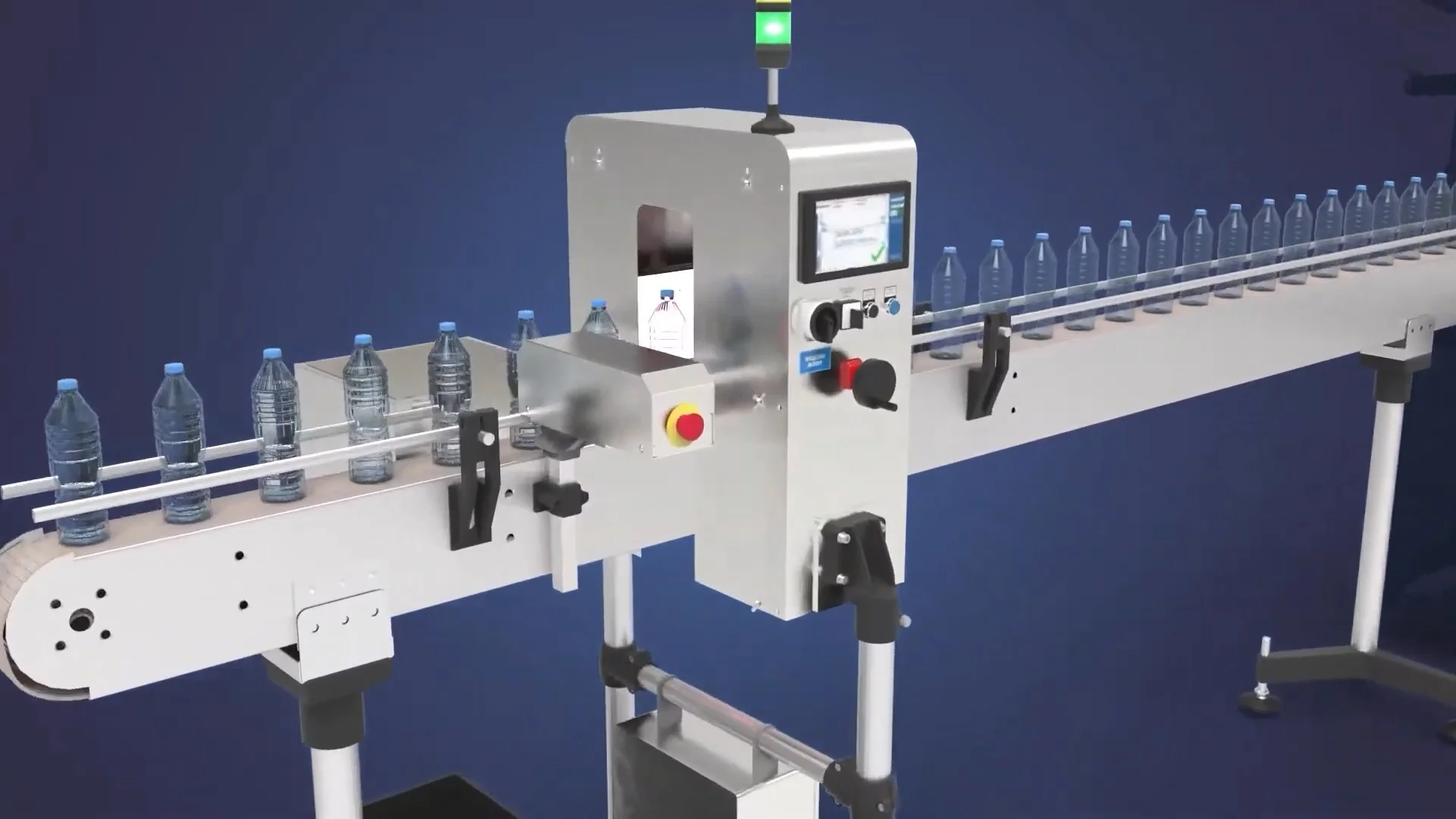
It is much more effective to show processes in volume: 3D video instructions allow you to break a component down to the last screw and see the exact sequence of actions.
To help you choose the right format for your task, we have divided them into three groups — with descriptions and business benefits.
| Format | For whom | What it gives the client |
|---|---|---|
| Step-by-step video instructions | New employees, line personnel in assembly workshops | Fast training without a mentor present, fewer errors during installation and maintenance |
| Interactive 3D diagrams | Repair teams, technical specialists, quality control department | Detailed component breakdown: rotation, zoom, internal view — lower defect and downtime rates |
| Virtual simulators | Training for rare and hazardous operations, preparation for launching a new line | Practical experience without risk to equipment, workers reach target performance faster |
Each of these formats easily integrates into an existing training program: from onboarding new hires to retraining experienced personnel.
We develop instructions based on your real operations and technical documentation, so the employee sees not a generalized image, but exactly the component and the tools they work with every day.
The choice of format depends on the complexity of the operation and the audience. For typical procedures, short step-by-step videos are enough; for engine or electronics disassembly — interactive diagrams; and for practicing actions under pressure — a simulator.
As a result, you get training videos for production that shorten the time to full competency and make work quality stable.
How the development of video instructions for employees works
Every enterprise faces the same task: how to quickly train employees to work with new equipment or regulations without interrupting production. Ordinary text instructions are read reluctantly, and mentors spend hours repeating the same thing.
A video instruction with 3D animation solves this problem: it clearly shows every component and sequence of actions, and the employee masters the material at a comfortable pace.
To ensure the result actually works, we have built a seven-stage process — from the first briefing to uploading the video into your training system.
-
Briefing and material audit. At the start, we record the training goals, audience, and existing regulations. We ask questions that reveal real scenarios: where employees most often make mistakes, and which operations are critical for safety.
-
3D animation scenario. Together with your process engineers, we break down each component and write a step-by-step scenario. Here we also decide what to show in cross-section and what in close-up, so training becomes faster rather than turning into a lecture.
-
Project approval. Before production begins, you see the storyboard and text explanations. We correct inaccuracies on paper — this saves budget and eliminates reshoots at the final stage.
-
3D modeling and animation. Based on the approved scenario, we create detailed models of your equipment and animate them. Already at this stage, it is clear how the final video will look — without complex technical language, understandable for any manager.
-
Voiceover and subtitles. The text is read by a professional narrator, and subtitles are added if needed. You receive a video that works equally well on a tablet in a noisy workshop and on a large screen in a training classroom.
-
Rendering and quality control. We deliver video in high resolution and check every frame for compliance with the regulation. You do not need to understand technical details — you simply receive a file that can be watched immediately.
-
Implementation into training. We package the video for your learning management system or provide it in a convenient format for offline sessions. We advise on how to set up knowledge checks after viewing, so you can see the real progress of employees.
This workflow has already proven itself in the automotive industry: thanks to clear requirement documentation at the second stage and mandatory approval at the third, we reduce the time from briefing to finished video to four weeks.
You get not just a video, but a ready-made training tool that works to reduce errors and speed up new hire adaptation.
What is included in the package: results and materials
In the automotive industry, every equipment maintenance operation requires precision, so training cannot be “generic.” We have prepared a package that covers all tasks: from clearly explaining the structure of components to tracking results. You get not just video files, but a training system ready to work in your department.
- Ready-made video instructions with 3D exploded views — allow you to show the structure of components and the sequence of operations without risk to equipment. The employee sees parts “in cross-section” and remembers the order of actions faster than with text instructions.
- Training scenarios — text versions of each video with timestamps and comments. They can be used to prepare mentors or adapted for a specific position.
- Methodological recommendations for mentors — lesson plan, questions for reinforcing the material, and assessment criteria. There is no need to develop a program from scratch — everything is already thought through.
- Modular content structure — videos are divided by operation, so you can easily build a program for new hires or experienced employees.
- Usage rights — a perpetual license for internal training, reproduction, and inclusion of materials in your own courses. No limits on the number of employees.
- Source materials for updates — when regulations change, we quickly make edits to the videos and scenarios, so training always matches current processes.
- Support during implementation — we help connect the video instructions to your learning management system, set up access for groups, and collect initial results.
Case study: how a 3D instruction reduced errors on the assembly line
Assembling a modern car involves hundreds of operations, where even a slight deviation leads to defects, rework, and line stoppages. Training new employees using paper diagrams is difficult and slow: information is absorbed slowly, and mistakes repeat again and again.
For one of the BMW assembly plants, we developed a series of 3D video instructions with exploded views.
Instead of abstract drawings, workers got a clear video: exactly how the component is installed, in what sequence the connections are tightened, and where tolerances are allowed.
This format is understandable to a new hire from day one and does not require the constant presence of a mentor.
Implementation results
The main effect — assembly errors dropped by 40%. These are confirmed figures from the line: fewer defects, less rework, more stable quality of the finished vehicle.
At the same time, introductory training time was cut in half — the employee reaches full productivity faster, and mentors are freed up for complex tasks.
The case worked so well that the client scaled the format to neighboring areas — from electronics installation to final finishing.
Today the plant uses video instructions as its baseline training standard, and we continue to support the project and update materials for new models.
This is not a one-off case: over the years, we have gained experience in the automotive industry and know how to turn a complex technological process into a clear and useful instruction.
If you have similar tasks on your production floor — let’s start with a pilot area and show a measurable result.
How to choose the right video instruction format for your plant’s specifics?
The choice of video instruction format directly depends on the plant’s specifics: one enterprise may have mostly simple repetitive operations, while another may have complex assembly of components with hundreds of parts.
There is no universal solution, so the main criterion is the complexity of processes and the types of operations employees perform daily.
For simple actions such as installing fasteners or connecting connectors, ordinary two-dimensional video with clear comments and emphasis on key points is sufficient.
But for multi-stage engine assembly, hydraulic work, or electrical work, a three-dimensional instruction with an exploded view is better: it shows the internal structure of the component and the sequence of operations.
This way the employee sees not only “what and where” but also “why this way,” which reduces the risk of errors on expensive equipment.
In the automotive industry, it is also important to consider the operating conditions of the instruction: if line workers change frequently or there are multiple shifts, the format must quickly bring a new hire up to speed and be easy to update when the process changes.
For unique equipment with non-standard operations, it is worth using detailed three-dimensional scenes with highlighted critical zones — this reduces training time and the number of defective operations.
We help you decide on the format before production: we analyze your process, identify the most complex and critical operations, and propose a solution that solves exactly your task.
As a result, you get an instruction that matches your plant’s specifics and actually works on the production floor — without overpaying for unnecessary effects and without losing quality on complex components.
Frequently asked questions about implementing video instructions
You doubt that developing video instructions is long and expensive, and that the result will become outdated within a month? That is normal: any change in training raises questions.
Let’s go through them one by one, based on our experience implementing such projects for automakers and dealer networks.
How long does it take to develop one video instruction?
The standard cycle is two to four weeks. The speed depends on the complexity of the scenario and the level of detail in the 3D model.
We always fix the timeline in the contract and stick to it: first we show the storyboard and a style example, then you approve the text, and only then does production begin.
Usually approval takes one or two rounds, because we clarify in advance exactly what the employee should do at each step.
Will 3D animation cost more than classic filming?
The cost is comparable to professional filming, but the savings come sooner. A 3D instruction does not need to be reshot if the regulation changes: it is enough to edit the model and the texts.
You also get a ready-made digital asset that can be used in presentations for dealers and clients, not just in internal training. In effect, you pay once for a universal tool that serves different business tasks.
What happens when the repair technology changes or a new model range arrives?
Video instructions based on 3D models are designed to last a long time. When a regulation changes, we update only the needed segment of the video — we change components, the sequence of actions, or the text support.
The update takes days, not weeks, and does not require a reshoot. In effect, you get a living system that grows together with your production.
How difficult is it to integrate instructions into the employee training system?
Easier than it seems. Finished videos can be easily uploaded to any learning management system or internal portal — no special modifications are required.
We will also advise on how to break the materials into short blocks, so you can use them both in group sessions and for self-study. Employees in Novokuznetsk, Kazan, or Vladivostok — all of them open the instruction from any device and get to work right away. Implementation usually takes no more than a few working days.
We understand that questions remain — often they relate to the specific nature of your tasks. Contact us through the website, and we will show examples of projects for the automotive industry and calculate timelines for your task during the first consultation.Order 3D video instruction development for your production
High-quality 3D video instructions save dozens of hours on training and reduce the number of errors on the line.
Instead of dry text regulations, your employees get clear visual scenarios with exploded views of components and a precise sequence of actions — understandable even for a new hire.
We deliver turnkey: from analyzing your production process to finished video materials. Order a free consultation — we will discuss your tasks, propose a format, and prepare a commercial proposal with transparent terms and guarantees.
What you get by ordering video instructions from us
- Full scope of work: script, filming of assembly operations, 3D animation of exploded views, and final editing.
- Adaptation to your regulations: the video is easy to update when technological processes change.
- Faster employee training: time to reach full productivity is reduced by 2–3 times thanks to clear visual material.
- Standardization of actions: every employee performs the operation according to a single reference standard, reducing the risk of defects.
- Flexible formats: suitable for a workstation, a tablet on the shop floor, distance learning, or a company portal.
- Technical support and accompaniment during implementation, so the video instructions are actually used in daily work.
Leave a request for a free consultation. We will prepare a commercial proposal for your tasks, show examples, and suggest the optimal format of 3D instructions for your production.