

HVAC System Installation Mistakes Are Costly
HVAC system installation is a process where the price of a mistake is measured by more than just rework costs. A poorly installed air conditioner or incorrect boiler piping leads to downtime, emergency callouts, and lost contracts.
Even a single shortcoming undermines the client’s trust, while training new installers with paper manuals leaves too much room for interpretation.
A diagram on an A4 sheet and a real assembly are two different things. An employee reads the manual but cannot see exactly how the piping connects, where shut-off valves should be placed, and in what order the fasteners are tightened.
The result is typical installation mistakes that repeat from project to project and fall on the shoulders of the service department.
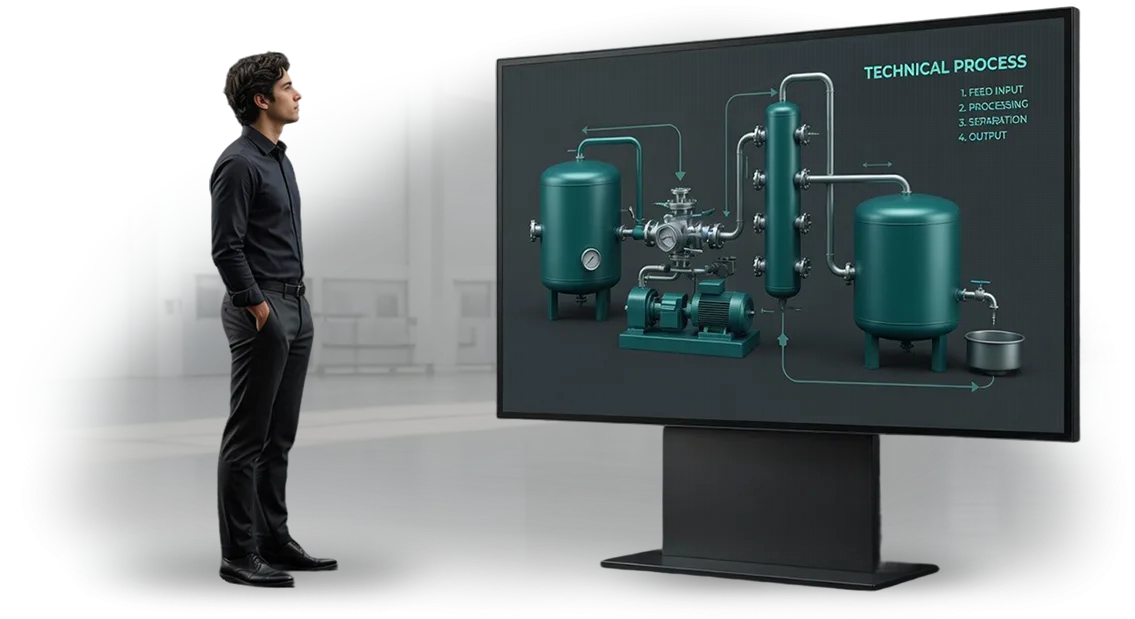
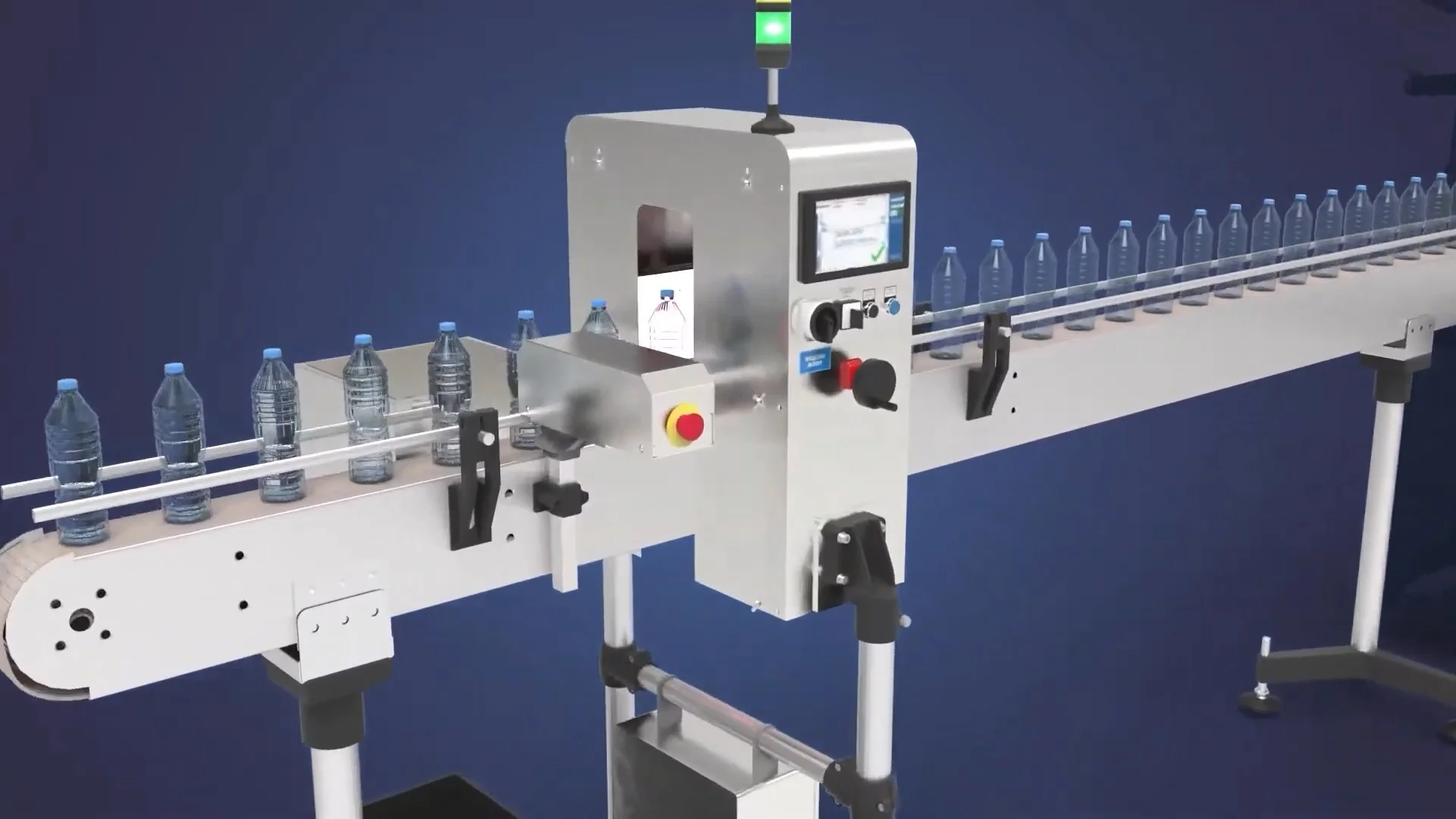
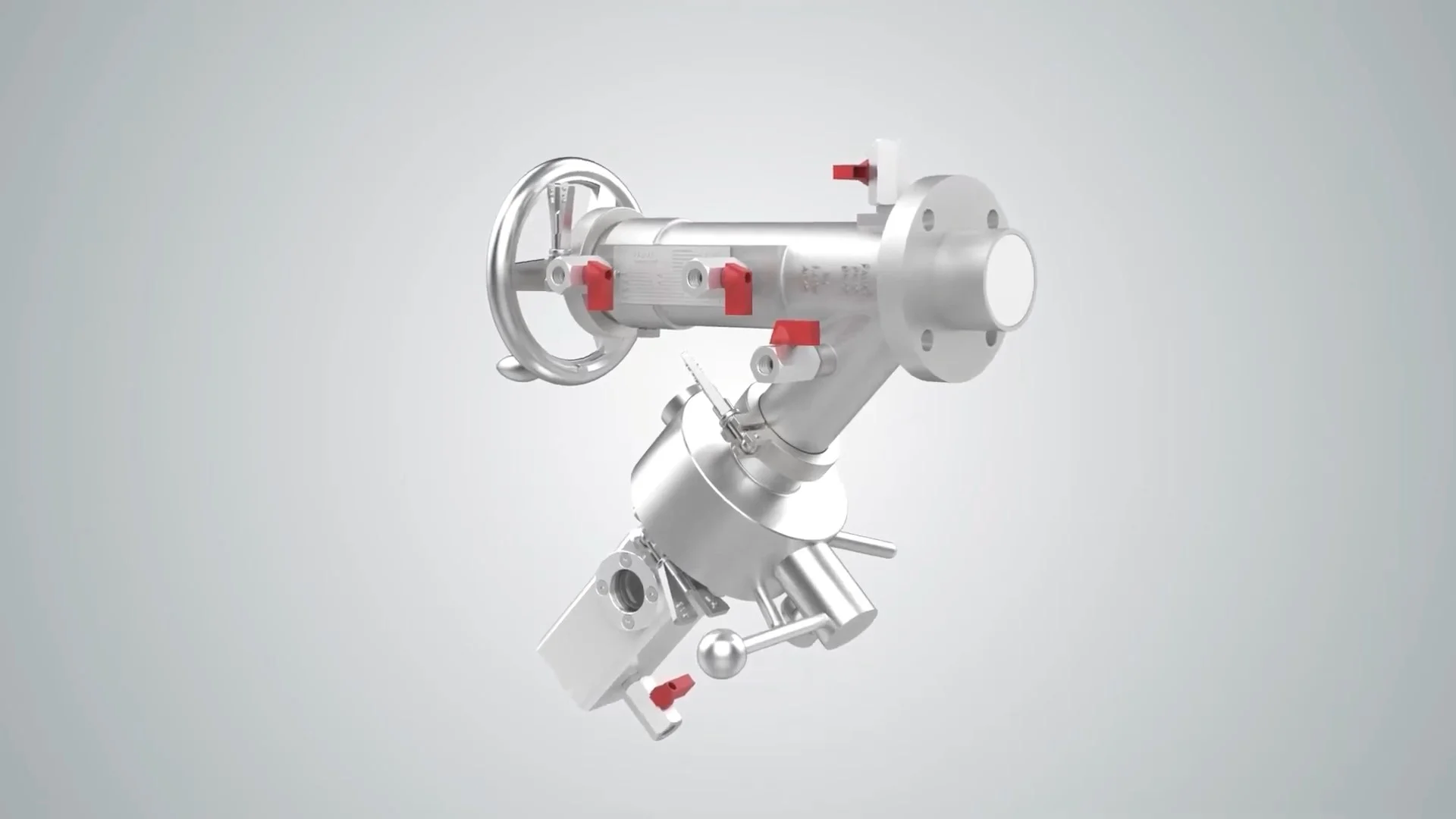
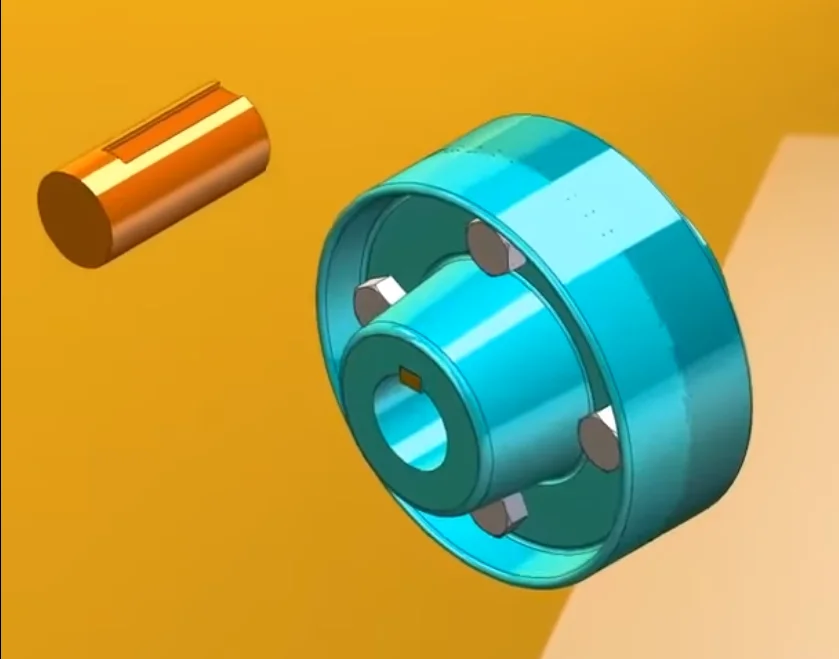
Video instructions with 3D visualization and exploded views solve this problem. The installer sees the structure in an exploded state: what all the components look like inside the equipment, how they relate to each other, and in what order the assembly is performed.
A dynamic demonstration eliminates misreading of the drawing — each step is shown exactly how it should be performed on site.
This training format works for any level of experience: a beginner ramps up faster, an experienced technician refreshes their knowledge before a complex job, and a team lead gets a single quality standard for the entire crew.
The video can be reviewed before heading to a site and used as a reference in non-standard situations.
That is why our team develops corporate 3D video instructions for companies that want to reduce the number of mistakes in HVAC system installation and service.
We turn your experience and procedures into clear training videos that employees actually use — instead of instruction folders gathering dust on a shelf.
What 3D Video Instructions Bring to Your Business
Training employees to service HVAC systems is a complex task: text-based procedures and flat diagrams do not provide the full picture. Mistakes during installation or repair lead to downtime and repeat visits.
3D video instructions clearly show the structure of assemblies and the sequence of actions, so beginners quickly understand what to do and how to do it.
The main benefit is fewer mistakes. Exploded views show the internal structure of the equipment: heat exchanger, compressor, fan. An employee sees the assembly logic before picking up a tool and does the job correctly the first time.
This speeds up training: short videos replace long lectures, and the mentor no longer has to repeat the same thing.
A single standard and safety are two more important outcomes. All employees learn from the same videos, so operations are performed the same way at every branch.
The videos show safe practices for working with electricity, refrigerants, and pressure — this reduces the risk of injuries and accidents, and therefore company costs.
The bottom line: 3D video instructions cover key business needs — fewer mistakes, faster personnel training, consistent quality, and safety. This is an investment that pays off through reduced defects and faster customer service.
Formats of 3D Video Instructions for HVAC Systems
Different tasks in HVAC system servicing require different training approaches. A new employee only needs a short video to learn how to replace a filter, while an experienced engineer needs a detailed equipment diagram to repair a chiller.
One format does not work for everyone — it is important to choose the right one for each audience and task.
Our team develops three formats of 3D video instructions that cover all scenarios: from quick onboarding of newcomers to systematic training of technical specialists.
All videos are created on professional equipment and adapted from scratch to your machinery and corporate style.
| Format | For whom | What it gives the client |
|---|---|---|
| Short video (1–3 minutes) | New employees, line staff | Quick immersion in tasks, 30–40% reduction in onboarding time |
| 3D animation with exploded view | Repair teams, technical specialists | Visual study of the internal structure of an assembly without opening the equipment — fewer mistakes during diagnostics |
| Full training course | Training centers, operations departments | A single standard of knowledge, fewer emergency downtimes and repeat callouts |
The choice of format depends on what you want to achieve in the end. If you need to quickly cover staff turnover, short videos are enough. If it is important to systematically prepare personnel for complex work, order a course that breaks down each assembly.
We don’t just shoot videos: we help integrate them into your learning management system, create a lesson plan, and update the videos when your product line changes.
As a result, you get not scattered files but a ready-made knowledge base that reduces costs and improves the team’s qualifications.
How We Create Your Video Instruction
For a video instruction to actually reduce onboarding time and the number of mistakes, it needs to be built as a product — with your involvement. That is why we have structured the process into seven clear steps: you always know what is happening and can influence the outcome.
- Brief and task analysis. We study your HVAC system specifics and gather requirements: which operations to show, who will watch the video, and which common mistakes need to be covered. This is the basis for the script.
- Script and storyboard. We write the text and diagrams for each frame. You see the logic of the future video before any rendering and can make changes without wasting time.
- 3D modeling and animation. We create an accurate model of your equipment and show assembly/disassembly of components. You receive intermediate frames and adjust details.
- Voiceover and subtitles. A professional voice actor reads the text, and we add captions. The employee absorbs information through two channels and remembers it faster.
- Editing and assembly. We cut the videos together, fine-tune the timing, and remove anything unnecessary. The result is a finished video ready for immediate use.
- Approval. You receive a link for review and leave your edits. We offer two rounds of changes so the result meets your expectations.
- Material delivery. We provide the finished video in the formats you need, plus source files and a short instruction. You upload the video to your learning management system or portal.
What Is Included in the Video Instruction Delivery
You receive not just a finished video but a complete delivery package that can be immediately integrated into your training program.
All materials are adapted for different channels — from an internal portal to mobile applications — so employees on the shop floor and in the office learn the processes just as quickly.
Here is what the package includes:
- Ready-to-use videos in multiple formats — for LMS, internal portal, messengers, and in-person demonstrations. Choose the right one for your task without recoding.
- Source project files — if the equipment model or procedure changes, you can make edits with your own team or order an update from us without creating the video from scratch.
- 3D exploded-view models for HVAC systems — use them in presentations, on display stands, or for briefings alongside the video. These are ready-made visual materials for clearly explaining how components are arranged.
- Text application guide — a step-by-step plan for integrating the video into new-hire onboarding, maintenance, and retraining. Saves time for your instructional designer.
- Supporting documentation — a script and a list of parts and assemblies shown in each part of the video. Helps you quickly find the right segment and conduct knowledge checks.
- Methodical recommendations — which scenarios to use for different roles: installers, engineers, service specialists. Accelerates a newcomer’s path to independent work.
- Support and updates for an agreed period — if you find an inaccuracy or want to supplement the video, we will make adjustments at no additional charge.
All materials are packed into a structured folder with clear names. You can quickly navigate the files and share the package with colleagues in other regions — nothing will be lost and it will not require your constant involvement.
Case Study: How We Reduced the Number of Mistakes by 40%
A service company that maintains shopping centers faced a common pain point: new employees made mistakes when setting up HVAC systems. Every mistake meant another crew visit, tenant complaints, and extra hours of supervision.
Training newcomers on real sites was expensive and slow: the mentor was distracted from work, and the employee was still afraid to act independently.
We proposed replacing part of the hands-on internships with 3D video instructions featuring exploded views. The employee saw the internal structure of the equipment and the sequence of disassembly and assembly — without the risk of breaking anything. This format allowed the company to cut onboarding time by almost half and relieve the mentors.
What Changed After Implementation
Over six months of working with the client, the number of mistakes in installation and maintenance dropped by 40%. Repeat crew visits became rare — employees arrived at the site already prepared for typical situations.
Importantly, the effect held even with staff turnover. The company stopped depending on the mentors’ personal memory: training materials are always at hand, and a new person reaches the site in two weeks instead of a month and a half.
What Made the Result Possible
The secret is not sophisticated equipment but methodology. We broke each operation into short steps and showed them from the angle that matters during real work. The employee doesn’t just memorize the sequence of actions — they understand the logic of the equipment.
An additional plus is client feedback. After the first videos, the company asked us to add pauses at key stages. We updated the video in a few days, and this format became a corporate standard. The same approach is now used in related departments — from warehouse logistics to service repairs.
How to Choose the Right Format for Your Task?
When it comes to training employees on HVAC systems, the main mistake is choosing a format “like everyone else’s.” There is no universal instruction: what works well for a beginner will slow down an experienced technician, and a detailed 3D diagram for a complex assembly will be excessive for a simple operation.
So the question “which format suits you” starts not with technology but with the task: what needs to be taught, to whom, and in what timeframe.
If employees are just getting into the subject, linear video instructions with a step-by-step demonstration and an emphasis on safety are suitable.
Experienced specialists who value their time are better served by short videos focused on non-standard cases, mistakes, and nuances — without repeating the basics.
In both cases, 3D visualization helps show the internal structure of the unit, but for beginners it should be simpler, and for professionals it should focus on the exact problem areas.
For complex equipment — heat pumps, multi-zone systems, industrial ventilation — an interactive instruction is the most effective.
In it, the employee chooses the depth of immersion themselves: view the general diagram, break down an assembly in cross-section, or go through a troubleshooting scenario.
This not only speeds up training but also reduces the risk of errors during real maintenance, because what stays in memory is not an image but the logic of actions.
In practice, we usually combine formats: a basic video course for initial training plus interactive modules for analyzing specific equipment models. This covers both the need for rapid onboarding and the need for a reference guide for experienced installers.
All of this is produced with professional equipment and proven tools, so the result is predictable: employees begin to work confidently shortly after the instruction is launched.
We help you decide on the format for your task — send us a description of your situation, and we will offer the optimal option: with detail, interactivity, or a basic sequence. The main goal is to make sure the instruction solves your specific task, not just a “nice video.”
Frequently Asked Questions About Creating Video Instructions
Before a project starts, clients always ask the same questions: how long it takes to create a video instruction, how much budget to allocate, how the material will fit into the existing training system, and what happens if changes are needed. We answer them briefly — so you can quickly picture the result and make an informed decision.
How long does it take to create a video instruction?
The timeline depends on the complexity of the 3D models and the number of scenes. For typical HVAC system tasks, two to three weeks from script approval is usually enough.
If training needs to launch by a specific date, we discuss an accelerated schedule — the key is not to lose quality.
How is the cost determined?
The price is based on the amount of 3D detail, the number of scenes, and whether voiceover is needed. We always fix the estimate before launch and do not change it during the process. This allows you to plan your budget without surprises.
Can the video instructions be integrated into our training system?
Yes. We deliver ready-made files in standard formats that play in any modern learning management system (LMS). If needed, we will help you configure uploads and assign courses to employees — so you get a complete training module, not just a video.
What about changes and guarantees?
After delivery, we make two iterations of edits to the text and visual details at no additional cost. If you later need to change a procedure or add a new model, that is treated as a separate task with a clear estimate.
We also provide a warranty on the product itself: the files will not break when the system is updated.
If you still have questions, write to us and we will advise you on your specific situation.Order a 3D Video Instruction for Your Team
Training employees to work with complex climate equipment is a task that determines the speed of service and the number of mistakes on site. Ordinary PDF instructions are rarely read, and mentoring takes up the time of experienced specialists.
A 3D video instruction with exploded views shows the structure of an HVAC system clearly: the employee sees how an assembly is taken apart and put back together, and remembers the algorithm without needing a second explanation.
To make sure we can handle the job, you don’t need to pay or take any risk. Just leave a request, and you will receive a consultation, a commercial proposal, and examples of our work. Everything then follows a simple checklist:
- You leave a request — briefly describe which equipment the instruction is for: a heating boiler, air conditioner, or air handling unit.
- We provide a free consultation — we clarify the employees’ skill level, typical failures, and the needed video format: full assembly breakdown, maintenance procedure, or emergency diagnostics.
- You receive a commercial proposal — with a fixed cost, timeline, and work stages. No hidden surcharges; everything is recorded in the contract.
- We look at examples of our work — we will send demo videos specifically about climate systems so you can see the graphic quality and level of detail in the exploded views.
- We agree on the script and pauses — you approve the text, emphasis, and close-ups so the video mirrors the logic of your service procedures.
- We prepare the video and test it with your specialists — you show the draft version to installers, they provide edits, and then the final video is released.
- You receive the finished video instruction — in the resolution you need, for an internal portal or mobile access in the field.
The entire process from request to finished video takes from two weeks. You control every stage, and the result is a clear training video that reduces the time it takes for newcomers to start working and cuts the number of mistakes when installing and servicing HVAC equipment.
Leave a request now — we will discuss your task and show you what a 3D video instruction looks like using real climate systems as examples.