

The Cost of Mistakes in Operating Medical Equipment
Operating medical equipment is an area of high responsibility. Even a small staff error during preparation or maintenance can lead to an accident, equipment downtime, and—most importantly—risks to patients.
Unlike household appliances, the cost of every incorrect action here is measured not only in repair expenses but also in people's safety.
Outdated staff training methods—paper manuals and occasional trainings—do not provide the required level of preparedness. A person remembers only part of the algorithm, and under stress or in an unusual situation acts at random.
As a result, instead of prevention we get unplanned breakdowns, and instead of staff confidence we get fear of equipment and mistakes that should never have happened.
The consequences of such failures go far beyond maintenance. There are schedule disruptions, additional costs for emergency repairs and spare parts, and most importantly—patient safety is put at risk.
Every medical equipment incident damages the clinic's reputation and can lead to serious legal proceedings, so preventing mistakes becomes a strategic task.
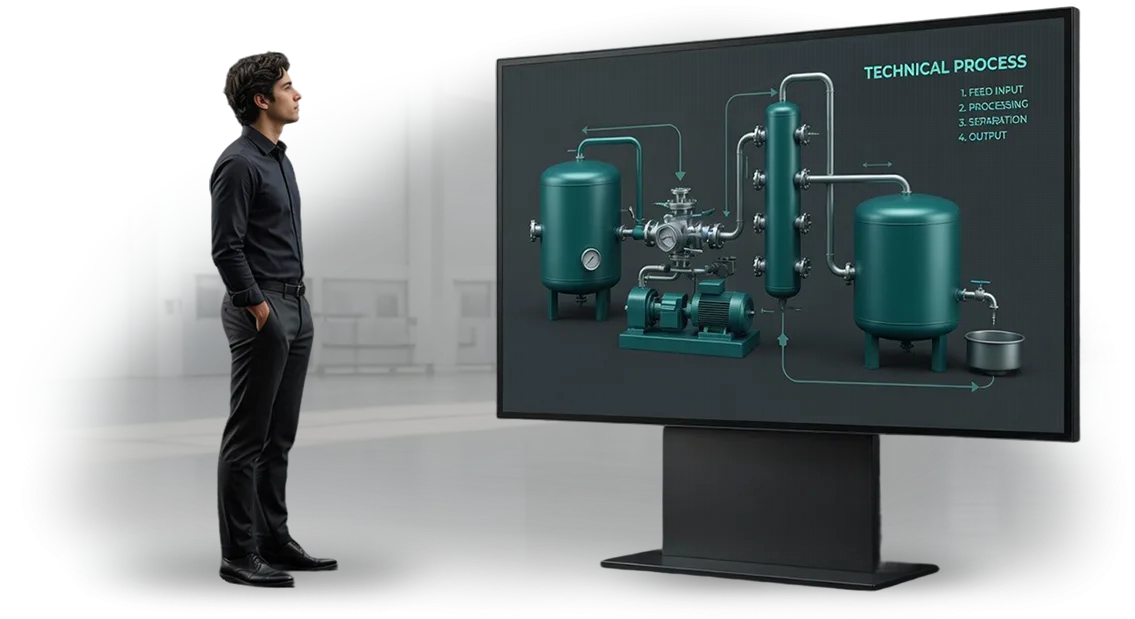
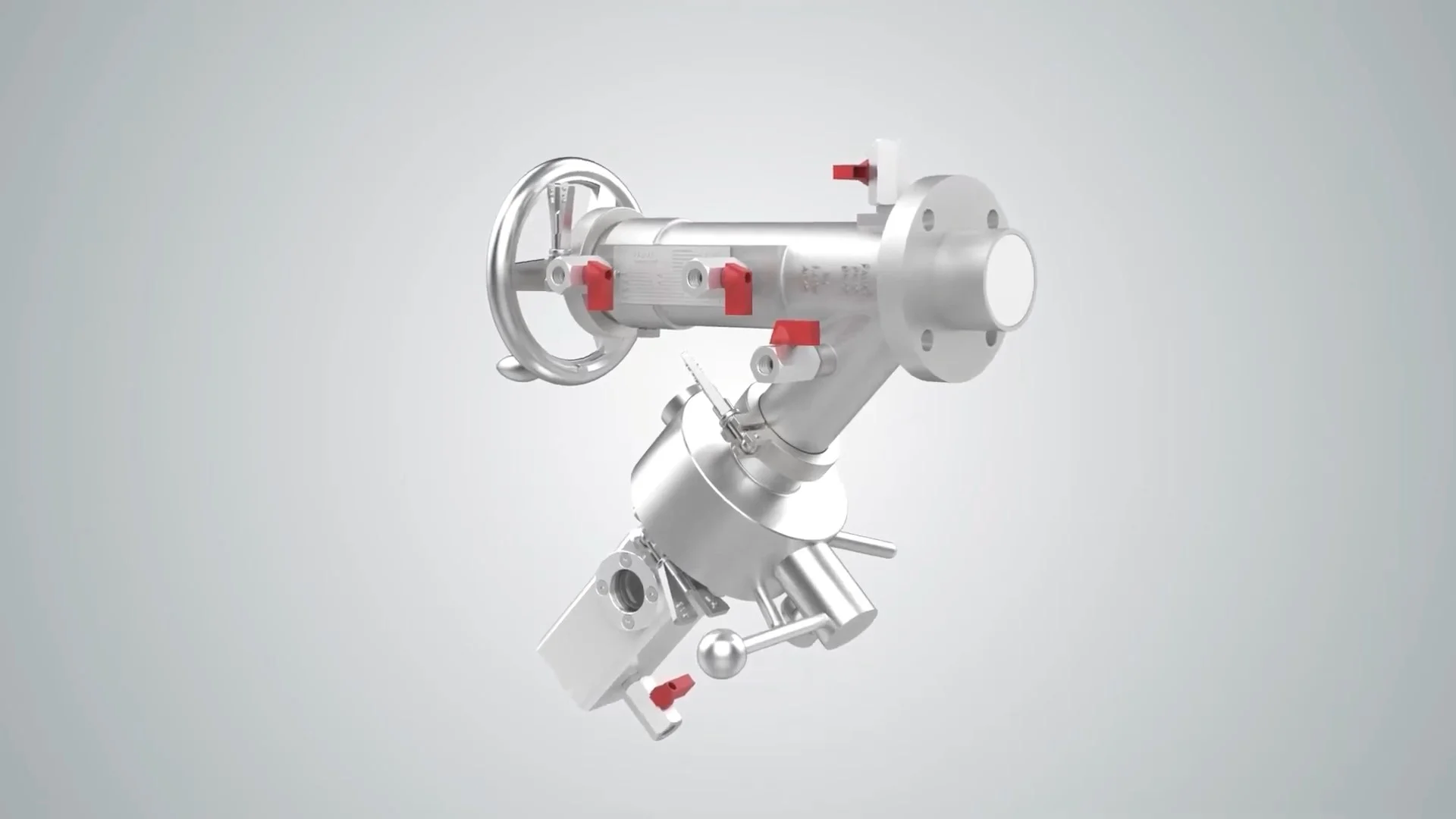
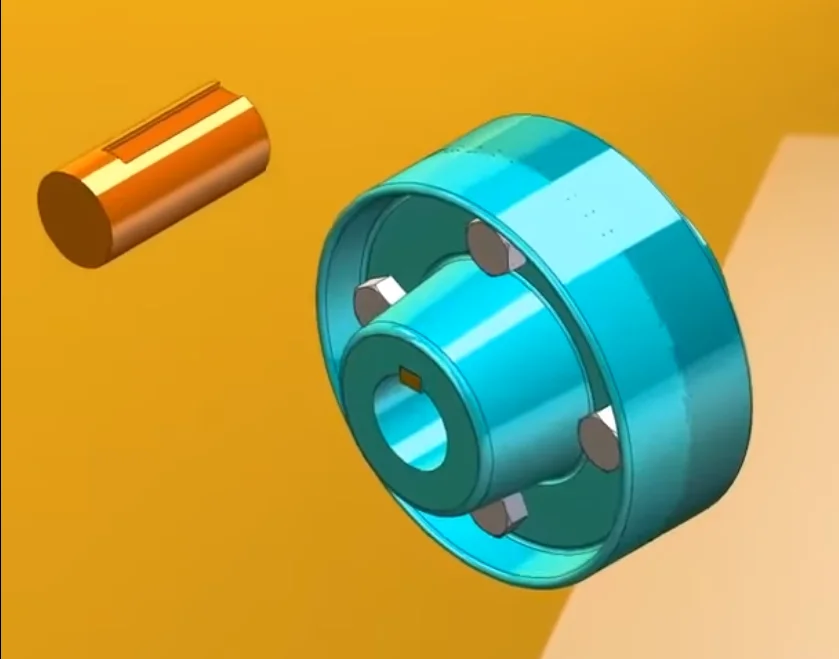
Proper staff training reduces these risks. Visual 3D video instructions with exploded-view demonstrations allow staff to understand how the equipment is built from the inside, and to see components and mechanisms that are impossible to inspect during normal operation.
This format is easier to remember, forms the correct sequence of actions, and reduces the number of errors and accidents—the client gains peace of mind and predictability in work processes.
We develop corporate training video instructions that turn complex technical material into a clear visual scenario. Our videos help staff master procedures faster and act confidently even in unusual situations.
As a result, the clinic sees fewer breakdowns, stable operation of expensive equipment, and protected patients—the cost of such training is incomparable to the losses from a potential accident.
What 3D Video Instructions Give to Your Business
Medical equipment has a complex structure, and patient safety and the clinic's reputation depend on how correctly employees use it.
Text instructions and posters overload attention: it is hard for a newcomer to imagine what the parts inside the device look like, and experienced staff spend time explaining the same things to colleagues.
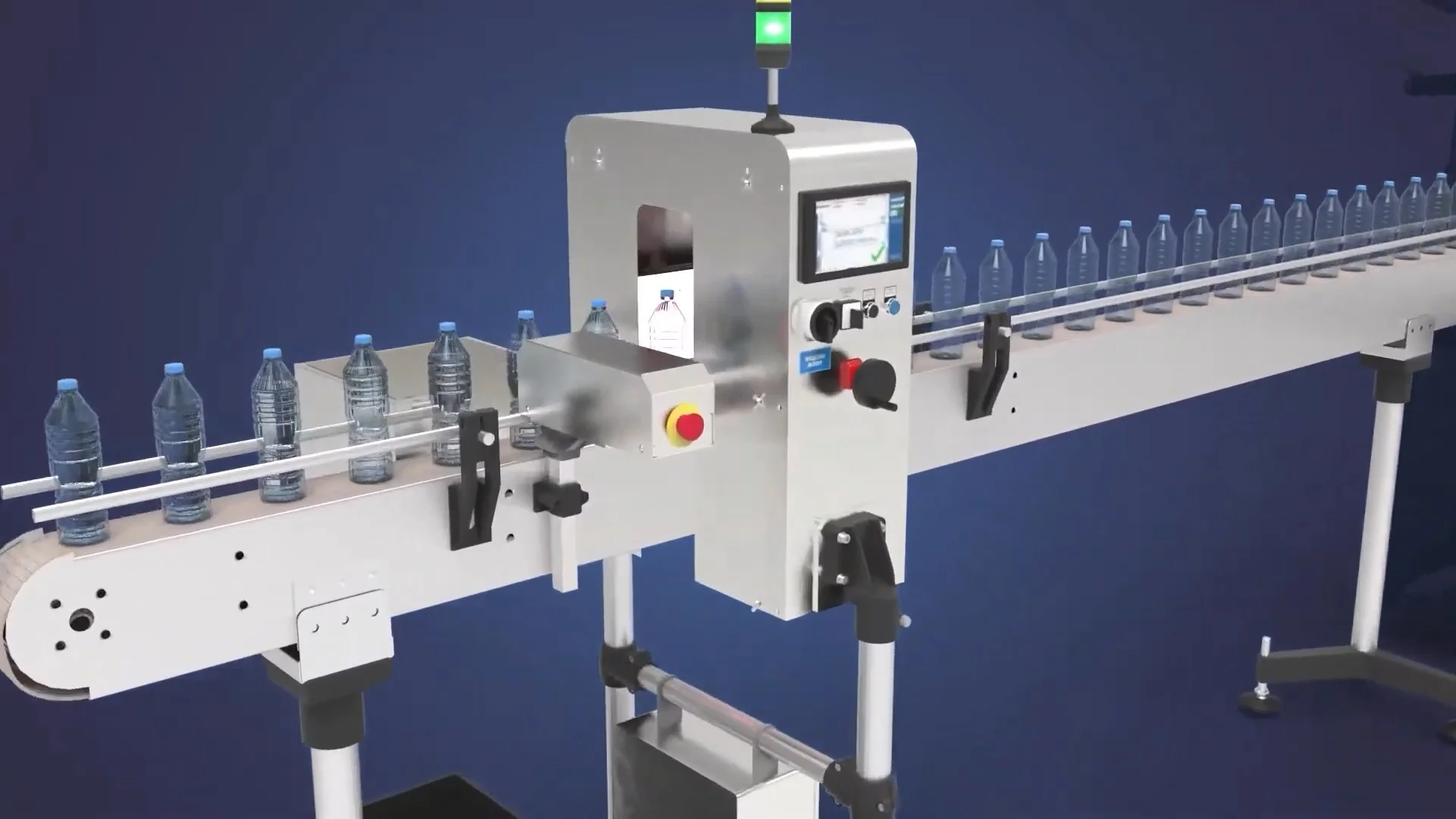
3D video instructions solve this problem visually. Instead of flat diagrams, the employee sees a three-dimensional model of the device, can examine an exploded view of its components, and understand the sequence of actions before starting to work with real equipment.
This makes training faster and reduces the risk of errors during maintenance and operation many times over.
For business, this means faster onboarding: a new employee reaches a working level in weeks rather than months. Fewer mistakes mean less downtime, fewer breakdowns, and fewer safety-related incidents.
Video instructions can be revisited at any time, so knowledge is not lost when staff turnover occurs.
We develop such instructions based on engineering documentation and 3D models adapted to specific equipment models. For example, for Siemens MRI machines we created a series of videos analyzing the key components—staff mastered the maintenance procedure 40% faster than usual.
Each video addresses a specific task: from daily preparation to troubleshooting common issues. As a result, a manager gets a tool that saves mentors' time, reduces the workload on experienced staff, and ensures a unified quality standard across all departments.
Formats of 3D Video Instructions for Medical Equipment
When it comes to training on medical equipment, there is no one-size-fits-all video.
Some employees need to understand how the device is built from the inside; others need to master the sequence of actions for replacing consumables; still others need to understand how the components work.
A correctly chosen 3D video instruction format reduces training time and lowers the risk of errors during real operation.
We develop all three formats and help you choose the best one for your task. Below is a comparison showing which option works best in different situations.
| Video format | For whom | What it gives the client |
|---|---|---|
| Full disassembly (exploded view) | Engineers, service departments, staff undergoing advanced training | A clear understanding of the design: the employee sees how components connect to each other and learns disassembly and assembly faster without risking damage to parts |
| Step-by-step actions | Medical staff, operators, new employees | A clear action algorithm: replacing consumables, preparing for work, daily maintenance. Minimum theory—maximum practice; errors are eliminated through visual cues |
| Component animation | Sales specialists, marketing, clients | A clear demonstration of how the device works. Helps present equipment advantages and train partners faster without going deep into technical details |
Full disassembly is especially useful for complex equipment where every detail matters. Step-by-step videos are suitable for regular training and quick onboarding, while component animation makes internal processes visible to those without engineering backgrounds.
If you are not sure which format will deliver the greatest effect, describe your situation and we will prepare a sample based on your equipment. This way you can evaluate the result before full production.
Stages of Turnkey Video Instruction Development
For a video instruction to truly help employees rather than become an expensive archived file, the development process must be transparent and manageable.
We have organized the work so that you see the result at every stage, make edits, and know when you will receive the finished product.
- Brief and needs audit — we identify which action the employee must master: from basic device operation to complex diagnostics. We study your procedures and requirements so that the video addresses your specific tasks rather than generic standards.
- Script and storyboard — we translate the technical process into a clear visual language. We agree on the script so that the operator sees all actions with medical equipment step by step, including detailed exploded views.
- 3D modeling and animation — we create an accurate three-dimensional model of your device and bring it to life: disassembly, assembly, internal components. This makes it possible to show employees the mechanics in a way that cannot be seen in reality.
- Voiceover and editing — we record the narrator's text, place accents, and add subtitles. The result is a single story: the voice guides while the picture shows—the employee absorbs the material without unnecessary strain.
- Final approval and revisions — you watch the finished version, submit edits, and we incorporate them promptly. The number of iterations is fixed in the contract to avoid an endless "just one more detail".
- Delivery of materials and support — we hand over files in the required formats and provide the source files. If a month later you need to update the instruction for a new version of the equipment, you can contact us for adjustments without starting a full cycle from scratch.
This approach eliminates the main client risks: unclear results, missed deadlines, and hidden additional fees. You pay for clear stages, and the ultimate goal—getting employees quickly to stable and safe work with equipment—is achieved predictably.
What Is Included in the Delivery: Video Instruction Package
You receive not just a video but a complete training package for employees. Everything is ready to use: materials can be uploaded to your learning management system or used in in-person sessions without changes.
- Voice narrator. Professional voiceover explains every step in clear language; the employee watches the screen and hears the instruction at the same time without being distracted by reading.
- Subtitles. The full text of the audio is shown on screen: convenient for working without sound, for people with hearing impairments, and for learning complex medical equipment terminology.
- 3D models. Internal components and mechanisms are shown in cross-section and as exploded views: the employee sees how the device is built without physically taking it apart. This is especially valuable when training on expensive equipment.
- LMS files. The course is delivered in a format that is easy to upload into the corporate learning system: videos, knowledge-check tests, and supporting documents are packed into one package.
- Device adaptation. The video works correctly on computers, tablets, and smartphones: employees can train both in the office and on the go.
- Training materials for the instructor. Checklists, text transcripts, and recommendations for running a session help launch training without bringing in external specialists.
Every element of the package works toward one result: employees master procedures faster, make fewer mistakes when working with medical equipment, and pass knowledge checks without extra burden on the manager. You get not a set of scattered videos but a ready-made training system tailored to your tasks.
Case Study: Training Clinic Staff in 2 Weeks
For the medical equipment manufacturer MedTech, training clinic staff had always been a bottleneck. Complex equipment requires precise actions: even a small deviation during procedure preparation can lead to errors, and their consequences are critical.
Traditional instructions and text-based videos did not provide the required level of understanding, while in-person training dragged on for months.
We proposed replacing part of the in-person training with 3D video instructions featuring exploded views.
Instead of flat images, the employee sees how the device is built, how components are removed and installed, and how to disassemble and reassemble a unit when replacing consumables. This allows staff to quickly learn the procedures without risking damage to expensive equipment.
The work took two weeks: from analyzing common errors to delivering the ready-made videos. We produced 12 videos covering the most complex operations and adapted them for tablets and phones so that training could be done right in the department. In that time, more than 300 employees across three clinic departments completed the instructions.
The result exceeded expectations. The number of errors during equipment preparation dropped by 40%, and initial training time was reduced from three weeks to three days.
Employees became more confident in working with the equipment, and the clinic no longer needed to call service engineers as often for routine adjustments.
After the initial launch, the client expanded the project: we added videos for new models and updated the onboarding program. This confirms that 3D instructions work not as a one-time campaign but as a systematic solution for staff training and reducing operational risks.
How to Choose the Right 3D Instruction Format for Your Task?
The choice of a 3D instruction format depends on two main factors: the type of equipment and the actual skill level of your staff. What works perfectly for a beginner will irritate an experienced specialist, and a version that is too brief for a beginner will lead to errors.
There is no universal solution—it is important to match task complexity with how quickly a person needs to start working independently.
For example, for complex medical equipment where the cost of error is high and staff are just joining the department, a detailed step-by-step 3D instruction is needed.
It should show the internal structure of components, disassembly and assembly, and common faults—so the employee does not just memorize the sequence of actions but understands the logic of how the device works. This speeds up staff training and reduces the risk of failures caused by human factors.
If the team is experienced and has long worked with similar equipment, excessive detail only slows down learning. It is more effective to use short modules: analyzing a nonstandard situation, an updated maintenance procedure, or a new component.
This approach does not pull people away from work and closes specific gaps rather than covering the material from scratch.
The frequency of equipment use also affects the format choice. For daily use, it is useful to add a "quick access" scenario in the 3D instruction so that an employee can open a hint on a tablet at any moment.
For rare but critical operations, a full course with repetition of key stages and mandatory knowledge checks is better.
The best way to understand which option suits you is to look at your specific situation. We help choose the format after a short audit: we analyze equipment types, staff skill levels, operation frequency, and the most common mistakes.
Based on that, we prepare a pilot fragment that you can show your team, and then we scale the solution across all departments.
Frequently Asked Questions About Developing Video Instructions
Before ordering video instructions, many clients have doubts: will deadlines be missed, can edits be made, what happens when the equipment changes, and what guarantees do we provide? Here we answer the key questions—this will help you make a risk-free decision.
How long does it take to develop a video instruction?
Timelines depend on script complexity. A standard video instruction takes 2–4 weeks; with a 3D exploded-view demonstration, 3–5 weeks. After the brief, we fix the exact timeline in the contract.
Can edits be made to the finished video?
Yes, every project includes two rounds of revisions. At intermediate stages, you receive the script, storyboard, and rough cut—you provide feedback, and we adjust the work. The final video meets your expectations.
What happens when the equipment changes? How do we keep it relevant?
The video instruction is created from your procedures and documentation. We provide the source materials, and if the equipment changes, you can order an update—this is faster than starting from scratch.
What guarantees do you offer?
We work under a contract: we fix deadlines, the composition of stages, and requirements for the result. You approve the work in stages and pay after checking. Our obligations are specified in the contract.
Order Video Instruction Development for Your Equipment
Ordering video instruction development for medical equipment is a systematic solution for training staff without interrupting work. You receive a set of materials that is equally useful for newcomers on probation and experienced specialists during recertification.
What is included in the work:
- Script development based on real procedures and common staff errors.
- 3D video instructions with exploded views: the employee sees the internal structure and understands the assembly logic.
- Professional voiceover and subtitles—suitable for training in noisy departments and remote branches.
- Adaptation to your learning management system: formats and packaging integrate with your internal portal.
- Delivery of source materials and exclusive rights—you are free to use the videos as your team grows.
Project start takes one working day: you send documentation and a list of key operations, and we fix deadlines and stages in the contract. After that, you receive a schedule with specific delivery dates—no vague "when it's ready."
Order video instruction development today—lock in convenient timelines and launch staff training this month. Leave a request, and we will prepare a commercial proposal for your equipment.