

Door System Assembly Errors: A Path to Losses and Defects
Door system assembly is a process where, it would seem, small details decide everything: an incorrectly set gap, mixed-up hardware, or a disrupted sequence of operations.
On a production scale, such installation errors evolve from isolated oversights into a systemic source of losses: a part becomes scrap, the work cycle slows down, and hours are spent on rework.
In the end, the company pays twice — for the defect itself and for lost time that could have been spent manufacturing finished products.
The situation is especially critical when a complex door design requires precise assembly, and the employee has no clear instruction in front of them.
Text-based regulations and static drawings overload newcomers, while an experienced master spends time explaining things to the same people. As a result, knowledge stays in the heads of a few specialists instead of becoming a standard for the entire team. Any staff turnover brings production back to a trail of errors and unstable quality.
The problem is aggravated by the fact that the cost of an error grows with production volume: a single defective unit can be replaced without consequences, but systematic failures in door system assembly hit order deadlines and the company’s reputation with partners.
Clients do not see the inner workings; they see the result: a delayed shipment or a door that fails after a month of use. It is precisely such situations that shape a customer’s decision to continue cooperation or switch to a competitor.
To break this cycle, tightening control is not enough — the approach to employee training must change.
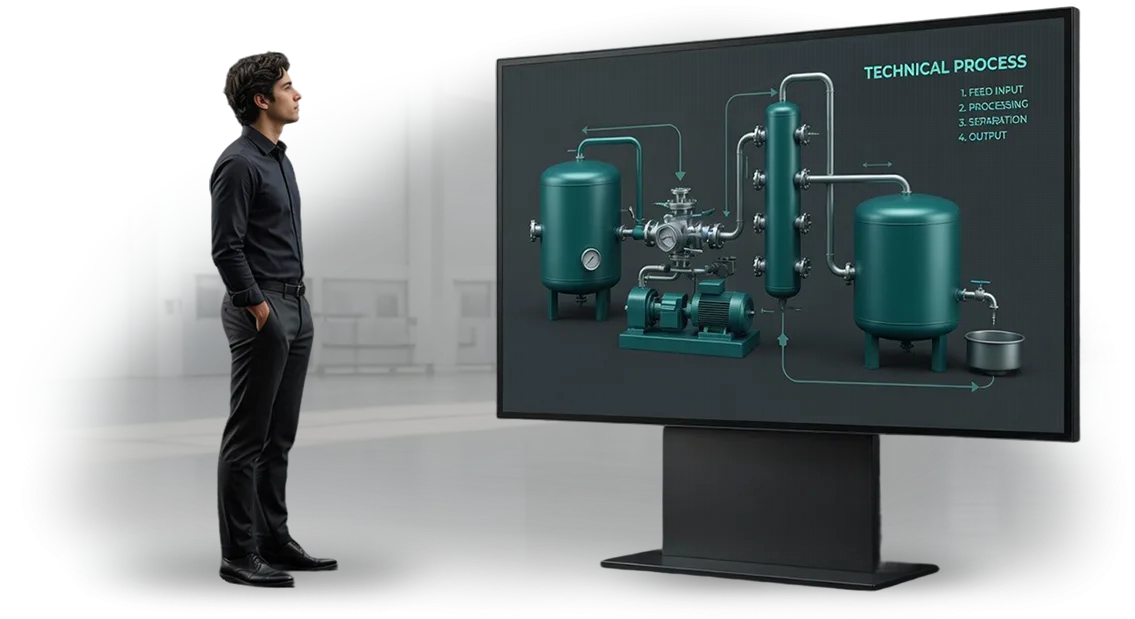
Visual video instructions that show every step of assembling a door system without the need to read drawings allow newcomers to get up to speed faster and experienced craftsmen to pass on their experience in a uniform way.
A clear sequence of actions visible on the screen reduces dependence on the human factor and lowers the share of defects in production. This is exactly the task we solve: we turn complex processes into clear algorithms that employees quickly grasp and apply without errors.
What 3D Instructions Bring to Working with Door Systems
Every new employee faces the same problem: thick manuals, complex drawings, and “rule-of-thumb” explanations do not provide the full picture.
The installer has to mentally assemble the door system mechanism, spending hours studying diagrams and still making mistakes on the first job site. With a 3D video instruction, this barrier disappears — assembly becomes a clear, visually obvious sequence of actions.
Reduced Training Time
Instead of multi-page documents, the employee receives a video where each component of the door system is shown disassembled and assembled in the correct order.
New installers master the process several times faster: they only need to watch the video once or twice instead of rereading the manual. This reduces the burden on trainers and allows personnel to be brought into the workflow faster.
Fewer Errors, Consistent Assembly Quality
An exploded view removes the main cause of defects — incorrect sequence and improper placement of parts. The employee sees where each element should go, how fasteners are tightened, and where misalignments can occur.
As a result, the quality of the finished product levels out: doors are assembled just as correctly by a newcomer as by an experienced master.
Employee Safety
The instruction shows not only the order of work but also potentially dangerous moments: how to hold heavy parts, what to pay attention to when connecting moving elements. This is especially important for service teams working on site.
The risk of injuries decreases, and a manager gains confidence that each stage is performed in a safe manner.
What This Means for Business
Reducing training time and the number of errors directly affects costs: fewer reworks, fewer complaints, and faster attainment of planned productivity by new employees. The service department also handles fewer repeat visits.
We create such 3D video instructions for door systems at our team— using professional equipment and refined tools to ensure the client gets a predictable result.
3D Video Instruction Formats for Any Task
Employee training rarely fits into a single scenario: some need a quick breakdown of a typical operation, others need a deep dive into the product’s structure.
Video instruction formats for door systems are selected for the specific task — from a short video for a newcomer to an interactive guide that opens right at the job site.
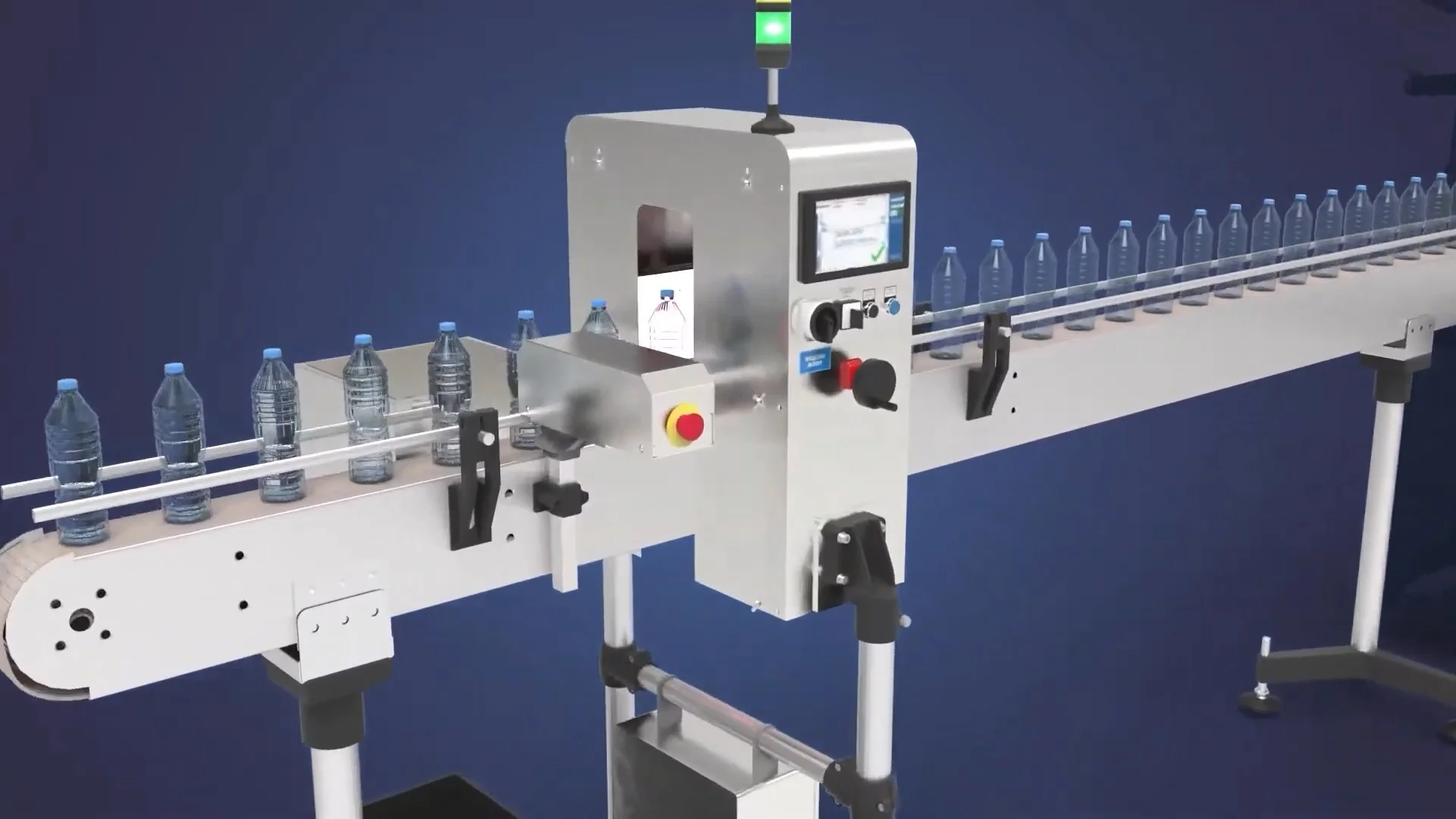
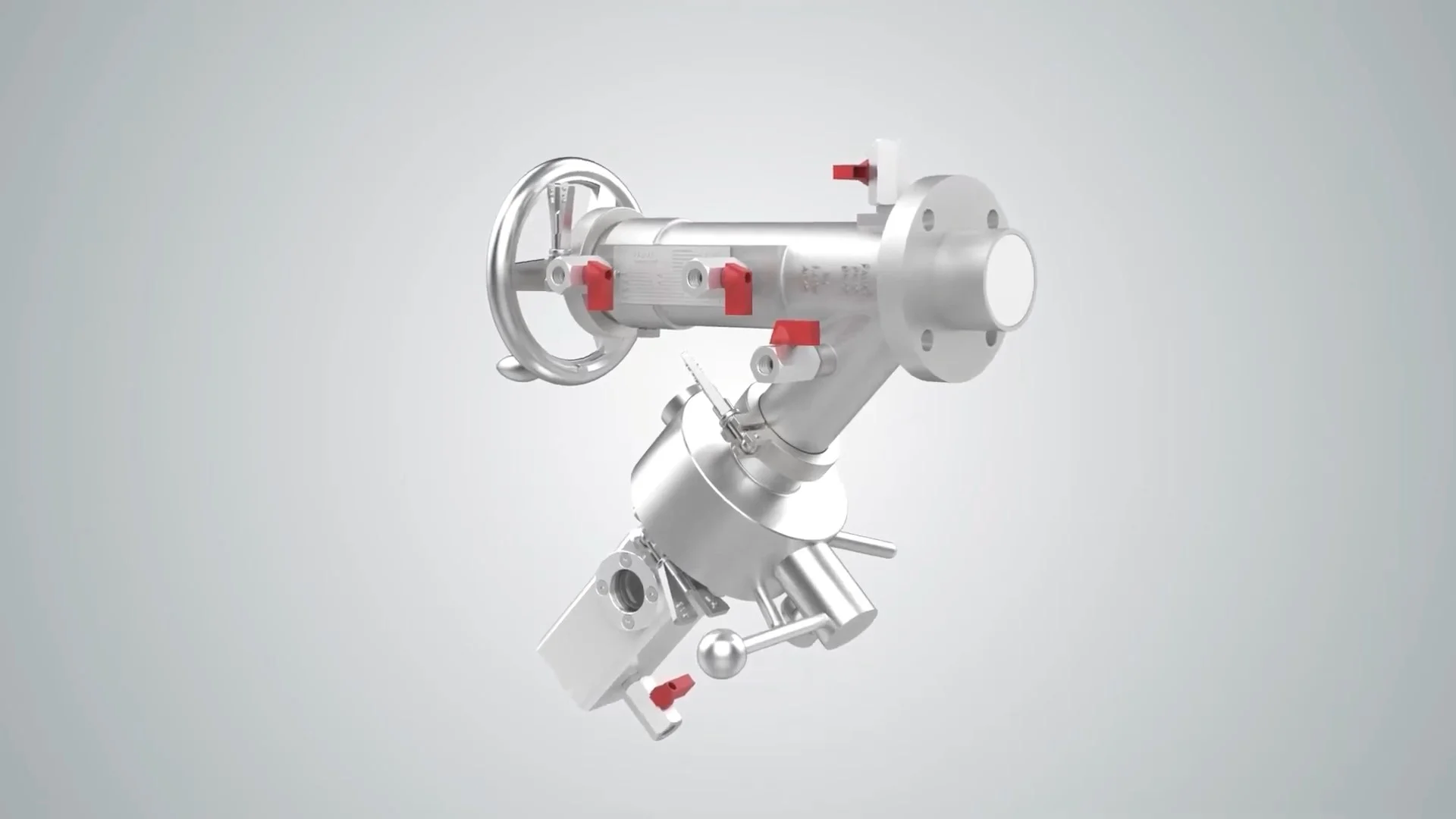
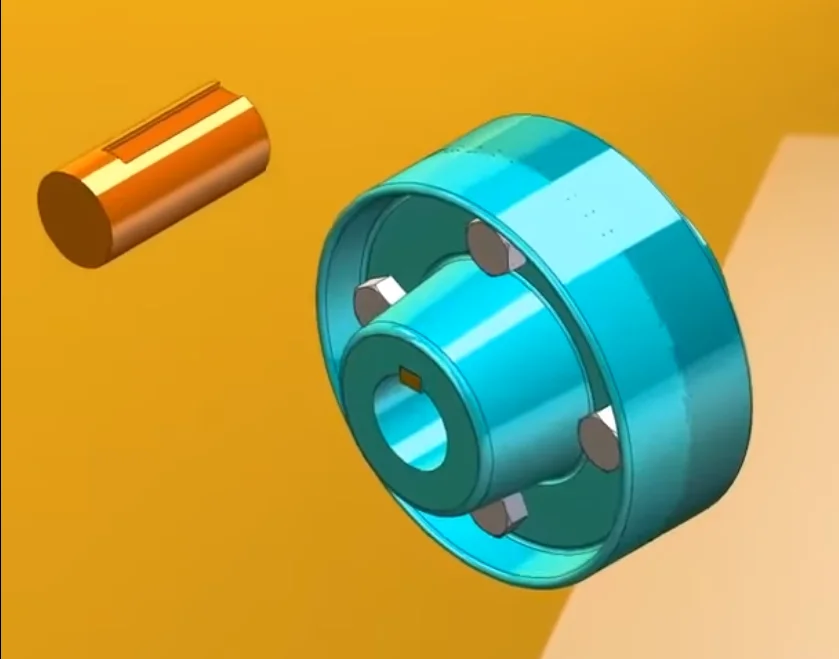
3D animation solves what regular filming cannot: an exploded view shows how a door system is built from the inside, how components connect, and in what order installation should be performed. This format is understandable without reading drawings and reduces the number of assembly errors.
| Format | For Whom | What It Gives the Client |
|---|---|---|
| Short video | New employees, quick start | The employee gets up to speed faster; the trainer does not waste time repeating the same thing |
| Interactive instruction | Installers and service engineers on site | Access to the needed step at any moment, fewer reworks and defects |
| Full video course | For systematic training of an entire department | A uniform work standard, knowledge assessment capability, higher service quality |
| 3D animation with exploded view | For studying the structure and complex components of a door system | A clear understanding of the design, shorter training time, and fewer failures caused by improper installation |
The choice of format depends on what matters most: speed of deployment, depth of detail, or convenience at the workplace. We combine these options and create a package that is actually used — from a smartphone screen to a corporate portal.
How a Video Instruction Is Created: Steps and Timelines
Creating a video instruction for door systems is not just “recording the screen” or drawing a diagram. An employee must quickly understand how to install a component, adjust hinges, or replace hardware, and for that, a well-thought-out script and clear 3D animation are needed.
The client needs to see the process, control timelines, and influence the result — that is why at our teamwe have built a transparent six-stage process.
- Briefing and material audit. We find out which door systems employees work with, which operations need to be shown, and who will be watching the instruction. We fix the timeline, format, and expected result.
- Instruction script. We outline the video sequence: which components to demonstrate, how to show the exploded view, and what the narrator’s text will be. The script is approved before animation begins — this saves time and budget.
- Creation of the 3D model and animation. We build a digital model of the needed door component, break it down into its parts, and add labels and pointers. The employee sees every detail and the sequence of actions.
- Interim approval. We send a draft version of the animation — you watch it and leave comments. Revisions are made before the final render, so you do not pay for double work.
- Final editing and voiceover. We assemble the video: narrator, subtitles, and emphasis on critical operations. We deliver the file in the required quality for a corporate portal or training program.
- Delivery and support. We hand over source files and materials for internal use. If the door design changes or a new model is added, we update the video without a full repeat fee.
Typically, the cycle takes two to four weeks, depending on the complexity of the script and the number of models. We fix exact timelines in the brief, and at each stage you receive a clear deliverable: a script, a draft animation, and a finished video.
Thus, creating a video instruction becomes a manageable project — with clear steps and support after delivery.
What Is Included in the Delivery Package Under the Contract
When you order the development of training videos, you receive not just a finished file, but a complete working package for launching employee training.
Everything needed to use the videos inside the company, update materials, and protect rights is handed over in a single stage after project delivery.
The final delivery package includes a set of video materials, source files, legal documents, and practical recommendations. Each element comes with a description, so you will not have to request missing items or guess how to use the materials.
What exactly you receive under the contract:
- Ready-made videos in formats suitable for your learning management system, messengers, and presentations. All storylines include exploded views of door systems — clearly showing the structure and the correct sequence of actions.
- Source project files — you can make changes with your own team or order updates from the developer without losing quality or incurring extra costs.
- Video usage rights — the contract specifies terms and territory, so you can freely use the videos in training, pass them to contractors, or include them in other company materials.
- Document package: contract with appendices, invoice, acceptance certificate, and technical specification. Everything is formatted so that you will have no questions during accounting reviews or audits.
- Application recommendations — a script with time codes, a list of key training points, and possible questions for knowledge checks. This is a ready-made lesson skeleton that you only need to integrate into your training program.
The complete package is delivered in one stage, so you can launch training immediately after work acceptance and not depend on additional deliveries.
Case Study: How Defects Were Reduced in Assembling Entrance Groups
For a factory assembling entrance groups, every new employee on the line is a risk of defects: a week goes by before they figure out the drawings and paper instructions.
During that time, mixed-up parts make it into assembly, threads get stripped, and the sequence of operations is disrupted. Rework eats into profits and delays order shipments.
We proposed replacing text-based regulations with 3D video instructions featuring layer-by-layer demonstrations of components. The worker does not need to read — they see on the screen which element goes where and in what order the fasteners are tightened. Assembly becomes a clear route where every step removes doubt.
Result at MetallDor Production
The experiment was conducted at the entrance door assembly section. Two months after the instructions were introduced, the factory recorded a 37% reduction in defects — without purchasing new equipment or expanding staff.
The improvement came from existing employees: the 3D diagrams highlighted typical mistakes that had been repeated automatically for years.
Separately, the speed of bringing new people up to speed increased. Previously, a trainer would spend two to three hours explaining the structure of the hinge assembly and lock.
Now the instruction shows an exploded view in three minutes, and the newcomer immediately moves on to practice. Adaptation time has almost halved, so full-scale work on the line begins faster.
Why This Works Specifically for Door Systems
An entrance group has hundreds of sizes and configurations, but the main difficulty lies in the internal components: bolts, rods, and strike plates. One incorrectly installed part renders the entire frame non-functional.
In a 2D drawing, these elements merge together, while an exploded view separates them in space: you can see the exact location of each part and the installation direction.
Today this is a standard solution for our clients, and MetallDor has assigned the next workshop — documentation for packaging finished products. When a system delivers measurable results, estimating departments come back for scaling.
Frequently Asked Questions About Developing Video Instructions
Ordering video instructions is an investment in employee training. Before starting, clients have the same questions: how to prepare data, how long to wait, what happens with revisions and guarantees. We answer honestly so you can make a decision on clear terms.
Do we need to send you ready-made 3D door models?
No, that is not necessary. Drawings, samples, or even just a list of typical employee operations are enough. We will create the 3D models of your door systems ourselves and build exploded views so that each component is clearly visible.
Your technologist’s involvement will only be needed at the scripting stage — to establish the correct sequence of actions.
What are the development timelines?
A standard project takes 3-6 weeks depending on the number of operations. As early as 1-2 weeks after the initial discussion, you will receive a script draft and storyboard.
If employees need training urgently, we offer a phased launch — first the key components, then additional modules. Timelines are fixed in the contract.
What guarantees do you provide?
We guarantee that the video will match the approved script and technical specification. If, after implementation, it turns out that some operation is explained unclearly, we will redo that fragment for free.
We also take responsibility for meeting deadlines — our production process is well-established, so delays almost never happen.
Can revisions be made after the video is ready?
Yes, revisions are provided at every stage. First you adjust the script, then the draft animation. We work until the instruction is truly easy to use. Usually one or two iterations are enough, but we do not set a limit — the final result must satisfy you.
How is the cost calculated?
The budget depends on the number of operations, the level of detail of the 3D models, and the number of formats.
After the brief, we send an accurate cost estimate broken down by stages and fix the price in the contract — without hidden surcharges, even if approval takes longer than planned.
Let’s Discuss Your Project? Get a Consultation
Do you already see how 3D instructions with exploded views reduce novice errors and speed up onboarding? Then let’s discuss your project.
We will show a free demonstration using door systems as an example and prepare a cost estimate for your format — no abstract promises, only based on your real tasks.
Leave a request for a consultation — it will take a couple of minutes. In return, you will get a clear understanding of what the instructions for employees will look like, what scenarios can be covered, and what result you will get a month after launch.
What you will learn during the consultation:
- How 3D instructions with exploded views speed up training in assembling and repairing door systems.
- Which operations are better shown in 3D and which are better left in text format.
- How to integrate video instructions into your current training system without downtime.
- How much time and resources employees will save after switching to visual materials.
- Which formats suit a workshop, warehouse, and remote teams.
- How we film and edit video so that it stays relevant when models are updated.
- Approximate timelines and development stages for your volume of models.
After the conversation, you will receive a cost estimate and a clear action plan. We will show examples of completed projects, answer your questions, and suggest a solution that fits your budget.
Call or write to us now — together we will analyze your task and show how 3D instructions can solve it faster than you expect.
How to Choose the Right Format for Your Task?
To choose the right video instruction format, you need to start from your training goals and the type of employees. There is no universal solution: what works perfectly for a newcomer often gets in the way of an experienced specialist.
Therefore, we first determine what result you want from the training, and only then choose the format.
If you need to train a new employee to assemble a door system, a 3D video instruction with exploded-view demonstrations works best. It clearly shows the internal structure of the mechanism, the installation order, and typical mistakes. Such material is easy to understand even if a person is encountering such tasks for the first time.
For experienced workers who need to refresh their knowledge or analyze a rare malfunction, short practical videos are more effective. They do not distract from work, quickly refresh information, and help reinforce correct actions. Choosing the right solution reduces staff training time and decreases the number of errors in work.
We specialize in developing video instructions for door systems, so we know the specifics well. During the consultation, we analyze your situation: who will be learning, which operations need to be mastered, and what materials are already available.
Based on that, we propose the optimal format — from a detailed 3D breakdown to a series of short modules.
You receive training material that solves exactly your task. Employees master new processes faster, make fewer mistakes, and work with more confidence after training. Trust us with the format choice — we will find a solution that fits your goals and budget.