

Errors in Biotechnology Cost More Than You Think
In biotech manufacturing, a personnel error is not a corrected entry in a logbook — it’s a spoiled batch, a halted line, and a missed delivery deadline.
One wrong step by an operator at the fermentation or purification stage negates weeks of laboratory work and expensive raw materials. The more complex the biotech process, the more expensive each deviation from the protocol.
And the worst part — such errors repeat because every new employee learns from other people’s unspoken assumptions.
Most often, today’s staff training consists of printed regulations, occasional trainings, and knowledge transfer “from senior to junior.” But a person remembers only a small part of what they read, while what they see with their eyes and repeat with their hands is absorbed almost completely.
A paper instruction does not show exactly how the operator’s hand should move, where play is acceptable, and where deviation is critical. That’s how hidden errors form — surfacing during an internal audit or at the launch of a new batch.
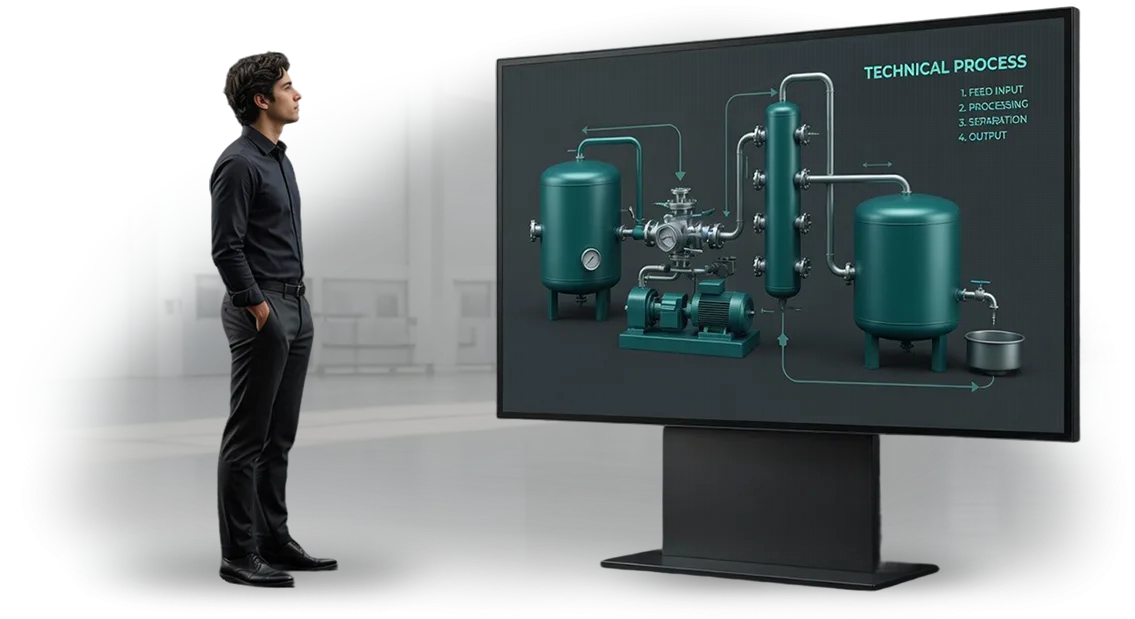
We address this pain: we turn your regulations into step-by-step video instructions for biotech manufacturing. Each stage is shown as it should be performed perfectly: the correct sequence, emphasis on critical points, and clear explanations for a beginner.
The employee sees the standard, remembers it, and repeats it on their line, rather than inventing their own technique.
As a result, employee training stops depending on a mentor’s mood or staff turnover. New operators get up to working speed faster, defects decrease, and the quality of each stage becomes predictable — which directly affects production output and the reputation of your facility.
What Video Instruction Training Gives a Company
In biotech manufacturing, the cost of an error is high: an incorrect order of operations can lead to a spoiled batch, missed deadlines, or safety issues.
Traditional paper instructions and mentoring do not provide a single standard — each employee remembers processes in their own way, and a newcomer has to spend a long time grasping the details.
Video training with visual animation of technological processes solves this problem systematically. Here are the key benefits for a company:
- Fewer errors. The employee sees each stage in the correct sequence and deviates from the protocol less often. Result: less scrap and less unplanned downtime.
- A single standard of knowledge. Everyone works from one video instruction, regardless of experience, shift, or tenure. The “everyone does it their own way” situation disappears.
- Fast onboarding for newcomers. A new employee masters the processes in a short time without distracting experienced colleagues from their work. Time-to-competence is cut significantly.
- Quality control. Management can check how well the material is absorbed and identify gaps in training. This makes it possible to adjust training in time.
- Risk reduction. Fewer production incidents, stable product quality, and peace of mind regarding compliance with technologies.
We create such video instructions: with 3D process animation, voice-over narration, and built-in knowledge checks. This is a ready-made corporate training tool that quickly pays for itself through reduced errors and accelerated staff onboarding.
Video Instruction Formats for Biotechnology Tasks
For a biotech company, it’s important that every employee — from line operator to laboratory engineer — acts according to a single standard. The cost of an error here is high: a spoiled batch, a sterility failure, equipment downtime.
That’s why the video instruction format should match the level of training and the nature of the task, not just be a “nice video.”
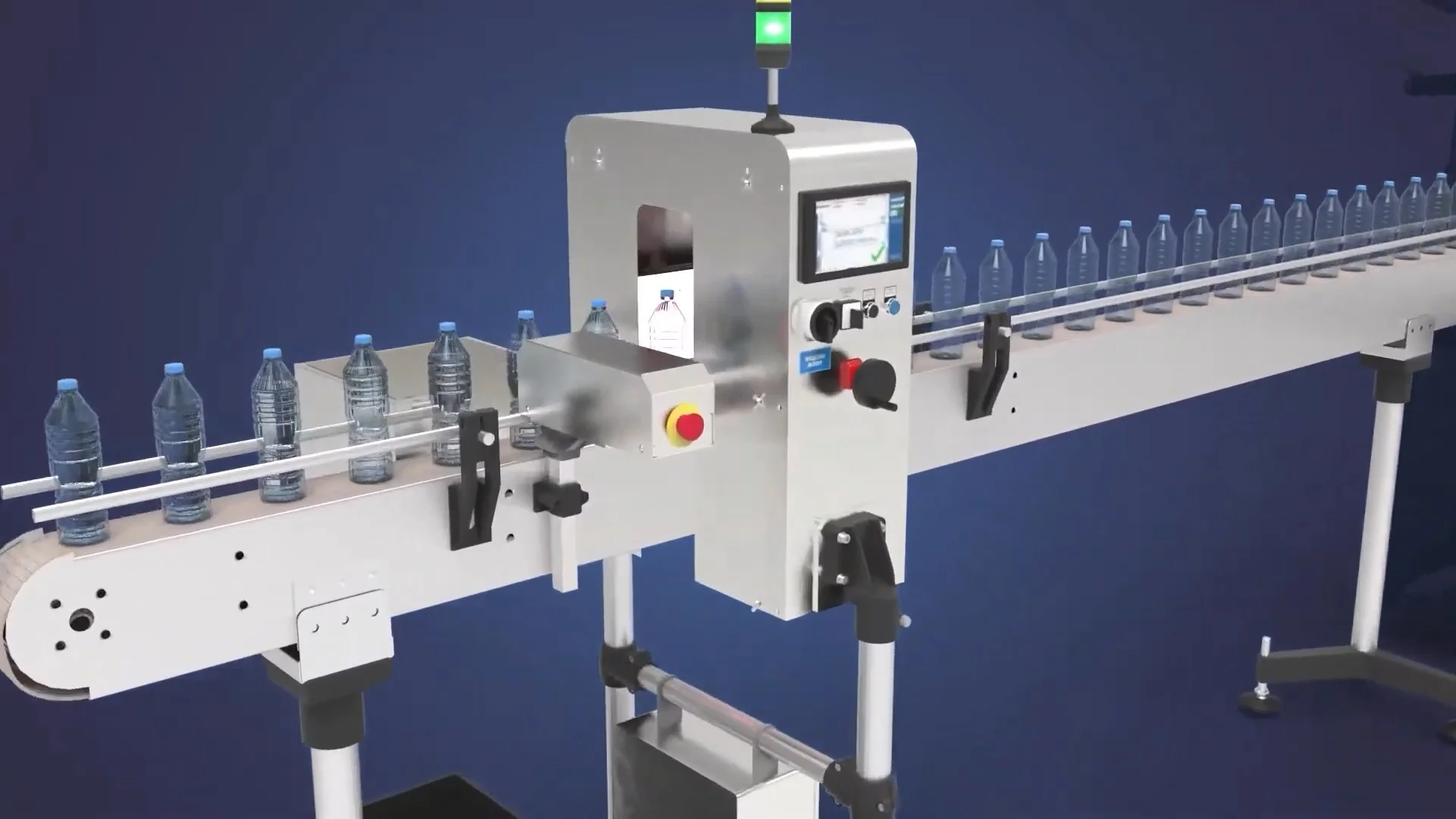
We work with three basic formats that cover different tasks: 3D animation of technological processes, video instructions with real footage, and interactive diagrams with knowledge checks.
In each project, we choose a format to suit the audience and equipment type — the customer gets training that is clear to employees and a predictable result.
| Format | For whom | What it gives the customer |
|---|---|---|
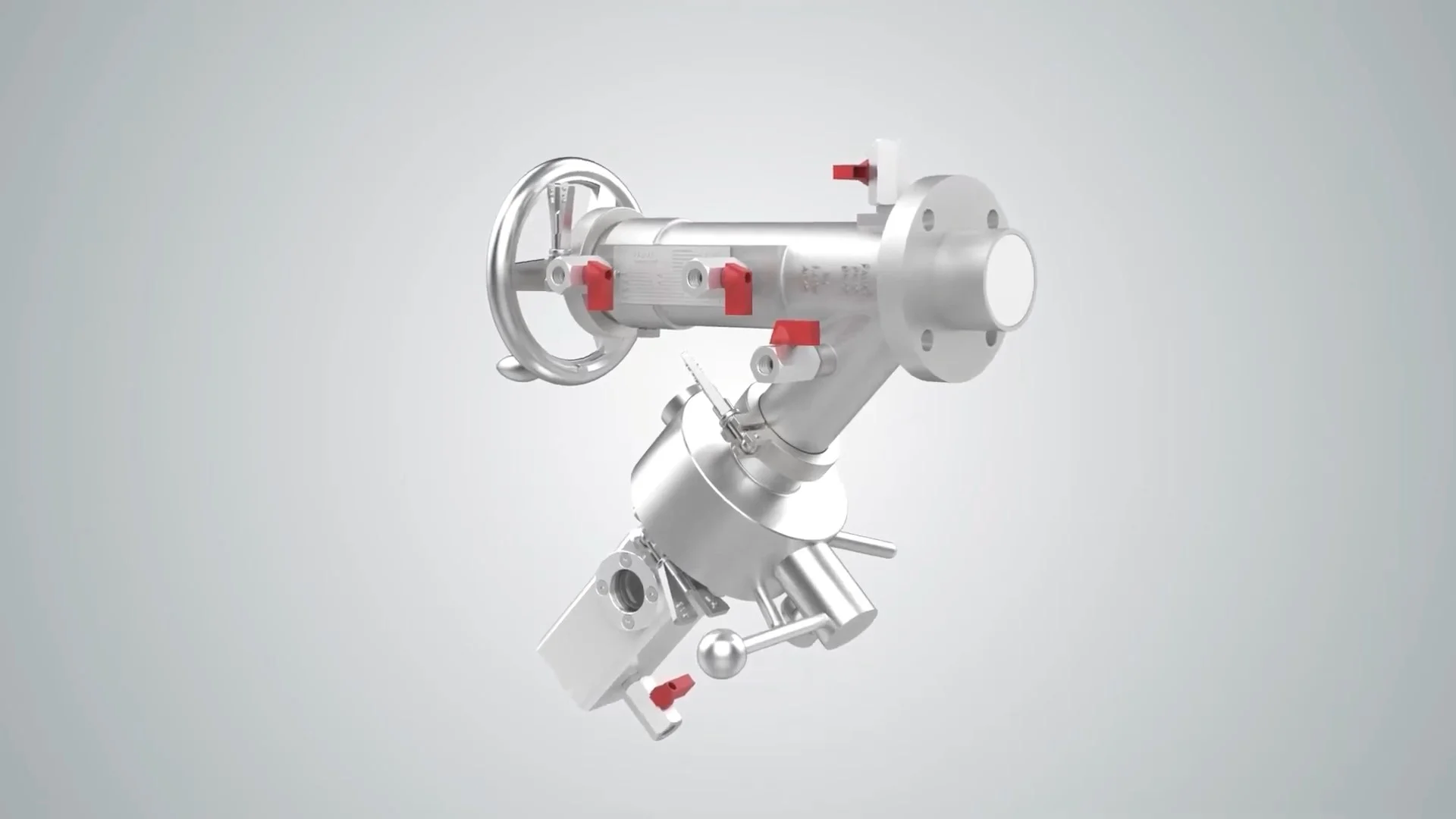
| 3D animation of technological processes | Production personnel, line operators | Safe study of complex installations without stopping production, fewer errors and emergency stops |
| Video instructions with real footage | Laboratory staff, quality control specialists | Accurate replication of operations and sterility requirements, less reagent consumption during onboarding |
| Interactive videos and animated diagrams | Technical specialists, maintenance services | Fast understanding of regulations and action sequences, faster transition to independent work |
By combining formats in a single course, you cover the entire training chain — from initial instruction to certification. The employee sees the full process and then practices the sequence on interactive blocks.
This reduces onboarding time for new people and lowers dependence on experienced staff, who spend hours repeating the same thing.
Such a training system scales without loss of quality: a video created once is used for all shifts, branches, and new employees. The manager gets a standard that works equally well in any department — and sees the result in the form of fewer errors and stable equipment operation.
How Video Instruction Development Works: Stages
In biotechnology, the cost of an error is high: incorrect dosing or a sterility breach can stop the line and spoil a batch. Training video eliminates the risks of the “human factor” if it accurately reflects the process.
That’s why we work transparently: you control each of the six stages, rather than learning about a problem at the end.
-
Brief and production audit. We study regulations and process charts, interview technologists. We record critical points where employees most often make mistakes, as well as training goals.
-
Plan and script. We write a script that leaves no room for double interpretation, and a storyboard. We coordinate them with your quality department and technologist before we start production.
-
Approval at every stage. We show the draft animation step by step so you can see the equipment and hand movements and make edits while they are still inexpensive.
-
Implementation — CGI animation of the process. We play through the entire cycle in detail: from raw material loading to quality control. We emphasize actions critical for cleanliness and safety standards.
-
Testing and launch. We give you a pilot version for real operators to evaluate. We collect feedback, make edits, and upload final files to your learning management system in the required formats.
-
Support. Production changes — the video updates too. We keep the material relevant: if a regulation or equipment changes, we quickly refine the necessary frames rather than creating the video from scratch.
What the Video Instruction Delivery Package Includes
When we deliver a project, you don’t just get a set of video files — you get a complete training system ready to launch.
We know how important it is that materials don’t sit on a virtual shelf, but actually reduce the time it takes for new employees to become productive and lower the number of errors on the production floor. That’s why the delivery package is designed down to the smallest detail.
- Final video instructions for all approved scripts. Every video is polished to the second; all key points of the technological process are shown clearly and without distortion.
- A set of adapted versions — full videos for detailed study, short cheat sheets for quick review, and fragments for examining individual operations. An employee can always choose the right format for the task.
- Trainer’s methodology guide — how to embed the videos into an in-person program, which operations to emphasize, and how to test material comprehension. Your mentors will save hours of class preparation.
- Accompanying documentation for your IT department — instructions for uploading to the learning management system, setting up access rights, and optimal viewing parameters. Implementation goes without surprises or lengthy approvals.
- Lifetime access to final materials through secure cloud storage. You can download the full archive at any time, create backups, or transfer files to another branch.
- Post-production support for one month after launch. We make minor edits for free, answer your employees’ questions, and help with technical details so nothing blocks training.
All materials remain your property forever, with no restrictions on internal reproduction. Use them for initial training, annual certifications, and refresher courses.
If technological processes change over time, you can quickly reshoot or edit the needed episodes — and we will help update the videos so they don’t lose quality or clarity.
Case Study: How Video Instructions Reduced Production Downtime
When a production line stops, every hour of downtime is expensive: deadlines are missed, staff are idle, and costs rise. The customer — a biotech company with experienced personnel but high turnover at the bottling section — faced exactly this.
New employees trained from text regulations, errors repeated, and onboarding took up to three months.
We proposed replacing part of the instruction with short video instructions shot right on the production floor. Instead of abstract diagrams — real operator actions, key control points, and common mistakes.
The video became part of the onboarding program: new hires watched it before starting a shift, and the mentor only checked practical skills.
Results for the first quarter: time-to-competence decreased by almost 40%, the number of bottling errors dropped by half, and line downtime caused by incorrect staff actions fell by a third.
The production manager noted: “Employees have stopped pestering supervisors over trifles, and new operators are working confidently after just two weeks.”
After the pilot project, BioTech — that’s the company’s name — switched all key areas to video instructions. A repeat order the following year confirmed: the investment paid off through stable line operation and reduced burden on mentors.
This case shows how video instructions become a tool for operational efficiency, not just training material. If you have similar tasks — we are ready to make the same project for your production process.
How to Choose a Video Instruction Format for Your Task?
The choice of format is determined not by video length, but by the complexity of the technological process and the employee’s skill level.
A simple operation can be shown in a short video, while multi-stage biotech processes require detailed CGI animation, where internal mechanisms and hidden reactions are visible.
To avoid mistakes, ask three questions: how often the employee refers to the instruction, what the cost of an error is, and what experience newcomers have. If the process affects safety or product quality, you need the most visual format with emphasis on critical points.
| Format | When to choose | What it gives the employee |
|---|---|---|
| Short video (1–2 minutes) | Simple operations, frequent repetition | Quick reminder, minimum time to get up to speed |
| Step-by-step video instruction (5–10 minutes) | Medium complexity, multiple stages | Detailed sequence of actions, ability to pause and return |
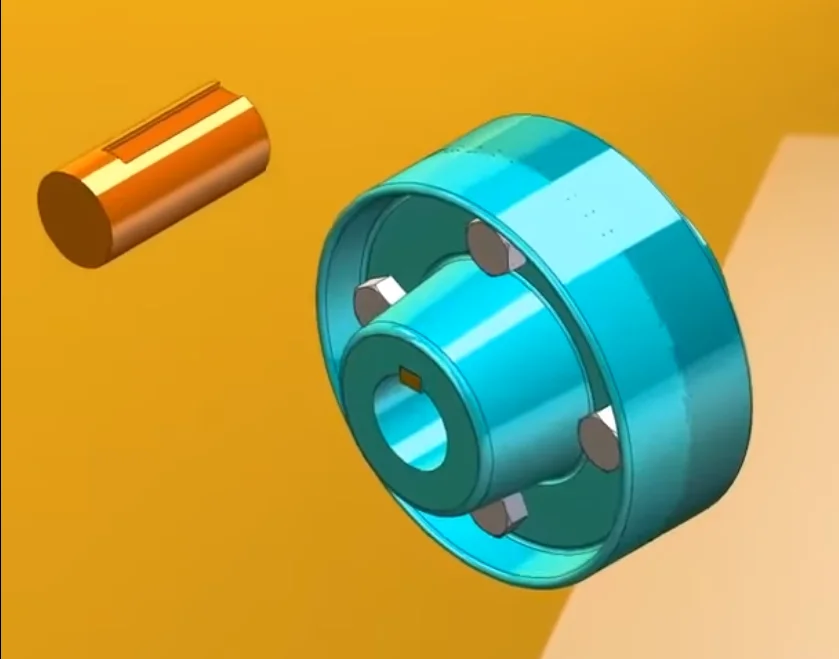
| CGI process animation | Complex biotechnological reactions, hidden equipment | Clear “inside” picture of the process, fewer errors and less training time |
We start work with an analysis of your task: we assess the complexity, audience, and level of detail.
For biotech manufacturing, we often combine real equipment footage with CGI animation — this covers both scenarios: quick review for experienced employees and in-depth study for beginners.
As a result, you get an instruction that actually reduces onboarding time and lowers the risk of errors.
Frequently Asked Questions About Video Instruction Development
Customers from the biotech industry come with the same questions: whether the video creation will take too long, what to do when regulations change, and who is responsible for the result. Let’s address the main concerns — and show how we resolve them in practice.
How long does video instruction development take?
The timeline depends on the complexity of the process and the approval of the source regulations, but usually fits within 2–4 weeks. We set stages and control points in advance, so you always see where the project stands.
If the process is already described, we can assign a separate team and reduce the timeline to a week — for urgent launches.
What if the technological process changes after the video is released?
Instructions are built as a set of scene blocks, so one stage can be replaced without reshooting the entire video. This works both a month and a year later: you pay only for updating the fragment, not for a new project.
Based on our team’s experience, about 70% of customers return with edits within the first year — and that’s normal; we plan for this in support.
What guarantees do you provide?
The contract specifies deadlines, the scope of deliverables, and the acceptance procedure. If any block does not meet the technical specification, we refine it at our own expense.
In addition, we guarantee correct video operation on your internal platforms — from the training portal to employees’ mobile devices — and advise on how to package the files for departments.
Still not sure how a video instruction will fit into your training system? Ask us — we’ll send examples of videos and explain how we address the needs of your specific process.Make Training Clear: Order Video Instructions
In biotechnology, every employee error is expensive, and complex processes are hard to explain with text. Video instructions with CGI animation turn abstract diagrams into clear scenarios: the employee sees each stage of work and remembers the sequence of actions. We have already helped dozens of companies make training clear, and we offer the same to you.
To order development, you don’t need to understand video production. You describe the task — we handle the script, animation, voice-over, and editing.
How we work
The project follows a transparent plan, and you see the interim result at every step:
- You send a short description of the task or simply tell us about the problem — we clarify the details and timeline.
- We prepare a script and a frame-by-frame plan; you approve the logic of the instruction.
- We create CGI animation of the technological process based on your regulations.
- We add voice-over, text prompts, and a convenient viewing format.
- We show a draft, make edits — you get the finished video within the agreed timeline.
- If needed, we help with deployment in your training system and adapt versions for different employee groups.
We coordinate every stage with you, so the result will exactly solve your problem. You get video instructions that employees will rewatch and use in their work — not abandoned files on a server.
Would you like to know the cost and timeline? Contact us — send a description of your task, and we will prepare the project estimate and work plan for your process. We’ll explain how animation will fit into staff training and which formats are suitable for your team.