

Personnel Errors and Audits: Why Pharmaceuticals Need Video Instructions
In pharmaceutical manufacturing, the cost of an employee error is measured not only in time and materials, but also in the company's reputation, audit results, and patient safety.
Even a single wrong step during equipment preparation or batch labeling can lead to a line stoppage, defective products, and regulatory directives.
At the same time, personnel change, while documentation remains complex — and that is exactly when standards start to be followed “from memory.”
A production audit reveals nonconformities often caused not by negligence, but by insufficiently clear training.
Text-based regulations are overloaded with terms, a mentor is not always available, and new employees are forced to absorb information through retelling from colleagues.
As a result, the same operations are performed differently, and inspectors record deviations that could have been avoided.
Video instructions solve this problem systematically: they capture a single reference standard for performing an operation in a visual form.
The employee sees the correct sequence of actions, critical control points, and typical mistakes — right when they are preparing for work or undergoing training.
This is especially important in pharmaceuticals, where process standardization is not a matter of convenience, but a direct GMP requirement and a condition for consistent quality.
Moreover, video instructions become an evidentiary basis for audits. A manager can show inspectors exactly how personnel were trained and which standards have been communicated to each workstation.
This reduces the number of findings and speeds up inspections, because the audit team sees real training tools rather than abstract documents. Reference-level knowledge of operations reduces the human factor, and repeated viewings help quickly onboard new employees.
We develop video instructions for the specific processes of your pharmaceutical production: from primary documentation to complex technological operations.
Instead of generic files, you receive training videos used by line managers, the quality department, and the training center. Errors become rare, audits go more smoothly, and the training process no longer depends on whether a mentor is available.
What 3D Animation Brings to Employee Training
Employee training in pharmaceuticals is not just knowledge transfer. The quality of the product, patient safety, and the company's reputation depend on how accurately a person understands the technological process.
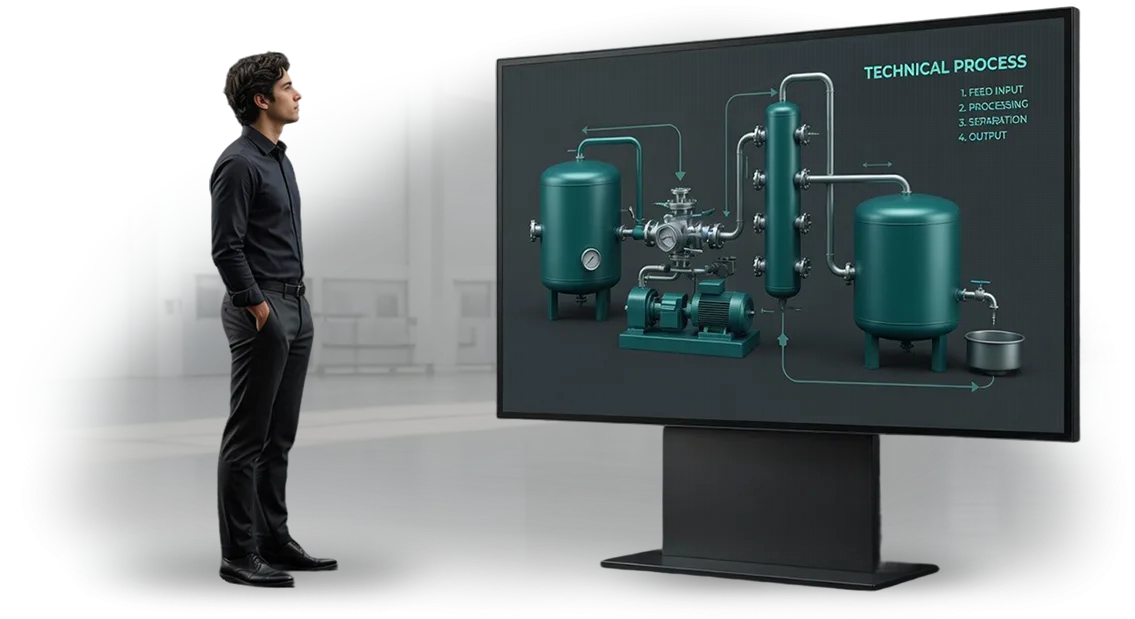
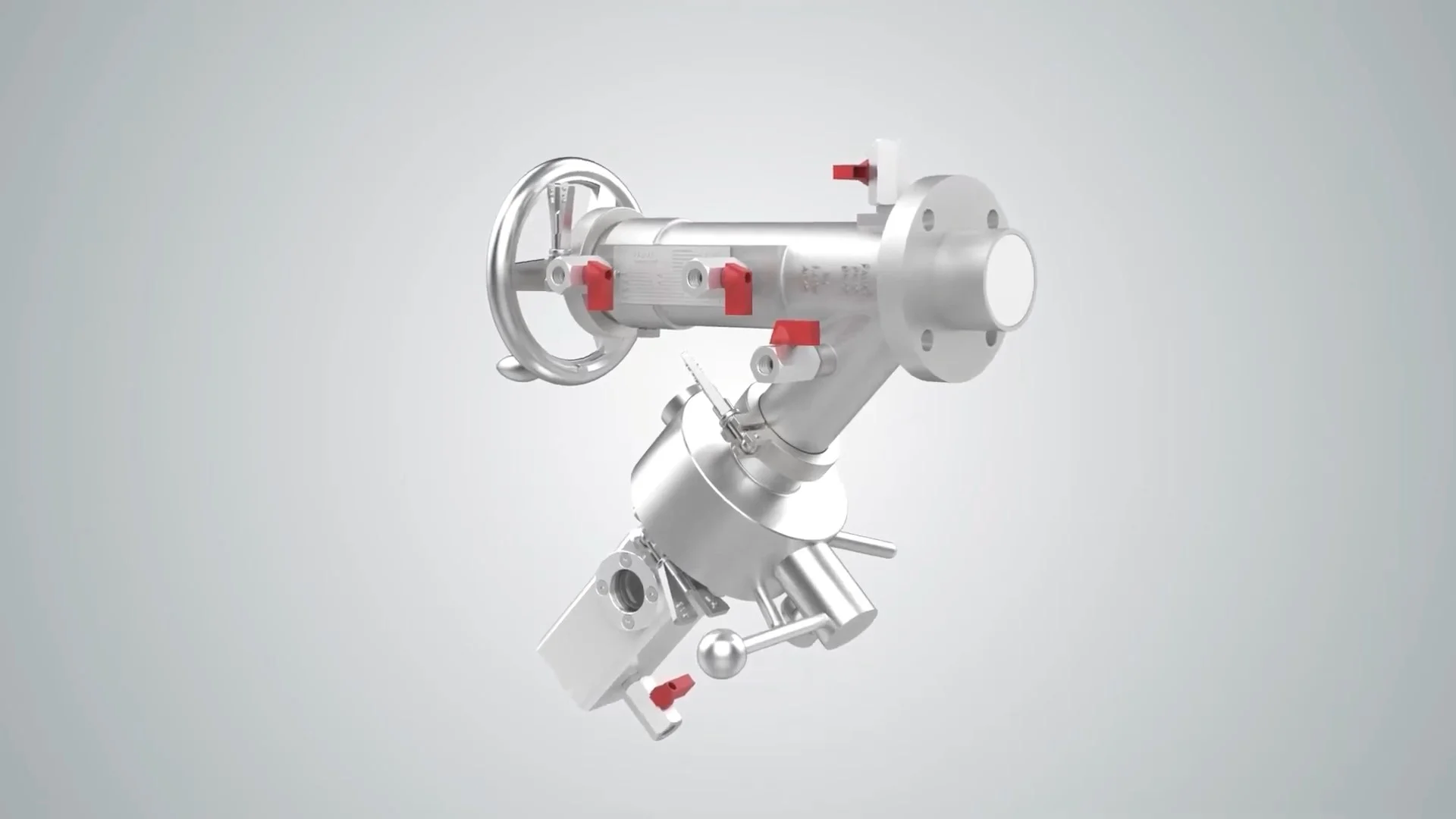
Text-based regulations and flat diagrams overload perception, and video footage cannot show the internal structure of equipment or the movement of substances the way 3D process animation can.
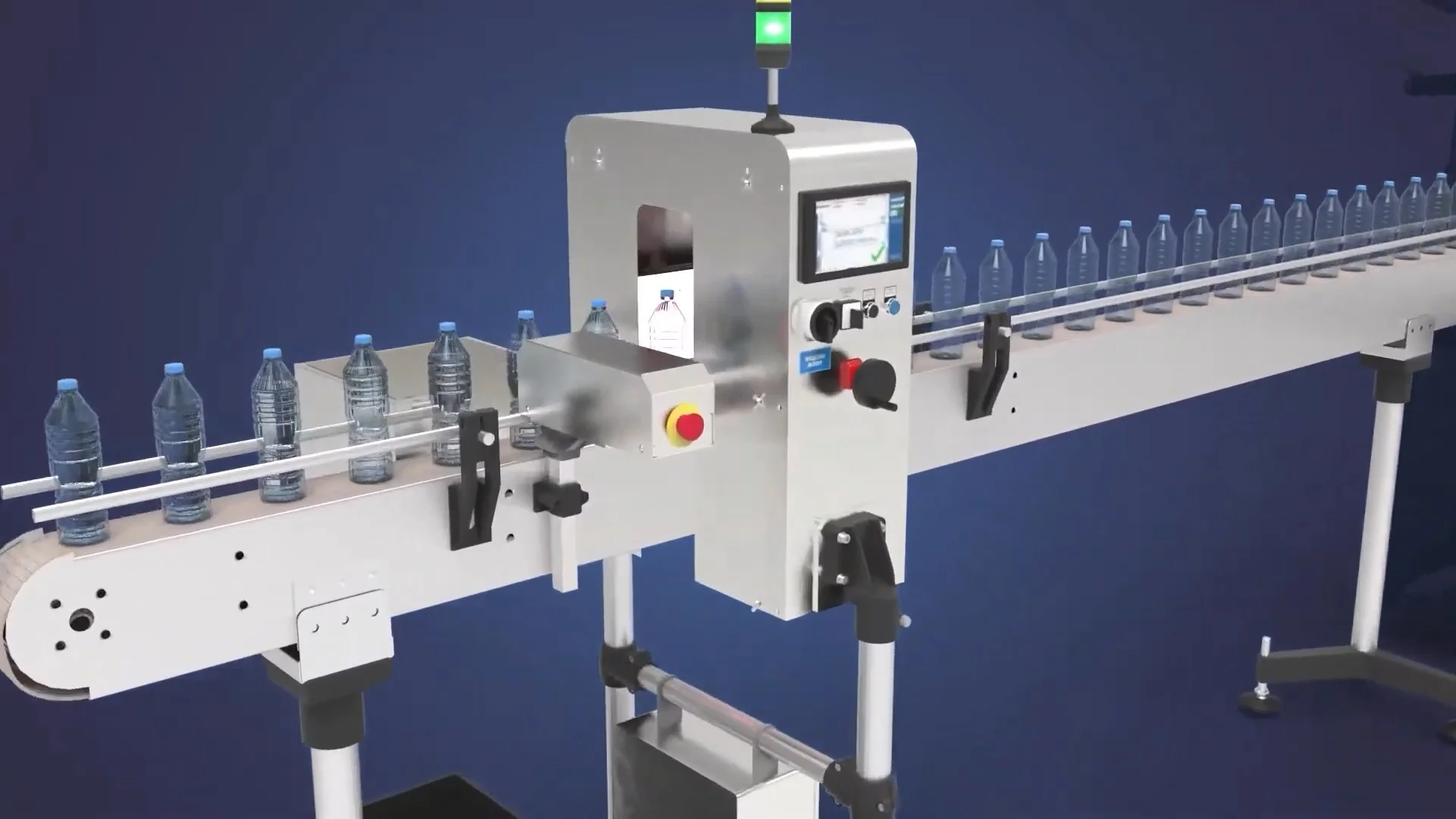
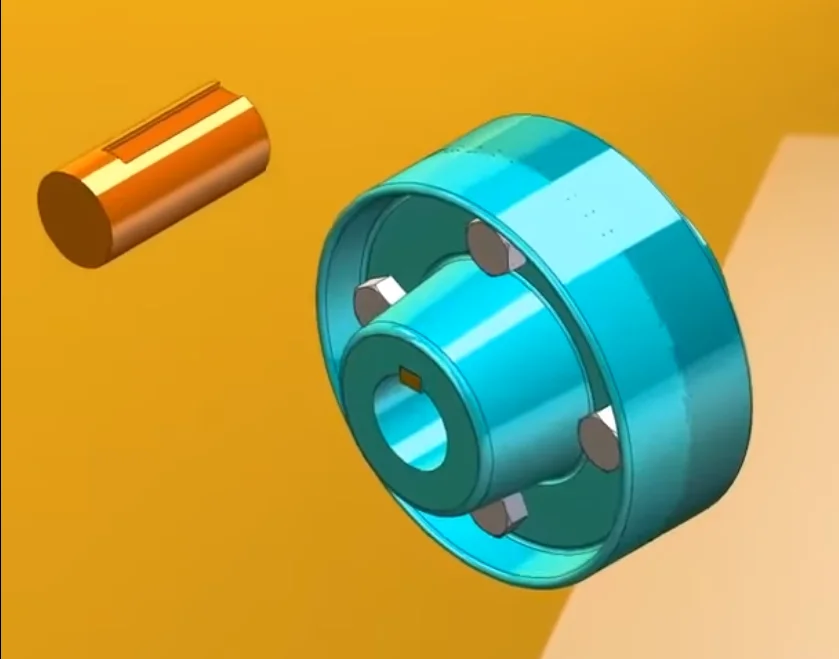
3D animation of technological processes turns a complex instruction into a clear film where every stage is shown sequentially and in detail.
The employee does not decipher an abstract diagram but observes exactly how the line works, how components interact, and what to pay attention to.
This format of digital instructions works faster and is more understandable than any static material — which means knowledge is absorbed from the first viewing.
Technology visualization helps reduce errors when performing operations: a person remembers the correct sequence of actions and sees the consequences of violations.
In pharmaceutical training this is especially important — the cost of an error is high, and a 3D model allows rehearsing a scenario without risking production. The employee stops acting blindly and confidently performs even rare regulatory procedures.
Visual training accelerates the adaptation of new employees: instead of weeks of reading regulations, there are a few short videos that can be reviewed at any time on any device.
The company gets a predictable result: fewer defects, faster ramp-up to full capacity, and less strain on mentors. Experienced specialists also refresh their knowledge faster when technologies change, because updating a 3D video is easier than rewriting a multi-volume manual.
In the end, 3D process animation becomes not an expensive decoration, but a working tool that pays for itself through reduced training time and fewer production errors.
For more than ten years, we at our team have been creating such visualizations for pharmaceutical companies, and every project solves a specific customer task: from personnel adaptation to standardizing operations across all sites.
Formats of Instructional Videos for Pharmaceuticals
Each training task in pharmaceuticals requires its own format: what works for an introductory briefing will not suit practicing a complex operation.
The format directly determines how quickly an employee masters the material, whether they remember the sequence of actions, and whether they will make mistakes.
That is why, before creating a video, we select a format based on the specific task, audience, and characteristics of your production.
Below are the typical formats that cover most corporate training tasks in pharma.
| Format | When It Works Best | What It Gives Employees and the Business |
|---|---|---|
| Short video | New regulation, introductory briefing, procedure update | Quick launch without time off work, simple memorization |
| Modular video course | Full training on a standard or product line | Structured knowledge and a clear control system |
| Interactive instruction | Complex operations, abnormal situations, work on equipment | Risk-free practice for production, lasting skill |
| 3D process animation | Demonstrating closed, hazardous, or hard-to-reach stages | Complete clarity and a unified understanding of the technology |
| Video with questions and pauses | Checking understanding after each block | Transparent assessment of employee readiness for independent work |
Often, the best result comes from a combination of formats: a short video for quick launch and an interactive course for deeper practice.
We design the program so that every element serves the overall goal — reducing errors, accelerating adaptation, and consistently maintaining standards.
Tell us about your task — we will suggest a format that solves it with minimal costs and maximum benefit for your team.
Stages of Creating Corporate Video Instructions
Working on a video instruction is not just “shooting a video,” but a structured process in which each stage brings you closer to a clear and effective training material.
We handle all the organization: from diving into your technological processes to final integration into your employee training system. You get a transparent schedule, clear approval checkpoints, and a result that is actually used.
-
Briefing and immersion in your technological process. We study the regulations, talk with technologists and operators, and collect real work scenarios. The output is a precise understanding of what exactly the video instruction must demonstrate and in what order.
-
Training video script. We turn technical steps into a clear visual sequence. We align the text, logic, and emphasis with you so the instruction answers the employee's questions “what to do” and “why exactly this way.”
-
Style development and 3D prototypes. We show what the key components and actions will look like. This allows you to see the future video in advance and adjust details before full animation begins, saving your budget.
-
Animation production. Using professional equipment and proven tools, we create dynamic 3D scenes exactly following the approved script.
You get a visualization of processes that cannot be shown with regular filming: the internal structure of equipment, the movement of liquids and reagents, and hidden mechanisms.
-
Animation review and revisions. We show intermediate versions and make corrections based on your feedback. We finalize the version — you are confident that every frame matches your regulations and quality standards.
-
Voiceover, subtitles, and final editing. We add professional narration, synchronize timings, and choose the soundtrack. The finished file is immediately ready for upload to your LMS or corporate portal.
-
Implementation and support. We provide source materials and usage instructions, and if necessary, help integrate the video into e-learning. We stay in touch so we can update the video when regulations or equipment change.
What Is Included in the Delivery: A Complete Kit for Your Production
You receive not just individual videos, but a complete training system for pharmaceutical production. The kit includes all the materials you need to launch employee training as early as next week — without searching for contractors or making refinements.
- A set of video instructions for every technological process, from equipment preparation to packaging of finished products.
- Project source files: scripts, storyboards, animation files. If a regulation changes, you can quickly make edits without reshooting.
- Methodological materials for instructors: checklists, tests, and guides for conducting sessions. They help assess material comprehension and confirm employee qualifications.
- Integration with your LMS: course import, task assignment, and automatic progress tracking. You can see who has completed training and who is falling behind.
- Full rights to the content. The videos remain your property — they can be reproduced, updated, and used on any internal media.
- Post-support: a personal manager helps with placement in the system and answers questions throughout the first month of operation.
All material is adapted to pharmaceutical standards: the videos account for cleanliness, safety, and documentation requirements. You get a single up-to-date source of knowledge rather than scattered presentations. With this kit, launching training takes days, not months.
Case Study: Optimizing Employee Training at a Pharmaceutical Plant
Training new employees in pharmaceutical production is a task with a high cost of error. Newcomers need weeks to master the regulations and bring operations to automaticity: even a small mistake at this stage can lead to defective products or delayed batch release.
For one plant, we developed a series of CGI video instructions — visual animations of technological processes replaced part of the paper manuals and lectures.
Instead of abstract diagrams, the employee sees an accurate 3D model of each step: equipment preparation, sterilization, packaging. Any fragment can be revisited at any time without distracting a mentor.
Project Results
The adaptation time for new operators was reduced by more than a third — from eight weeks to five. The error rate in critical operations fell by a quarter, and new employees began asking questions about regulations twice as rarely.
The plant ordered a second series of videos for other areas, and the methodology was included in the annual personnel certification program.
This confirms that a successful CGI project pays off not only at the moment of implementation, but also as a systematic tool that saves mentors' time and improves training quality.
How to Choose the Right Video Instruction Format for Pharmaceuticals?
Choosing a video instruction format for pharmaceuticals is not a matter of taste, but a task with three variables: what the process is, who will be learning, and what the regulations require.
There is no universal solution: what works perfectly for training on a packaging line is useless for explaining aseptic rules.
The main criterion is whether the instruction needs to show processes invisible to the eye: the movement of airflows, the distribution of sterile zones, or the consequences of an error at the molecular level.
If so, CGI animation is the right choice, because it literally opens the employee's eyes to what cannot be seen on a real production floor.
The second important point is engagement and memorability. An employee watching a video for the tenth time will not absorb monotonous narration. Therefore, for long or safety-critical processes, it is better to choose game-based formats and scenarios with action choices.
They make employees make decisions independently and immediately see the consequences of an error. Simple operations of five steps are enough to show with a classic video briefing — there, animation would only add cost without noticeable benefit.
The third criterion is compliance with pharmaceutical standards. Training must be recorded, reproducible, and verifiable. The technology used to produce the video does not matter — what matters is that you can integrate it into your e-learning system and track completion.
That is why we always start not with “which format looks nicer,” but with a brief: you tell us where employees struggle, which mistakes are the most costly, and how training currently works.
We will propose the format ourselves — sometimes it will be a combination of animation and interactive inserts, sometimes a short two-minute video.
Practical advice: do not choose a format based on a picture in a portfolio. Request a demo specifically for your technological process — that way you will see how convenient it is for employees to learn.
We have already done such projects for pharmaceutical manufacturers, where replacing text regulations with video instructions halved the number of questions from new employees.
Call or write to us — we will send examples similar to your task and suggest which format will deliver results fastest.
Frequently Asked Questions About Developing Corporate Video Instructions
Before launching training, customers most often ask about cost, timelines, implementation, and animation quality. We answer honestly and briefly — we have been making video instructions for pharmaceutical production for over 10 years and know what matters to a manager.
How much does a video instruction cost?
The cost depends on the number of scenes and the complexity of the 3D models. After analyzing the task, we provide a fixed estimate — with no hidden surcharges.
What are the development timelines?
A typical project takes 2–4 weeks. We set the schedule before starting and stick to it: you approve each stage and make edits without extending the timeline.
How do we implement the training?
The video is embedded into the e-learning system, portal, or work tablets. We help with the integration — you simply include the video in the program.
What will the animation quality be like?
We create 3D animation that accurately reproduces your equipment and processes. Employees see a clear picture, memorize operations faster, and make fewer mistakes.
What guarantees do you provide?
You approve the script, intermediate versions, and the final version. If any inaccuracy is found, we will fix it at no additional charge.
Order Video Instruction Development for Your Company
Pharmaceutical processes do not tolerate inaccuracies: an employee error can cost reputation, time, and resources.
Video instructions solve this problem — they turn complex regulations into clear, understandable algorithms that employees absorb many times faster than text instructions.
We take on the project turnkey: from script to final files. First, we conduct a free expert consultation during which we analyze your processes and training goals.
Then we prepare a project estimate — it takes into account the specifics of pharmaceutical production, the number of scenarios, and the required format of materials. You receive a commercial proposal without unnecessary expectations or hidden terms.
When you order video instruction development from us, you get:
- expert consultation on the structure and format of training specifically for your tasks;
- a project estimate within a couple of days — transparent, with all details taken into account;
- turnkey employee training: script, filming or CGI animation, editing, final version;
- ready-made videos that reduce the onboarding time for new employees to two or three shifts;
- the ability to quickly update materials when regulations change;
- support at all stages and a guarantee of the result — you accept the work only when it fully satisfies you.
Contact us to order a video instruction for your pharma company. We will consult you, calculate the cost, and prepare a commercial proposal in the near future — without formalities and with a focus on your benefit.