

Instructions for wood processing: why the old approach doesn't work
At wood processing plants, injuries and staff errors are costly: line stoppages, equipment damage, downtime, and reputational risks.
Yet most safety instructions are outdated texts and diagrams that employees skim just to "check the box." Boring training isn't memorable, and therefore doesn't change behavior on the shop floor.
The danger is that formal training creates a false sense of control. A manager sees signatures in a logbook, and a week later the operator breaks the sequence of operations when servicing the sawmill.
Staff errors repeat because not a single vivid image of a correctly performed action remains in their memory.
That's why classic lectures and static videos don't reduce the number of incidents.
An employee shouldn't just read about workplace safety — they need to see the technological process with their own eyes from the perspective of their own actions: where the hand goes, where the lever is, which moment is critical. The goal of training is to make the instruction part of muscle memory.
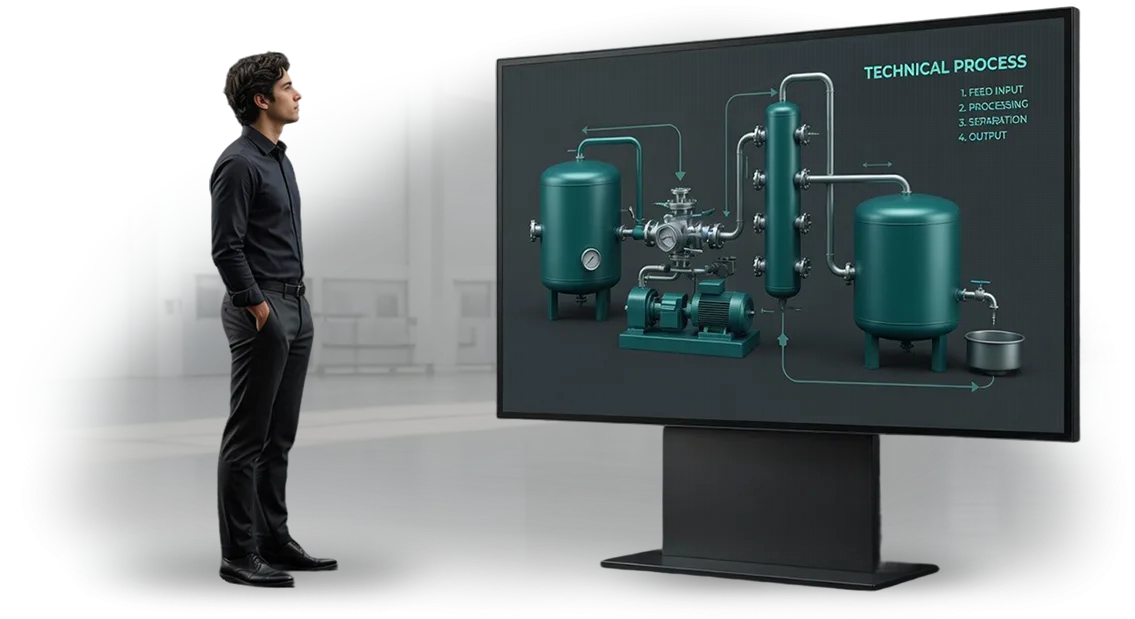
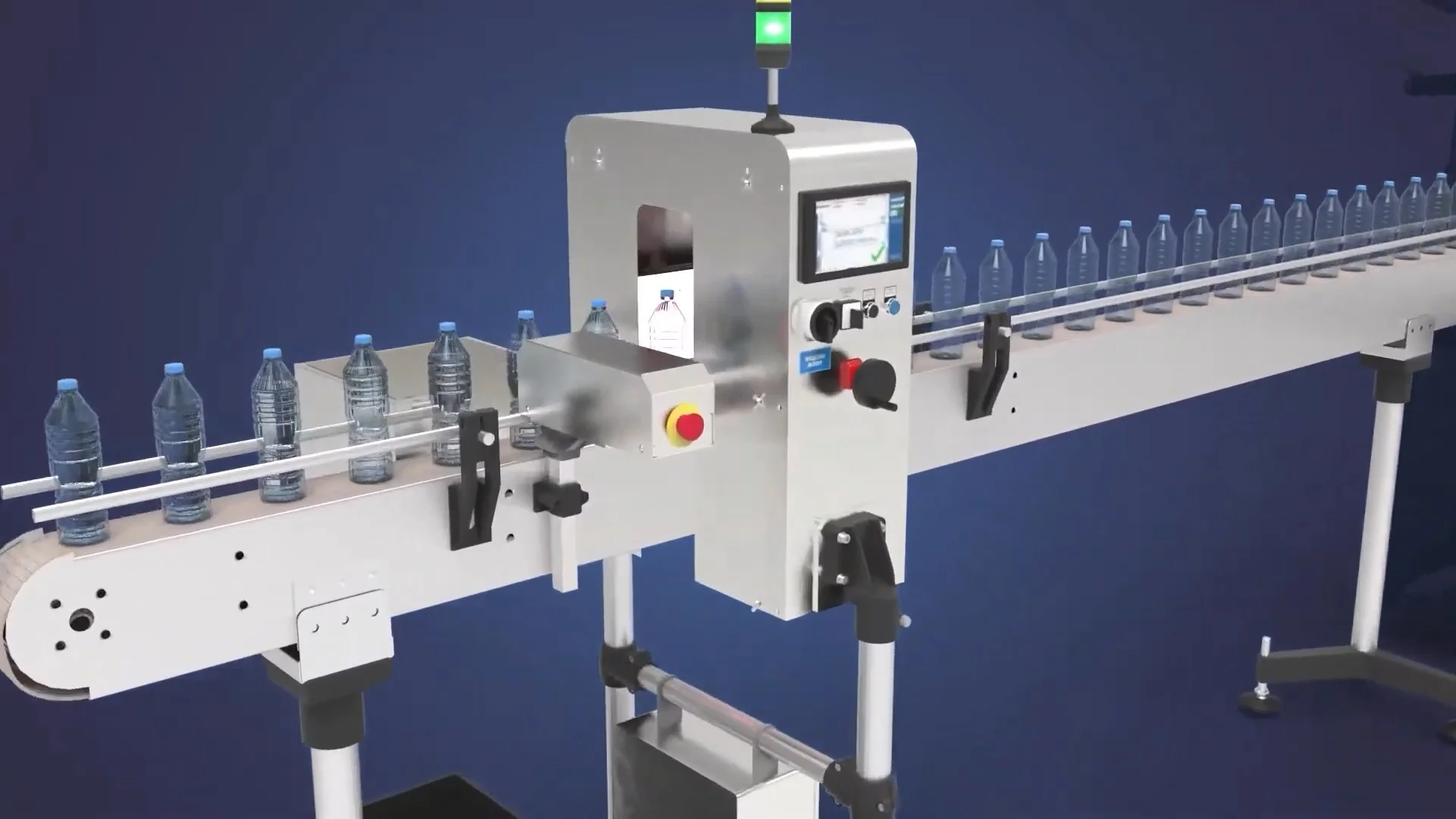
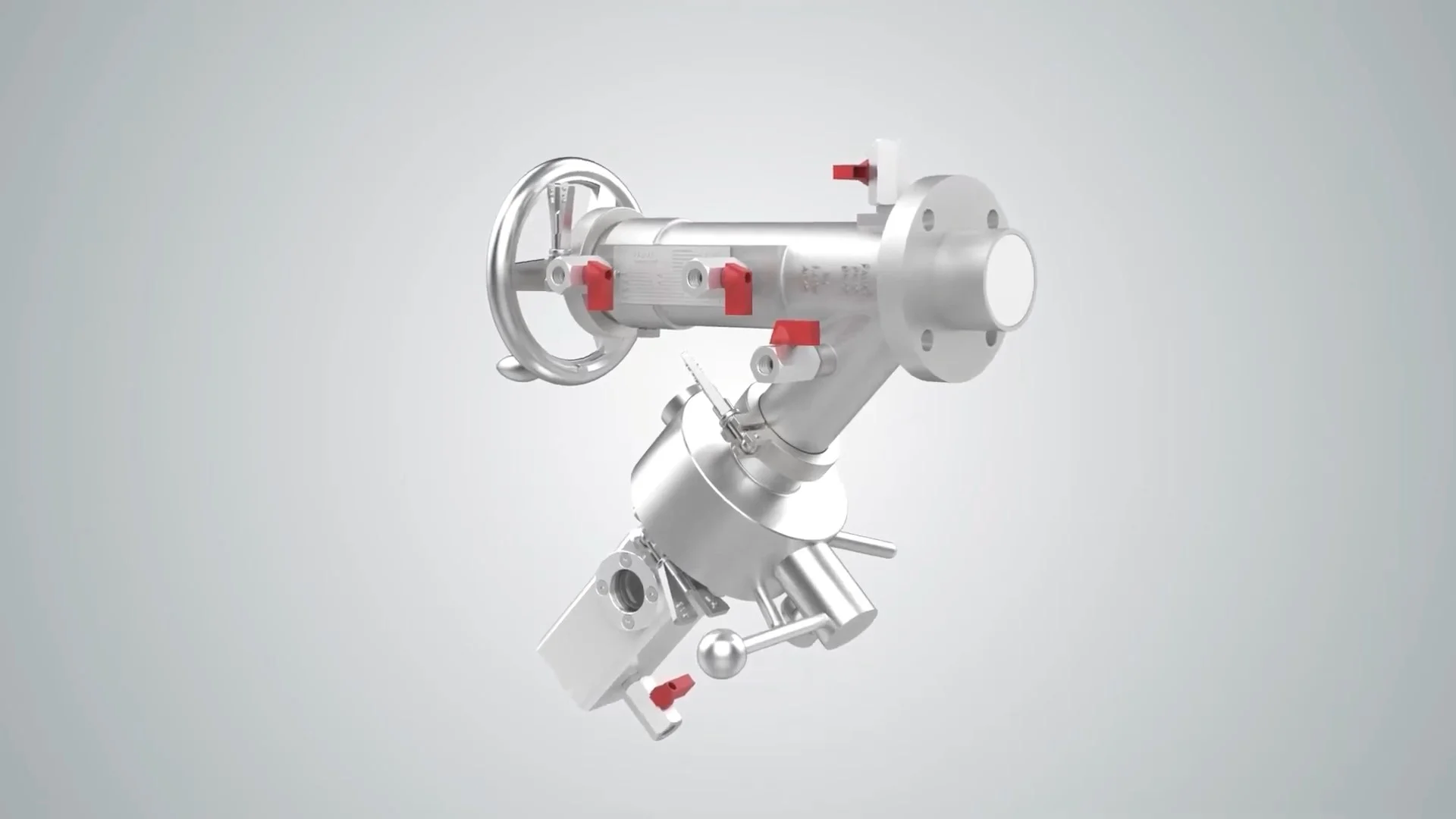
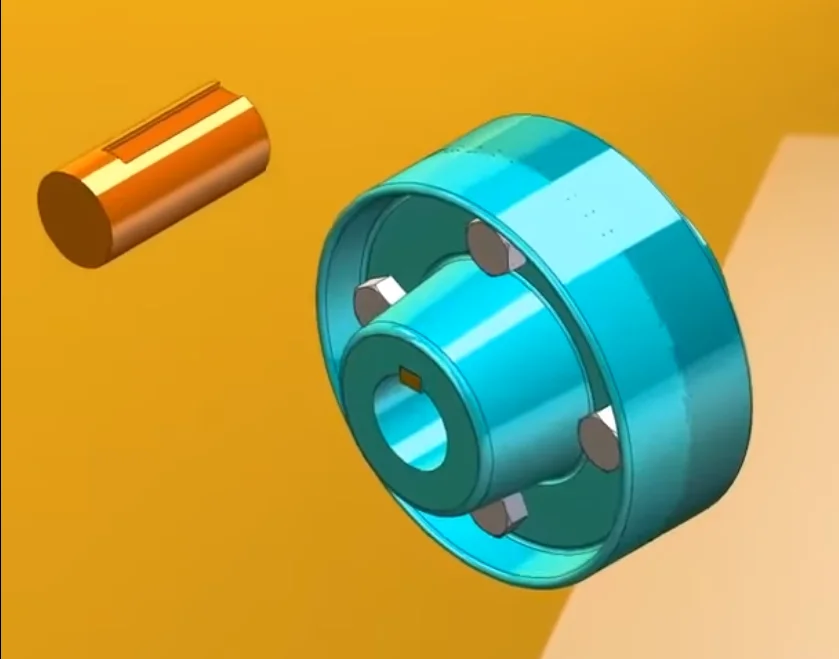
We solve this problem with interactive instructions based on CGI animation of technological processes. Instead of flat diagrams — a clear 3D model of wood processing where each step is shown sequentially and with the right level of detail.
An employee can pause, replay, examine a complex component — material is absorbed at a comfortable pace.
For the company, this means predictability: fewer errors, fewer injuries, stable operation quality. And employee training turns from a formal procedure into an understandable tool that genuinely reduces production risks.
What you get from CGI videos for employee training
At our team we create CGI videos for wood processing that turn training from a formal instruction into a clear and memorable process.
Working with dangerous equipment and complex technological chains doesn't forgive mistakes — so what matters isn't just how the material is presented, but how well it's absorbed. Below are four measurable benefits the client receives.
Material comprehension
Texts and diagrams require abstract thinking, while video shows the process as it actually happens. The employee sees the sequence of operations, material flow, component operation — and remembers it visually.
As a result, new workers start working independently faster, and experienced ones ask their mentor fewer follow-up questions. The material is absorbed from the first viewing, without repeated replays or extra hours of additional explanation.
Fewer accidents
Hazardous situations in wood processing can't be practiced on live equipment. CGI allows you to walk through error scenarios and their consequences without risk to people or machinery. The employee sees what a violation leads to — and acts more carefully in real conditions.
The company gets fewer injuries, breakdowns, and stoppages. Accidents are direct losses, and training works like insurance that pays for itself after the very first prevented incident.
A uniform training standard
Every employee goes through the same scenario, filmed according to your regulations. There's no need to rely on a specific mentor's experience — the video sets the benchmark, identical across all shifts and sites.
This simplifies quality control and onboarding of new employees. Even if the team changes, the standard for performing operations stays stable — and so does the outcome.
Saving mentors' time
Mentors spend hours repeating the same introductory information. The video handles the routine: the employee studies the process on their own, and the mentor only steps in for complex cases and questions.
Experienced specialists' time is no longer consumed by repetitive briefings. The result: faster onboarding, lower training costs, and more time for actual production tasks.
CGI instruction formats for different production tasks
In wood processing, the price of a mistake is high: an incorrect sequence of actions can ruin a workpiece, break a machine, or cause an injury.
Text instructions and photos don't convey the dynamics of a process or the nuances of working with equipment — employees memorize the algorithm with distortions, which leads to defects and downtime.
CGI animation solves this: it shows each step accurately, clearly, and to a uniform standard. But one video doesn't cover all needs — a beginner needs a different level of detail than an experienced operator, and complex processes require a separate format. That's why we've divided short training videos by key production scenarios.
| Format | For whom | What it gives the client |
|---|---|---|
| Routine operation scenarios | New employees | Fast onboarding without pulling experienced mentors away; the employee works safely and without defects from day one |
| Detailed animation of complex processes | Experienced operators, machine setters | Fewer errors during changeovers and non-standard part processing; less time resolving non-standard situations |
| Comprehensive introductory program | All production specialists | A uniform work standard across all sites; simplified quality control and improved workplace safety |
This structure covers all training levels: from initial familiarization with the shop floor to practicing rare and hazardous operations.
You get a ready-made package that's easy to integrate into your existing training system — no separate training center or complex infrastructure required.
All videos are created on professional equipment and adapted to your specific needs: specific machines, tools, and process sheets. This isn't a "one-size-fits-all picture" but an accurate model of your production that reduces costs and makes training predictable.
How the project goes: from brief to launch in 6 steps
We've structured the process so you always know what stage the video is at and what happens next. No "black boxes": each stage ends with a concrete result that you see and approve.
Below are the six steps a project goes through from the first brief to uploading the video into your learning management system.
-
Brief and material audit. We gather requirements: which operations to show, who the audience is, and what mistakes they make most often. We study your regulations, photos, and production videos — this is the foundation for realistic animation.
-
Script and storyboard. We turn the technological process into a clear sequence of shots. You receive the voice-over text and a visual description of scenes and approve them before work starts — this saves time on rework.
-
3D modeling and animation. We create digital copies of your equipment and parts, replaying every movement. At this stage you can already see what the video will look like and request changes to geometry or pacing.
-
Interim approval. We send a draft fragment of the animation. You check whether it matches the real technology and leave comments. We make changes before the final render — this eliminates surprises at delivery.
-
Final editing and voice-over. We assemble the animation, add the narrator's voice, subtitles, and graphic hints. We also check that every instruction step is visually clear and requires no guesswork from the employee.
-
Launch and material handover. We deliver the finished video in the formats your training system needs. We also provide source files and brief instructions on updating the video if the production technology changes.
What's included in the CGI instruction package for staff
The CGI instruction package from our team includes everything needed to launch training without bringing in contractors.
You get not just videos but a working tool: ready content, documents, and support at every stage of implementation — from the first screening to regular updates for new standards.
- Ready-made video instructions for wood processing operations — in formats adapted for viewing on any device: from a machine screen to a tablet on the shop floor.
- Project source materials — graphic elements, scenes, and files so you can make edits with your own team or order updates without losing quality.
- Methodological recommendations for trainers — how to integrate the video into the training program, what questions to ask after viewing, how to check material comprehension.
- A package of rights transfer documents — usage license, acceptance certificates, confirmation of no third-party claims.
- Training for trainers and administrators — a short session covering how to work with the material, update it, and answer employee questions.
- Technical support for an agreed period — we answer questions and help adapt instructions to new equipment and regulations at your production.
All of this addresses the client's key question: what happens to training after the project ends. You get an independent tool — your employees learn faster and safer, and quality doesn't depend on an external studio.
Case study: how we cut downtime on a wood processing line by 40%
We came to the timber processing plant "Severny Les" when the sorting section was losing up to 15% of working time due to operator errors.
Equipment sat idle during every changeover, and old text instructions didn't help: newcomers took months to learn, while experienced employees worked on autopilot, each in their own way.
The solution: corporate training video instructions with CGI animation of technological processes. Instead of dry diagrams, employees got a visual guide where every stage was shown clearly: from the correct sequence of actions to typical mistakes.
Training took place right at the workstation, without interrupting shifts, and complex operations could be rewatched multiple times.
The effect appeared within the first month. Within two months of launch, line downtime dropped by 40%, the number of changeover errors fell threefold, and new operators' adaptation time decreased from a week to two days. The plant left constant emergency mode and stabilized its shift targets.
The plant technologist overseeing the implementation summed it up: "We used to explain processes with hand gestures, and everyone understood in their own way. Now we have a single visual standard — that removed the main source of errors on the line."
The Severny Les case shows that properly delivered knowledge converts directly into minutes and bottom-line results. If your equipment is idle due to human factors, maybe you don't need new machinery — you just need to train people differently.
How to choose the right CGI instruction format for your task?
The choice of CGI instruction format depends directly on how complex the process is and what outcome you expect from training.
For simple operations, a short video with a single replay of key actions is enough; for multi-stage technological chains, you'll need a full series broken into scenes with emphasis on critical points.
It's better to determine this before starting — then you won't overpay for unnecessary detail or cut something important.
The main criteria for choosing a format are process complexity, budget, and timeline. Complexity determines the number of angles, scenes, and level of detail.
Budget isn't about "more money means better visuals" but conscious optimization: sometimes schematic animation is enough, sometimes a photorealistic model is needed, and for training purposes stylized presentation often wins.
Timeline affects the level of finishing: when time is limited, we use proven techniques and ready-made scene libraries without losing informational value.
In wood processing, it's especially important to clearly show the sequence of working with equipment, safety rules, and the operator's interaction with the line.
CGI lets you see the process from the inside — without risk to personnel and without stopping production, which is impossible with regular filming. This speeds up onboarding of new employees and reduces errors caused by misunderstanding instructions.
During the consultation, we propose 2–3 specific formats for your task with a cost and timeline calculation. You see the difference in detail, scope, and presentation, and choose the option that matches your priorities.
No pushing — just a transparent explanation of why this particular format is optimal for your process.
The right choice is a balance between completeness of information and the cost of creating it. We help find this balance at the very first discussion, then lock it into the brief and estimate.
Answering common client concerns
Clients often hesitate before ordering training videos: what if the material doesn't resonate with employees, what if the video becomes outdated after equipment changes, or we can't update the video.
These concerns are understandable — and that's exactly why we structure our work so you get a result, not just a finished file.
Below we answer the questions we hear most often. If your concern isn't here — just write to us, we'll discuss the details and propose a solution.
What if the video isn't well received or doesn't suit our employees?
Before filming or developing CGI animation, we approve the script and style with you. You see what the video will look like and what text the narrator will voice before the final edit. We make changes at every stage — until you say "now that's exactly it."
In addition, we build all training videos on your specialists' real tasks. We break down actual wood processing operations and account for your production's specifics. That's why the video turns out practical, not abstract.
What if the process changes or equipment breaks down? Will the video become outdated?
We make videos that are easy to update. If the order of operations changes, a new machine appears, or the work algorithm shifts — there's no need to reshoot everything. You just replace one block of the video or make edits to the process animation.
You can come back to us in a month, six months, or a year — we keep the source materials and are always ready to support updates. That's cheaper and faster than ordering a new video from scratch.
Can you train our employees to work with this video?
We don't need to install anything on your equipment. The videos can be viewed on a computer, tablet, or smartphone — in whatever learning management system suits you, or simply at a team meeting. We'll produce all the necessary formats for your system.
If you'd like, we'll prepare a short guide for your training administrator: how to distribute the videos, how to track views, and how to quickly answer employee questions. This won't become an extra burden for your team.
We guarantee the result: you get ready-made training video instructions that genuinely simplify onboarding, improve skills, and reduce the number of errors on the job. If anything goes wrong — we're available and ready to help at any stage.Get a project estimate with clear timelines and a guarantee
Every day without working training is lost productivity and production risks. You already understand that video instructions help onboard employees faster, but you're not sure how much it will cost and when you'll get the finished result.
We remove the uncertainty: we collect a brief for free, prepare a transparent project estimate, and lock the timelines into the contract.
Send us a request or ask questions during a free consultation. A manager will clarify the tasks, scope, and format of the video instructions, and review your technological process. Within a day you'll receive a clear estimate — without hidden items or surprises.
- Project estimate before contract signing — you know the budget in advance.
- Free consultation — we discuss tasks, audience, and timelines with no obligation.
- Estimate with stage-by-stage breakdown — you see exactly what you're paying for.
- Timelines locked into the contract — protection against project delays.
- Quality guarantee — we refine the videos until the result satisfies you.
- Clear format for employees — your workers will master the material quickly.
You'll get more than just animation — a working training tool: clear structure, focus on safety and key operations.
This is especially important for wood processing — complex processes need to be shown clearly and without distortion so employees remember the correct sequence of actions.
Leave a request on the website — today we'll conduct a free consultation and prepare an estimate with options for scope and budget. You have nothing to lose, and you'll gain precise numbers, clear timelines, and confidence in the result.