

Video Instructions for Sports Goods Manufacturing: Why Paper Holds You Back
Every sports goods manufacturer lives in two parallel realities: the technology has already moved ahead, while employees' knowledge is stuck in the past.
Equipment has become more complex, start-ups are more expensive, quality requirements are stricter — yet a new hire still masters operations through trial and error using a sheet of paper that hasn't been updated in years.
A paper instruction can't show the nuances of fine adjustment, the exact sequence of operations, or the safe way to grip a tool. Text explains with words, but people remember with images — which is why staff errors on the production floor become a system rather than an accident. Hence ruined batches, disputes with suppliers, and rework that no one had planned for.
For businesses, these losses are easy to see. Defects on the production line mean reworking a batch, writing off materials, and missing shipping deadlines.
Training new employees stretches out over weeks: the mentor gets pulled away from their own work, the newcomer learns the hard way on real equipment, and every wrong move lowers product quality.
For the first few months, the newcomer works at reduced speed, while an experienced master spends up to a third of their time explaining instead of producing. And when the master leaves, the technology they carried in their head leaves with them.
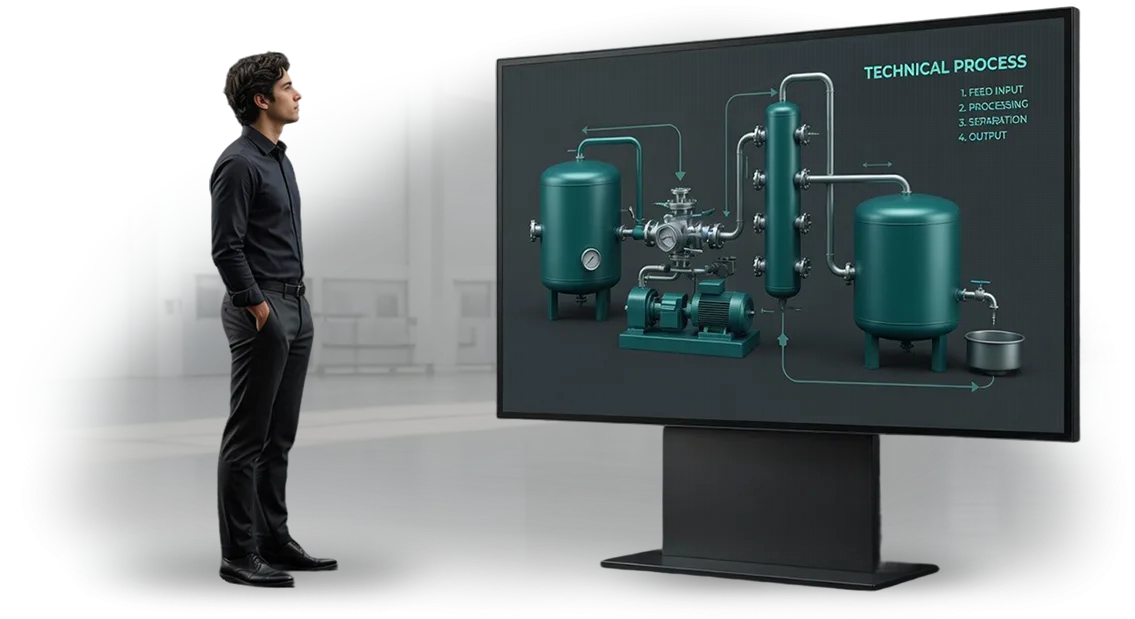
Video instructions for workers bridge this gap between technology and the team's understanding. We turn a procedure into a visual process that an employee can see, understand, and repeat without putting quality or deadlines at risk.
The screen shows the operation exactly as the best master performs it — step by step, from gripping the tool to checking the result. This isn't a "checkbox video" but a working tool for onboarding, adaptation, and raising the standard on the line. That's what we deliver.
What Results Video Instructions Deliver Instead of Paper Procedures
Paper instructions on a sports goods production line often go unused: employees don't reread multi-page procedures, and newcomers master processes through trial and error. This directly affects the defect rate, equipment start-up speed, and quality consistency.
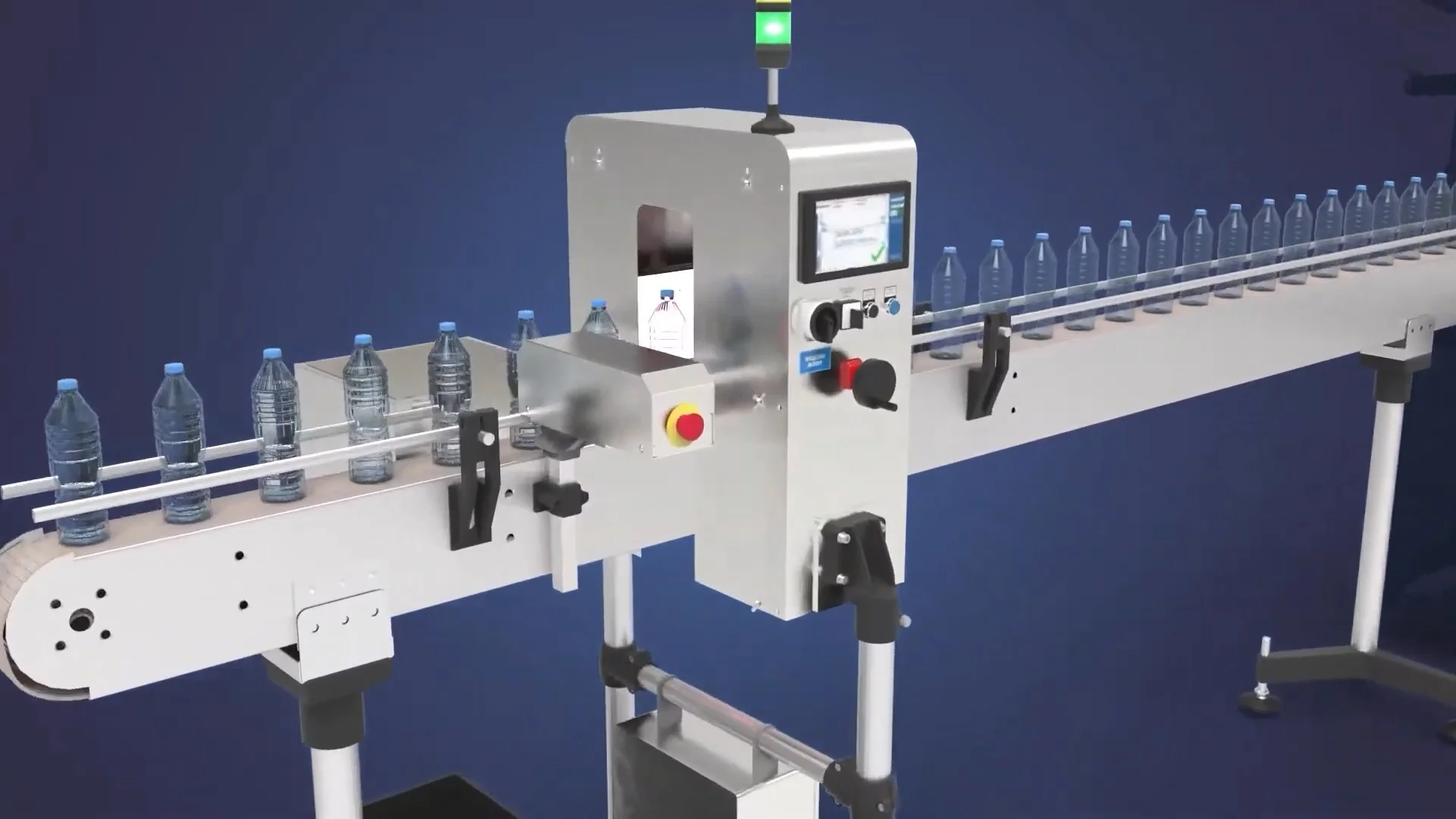
Video instructions with CGI animation of technological processes solve these problems systematically.
The first result — a noticeable reduction in defects. When an employee sees each stage in motion, they remember the sequence of actions and critical tolerances instead of hunting for the right clause in a text.
Human-factor errors drop from the very first days of using the videos, and the operator gets a clear visual benchmark instead of abstract descriptions.
The second result — faster ramp-up to full capacity. A newcomer no longer depends on a busy mentor: they turn on the video, follow along with the screen, and master the operation more quickly until it becomes automatic.
For the production line, this means less downtime, faster onboarding of new employees, and a smooth shift start without losing pace.
The third result — a unified training standard. CGI animation shows the ideal process without being tied to a specific worker or their mood — exactly how it should happen in reality.
Everyone — an experienced operator, a trainee, or temporary staff — gets an equally accurate picture of the technology, so process standardization stops being just a slogan.
Finally, video instructions help retain the team. Clear training reduces stress at the start, employees get up to speed faster and are less likely to leave after their probation period.
Experienced workers use the videos for self-checks and knowledge transfer — creating a unified knowledge base that doesn't depend on "old-timers."
Together, this turns scattered knowledge into reproducible skills. Faster ramp-up, fewer defects, and a unified standard — these are the results we build into every video instruction.
They are measured not in pages of procedures, but in percentages of plan completion and a smooth-running shift.
Video Instruction Formats: From 3D Animation to Combined Footage
The choice of format determines how quickly a new employee settles into the work rhythm and how many defects they create before that.
In sports goods manufacturing, some processes are invisible to the eye — internal components, part movements, assembly stages — while other operations are better shown on real equipment. So there is no universal "one-size-fits-all" approach; each task needs its own format.
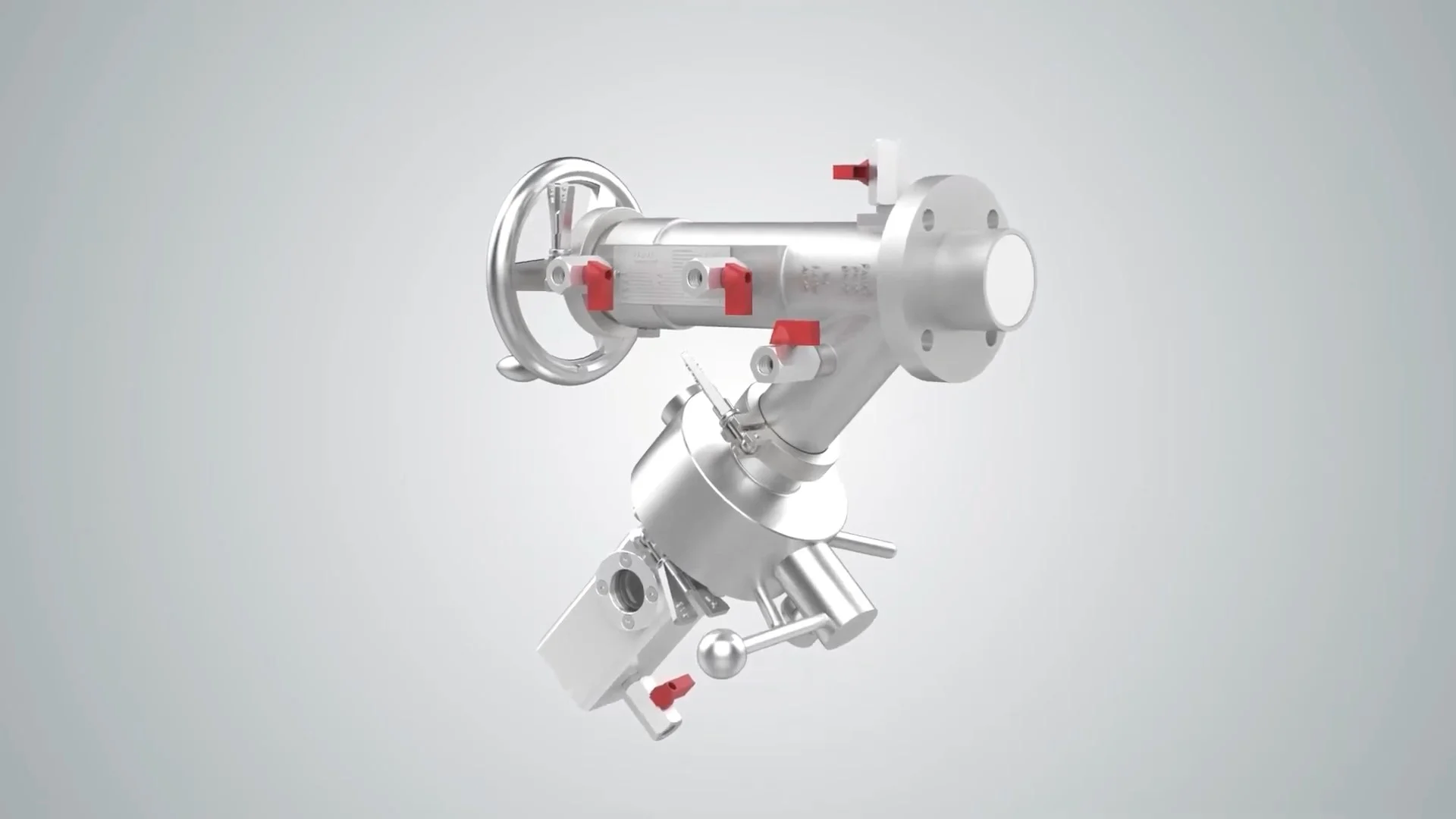
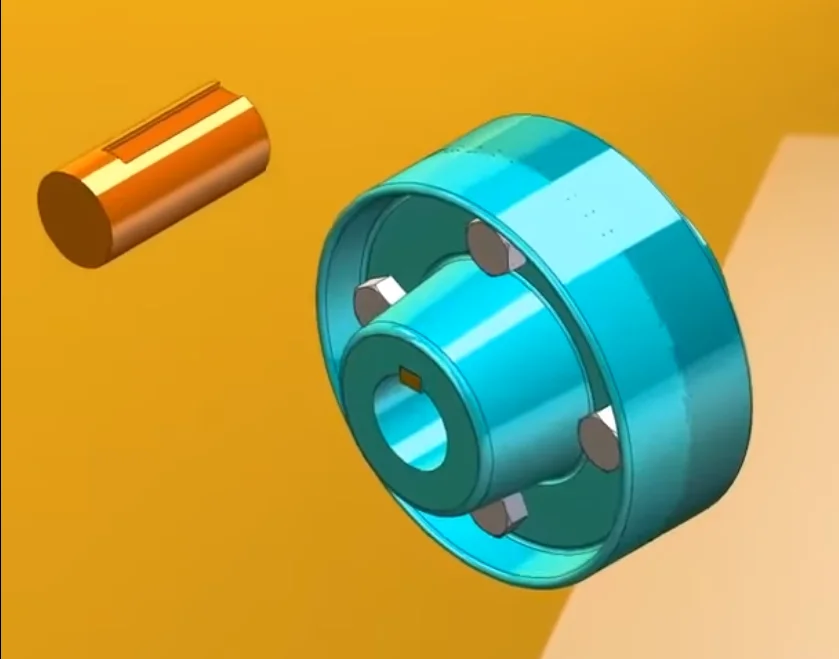
3D process animation shows the product's internal structure and explains hidden technological stages. Combined footage blends shop-floor video with 3D inserts: the employee sees the real tool and immediately gets an explanation of the complex assembly. Slide-based courses cover the theory — procedures, standards, and safety practices.
Format Comparison
| Format | For whom | What it gives the client |
|---|---|---|
| 3D process animation | New employees, complex assembly units | Quick understanding of product structure, fewer defects in the first weeks |
| Combined footage | Operations on real equipment, changeover | Maximum clarity: real process + detail on complex areas |
| Slide-based courses | Theory, standards, briefings | A unified knowledge standard and easy content updates |
What to Choose for Sports Goods Manufacturing
The optimal approach is to combine formats. A slide-based course provides the foundation, 3D animation explains hidden processes, and combined footage reinforces the skill on real equipment.
This way, training no longer depends on the mentor's experience and delivers the same result for all new employees.
We develop scripts and shoot with professional equipment, so the client receives ready-to-use video instructions that integrate into the training program and work for years. Tell us about your task — we'll suggest a format to fit your technology and product specifics.
Development Stages: From Task Definition to Launch and Support
We work according to a transparent process: you always know what stage the project is at and what you'll get as a result.
It all starts with studying your tasks and the actual work on the production line, and ends with ready-made video instructions your employees can start using tomorrow.
- Interviews with technologists and operators. We study the process at your sports goods production: we identify complex assemblies, typical errors, and critical moments. This makes the instruction practical rather than "theoretical" — one that actually solves your team's challenges.
- Script approval. We prepare a detailed script: shot sequence, voice-over text, and emphasis on key operations. You approve it before production begins — eliminating rework and unnecessary costs.
- Visualization and video production. Based on the script, we create animation of the technological processes — from individual parts to full assembly. At this stage, you can see what each component will look like and make adjustments without missing deadlines.
- Rough cut. We assemble a draft version where the timing and narrative logic are already clear. You review it and give feedback — we make changes before the final edit.
- Final approval and launch. You approve the final version. We prepare the files in the formats you need — for a computer, tablet, or employee phone — and upload the videos to your learning management system.
- Support and development. We help integrate the instructions into the training process, answer employee questions, and support the project after launch. If the technology changes, we'll update the videos without lengthy approvals.
This process guarantees you get not a "pretty video" but a working tool that reduces training time and lowers the number of errors on the production floor.
What's Included in the Video Course Delivery for Employees
The video course delivery includes not just a set of files, but a complete working package for the training department and technologists of your sports goods production.
You receive ready-made videos, documentation, and usage rights to launch training immediately after the materials are handed over.
- Ready-made videos in the formats you need — for your training portal, stationary screens, and employees' mobile devices. The videos are adapted to different viewing scenarios, so training proceeds at a comfortable pace without interruptions.
- Edit scripts — text descriptions of every shot and voice-over line. If a process changes, you can quickly find the relevant segment and coordinate the update with your technologists.
- Guide to updating video instructions — the step-by-step process for equipment replacement, procedure changes, or introducing a new operation. The training department can pass along updates without starting a new production cycle.
- Usage rights — officially executed rights to the videos with no restrictions on duration or number of employees. The materials can be freely used within the company and shared across departments.
- Placement guidelines — a reference card on where to upload the videos, how to grant access to new employees, and how to track views. This eliminates "how do we use this?" questions from day one.
- Post-delivery support — we stay in touch and advise on using the materials if any non-standard tasks come up.
After delivery, you have everything you need to launch training: ready-made videos, scripts, usage rights, and a clear update process. All that's left is to appoint someone responsible and add the video instructions to your employee onboarding program.
Case Study: Video Instructions for Sports Goods Manufacturing Reduce Defects
For a sports goods manufacturer, defects on the assembly line often mean not only wasted materials but also delayed shipments, higher production costs, and tension within the team.
At one such company, we encountered a typical situation: new employees learned "by ear" from experienced masters, each one understood the operation differently, and quality control took hours. The problem wasn't the people — it was the lack of a unified training standard.
We developed a series of video instructions for SportTech covering the key technological operations — from material preparation to final inspection of the finished product. The videos were shot right on the production line, with real employees and real equipment.
Every action was broken down into short, clear steps, with emphasis on the bottlenecks where defects most often occurred.
The result was visible within the first quarter. The defect rate on the sections where video instructions were introduced dropped by a third. Training of new employees doubled in speed — instead of a week of mentoring, a new worker reaches target performance in two to three days.
Senior masters were freed up as well: they no longer had to repeat the same thing to every newcomer.
The production manager praised the project: "We used to explain the same operations to every new employee ten times over. Now a person watches the video instruction, repeats the actions, and gets it right immediately.
Defects on the line have dropped significantly, and onboarding takes days instead of weeks. For us, these aren't just training videos — they're a working tool that paid for itself within a few months."
The case showed that quality video instructions are not a one-off lecture but a systematic way to bring order to production processes. They are equally useful for experienced workers refreshing their knowledge and for newcomers getting up to speed faster.
If your production has repetitive operations and errors in performing them — a similar solution will deliver measurable results without a complex overhaul of processes.
How to Choose a Video Instruction Format for Your Production Needs?
Choosing a video instruction starts not with the format but with the task. In sports goods manufacturing, there are operations where simply showing the sequence of actions is enough, and complex processes where the employee needs to understand the product's internal structure.
A short video with an operator works for the former; for the latter, CGI animation that clearly reveals invisible details is better. The higher the cost of an error, the more sense animation makes.
The format choice also depends on how often the instructions change. If equipment is updated every season, choose a modular approach that's easy to extend without reshooting.
If turnover is high, make short videos for each step: they're faster to update and easier to hand to a newcomer. In both cases, the load on mentors drops and ramp-up to the work rhythm speeds up.
A training budget is no reason to skip video. Start with two or three key areas where mistakes cost the most, produce them in CGI, and then scale to the rest of the processes.
The result is fewer defects and faster onboarding, while the costs are recouped through reduced training time. During a consultation, we review your operations, priorities, and constraints.
If you're unsure how to choose a video instruction for your production, send us a description of a typical operation — we'll recommend the format that will deliver the best result. The first step is a short conversation and a format recommendation at no extra cost.
Common Doubts Before Ordering: Addressing Your Concerns
Before ordering a training video instruction, clients often hesitate: won't the animation be too hard to grasp, will the timeline stretch, is the price of a video instruction justified, and what about updates? Here's how we address these objections in practice.
Won't employees find animation confusing — aren't they more used to regular video?
Animation is created specifically for training: it strips away the extra noise of the production floor and focuses attention on the key operations. The technological process is shown as clear as day — with slow motion, captions, and voice-over.
This format is easier to understand than live-action footage, where important details are often blocked by people or equipment.
How long does it take to create a video instruction?
Timelines depend on the complexity of the process, but a typical instruction takes us two to four weeks. Our process is well-tuned: brief, script, model creation, animation, voice-over.
If you need to launch training urgently, we offer accelerated options by simplifying individual scenes without losing the training effect.
Isn't this more expensive than regular filming?
CGI animation is often more cost-effective: there's no need to rent equipment or hire camera crews, actors, and an editing team. The biggest value — you don't have to halt production for shooting.
What's more, the process model stays with you: to update individual shots, you won't have to pay for a full reshoot, and the cost of adjustments is significantly lower.
What if the technology changes — won't the video become outdated?
That's why we build instructions from separate modules. If one operation changes, we re-animate only that block — not the entire video. You receive an editable source file, and updating the content takes days instead of weeks. This is especially important for productions where processes are improved on a regular basis.
Order a Pilot Video Instruction and Evaluate the Result
Ordering a video instruction for sports goods manufacturing is simple: just leave a request — and we'll consult with you free of charge, calculate the cost, and show you a demo video.
You'll see the format of your future instruction on the material of your own technological process before making a decision.
Here's how the work proceeds after your request:
- You contact us any way you like — we clarify which operations, machines, or assembly units need to be shown to employees.
- We hold a free consultation with your technologist or section manager: we review the scenario, tricky points, and the training requirements for new and existing employees.
- We prepare a cost and timeline estimate for your task — you get a quote with no hidden conditions. The price is fixed before work begins.
- We create a demo video based on one of your procedures. You see the style, level of detail, and quality of the animation, make edits, and then approve the final concept.
- We launch the full development cycle: we write the script, create 3D models of the sections, animate the processes, record voice-over, and edit the video instructions.
- We deliver the finished videos to your learning platform, along with the source files. Employees get access; you get the ability to update the material when the technology changes.
The whole process, from the first consultation to delivery of the finished instructions, takes 5 to 15 working days depending on complexity.
In the end, your staff masters operations faster, makes fewer mistakes, and doesn't depend on "old-timers" who go on vacation or leave the company.
Evaluate the benefit right now — request a demo video and a cost estimate for your section. This comes with no obligation. Leave a request, and we'll prepare a proposal within one business day.