

Mistakes in Robotics Cost Dearly — Training Must Be Visual
Mistakes in robotics are costly: incorrect manipulator settings, a wrong operation sequence, or an untimely line stop lead to equipment breakdowns, defective batches, and missed deadlines.
Written procedures and static diagrams do not help — the employee does not fully understand how the robot should behave in each specific situation. As a result, training drags on, and first mistakes end up costing ten times more than the training itself.
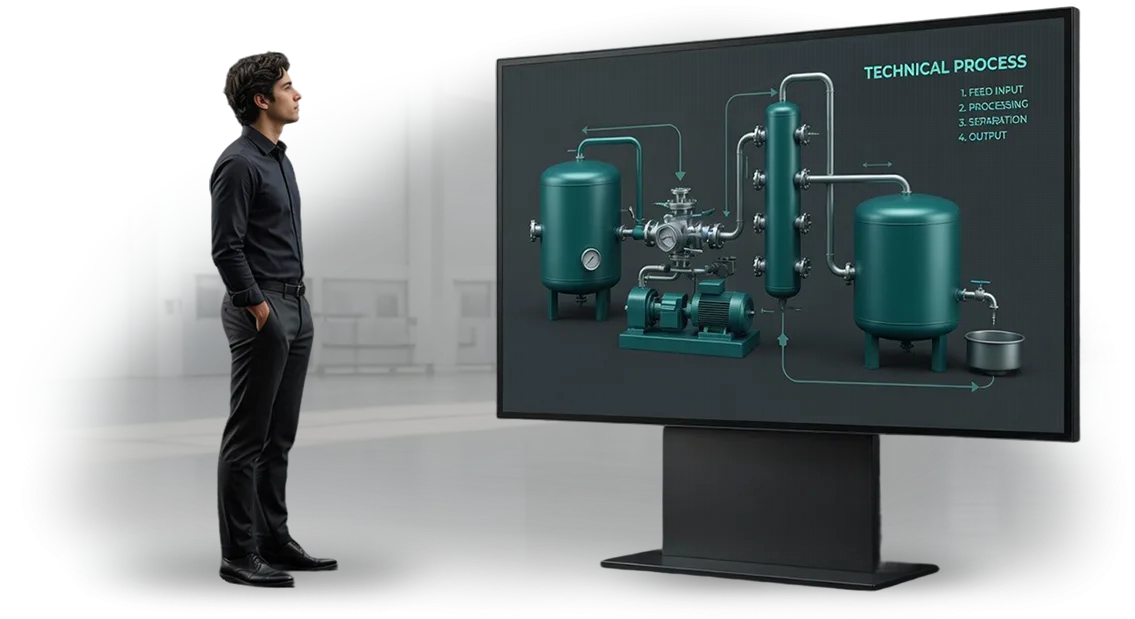
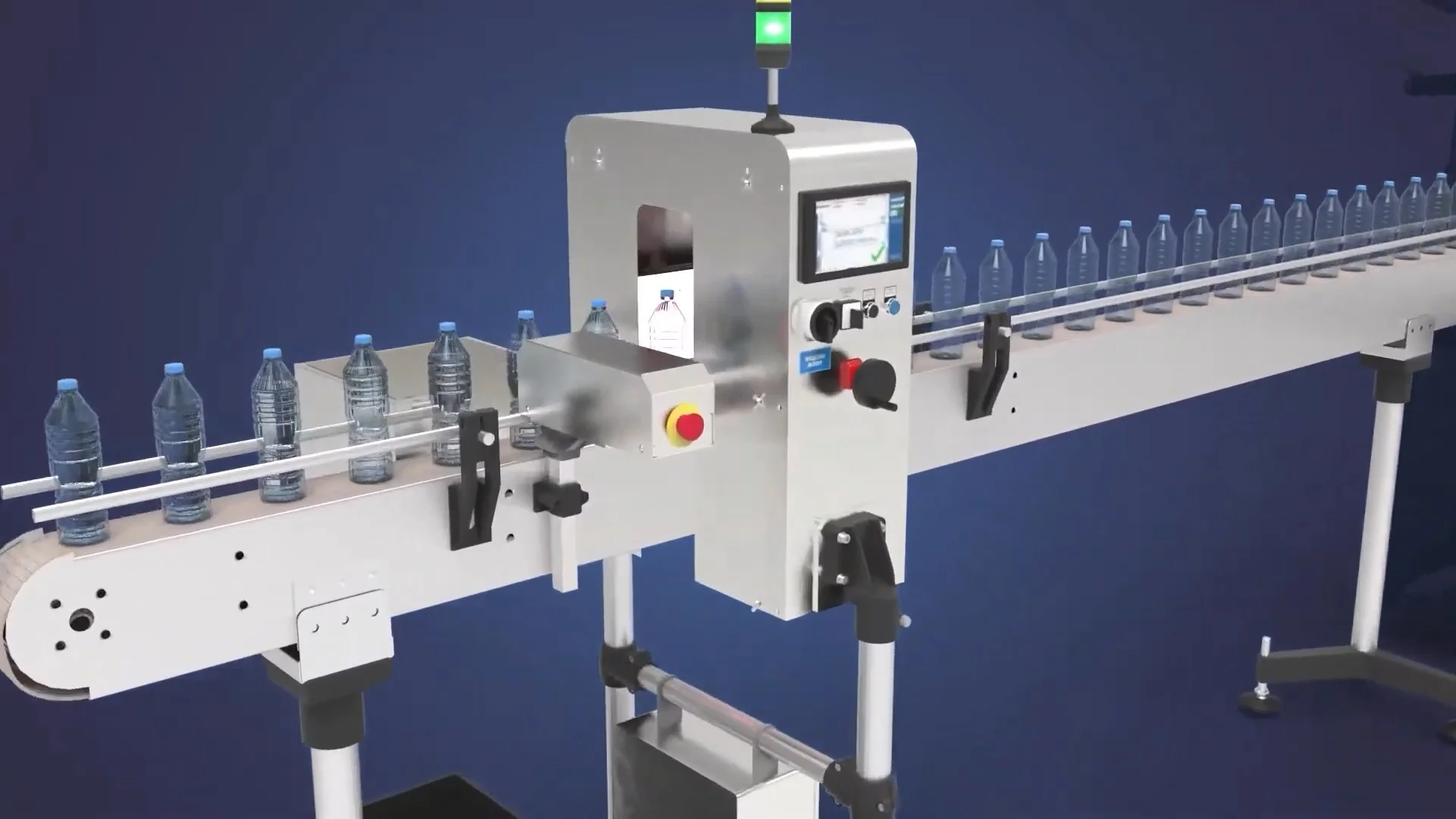
Video training with visual instructions solves this problem. Our team create CGI animations of technological processes: the robot performs operations with an exact sequence of movements, showing safety zones, gripping points, and correct and incorrect actions.
Such animation replaces hours of reading documentation — the employee sees the process as it actually happens on the real production floor, even before entering the workshop.
For the client, this means fewer errors during commissioning, faster onboarding of new employees, and confidence that every operator understands their area of responsibility.
Video instructions can be reviewed unlimited times, used for certification, and adapted to different skill levels — from novice to engineer. This reduces the load on mentors and cuts training time from weeks to a few days.
Visual instructions are not just a way to convey information, but a tool to protect against expensive mistakes. The more accurately an employee visualizes the process, the lower the chance of an abnormal situation.
If you want to reduce losses from staff errors and accelerate robotics training, we will show examples of our animations and help you prepare material for your tasks.
What Benefits Does Production Get from Corporate Video Instructions
New employees need to be shown processes, not given lectures. Video instructions allow a person to get up to speed in a matter of days — without being tied to a mentor's schedule. This is especially important in robotics production, where an operator error costs a lot.
Systematic video training gives businesses four main benefits:
- Speed of adaptation. The employee gets access to the knowledge base on day one and studies the material at their own pace. Time to independent work is cut from weeks to several days.
- A uniform knowledge standard. Everyone works from one reference video — no discrepancies between shops and shifts. The manager is confident: everyone performs operations the same way.
- Fewer errors. Visual demonstration of critical points and typical mistakes reduces defects and injuries. The experience of the best operators is built into reference instructions.
- Less load on mentors. Training videos replace repetitive explanations. Mentors focus on complex issues instead of answering the same questions from newcomers.
At our team we shoot such instructions at real sites and edit them with a focus on key actions. The client receives a complete package: script, shooting, editing, and section breakdowns for quick search of the needed fragment. The video works both as initial training and as a reference at any time.
Video Instruction Formats for Different Robotics Tasks
In robotics, an employee works with complex equipment where the cost of an error is a line stoppage or a unit breakdown. Written procedures do not convey the dynamics of mechanism movement, and regular video from one point often fails to show the main thing.
Therefore, the key to fast training is a correctly chosen video instruction format: it determines how much time a novice will spend learning and how many mistakes they will make in the first week of work.
| Format | When to choose | What the client gets |
|---|---|---|
| CGI animation | When you need to show hidden mechanics, cutaways, and the movement of parts that cannot be captured with a camera | A clear model of equipment operation, a uniform training standard, fewer questions from staff |
| Screen recording | When you need to capture control panel settings, software, and the operator's sequence of actions | An exact step sequence for setup technicians, repeatable results during changeovers |
| Interactive instructions | When many employees need training and knowledge checks are required without an instructor | Fast onboarding and control over each employee's mastery of the material |
The choice of format depends on the task: CGI animation is suitable for getting acquainted with mechanics, screen recording for practicing practical actions, and interactive instructions for mass training.
In practice, the best result comes from a combination: first the employee watches an animation and understands the principle, then repeats the actions from the video, and then passes an interactive check.
This approach cuts training time several times over and relieves the load on mentors.
The employee receives instructions that answer questions before they arise, and you receive a tool that works without your participation and is equally understandable to an engineer, operator, and newcomer.
How Video Instruction Development for Employees Works
A clear process is half the success of a project. We do not ship a finished video "in one day": each stage is tracked, and you see intermediate results and make edits before the video goes into production.
Approval at every step removes the risk of "making the wrong thing" and unnecessary rework.
- Brief and task audit. We define the goal of the video instruction: train a beginner, standardize operator actions, reduce the number of errors. We collect regulations, equipment photos, and the specifics of the workshop or laboratory.
- Script and storyboard. We turn the technological process into a clear sequence of employee actions. We show which robot components will be visible and from which angle. This is where you approve the training logic.
- 3D models and environment. We create an exact copy of the workstation: robot, tooling, control panel. Already at this stage you can see how closely the video matches the real equipment.
- Animation and draft video. Mechanism movements, operator actions, mode switching. You receive a draft version with temporary voiceover and check technical accuracy.
- Voiceover and subtitles. A professional narrator calmly explains each step. Subtitles help in a noisy workshop and for employees who prefer reading.
- Final editing. We place emphasis, add "stop — check" checkpoints, and embed pauses for performing actions. We deliver the finished file in the required formats.
- Launch and support. We help upload the video to your learning system and adapt it to workstation screens. After the pilot launch, we make edits if employees point out unclear moments.
This approach makes the video creation process predictable: you always know the project stage and what you will get in the end. No "black boxes" — only clear stages, control points, and a result that can be used immediately after delivery.
What's Included in the Delivery: Employee Training Package
The full delivery package is not just videos, but a complete training system. You get all the materials to launch the program without engaging a contractor, additional payments, or lengthy preparation: from script to knowledge assessment.
The package includes:
- Training video instructions. Professional videos on technological processes, including CGI animation for a clear breakdown of robotics operations. Employees see every stage in close-up and understand the logic of operations.
- Scripts and time codes. Each video comes with a transcript broken down by scene. This makes it easy to quickly find the right fragment for replay or error analysis.
- Tests and assessment tasks. Knowledge checks after viewing: questions, quizzes, practical case studies. You can see who has mastered the material and who needs additional training.
- Methodological guidelines (teaching guides) for the instructor. A step-by-step lesson plan, recommendations on key points, and typical beginner mistakes. The mentor doesn't need to come up with anything — just follow the structure.
- Source materials and templates. Presentations, graphic files, and editable versions of scripts. You can update the content yourself when processes change or add new sections.
- Employee reference sheets. Short cheat sheets with key steps and safety rules. They reinforce knowledge after training and support daily work.
All elements are combined into a single structure: from task setting to result evaluation. As a result, implementation takes days rather than months, and the skill level of employees is the same across all departments — even with remote work or staff rotation. You receive not scattered files but a ready-made system that can be easily scaled to new areas.
Case Study: CGI Animation of Robotics Processes Accelerated Training
Training personnel to work with robotic lines usually runs into two constraints: expensive equipment and the high cost of error.
It is difficult for a beginner to mentally assemble a complete picture of the technological process, and training on real machines leads to downtime, breakdowns, and waste of materials. An industrial robot manufacturer faced exactly this — and came to us for a solution.
At our team we developed a series of CGI animations of key technological operations: from part gripping to the coordinated work of several manipulators on one line.
Instead of a dry text instruction, the employee sees the exact sequence of actions with visual emphasis on dangerous and complex stages.
The material can be studied without access to the workshop, at a comfortable pace, returning to the needed fragment an unlimited number of times.
The implementation result was measurable. The time for introductory training of new operators decreased by 40%, and the number of errors during the first independent shifts fell by 25%.
This was achieved without using expensive equipment at the training stage — employees came to the real line already prepared.
The company's management also noted indirect effects: consumable use during internships decreased, mentors were unburdened, and the adaptation of new hires became calmer and faster.
The animations also formed the basis for annual staff certification and knowledge refreshes after the reorganization of production areas.
After the pilot project, the client expanded the video library to cover all major operations and introduced them into the training standard for every department.
This confirms the main point: high-quality visualization of technological processes pays for itself within the first quarter and continues to deliver value long after it is created.
Addressing Doubts Before Ordering Video Instructions
Before ordering video instructions, clients most often worry about complexity, timelines, and how quickly materials will become outdated.
For companies with robotic lines, the cost of error is especially high — employees work with expensive equipment, and every training shortcoming noticeably impacts production.
We remove these risks: we set deadlines in the contract, provide revision guarantees, and stay in touch after delivery. Below are answers to typical objections.
Is it difficult to integrate video instructions into current production?
No. We design videos around your real operations — from simple to robotic cycles. We coordinate the script with technologists and deliver the material for learning platforms, tablets, or workstations.
How do you guarantee timelines?
Deadlines are fixed in the contract before the start. The project is divided into stages with control points — you see progress and know in advance when you will receive the finished version.
Will the video become outdated — will it have to be reshot?
No. We use a modular structure: when a procedure or equipment changes, only a separate block is replaced, not the whole video. This saves the budget for training support.
What quality guarantees do you provide?
Compliance with the technical specification and approval on your side before final delivery. Several revision iterations are included in the cost. After launch — support for updates and technical questions.
Order Corporate Video Instructions for Your Robotics
Working with robotics requires precise actions from employees: an error during setup or maintenance leads to line downtime, equipment breakdowns, and lost revenue.
Text instructions and occasional training sessions do not provide the needed training speed — knowledge is forgotten, and each operator's actions remain "at their discretion." Corporate video instructions solve this problem: the employee sees the correct sequence of operations, can review a complex moment, and acts in the same way as colleagues.
We develop training videos for companies that use industrial robots, collaborative robots, and automated lines.
Over 10+ years we have completed projects for dozens of manufacturing enterprises: from short 2–3 minute videos to full courses on starting and maintaining robotic cells.
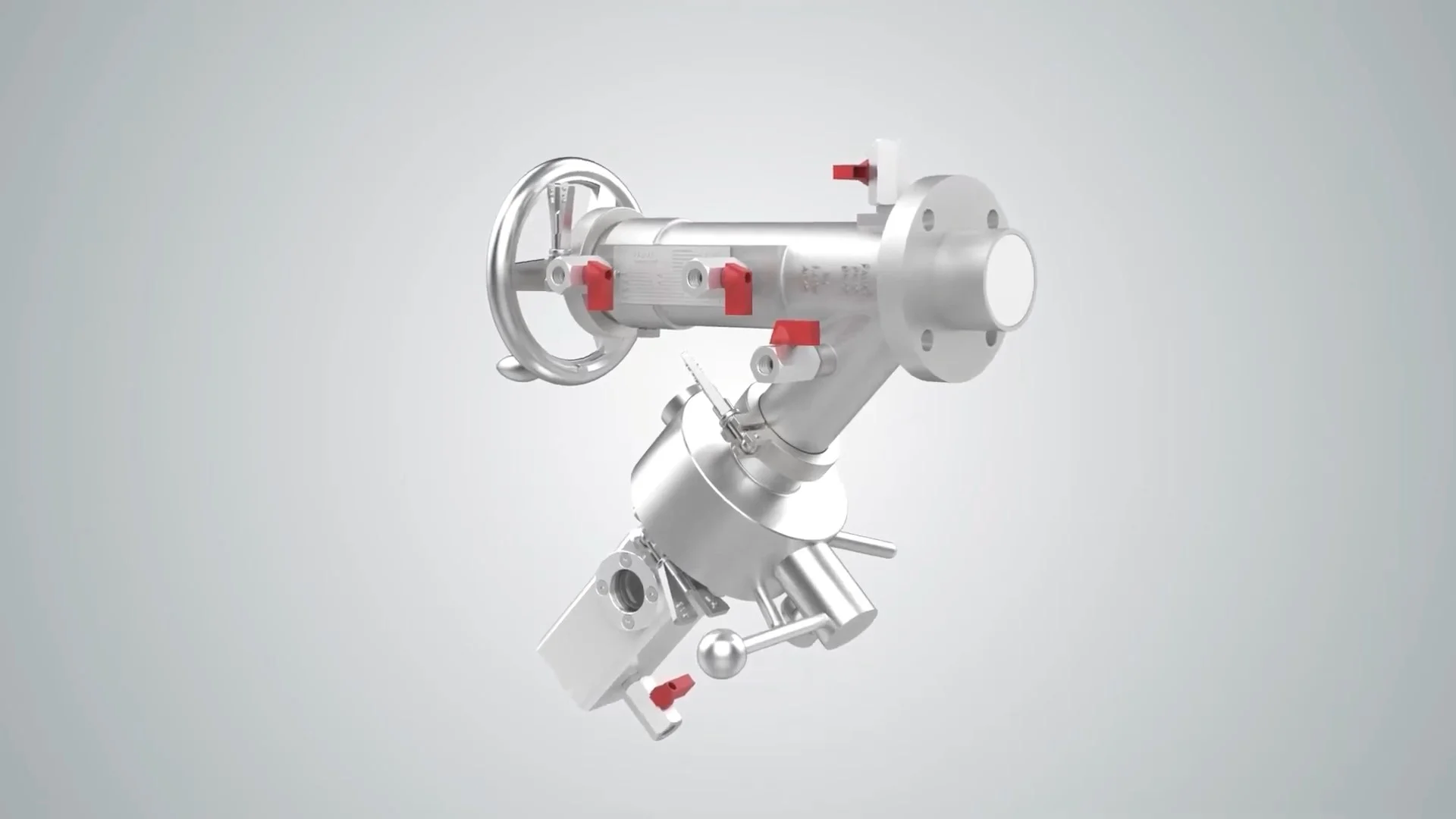
We shoot videos at real sites or create CGI animations of technological processes — this allows us to show the internal structure of mechanisms and rare emergency situations without stopping production.
What you get when you order video from us:
- A cost estimate based on your scenario and number of instructions — we fix the price before work begins, with no hidden additional charges.
- A project plan: stages, production and editing timelines, and a list of materials needed from you.
- Consultation on format: shooting at your production facility, process animation, or a combined option.
- Selection of video duration and structure for different employee categories: beginners, experienced operators, engineers.
- Examples of our work in your industry — we show how the project looked and what result the client achieved.
- A guarantee of the result: you approve the video stage by stage, and we make revisions until full approval.
To order video and get a cost estimate, leave a request for a consultation — we will discuss your task, answer questions, and propose a solution that will reduce training time and lower the risk of errors when working with robotics.
After the brief, you will receive a project plan and an accurate estimate within a few business days.
How to Choose the Right Video Training Format for a Specific Task?
There is no single "best" format — the right choice depends on the specific task the video needs to solve. If an employee needs to remember a sequence of actions with equipment, short instructions with an emphasis on visual cues work better.
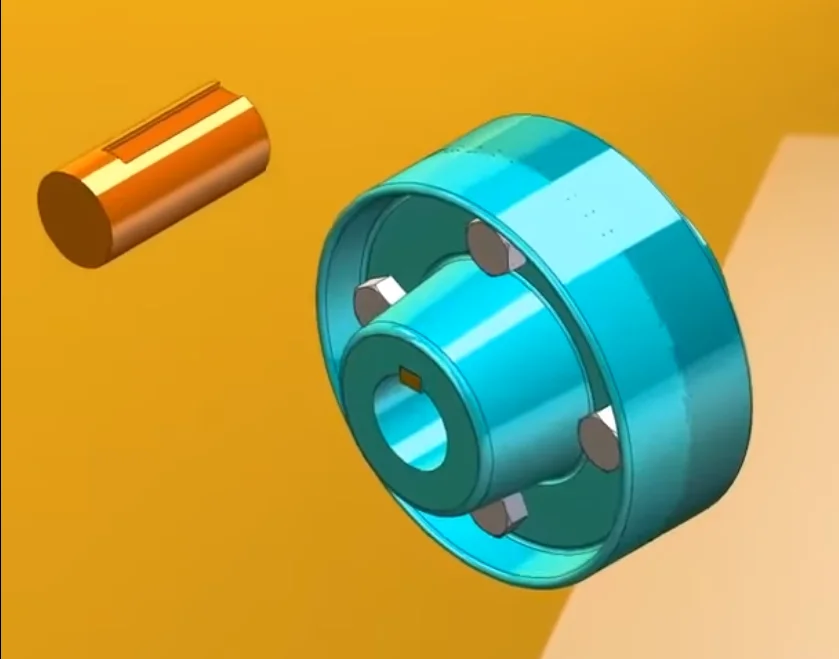
If the goal is to understand the internal processes of robotic systems, their logic, and the interaction of components, CGI animation is more effective — it shows what is hidden behind the casing.
The first criterion is skill complexity. For simple operations, such as replacing a part or basic settings, a recording of the real process with mentor commentary is enough.
For complex setup or programming scenarios, animation is better — it breaks down every stage in detail and allows the mechanism to be examined from any angle without risk to equipment.
The second criterion is the audience and learning environment. Beginners need close-ups, repetition, and explanations of terms; experienced engineers need information density without distractions.
If training takes place directly on the production floor, the video should be short so it can be reviewed at the machine; for self-study in the office, longer modules are suitable.
The third criterion is update frequency and maintenance budget. Video with real footage has to be reshot with every equipment change. A CGI model allows edits without reshooting: you only need to change the 3D scene and update the required frames. In the long run, this saves resources when processes change regularly.
The final choice is a balance between depth of explanation and speed of comprehension. Start by answering the question: what should the employee do after watching? If they need to act confidently, choose a format that simulates real actions.
If they need to understand why a particular process happens, choose animation. We help clients define these criteria and create videos that exactly match the task.