

Losses Due to Errors in Vacuum Technology and Cryogenics
In vacuum technology and cryogenics, the cost of an employee error is measured not by the value of a damaged part, but by production downtime, broken contracts, and safety risks.
Incorrect handling of vacuum systems or cryogenic equipment leads to emergencies that can paralyze an enterprise for days and weeks.
Most often, the problem is not negligence, but a lack of understanding of what is actually happening inside the installation. The employee does not see how the vacuum is created, where the cold concentrates, or at what moment critical pressure occurs.
As a result, even experienced specialists act by guesswork—and pay for it with expensive repairs and lost orders.
Paper instructions and general presentations do not solve the problem: they describe the process in words but do not show the dynamics. Safety rules are memorized formally, and in a real emergency, a person becomes lost—and makes the very mistake that leads to an accident.
This is where visualization is needed. Training video instructions built on visualization of technological processes allow an employee to see every stage of working with vacuum and cryogenic equipment—from preparation to cycle completion.
They understand not only the sequence of actions, but also their physical meaning, and are therefore ready for any emergency situation.
As a result, staff training ceases to be a formality and becomes a business protection tool: fewer downtimes, fewer costly errors, and higher predictability of every process.
How CGI Animation Simplifies Understanding of Complex Processes
Employees find it difficult to understand vacuum technology and cryogenics through diagrams and text: the equipment is enclosed in casings, processes are hidden from view, and the cost of error is high.
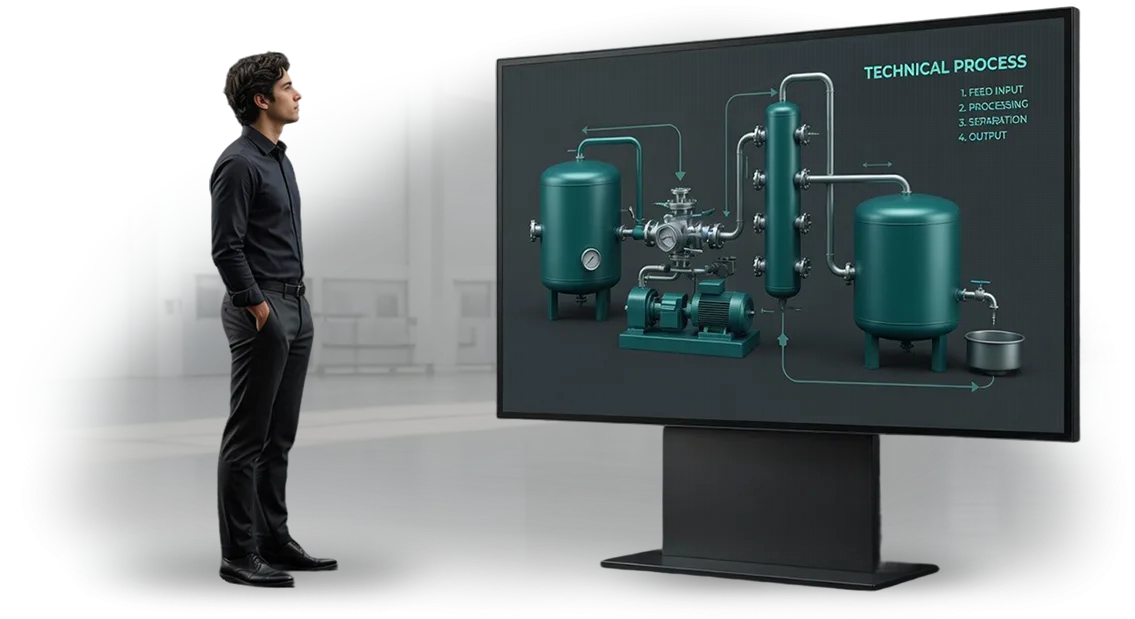
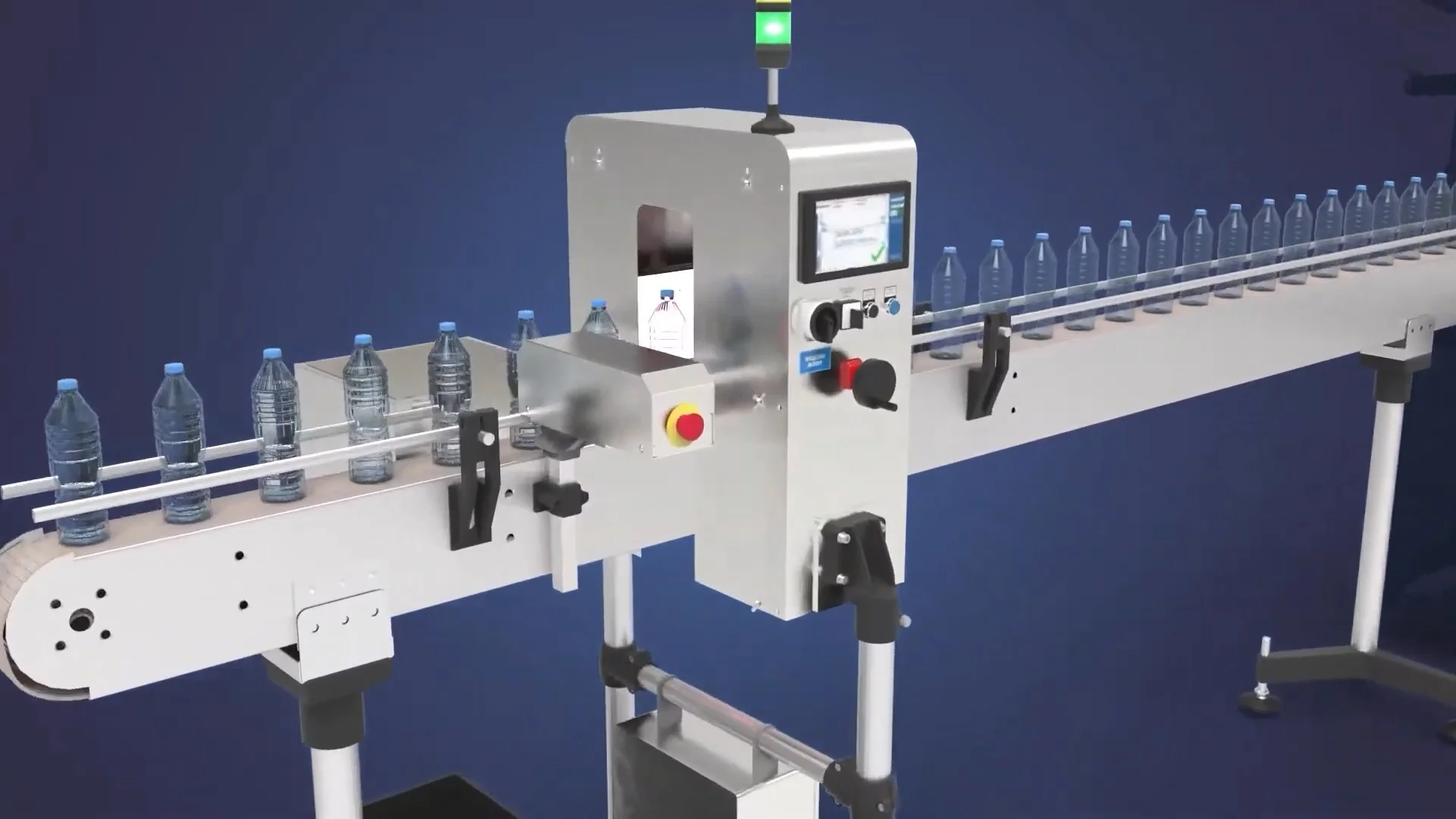
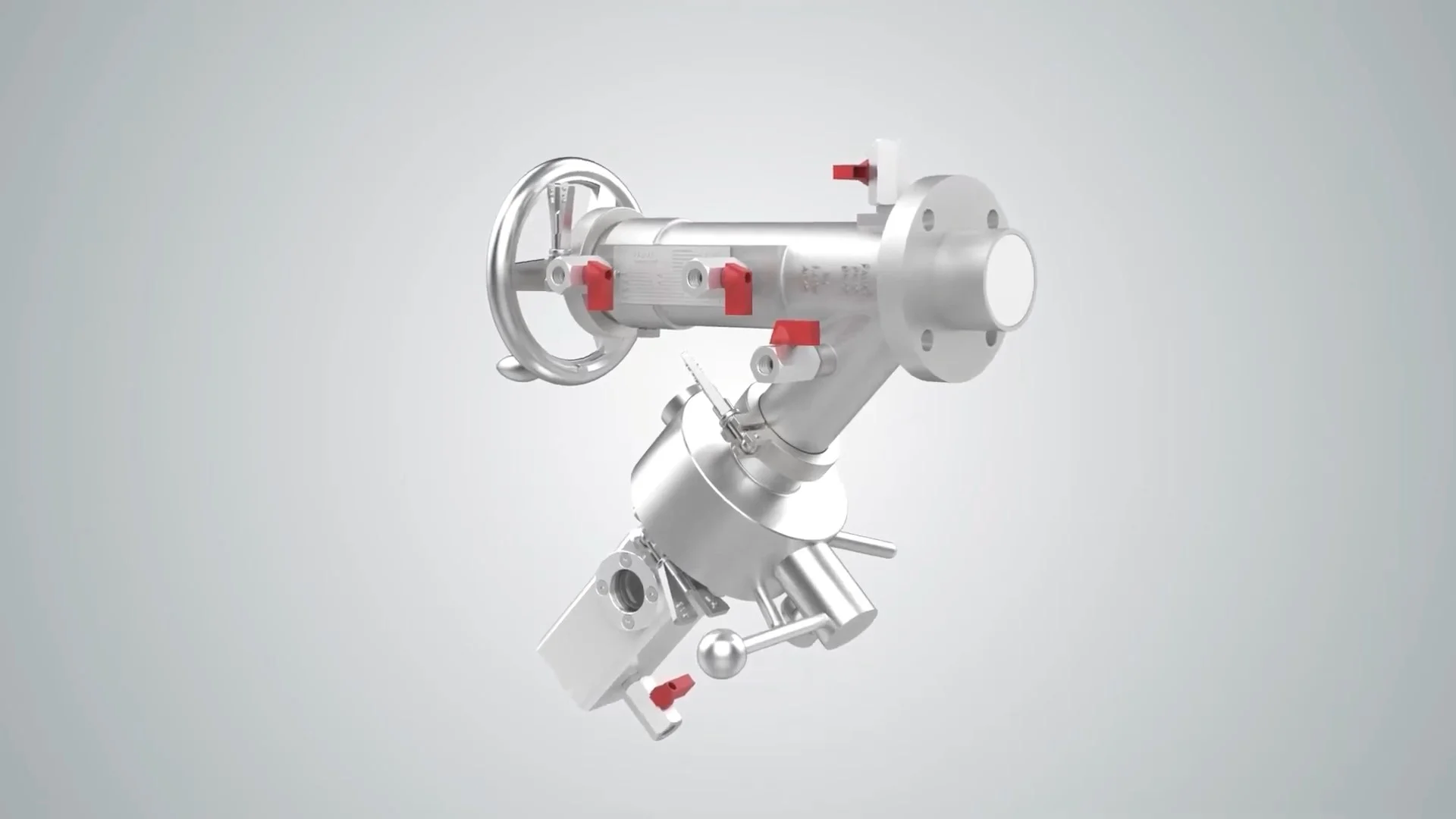
CGI animation shows complex equipment from the inside—how gases move, temperature changes, and valves and protective interlocks operate. Instead of abstract diagrams, the employee sees an accurate 3D visualization of processes and remembers the correct sequence of actions.
Visual instructions based on CGI animation reduce onboarding time and remove the fear of expensive equipment. A newcomer can visually "touch" every assembly, understand the system logic, and practice the procedure before approaching real equipment. Staff training becomes safe and predictable.
We create such videos. Our engineers understand vacuum and cryogenic systems, and our animators turn a technical scheme into a clear visual sequence.
Therefore, the animation is not just beautiful but technically accurate: it shows exactly what should happen in every unit of the installation.
For business, this means a unified training standard: every employee sees the same process with the same level of detail. Productivity grows, the number of errors and repeated questions decreases, and the mentor no longer has to explain the same thing ten times. The videos can be used for initial training, certification, and analysis of emergency situations.
Once created, CGI animation works for years and suits the entire equipment line. If regulations change, it is enough to update individual scenes. This saves time and budget on constantly conducting live briefings, which are difficult to standardize with complex equipment.
CGI Instruction Formats for Vacuum Technology and Cryogenics
Each format solves its own task: quickly bringing a newcomer up to speed, checking knowledge before authorization, or analyzing an emergency situation.
The key point is that the employee receives the instruction exactly when it is needed, rather than searching for it in a PDF folder.
| Format | Target Audience | What It Gives the Client |
|---|---|---|
| Full training video — 5–10 minutes | New employees and trainees | A unified standard instead of "ask the senior," fast transition to independent work |
| Short video guide — 1–2 minutes | All workshop employees | An answer to "what to do next" without stopping the process |
| Interactive video with action choices | Operators and maintenance personnel | Knowledge check before authorization, fewer emergency shutdowns |
| 3D process animation | Complex vacuum and cryogenic equipment | Visualization where photos and drawings do not provide the full picture |
| Video with voiceover and subtitles | Multilingual crews | The same requirements for everyone, fewer errors due to misunderstanding |
The finished package can be easily assembled to fit the budget: start with one critical process, then scale it to all areas. The videos pay for themselves through reduced defects, accelerated training, and reduced workload for mentors.
We handle the brief, script, and production, and you get a format that employees actually watch to the end. We will show examples relevant to your field—we will send you a link to our work.
Stages of CGI Instruction Development: From Brief to Launch
We know how important it is for a new instruction to actually train an employee rather than become dead weight. That is why we have structured the process so that you control every stage and get a result that reduces errors and accelerates onboarding.
- Brief and immersion into specifics. We study your production, work with vacuum and cryogenic equipment, and typical mistakes of newcomers. The output is an understanding of training goals and success criteria.
- Script approval. We present a text script: the sequence of operations, safety emphasis, and clear wording. You make edits before production begins, so there are no unnecessary costs.
- CGI animation production. We create a visual video of the technological process: internal components, media movement, operator actions. The employee sees the entire physics of the process, not just the external screen.
- Voiceover and finishing. We record professional voiceover, add subtitles, and highlight key steps. This helps the instruction be absorbed faster and work in noisy workshops.
- Testing on a training group. We show a draft version to real employees and collect feedback. We make corrections if something is unclear or contradicts the regulations.
- Launch and control. We deliver the finished video to your training system or workstations. We provide recommendations for monitoring completion and knowledge assessment.
What Is Included in the Delivery Package: From Script to Final Video
We have prepared a complete delivery package for corporate video instructions—from script to ready-to-use files. You receive everything in one project: no need to search for a scriptwriter, animator, editor, or separately order voiceover. This reduces timelines and eliminates the loss of meaning between stages.
What Is Included in the Package
- Training instruction script. A detailed step-by-step document that you approve before production begins. It specifies the text, logic, and visual emphasis. You see the future video before animation starts—this eliminates expensive changes.
- 3D models and animation of technological processes. Visualization of vacuum technology and cryogenics, including hidden processes. The employee sees what happens inside the equipment even if physical access is limited. Animation makes complex processes clear.
- Professional voiceover and subtitles. The text is read by a voice actor with clear diction; subtitles help study the material in noisy environments or at the workplace without headphones.
- Editing and post-processing. Assembly of the video sequence, accent placement, slow-down of key moments, and explanatory captions. The video is dynamic and understandable for any skill level.
- Final files in the required formats. Finished videos for corporate LMS, internal portals, messengers, and video panels. We also provide source materials and usage instructions.
- Accompanying documentation. A guide to integrating video instructions into the training process and recommendations for assessing employee knowledge.
All items are not just files, but working tools that solve a specific task: from initial introduction to the process to knowledge retention control. You receive rights to the materials and can freely use them in any internal system.
Case Study: How a CGI Instruction Reduced Operator Training Time
Standard onboarding for a vacuum equipment operator took up to two weeks: the employee read instructions, looked at diagrams, and only then tried to work on a real installation. Errors at this stage were costly—from damaged components to production shutdowns.
For a company operating cryogenic installations, the cost of every error was measured not in hours, but in shifts.
We built a CGI instruction for the production division of a cryogenic systems company. Instead of flat diagrams, the operator saw animated 3D scenes: how a vacuum pump works, how a cryogenic installation is started and stopped, and which actions are critical for safety.
What Changed After Launch
Operator preparation time was reduced from 12 working days to 3. The number of errors during the first independent startup of the installation fell by almost half—to 15%.
New employees were authorized to work faster, and mentors stopped repeating the same introductory part every shift.
Six months later, the client ordered a second instruction—for planned maintenance of the pump fleet. This confirms that the format pays off not as a one-time animation, but as a permanent training tool.
Why It Worked
The key to the result is packaging the technology into the operator's logic. A CGI instruction shows not a general principle, but specific actions on specific equipment: what the operator sees, hears, and checks at every moment of the process. This format holds attention better than text and remains in memory permanently.
For business, this means predictable training quality: fewer defects, faster shift readiness, and lower workload for mentors.
How to Choose the Right Format for Your Tasks?
There is no universal format: what is perfect for a short introductory course is useless for training on cryogenic circuit operation. The choice begins not with budget, but with understanding the level of complexity employees must master and what happens in the event of an error.
Vacuum and cryogenic systems require special attention: the sequence of actions, work with pressure and temperature, and safety procedures matter.
For such tasks, step-by-step videos with animation of internal processes are better suited—they show what cannot be seen on real equipment.
The next criterion is the specific requirements of production. With high staff turnover, short modules with comprehension checks introduce new employees faster than one long film.
For engineers who already work with the equipment, analysis of emergency situations and routine operations is more valuable. We clarify who will be learning, and the choice of instruction—its structure, depth of detail, and duration—depends on that.
Training budget is also important, but we suggest distributing investments wisely. Computer animation of a technological process requires more resources, but it pays off when you need to explain the operation of complex components or dangerous scenarios.
If the task is simple—for example, instruction on filling out logs—lighter formats are sufficient without losing perception quality.
To help you avoid guessing which option fits, we conduct a mini-audit: we analyze process complexity, number of employees, frequency of regulation updates, and training budget. Based on the results, we propose a specific format and explain why it solves your task.
You get an instruction that employees will actually watch and apply, not "a beautiful video that no one finished."
Frequently Asked Questions About Creating Training Video Instructions
Creating training video instructions for complex technological processes—vacuum equipment and cryogenics—raises similar questions from clients. Most often, they worry about timelines, budget, and whether animation can accurately convey the nuances of production. We answer the main concerns so you understand how we work.
How long does it take to develop one video instruction?
The timeline depends on the complexity of the process and the number of scenes. A typical project takes from two to six weeks: from brief to final video. We set the schedule in the contract and show the stages in advance so you can see progress.
What makes up the cost, and why is it not inexpensive?
The cost is formed from the script volume, animation detail, and the need for coordination with your engineers. We work to a fixed estimate: after the brief, you receive an exact cost that does not change during the process. This allows you to plan the budget without surprises.
Is it difficult to show vacuum and cryogenic processes in animation?
This is our specialization—we have already made videos for enterprises working with high vacuum and ultra-low temperatures. Animation allows us to show what cannot be captured with a camera: molecule movement, pressure changes, and the behavior of media.
For the client, this is a way to explain the physics of the process to employees simply and clearly.
What guarantees that the result will be high-quality?
The guarantee is built into the process: at every stage—script, style, draft animation—you approve the intermediate result. We make edits until the video becomes understandable to your employees. Only after your final confirmation do we deliver the source files and the finished video.
Do you adapt videos to internal company standards?
Yes, we tailor the video to your documentation: we use accepted terms, regulations, occupational safety requirements, and corporate style. If equipment or procedures change in the future, you can order updated scenes without reshooting the entire video.
These are just some of the questions—below we take a closer look at how the work proceeds, what is included in the final package, and what results you will get.Order CGI Instruction Development: What You Get
Employees master complex processes faster when they see them visually, rather than reading multi-page regulations. This is especially important for vacuum equipment and cryogenics—there are many hidden stages that cannot be shown with an ordinary camera.
We offer you to order a CGI instruction that turns a technological process into clear animation—and as a result, you get a finished product, not just a "video."
What You Get After Ordering
- A finished CGI animation of your technological process—with a precise sequence of operations, equipment components, and safety zones.
- A script that a newcomer can understand—we develop it together with your technologists, remove the unnecessary, and keep only what the employee needs.
- A set of training materials—videos for groups, short reference guides for cheat sheets, and slides for knowledge testing. One order covers all training formats.
- Launch support—we help integrate the animation into your training system: we suggest how to conduct the session, what questions to ask, and how to check the results.
- Update capability—if the process changes, we will quickly make edits and send a new version of the animation.
- Usage rights—you receive the source files and can place the instruction on an internal portal, in an LMS, or on any medium without restrictions.
How It Works
You submit a request—we contact you within one business day, clarify the task, and send examples of our work. After the brief, we fix the timeline and cost, and then show intermediate versions at every stage. You make edits before the animation goes into final rendering.
As a result, employees onboard faster, make fewer mistakes, and work more safely. And you get a measurable effect: less mentor time, fewer defects, and more confidence in staff actions. Submit a request—and we will prepare a commercial proposal with an exact timeline for your task.