

How CGI Animation Solves Learning Challenges in Higher Education
When a curriculum includes complex technological processes — chemical reactions, equipment operation, industrial cycles — traditional teaching methods fall short. Text and static diagrams fail to convey dynamics, and live-action filming is often impossible or dangerous.
Students are forced to imagine what they cannot see, which slows understanding, reduces interest, and lowers readiness for real-world work.
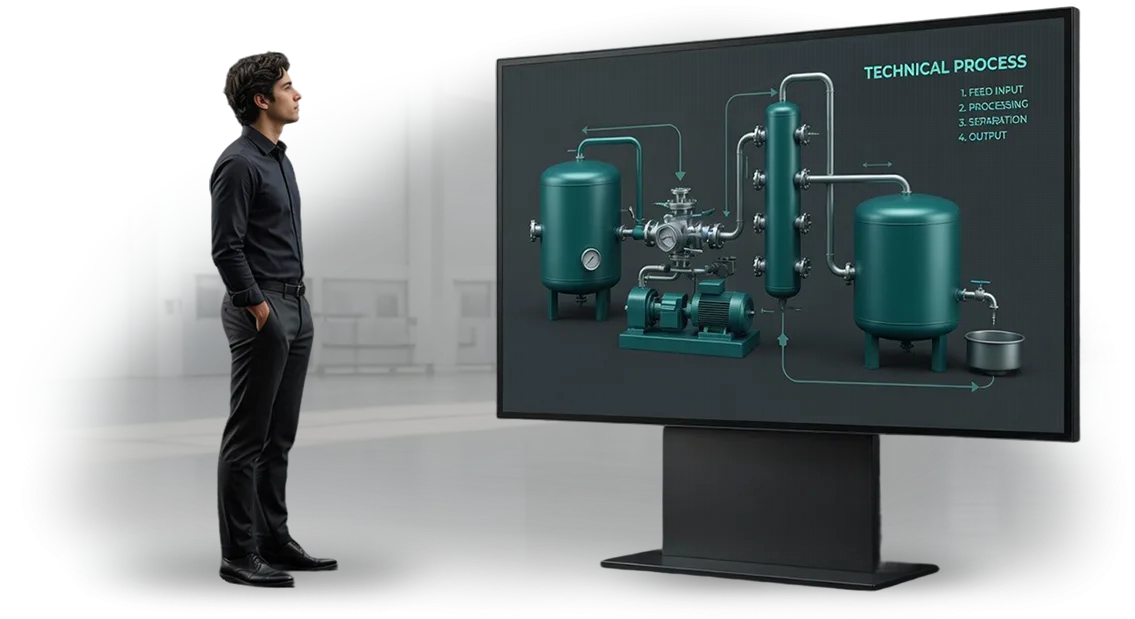
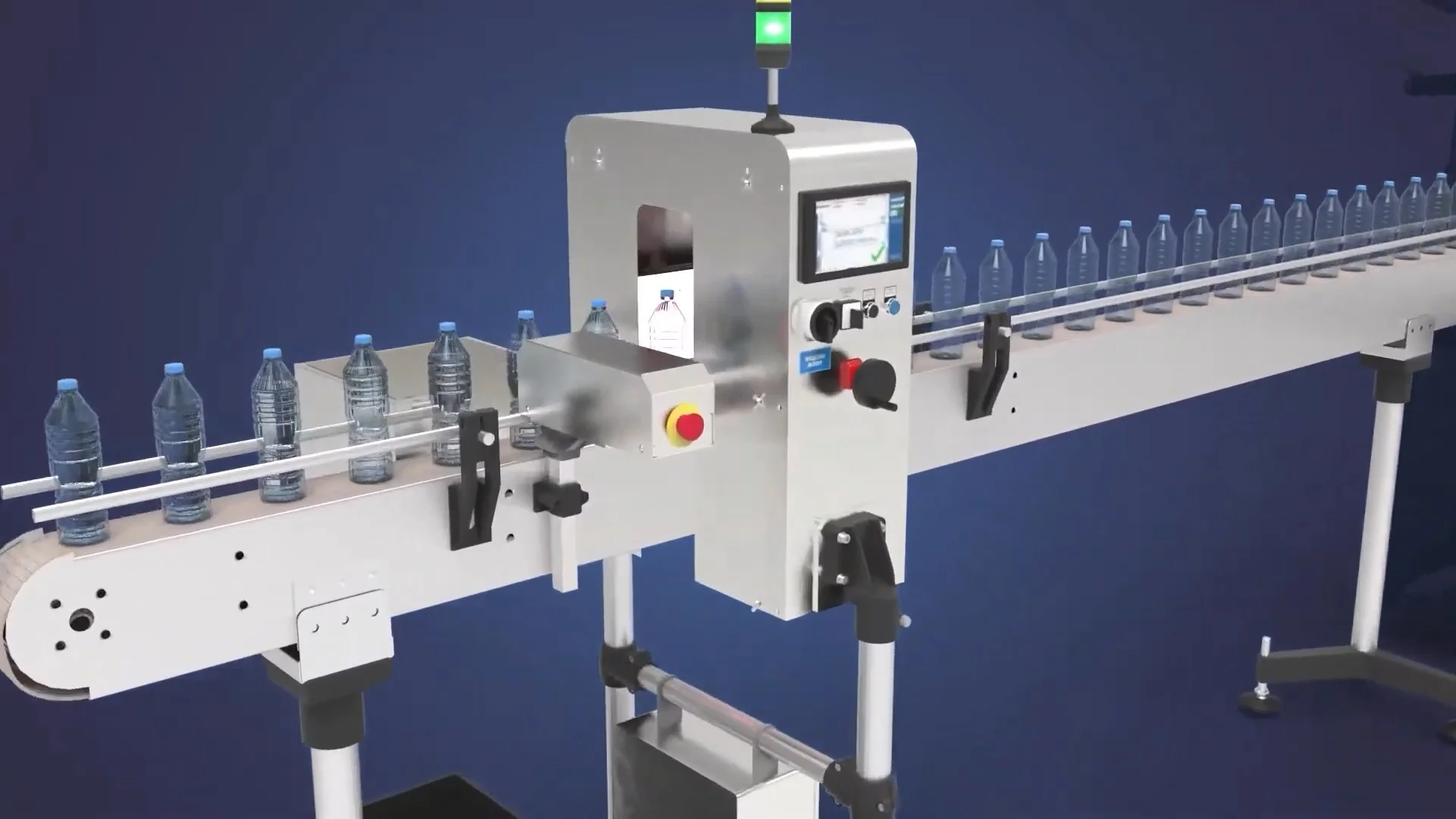
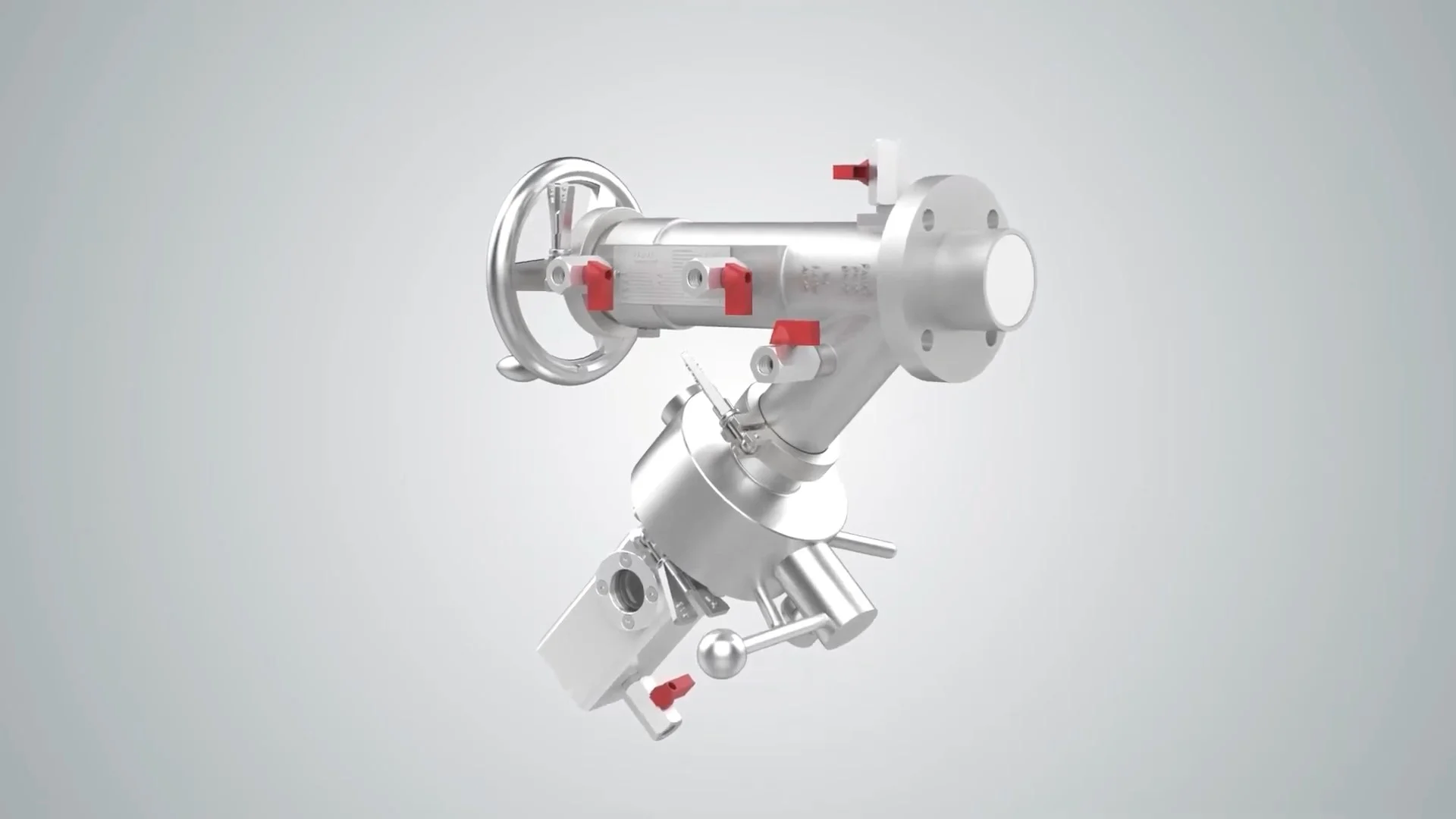
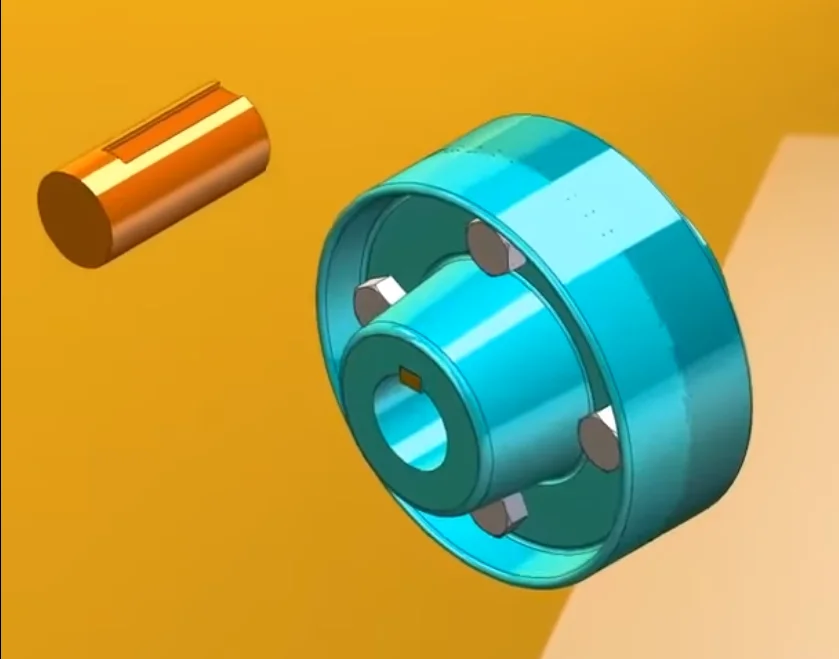
CGI animation for universities solves this problem: any process can be shown step by step, in detail, and at the required speed. Even things that happen in a split second or inside closed equipment become clearly visible.
Such video instructions are easy to integrate into lectures, lab sessions, and distance learning courses — they work as complete educational material and shorten the path from theory to practice.
For a department, this means fewer repeated explanations and deeper student engagement with the subject. The instructor focuses on analyzing difficult points instead of endless "how does this work" clarifications.
The university gains modern content that improves engagement, quality of training, and graduates' confidence when they enter production.
We have been creating CGI animation of technological processes for higher education for over 10 years. Our videos help transform complex topics into clear visual stories — tailored to your curriculum and the specifics of your specialty.
What Benefits Professional Video Instructions Provide
Professional educational video instructions solve several tasks at once: they accelerate onboarding, reduce the number of errors, and level out the training of all employees.
Unlike text-based regulations, a video shows the process in action — exactly as it should be performed in practice.
Here are the benefits you get:
- Faster training. Learning a new process by video is 2–3 times faster than by text: there is no need to read and mentally imagine each step — everything is already shown.
- Fewer errors. A clear demonstration of the correct sequence of actions reduces typical mistakes. This is especially important for complex and dangerous operations: the price of an incorrect step can be high.
- Knowledge standardization. All employees see a unified picture of processes: the same terminology, sequence of actions, and emphasis. The result no longer depends on which mentor trained the person.
- Time savings for the team. Experienced specialists stop repeating the same thing: they send a link to the video and focus on current tasks. This reduces the load on key employees.
- Easy updates. If a technological process changes, simply reshoot one block. No need to reprint dozens of pages of documentation and wait for everyone to read the new version.
- Availability at any moment. Videos can be reviewed before a shift, on a phone or tablet. This is convenient both for newcomers and experienced employees when they need to refresh their knowledge quickly.
We develop training videos based on your actual processes and requirements. As a result, you reduce onboarding time, lower costs associated with errors, and achieve predictable quality across your entire team.
Video Instruction Formats for Different Higher Education Tasks
Higher education faces a difficult challenge: explaining technological processes to students that are hard to show live. Some processes are dangerous, others require expensive equipment, and still others stretch over several days. Video instructions remove these limitations — but only if the format matches the educational task.
We produce videos in various formats — from accessible 2D animation to interactive videos. Each has its own purpose, so at the start we help clients understand what exactly they need: introduce the principle of operation, show a sequence of actions, or test comprehension.
Format Comparison
| Format | Suitable for which university tasks | What the client gets |
|---|---|---|
| 2D animation | Diagrams, operating principles, theoretical processes | Clear explanation without unnecessary details, fast production, easy edits |
| 3D animation | Complex mechanisms, detailed devices | Maximum clarity, ability to show an object's internal structure |
| Live video with graphics | Real equipment, laboratory work | Connection to specific hardware, credibility, emphasis on practical value |
| Interactive videos | Knowledge testing, practicing action sequences | The student chooses options, sees mistakes, and immediately gets an explanation |
We help select a format based on the curriculum, budget, and deadlines. For an introductory lecture, 2D animation is enough; for a course on equipment operation — 3D or live video with graphics.
Interactive videos are especially useful in distance courses, where you need to hold attention and immediately assess results.
Stages of Developing Video Instructions for Training
A transparent seven-stage process — at each step you know what you receive and what it costs. We handle the script, production, and voiceover, while you control only the key approval points.
This approach works both for corporate video instructions for employees and for training videos in higher education, where precise presentation of material matters.
- Development brief. We discuss the video's goal, audience, actions to cover, and deadlines. We document everything in the technical specification and budget estimate — you immediately understand the cost and the result.
- Script and storyboard. We turn the instruction into a visual sequence: writing the text, step logic, and visual emphasis. You receive a document describing every frame, which you can approve or adjust.
- Layout approval. We show the style, graphics examples, and animation before production begins. This eliminates unexpected revisions at the final stage.
- Video production. We create animation, CGI, or footage based on approved materials. We work with professional equipment and refined tools to ensure a stable result.
- Editing and voiceover. We assemble the video, add the narrator's text, subtitles, and captions. We check the timing and ease of perception for employees and students.
- Revision iterations. You receive a draft version, and we make changes until it fully matches the technical specification. Usually two or three cycles are enough.
- Final video and source files. We deliver the finished video in formats suitable for your learning portal, LMS, or social media. We also provide source files so you can update materials in the future.
What Is Included in a Complete Video Instruction Package for a University
When you order a video instruction package for a university, you get not just a set of individual videos, but an integrated employee training system.
This is a ready-made tool that can be implemented immediately — from technical staff and lab assistants to lecturers and admissions office employees. Everything needed for launch is already included and tailored to your institution's processes.
Here is what the complete package includes:
-
Scripts and videos. For each process, we prepare a detailed script and produce a video instruction — short, step-by-step, with emphasis on key mistakes. The videos address real tasks: equipment operation, document processing, and interaction with systems.
-
Knowledge assessment interfaces. You receive a convenient control system: you can see which employees opened an instruction, who watched it to the end, and who failed the assessment.
This frees managers from manual checking and provides documented proof that staff have actually been trained.
-
Style guide. All videos follow a unified visual style — using corporate colors, the logo, and common presentation principles. Materials look professional and do not become a "patchwork" when compared across departments.
-
Supporting learning materials. In addition to videos — short reference cards, checklists, and tests. These help employees quickly recall the sequence of actions and check themselves directly in a work situation, without rewatching the entire video.
The result — you pay once and get a system that works after project delivery. Employees onboard faster, make fewer mistakes, and you always have confirmation that all instructions have been studied and understood.
Case Study: How Video Instructions Reduced Errors in a University
At a technical university, laboratory staff and students regularly confused the sequence of operations on complex equipment. This led to breakdowns, canceled lab sessions, and extra workload for engineers.
Text instructions were seldom used — few people read them to the end, and diagrams seemed too abstract.
We developed a series of short video instructions with CGI animation of technological processes. Instead of scattered regulation pages — precise visual support for each step, clear at first glance.
The videos were integrated into the distance learning system and shown before lab work began, while also remaining available for repeated viewing.
Here is how the university's metrics changed in one semester:
| Metric | Before | After |
|---|---|---|
| Errors when starting equipment | 100% | −64% |
| Average preparation time | 45 minutes | 30 minutes |
| Technical support requests | 20 per week | 7 per week |
Following implementation at the Institute of Engineering Systems (name changed at the client's request), equipment-related errors dropped by 64%, and preparation time fell by a third. The university published the results report publicly, and we will send the link upon request.
The laboratory head summarized the main change in a testimonial: "Students are no longer afraid of complex machinery and review the videos themselves before every task." One month after launch, 78% of users chose video instructions instead of text regulations.
The university's experience proved so successful that management ordered an expansion of the library to the remaining laboratories — the repeat project was the best confirmation of the format's value.
Frequently Asked Questions About Developing Video Instructions
Before submitting a request, clients want to know the cost, timelines, how revision approvals work, and whether there are guarantees. We make video instructions for employees and animation for higher education, so we answer everything transparently.
How much does developing a video instruction cost?
The cost depends on the format, duration, and complexity of the animation. During the brief we establish the tasks, after which we name the exact price and agree on the estimate. No hidden additional costs — you see the full budget in advance.
What are the production timelines?
A typical project takes two to four weeks. The timeline is stated in the contract, and for a tight deadline we offer an accelerated option without sacrificing quality.
How do you guarantee quality?
We show intermediate versions at every stage. You make revisions before the final version and accept the work only when the result meets your expectations. After delivery, we stay in touch and fix technical errors free of charge.
Can videos be updated?
Rules and programs change, so materials can become outdated. We keep the source files — updates take just a few days, and you get a new version without reshooting from scratch.
How does the revision approval process work?
You leave comments with timestamps in any convenient format — we make changes and send you the updated video. Usually two or three iterations are enough to approve the final version.
Get a Proposal for Creating Training Videos for Your Team
Submit a request — and we will prepare a proposal that takes into account the specifics of your team. Tell us what results you expect from the training, and we will suggest the right format and script for your task.
The first step is a consultation. We will clarify what should change in employees' work after watching the video, determine the complexity of the material, and provide a free calculation of timelines and cost.
The result — a ready commercial proposal after which you immediately understand what you will receive and when.
By ordering video instructions from us, you receive:
- expert consultation on corporate and educational video — without formality or unnecessary theory;
- free calculation of timelines and cost for your task;
- a commercial proposal with a clear scope of work and stages;
- format selection: 2D animation, 3D visualization of a technological process, or filming with employees;
- examples of projects for similar tasks — including higher education;
- a video creation plan: from script to final editing;
- technical support when integrating the video into your training system.
We have worked remotely for more than 10 years, so we take on tasks even if your team is in another city. Simply fill out the form or write to us — we will call you back within one business day, answer your questions, and clarify what is needed to start.
Submit a request to create training videos now — get a working solution for your team.
How to Choose the Format of Video Instructions for an Educational Program?
There is no universal answer to this question — and that is normal. Choosing a video format always starts with the goals of the educational program: where students will watch the videos, how complex the material is, and what results you want from the training in the first place.
A basic rule: if an employee is encountering a process for the first time — choose a detailed breakdown with minimal editing and logical pauses. If you need to refresh knowledge or show a rare operation — a short dynamic video that can be reviewed as needed works well. The more complex the technological process, the higher the requirements for detail and clarity.
A practical tip: before ordering a format, test the material with a real user — a lecturer or lab assistant. If they lose the thread from the first seconds, then the wrong structure was chosen, regardless of how nice the visuals are.
We assemble the script in advance with the audience's skill level in mind, so the video works for results rather than simply being "well made."
And the main criterion: choose not the "trendy" format, but the one that solves a specific problem — reduces onboarding time, lowers the number of errors, and makes training repeatable without the mentor's direct involvement. If that requirement is met, the production technology takes a back seat.
Want an expert recommendation tailored to your program? Write to us — in 15 minutes we will discuss the specifics of your course and suggest the optimal video instruction format, without unnecessary investment in unsuitable formats.