

Corporate Video Instructions in the Style of Architectural Visualization
Text-based regulations and static presentations have long ceased to hold attention. Employees skim instructions, skip critical steps, and make the same mistakes when working with equipment or software products.
Even the most detailed document doesn't provide a clear picture, especially when a newcomer encounters a non-standard situation.
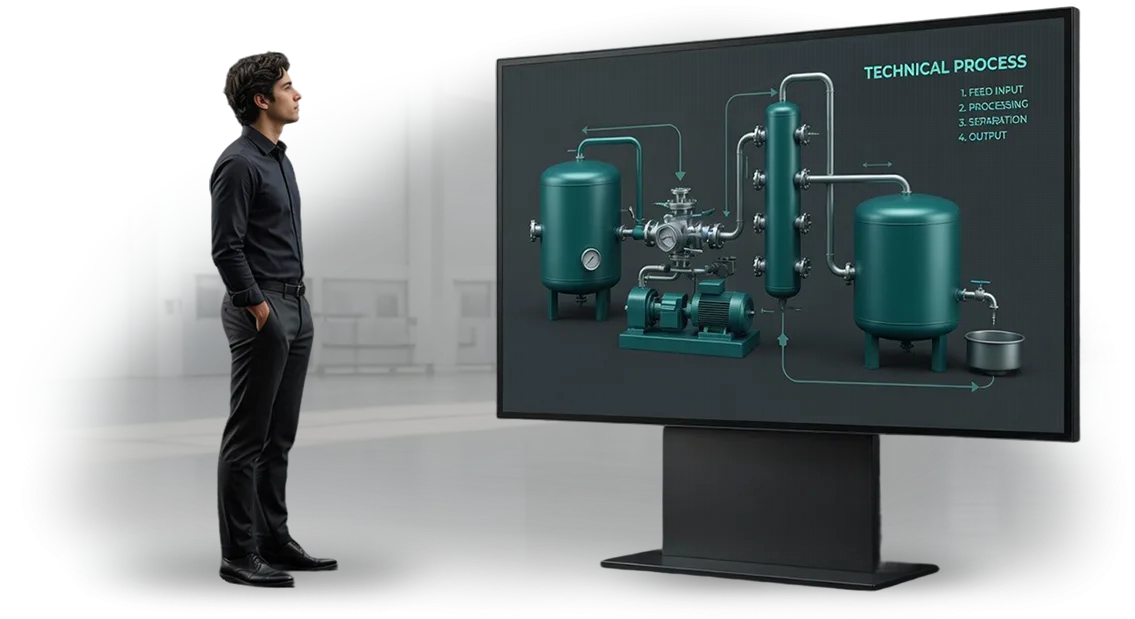
Corporate video with 3D visualization addresses the main need — clarity. Instead of abstract bullet points, the employee sees a three-dimensional scenario: how a unit is arranged, in what sequence to perform operations, which errors are most common.
Training videos are better remembered, which means the employee reaches the required level faster and distracts mentors and tech support less often.
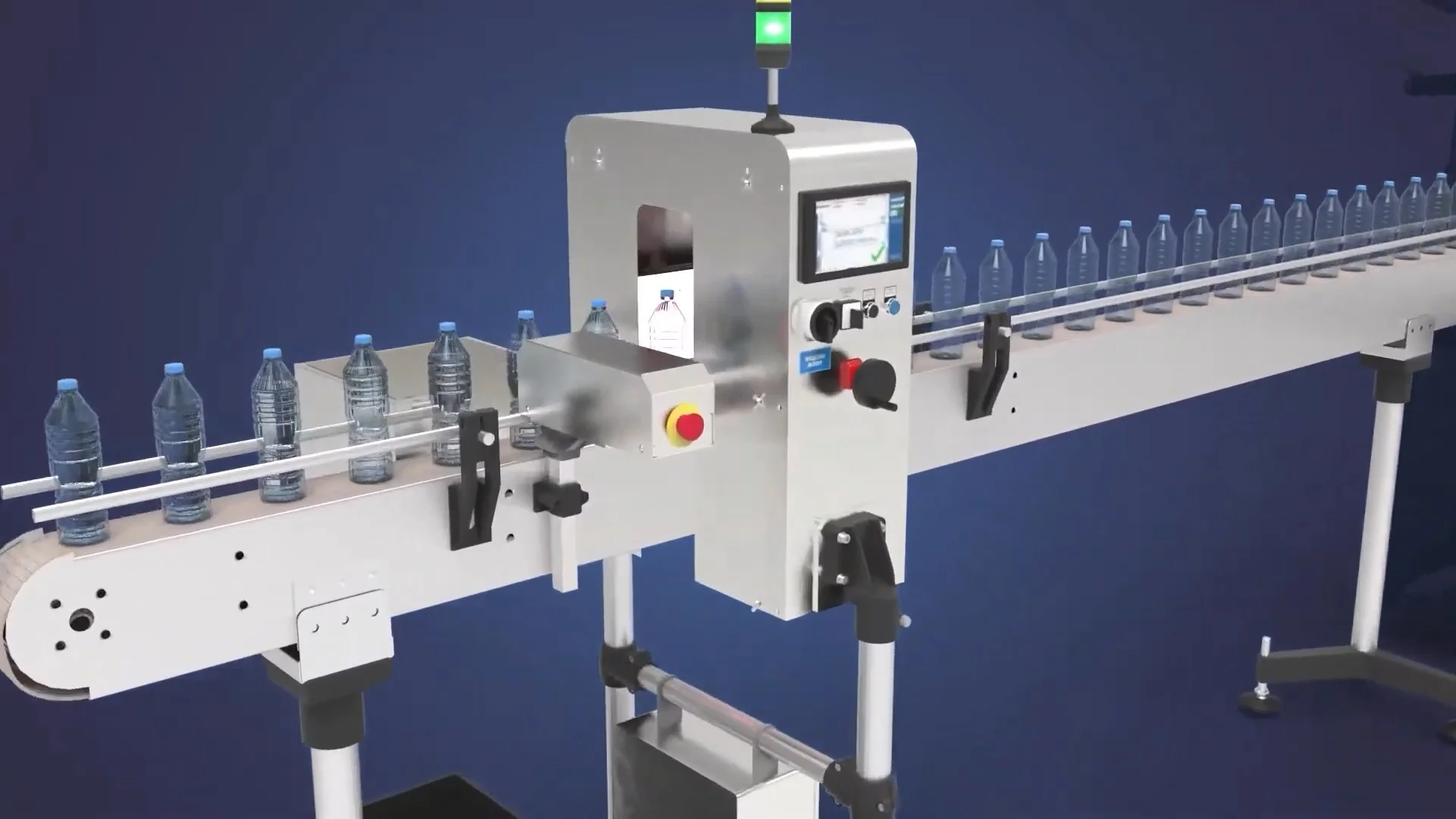
We create training videos in the style of architectural visualization: each object looks realistic and aesthetically pleasing, and actions are shown as they happen in reality.
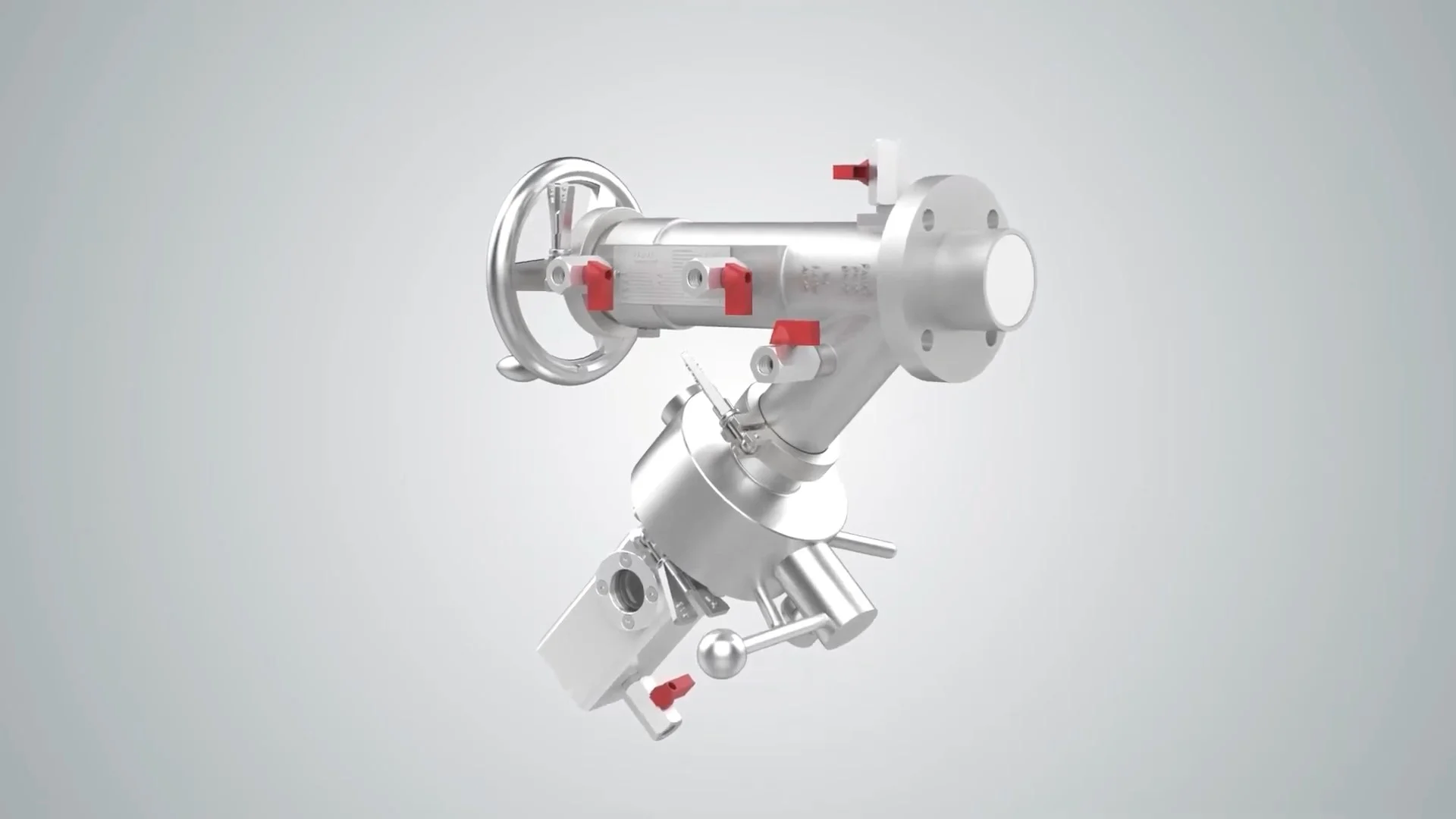
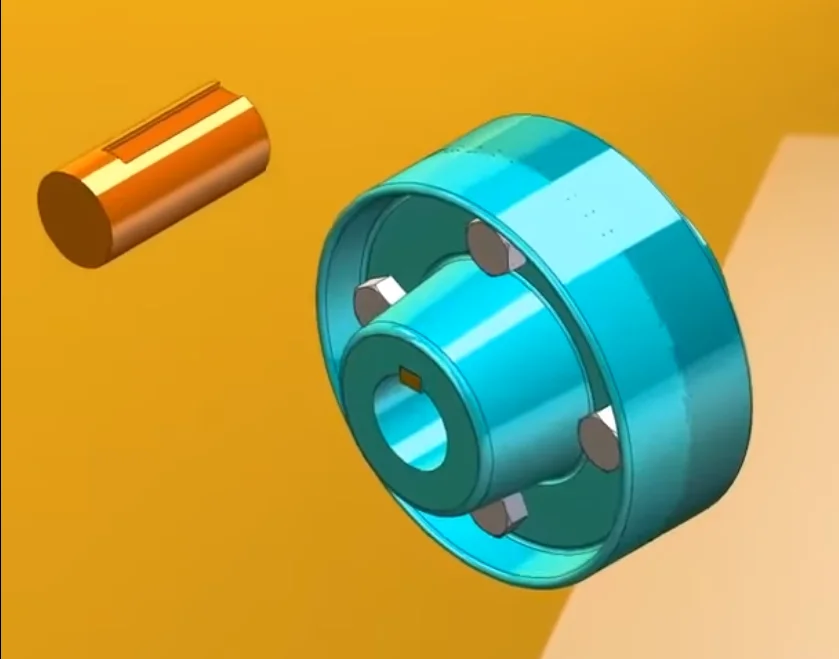
3D animation technology makes it possible to break down a process to the smallest detail, look inside a mechanism, and explain complex logic in simple language. Such instructions are suitable both for mass training and for transferring expert experience.
For business, this means a quality standard that does not depend on a particular trainer or branch. Video instructions are easy to update when processes change, and development costs are recouped through fewer errors and faster onboarding of new people.
Most importantly, employees begin to work more confidently, and managers get a manageable and predictable training process.
What 3D Animation Gives Internal Teams
Text instructions and static diagrams often fail to hold attention: an employee reads but doesn't picture the real process. 3D animation solves this problem — it shows each step in motion, from the right angle and at the right pace, replacing long explanations with visual action.
For newcomers, this is a quick path to productivity. Instead of reading regulations, a person watches a video where the entire technological process is visible from start to finish. They can pause and return to a difficult moment. As a result, onboarding shrinks from weeks to a few days — the employee starts adding value faster.
Fewer errors is a direct saving. When everyone follows a single visual standard, the amount of defects and rework decreases. Even experienced staff skip critical steps less often when they see a clear sequence in the video.
For manufacturing training, 3D animation reveals what is impossible to show in reality: internal mechanisms, dangerous operations, cutaway processes.
We use professional 3D graphics tools to create videos that replace expensive site visits and eliminate risks for newcomers.
Staff engagement grows because dynamic video is easier to perceive than a boring document. Employees are more willing to complete training, remember material better, and return to the video when needed without distracting a mentor.
As a result, the company gets faster onboarding, fewer errors, and increased productivity. Corporate 3D videos pay off by reducing mentor costs, cutting defects, and decreasing time spent on retraining.
Formats of Training Videos with Architectural Visualization
There is no universal training video format: what works perfectly for a short briefing is useless when studying a multi-stage process.
Visualization in the architectural presentation style combines the benefits of both approaches — complex assemblies and mechanisms become clear, and the employee remembers the sequence of actions faster.
We choose a format not "to taste" but for a specific task, so we clarify in advance what a person should be able to do after watching and under what conditions they will watch the video — on a computer, tablet, or smartphone.
We prepare three main formats — the choice depends on the task.
| Format | When to Use | What It Gives the Business |
|---|---|---|
| Short video, 2–4 minutes | Updating regulations, introductory briefing | Employees quickly get up to speed, fewer questions for mentors |
| Modular course with 3D animation | Systematic training on complex processes | Consistent knowledge level among all specialists, fewer typical errors |
| Interactive 3D diagram | Working with equipment, safety procedures | Safe practice before going to a real site, minimum emergency situations |
The formats do not exclude each other: a short video covers quick familiarization, a modular course covers systematic training, and an interactive diagram covers safe practice of complex operations.
In a single project, we combine several types to build a full cycle — from initial briefing to knowledge control. We deliver finished materials in formats that are easy to integrate into corporate portals and e-learning platforms, including the widely used Moodle.
As a result, you get a predictable level of staff training, fewer workplace errors, and saved mentor time.
How the Project Goes: From Brief to Implementation
Developing a training video is a well-structured system in which you always understand what is happening and when the result will be ready. We organized the process so that the client participates at key points and makes decisions without diving into technical details.
- Video brief — we record the learning objectives, audience, key scenarios, and usage format: distance learning system, webinar, or workplace.
- Plan and storyboard — we create the video structure, key frames, and voice-over text so you can see the future video lesson before production begins.
- Approval at each stage — we show intermediate versions from rough animation to the final one, making edits before completion, not after.
- Animation production — we create 3D scenes, characters, and objects in the architectural visualization style so the material is clear and easy to integrate into training programs.
- Voice-over and editing — we record a narrator with the right intonation, add subtitles and graphic explanations, and prepare the video in formats for any learning platform.
- Training implementation and support — we deliver the video to your distance learning system, set up access, check operation on employees' real devices, and collect feedback after launch for adjustments.
At every stage you know what is happening and can influence the result. This approach eliminates surprises and provides a video that actually solves the training task.
What Is Included in the Delivery
Work on video instructions does not end with delivering the videos. You receive a complete delivery package: finished videos, source files, accompanying documents, and usage rights — everything you need to launch training tomorrow.
The package includes:
- Ready-made video instructions in formats for a corporate training platform, messengers, and offline presentations — employees complete the material from any device without losing quality.
- Source project files — regulations change, and you make edits with your own specialists without ordering work from scratch.
- Versions with subtitles and professional voice-over — help employees with different experience and skill levels absorb the material.
- Scripts and storyboards — clear documentation for approval and the basis for future updates.
- Implementation guide — a short plan for building training, assigning responsible people, and tracking views.
- Full rights to the videos — the videos work in training, on internal portals, in presentations, and in new-hire onboarding without restrictions.
The document package is transferred under an acceptance certificate, and the source files remain your property.
This means that in a few months you are not dependent on the contractor: you can update instructions, change a regulation, or rebuild a scene yourself, or return to us with a specific task — in both cases you control the process.
Example: How Safety Was Improved at a Production Facility
At any production facility, employee safety is an issue that does not tolerate a formal approach. Even one mistake while working with equipment can cost someone their health, and a company downtime and reputation.
At the same time, standard briefings and text regulations are poorly absorbed: a newcomer needs time to picture hazardous zones and the sequence of actions.
A company called Metallurg-Invest approached us with the task of reducing the number of employee errors and accelerating the onboarding of new staff. Together with their occupational safety specialists, we analyzed typical violations and built scenarios for training 3D videos.
Each video shows the production site from different angles, as in architectural visualization: hazardous zones, movement trajectories, and the correct sequence of operations are visible. The employee sees not abstract diagrams but the real environment of their workshop.
Results of 3D Videos at the Enterprise
After introducing the videos into the training program, personnel errors dropped by 40%. This was especially noticeable among new employees: the adaptation period was reduced from several weeks to several days.
People quickly remembered safe techniques because they saw the process through the eyes of an experienced master, rather than reading dry instruction text.
The company's management also noted an additional effect: the videos began to be used for regular briefings and incident analysis. Thanks to clarity, the materials do not become obsolete — when a regulation changes, an updated version can be quickly released. The client confirmed the effectiveness with a repeat order for the next production area.
How to Choose the Right Format for Your Task?
There is no universal answer "the best format" — the right choice depends on three things: what skill employees are mastering, how often they will refer to the material, and what budget is allocated for the video.
If the task is simple — for example, teaching staff to fill out a CRM request — a short 2–3 minute video is enough. If you need to explain a multi-stage technological process or launch a new product line, a longer format with detailed script development will be required.
Short videos are an ideal choice for mass training when speed matters: an employee watches, repeats the action, and immediately returns to work. They are cheaper to produce, faster to approve, and easy to update when regulations change.
Long formats are appropriate for complex tasks where safety, quality, or money is at stake: they allow each stage to be shown large, with emphasis on typical errors and analysis of emergency situations.
The main selection criterion is not the duration itself, but the depth of immersion the employee needs for a confident result. Ask yourself: should the person simply familiarize themselves with the instructions, or actually perform the operation without prompts?
In the second case, it is better to choose a video where every action is shown step by step on the working interface, with pauses and explanations.
The budget for the video also determines the format: a short cut-together video from ready-made material will cost significantly less than a scenario with 3D visualization and several locations. But do not save on the main thing — clarity.
If an employee watches the video three times and still makes mistakes, savings on production turn into losses on rework.
The most pragmatic approach is to start with a basic format and then scale it to the company's real needs. In practice, it often turns out that one universal video solves 80% of tasks, while narrower scenarios are covered by short additions to it.
We will help you make a preliminary video selection for your task: send us a description of the process, and we will propose the optimal structure, duration, and style — taking into account your deadlines and video budget.
Common Concerns: What If the Video Doesn't Fit?
When ordering a training video, you may worry: what if the material doesn't align with internal regulations, employees don't like it, or the result is not what we imagined? That's normal — responsibility for the result lies with us.
We structure our work so that doubts don't remain. First, we immerse ourselves in your specifics: we take real scenarios, instructions, and standards — the video adapts to your processes rather than existing on its own. You receive a training product that fits into your current training system.
Quality assurance is not just words. We fix key points in the brief and at the script approval stage, so you see the direction before animation begins. If something goes wrong, you say so at an early stage rather than after the final render.
What if the finished video doesn't match our standard?
We address this objection at the start: we study your regulations, corporate style, and terminology. If you notice inconsistencies after reviewing the draft, edits are made before the final version.
The contract specifies iterations that are already included in the cost — so you won't be left alone with the problem.
How many revisions can be made?
Usually we include two or three iterations after the draft video. That is enough to refine details: accents, timing, wording. If more is needed, we discuss it separately — the main thing is that the result solves your task, not just meets formal points.
What if employees don't like the video?
We focus on the real audience: we use live examples close to your specialists and a clear visual sequence. If after launch you see that the material is perceived as more difficult than expected, we help adjust the presentation — you don't end up with unsuitable content.
So doubts are a working part of the process. Our task is to make the result useful for your employees and business, not just formally accepted. Shall we discuss your case? We'll advise how to present the material better.Let's Start with a Short Brief — We'll Do the Rest
To order 3D training, you don't need to prepare a detailed technical specification. A short brief is enough — tell us who and what we are teaching, and which presentation style is more convenient. From there, the entire process is on us: you only approve the key points.
After the brief, we send a concept, cost estimate, and production timeline — no prepayment is required until your approval.
If strict graphics are important, we make videos in the architectural visualization style: this makes it easier for employees to read space and the sequence of actions. We will also offer another option if you need a warmer tone.
The work stages look like this:
- Discuss the brief: training objectives, audience, preferences on style and duration.
- Choose a style and prepare a concept — in architectural visualization style if needed.
- Send a cost estimate and production timeline, and fix them after your approval.
- Approve the script and storyboard — you see the future video before animation starts.
- Launch production: 3D graphics, animation, voice-over, editing.
- Deliver the finished video, transfer source files and an update guide.
Leave a request to order 3D training and discuss the brief. In response, we'll send a concept, cost estimate, and calendar plan. After the estimate is approved, we'll lock in production timelines and start work immediately.