

Why Cutaway-Style Video Instructions Train Faster
Every manager has dealt with employees skipping text policies and not finishing long video lessons. As a result, knowledge never reaches the workplace, and staff errors turn into defects and downtime.
Familiar training formats no longer work: attention is harder to hold, and production processes are only becoming more complex.
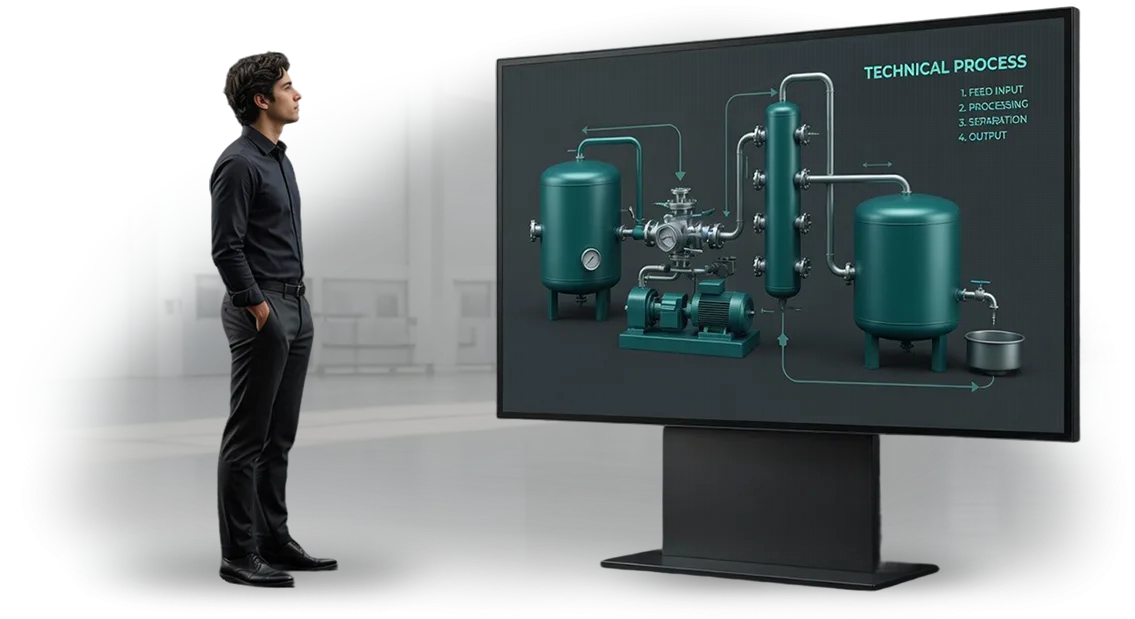
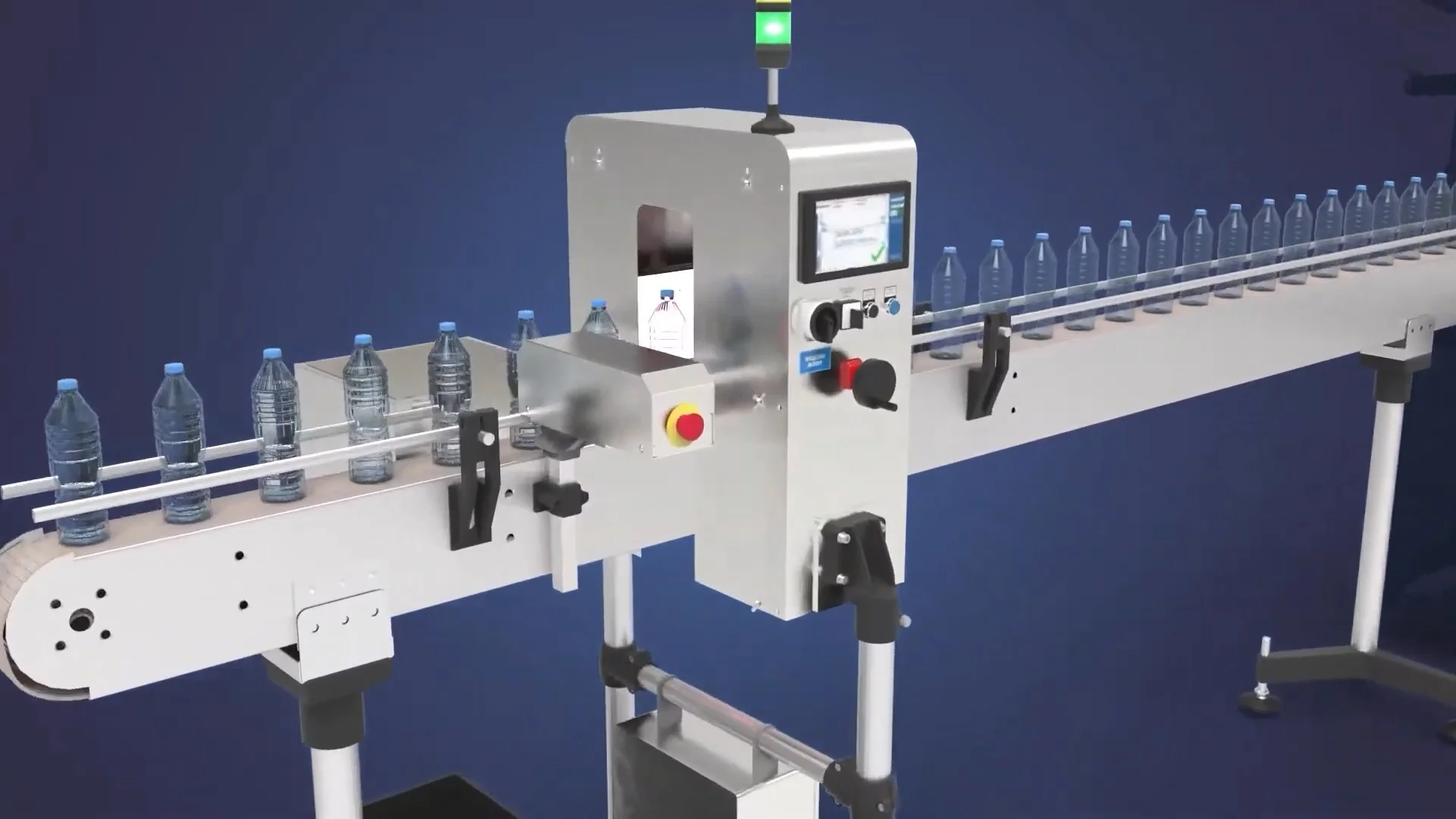
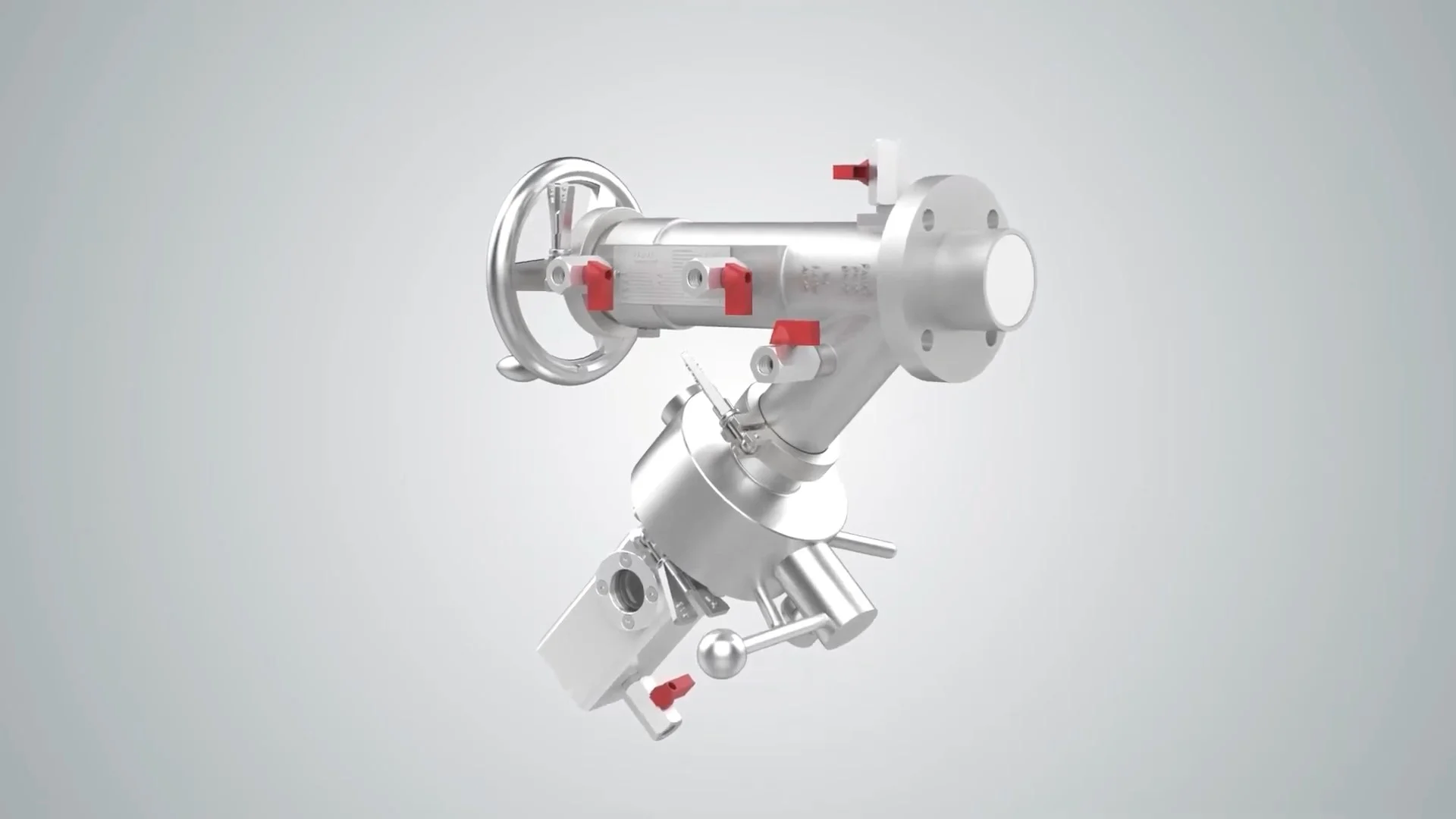
A 3D cutaway animation changes this. Instead of flat diagrams and abstract slides, an employee sees the internal structure of an assembly or mechanism: how parts move, where the flow goes, where a failure can occur. Such an image is read instantly — there is no need to decipher a drawing or recall terminology.
Video instructions with a cutaway hold attention through clarity and motion. Employee training goes faster: a new person masters the process in fewer repetitions, and experienced staff make fewer mistakes in unusual situations. The material stays in memory longer because the brain remembers an image, not text.
For businesses, this format delivers measurable results: onboarding time is reduced, there are fewer errors when operating equipment, and explanations do not have to be repeated for each employee individually.
Corporate video instructions in cutaway format level the quality of training — all specialists work to a single standard rather than relying on their own experience.
We develop such videos with your tasks in mind. We show the process so that employees of any skill level understand it — this solves the problem of ineffective training.
What Businesses Get from 3D Employee Training
Faster Onboarding
New employees master workflows faster when they see them clearly. Instead of reading long instructions and analyzing diagrams, a person understands in a few minutes how an assembly, mechanism, or procedure works. The company saves weeks of adaptation time and gets a return on a new hire sooner.
Clear Visualization of Complex Processes
A cutaway reveals the internal structure of equipment and the sequence of operations in a way that is impossible to see in reality. An employee remembers the sequence of actions without dismantling an expensive object or risking mistakes during training. Complex scenarios become understandable even to those who have never worked with such machinery.
Fewer Errors and Incidents
A training video allows employees to practice rare and dangerous situations without consequences. The employee sees what leads to a technology violation and learns to act correctly.
As a result, the number of defects, breakdowns, and incidents decreases — which means direct losses and downtime are reduced.
Higher Engagement and Skill Levels
3D animation is easier to absorb than dry text and keeps attention to the end. Staff actually watch the material instead of skipping over it. Regularly updating video courses helps keep the team’s skills current without interrupting production.
Formats of Training Videos with Cutaways for Employees
A cutaway training video is not just a video but a working tool that adapts to the employee’s level.
To make the video useful rather than sitting in an archive, the format is chosen for a specific task: getting familiar with equipment, work procedures, or analyzing an emergency situation.
| Format | For whom | What it gives the client |
|---|---|---|
| Overview cutaway with labels | New employees, interns | Fast immersion in the equipment without the risk of mistakes, shorter onboarding time |
| Detailed cutaway with assemblies | Maintenance crews, service departments | Clear breakdown of each assembly, fewer errors during servicing |
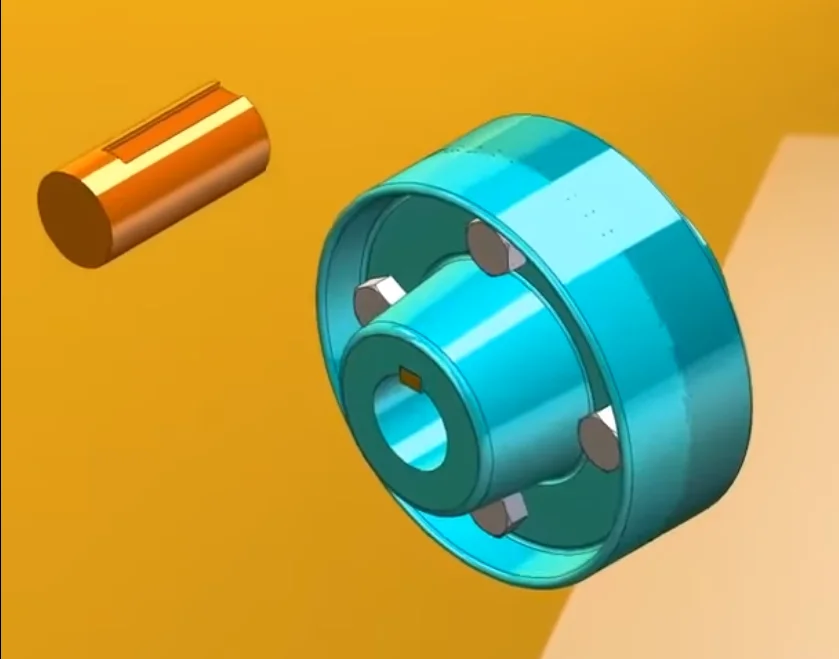
| Step-by-step assembly/disassembly | Production staff | Clear assembly instructions without reading drawings, faster process |
| Cutaway with flow animation | Technical specialists | Understanding of system operating principles, faster fault diagnosis |
This breakdown allows videos to be deployed targeted: some employees get the big picture, others get detailed breakdowns. As a result, training takes less time and staff reach the required level faster.
Our clients note that after implementing these formats, error rates drop significantly and repeat support requests decline.
How We Create Video Instructions: 7 Steps from Brief to Implementation
A transparent process is what distinguishes a reliable contractor from “jacks of all trades.” We broke video instruction development into 7 stages so you can see what happens at each step and how it affects the result — videos that are clear to employees and truly reduce the number of errors.
-
Brief and audit. We discuss which operations cause the most questions and collect your policies and technical charts. The result is a clear understanding of which instructions are needed first.
-
Training script. We turn dry documents into short scripts in the employees’ language. Each module covers one task so the video can be reviewed in full or in steps.
-
Storyboard and style. We agree on the visual style: color scheme, presentation, scene cutting. Already at this stage you can see what the future instruction will look like.
-
3D modeling. We create three-dimensional models of your equipment in the “cutaway” style — internal parts are clearly visible, like a real cross-section. This helps an employee understand the structure of an assembly rather than just memorize a sequence of actions.
-
Voiceover and editing. We record professional voiceover, add pop-up hints and highlights for critical operations. We edit the video in a rhythm that holds attention and never loses the thread of the actions.
-
Focus group review. We show a draft version to several employees and see where questions arise. Based on their reactions, we make corrections — this removes misunderstandings before a full rollout.
-
Implementation and analytics. We upload the videos to your training system in the required formats, set up access, and provide recommendations for tracking views. When necessary, we update the videos — for example, after procedures change.
This approach provides a predictable development timeline and a clear result: employees master new processes faster, and you do not need to spend time on endless one-on-one consultations.
What’s Included in the Delivery: A Complete Materials Kit for Your Training
You receive not just files but a complete kit for launching training — everything you need to put the materials to work as early as the day after delivery.
The delivery includes project results: finished videos, source files, and methodical materials assembled for your department’s task.
- Ready-made video materials in formats for learning management systems, presentations, and messengers — an employee opens the lesson from any device without additional setup.
- Cutaway animation: complex equipment and processes are shown clearly, with a breakdown of internal structure and sequence of actions.
- Project source files — if needed, you can make edits with your own team or order updates from us without reshooting.
- A trainer’s guide: script, timing, key messages, and recommendations on how to integrate the video into the training program and check comprehension.
- A handout for employees: a short summary of key steps that can be printed or placed at the workstation.
- An update policy: a clear process for making changes when equipment or procedures are modernized.
- Post-delivery support: a short consultation on using the materials and answers to trainers’ questions during the first month.
This set covers the full cycle — from first viewing to knowledge control. You get a transparent delivery and can launch training without bringing in contractors or long approvals.
Case Study: How a 3D Cutaway Helped a Factory Cut Staff Errors
Operator training in production often drags on for weeks: theory is separated from practice, and a mentor physically cannot show every piece of equipment.
The factory needed to train 200 people in a month — under the standard scheme, this would have taken 22 days for the introductory course alone, plus mistakes by newcomers caused downtime.
We proposed replacing part of the instruction with a CGI video featuring a cutaway. Instead of flat diagrams and photographs, employees saw the machine’s internal structure: how parts move, where the risk of breakdown occurs, how to follow the procedure correctly.
This is not animation for effect — it is an accurate copy of the mechanism that can be shown in cutaway and in operation.
How It Happened
Together with the factory’s technologists, we analyzed the five key operations where most errors occurred and combined them into a single 12-minute training video.
The equipment cutaway made it possible to show the sequence of actions without stopping the real line — training ran in parallel with production.
Operators worked through the video at their own pace, and knowledge control was built in as test scenarios. That gave management an objective picture of each employee’s readiness before they were allowed near the machine.
Business Results
Introductory training time was cut from 22 days to 7 — the factory met the deadline and did not delay the launch of the new line. Errors among new operators dropped by 40%, and repeat requests to mentors fell threefold. Downtime caused by staff virtually disappeared.
Three months later, the client returned to ask us to adapt the video for training the maintenance crew.
How to Choose the Right Video Instruction Format for Your Task?
Choosing a video instruction format starts not with the question “which video looks nicer” but with the business task: what should the employee do after watching.
If the goal is to teach the correct disassembly of an assembly or performance of an operation where every detail matters, a plain slide or a single-angle recording is not enough.
A cutaway shows the internal structure from every side at once — this reduces errors and shortens the time needed to bring new people up to speed.
For simple procedures where employees already know the process, a short video with clear steps is enough. There is no need to overpay for detail here. It is a different story with complex equipment, dangerous operations, or work with newcomers.
In those cases, the cutaway format pays for itself with the very first prevented breakdown and gets an employee to the required level of independence faster.
The main advice to a client is to evaluate two parameters: the audience’s skill level and the cost of an error. If the cost of an error is downtime, reputation, or safety, choose the most visual format with the internal anatomy of the object.
If the audience is experienced, an overview video with an emphasis on quality control may be sufficient.
Another criterion is the frequency of updates. A detailed 3D cutaway video is worth creating when equipment and processes are stable and will be used for years.
If procedures change frequently, it makes sense to plan a modular structure: the base video is shot once, and individual segments are updated as changes occur.
The final rule is simple: the complexity of visualization should match the complexity of understanding the task for your team. A cutaway is not decoration but a tool that accelerates training and protects the business from mistakes.
We help you choose a format for your task and budget, without forced options — because a properly chosen instruction works immediately.
Frequently Asked Questions About Developing Training 3D Videos
Before ordering a training 3D video, clients most often ask the same questions: how often will the video need to be updated, will it fit into the existing training system, and how long will production take. Below are honest answers that will help you make a decision without unnecessary doubt.
Will we be able to update the video when processes or equipment change?
Yes, this is planned from the very beginning. We design videos modularly: individual scenes can be replaced without reshooting the entire video. You receive the source files and clear instructions — point changes do not require contacting developers. If changes are large-scale, we deliver an updated version within days, not weeks.
Will the video work in our training system or LMS?
Yes. We deliver videos in standard formats supported by all popular platforms: SCORM, MP4, and video by link. Before delivery, we check the upload and correct display on your side, and if needed, we help configure integration. Instructions for the system administrator are also included.
How long does it take to produce one video?
The standard timeline is from 2 to 4 weeks. The duration depends on complexity: the number of scenes, the level of object detail, and the need for narration.
A clear schedule is fixed in the contract at the start, and intermediate versions are shown at every stage — you see progress rather than waiting for a finished file at the end.
How much does it cost and what does the price consist of?
The cost depends on the scope: running time, number of scenes, style, and the need for re-voicing. We do not quote a figure “starting from” until we study the task.
After the brief, however, we provide a precise cost estimate broken down by stage and fix it in the contract — it does not change during the process. You pay for a finished video that solves a specific training task, not for a designer’s hour.
What if the video does not fit or revisions are needed?
We provide a guarantee on the result: until you accept the work, we make revisions free of charge within the scope of the agreed technical specification. This logic is specified in the contract.
Additional changes “along the way” are also possible — we will discuss the scope and timeline separately, but we guarantee basic compliance with the specification.
If you are unsure whether a 3D video suits your task, send us a description of the situation, and we will recommend a format that solves it faster and more affordably. Sometimes a simpler diagram or animation achieves the same goal.Order a Video Instruction with a 3D Cutaway: We Start with a Brief
Employees absorb instructions better when they see the device from the inside. A cutaway shows how assemblies and mechanisms work — assembly or repair errors become rarer, and a new hire gets up to speed in days rather than weeks. This reduces training costs and improves workplace safety.
We suggest starting with a free brief: you describe the task, we evaluate the project and prepare a presentation with formats for your scenario. We will send it within 24 hours — no commitment and no prepayment required.
What you get when you order:
- A free brief and project assessment within one business day.
- Format selection: from a short video to a full training course.
- Clear video instructions that reduce errors and accelerate employees achieving the required level.
- A professional team with ten years of experience in corporate training.
- An individual script and style for your brand and audience.
- Transparent timelines and stages — you see your progress at every step.
- All source materials and rights to the finished video remain with you.
To discuss your project, contact us in any convenient way — via the form on the website, by phone, or by messenger. We’ll explain how a cutaway video instruction solves the specific tasks of your production and suggest the best solution for your budget. We start with a brief — we’ll handle the rest.