

Why Video Instructions for the Energy Industry Are Not a Luxury but a Necessity
In the energy industry, the cost of a mistake is measured not in fines but in people's health and uninterrupted equipment operation.
Every day, employees perform dozens of operations—from substation switching to scheduled maintenance—and any deviation from the instructions can lead to an accident with millions in losses.
Traditional training for energy workers consists of thick regulations and infrequent training sessions that fail to keep up with real-world scenarios. A recent newcomer is left alone with a hazardous facility, relying on memory and colleagues' advice.
That is exactly how incidents occur—incidents that could have been avoided if the employee had had a clear video instruction at hand.
And once an accident has happened, the costs of eliminating the consequences and equipment downtime multiply many times over the cost of quality training.
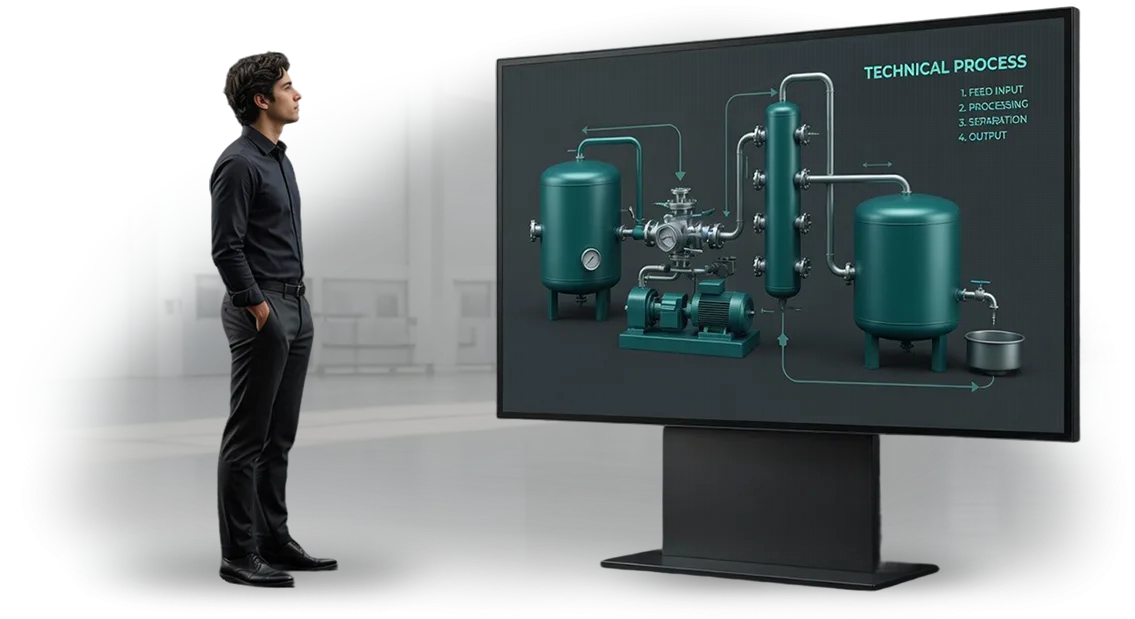
A video instruction for the energy industry is not just a "picture with text" but a step-by-step action algorithm that mirrors the logic of real work.
The employee sees every movement, every component, every lockout—and memorizes the safe sequence at a comfortable pace, without pressure or haste.
The result is predictable: fewer errors, faster onboarding, consistent compliance with regulations. The company stops spending money on retraining, accident reviews, and downtime—and gains confidence in every action of its personnel. Cost reductions become visible within the first months of using such video instructions.
That is why we create training video instructions for energy companies that want to reduce risks and improve their safety culture. We analyze your regulations, equipment passports, and drawings, turning them into short, clear videos understandable even to a new employee.
What Results a 3D Video Instruction Will Bring
Employees in the energy sector work with expensive and hazardous equipment, where any mistake can lead to downtime, injury, or an accident.
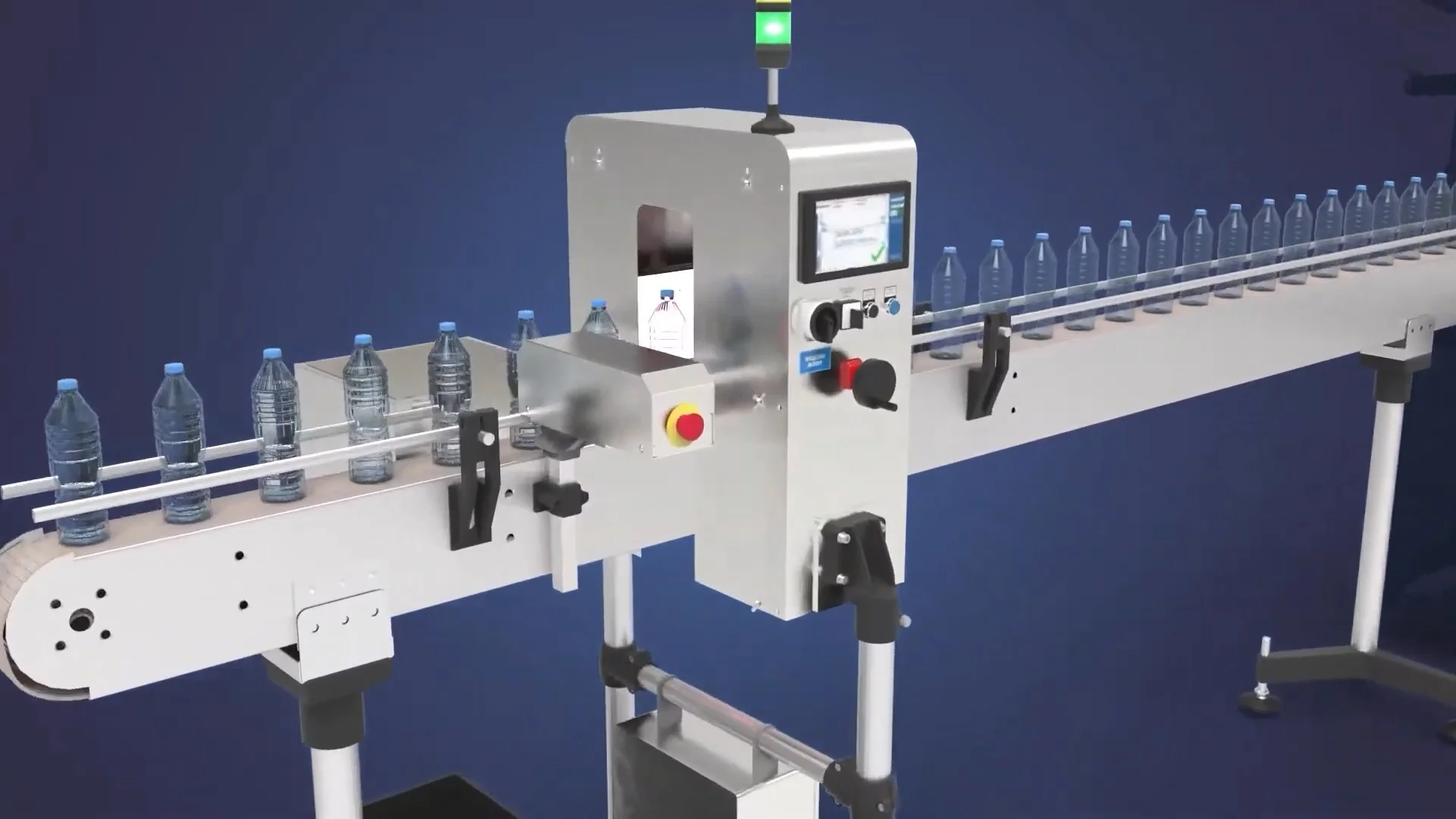
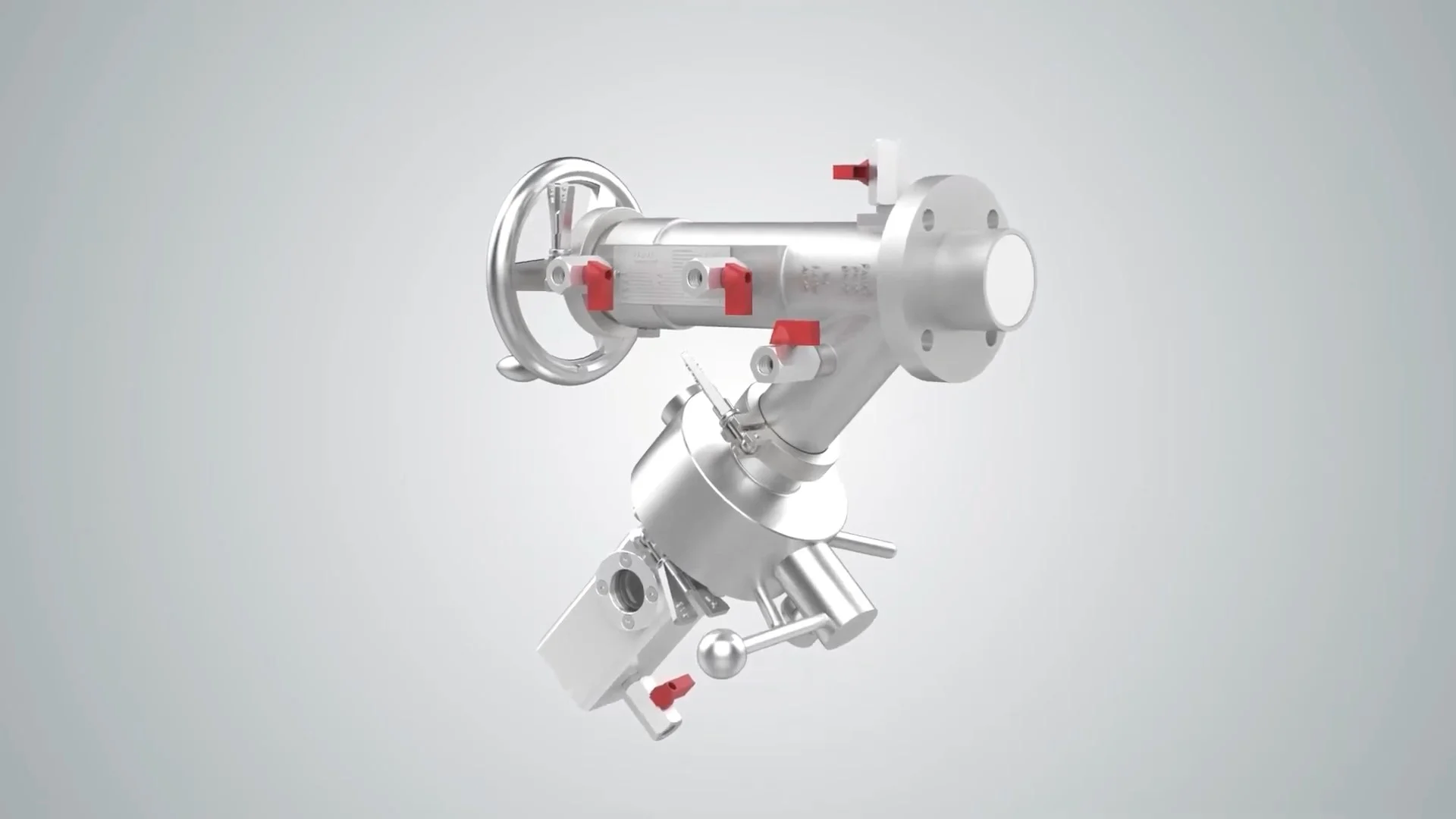
A 3D video instruction created from your CAD drawings shows every component and every action with maximum clarity—the operator sees the process as if they already hold the tool in their hands.
As a result, new specialists adapt faster, and experienced workers make fewer mistakes in emergency situations.
The primary result is safety. Instead of dry text regulations, the employee sees the precise sequence of operations on a realistic model. This reduces the risk of violating safety rules, damaging expensive equipment, or suffering a workplace injury.
For a manager, this means fewer incidents, less downtime, and a smooth inspection by regulatory authorities.
The second result is learning speed. A video instruction is absorbed several times faster than reading documentation: there is no need to mentally assemble the device from drawings—everything is already shown in motion.
Onboarding time for newcomers is reduced, and retraining employees during equipment modernization takes hours rather than weeks. This directly impacts labor productivity and a quick return to work.
The third result is savings. You reduce costs for in-person instructors and training ground rentals, as well as reduce defects and breakdowns caused by incorrect actions.
A 3D model created once pays for itself many times over: it can be used to train different shifts, branches, and contractors without additional investment. Plus, the video is available around the clock—an employee can review a complex component at any time.
Finally, there is the overall effectiveness of the training system: 3D instructions standardize staff knowledge, make the process transparent for managers, and employees themselves feel more confident and are more willing to follow regulations.
Competent personnel mean stable equipment performance, predictable timelines, and a reputation as a reliable supplier in the energy industry.
Formats of 3D Video Instructions for the Energy Industry
In the energy industry, the cost of an employee's mistake is especially high: an incorrect action with equipment can lead to downtime, an accident, or a safety threat. Standard text instructions and diagrams take time to interpret, and live training cannot always be repeated.
That is why we translate processes into clear 3D models: the employee sees every component, every movement of the simulation, and understands the sequence of actions without guesswork.
There is no universal "single" video instruction—tasks differ: a quick cheat sheet, a detailed breakdown of repair work, or a full course for newcomers. Therefore, we select the format to match the specific task and training stage. Below are the standard options already used in the energy industry.
| Format | For Which Tasks | What It Gives the Customer |
|---|---|---|
| Short 3D clip (1–3 minutes) | Standard operation: startup, switching, consumable replacement | Quick review before a shift, fewer errors |
| Modular video instruction (5–15 minutes) | Breakdown of a component or technological process | Faster onboarding, unified action standard |
| Full 3D course | Systematic training of new employees | Reduced mentoring time, consistent knowledge across all crews |
| Interactive 3D guide | Knowledge assessment and skill practice | Objective evaluation of staff readiness, lower accident rates |
This breakdown covers the entire training cycle: from initial introduction to knowledge control. At the same time, all formats are built on a single 3D model created from your drawings, so employees see exactly their equipment rather than abstract images.
We will select the right format for your budget and task, and then scale the solution to other areas or workshops.
If you are not yet sure where to start—begin with one short clip for the most frequent operation and evaluate the effect. Other formats can easily be added later when you see the results.
How Video Instruction Creation Works in 7 Steps
We will explain how the work is structured so that you understand at every stage what is happening and what you get as a result. We handle the entire implementation—from brief to finished instruction—while you control only the key milestones and approve the result.
-
Brief and task immersion. We study the process that needs to be explained, your audience, and current regulations. Based on this, we agree on the technical specification: timelines, format, and the list of scenes to be included in the video.
-
Script and structure. We break the training into logical blocks, write the voiceover text, and plan visual accents. You see the script before production begins—you can make edits without wasting time on rework.
-
3D model and texture creation. We build accurate equipment models from your drawings and photographs. The employee sees mechanism details exactly as they are in reality—no need to stop production for filming.
-
Animation and shot composition. We bring mechanisms to life, show components in cross-section, and add arrows, labels, and highlighting of key elements. Complex operations become a clear sequence of actions.
-
Voiceover and editing. We record clear, calm narration, synchronize it with the video, and add subtitles. We check the video for clarity: can a new employee follow the instruction from the first viewing.
-
Approval and revisions. We send you a link for review; you leave comments on the script, shots, and terminology. We make changes within the agreed timeline and show the result again.
-
Delivery and support. We hand over the final files and help upload the instruction to your training system. If equipment or regulations change—we will promptly update the necessary fragments so the material does not become outdated.
What Is Included in the Video Instruction Delivery
Developing a video instruction is not just screen recording or a set of slides. We assemble a complete package that can be used immediately in a distance learning system, on an internal portal, or on a supervisor's tablet. Below is the delivery contents.
- Script and methodological structure. We break the process into clear steps: from work preparation to typical mistakes. Each step is accompanied by voiceover commentary and visual accents so the employee can watch the video without being distracted by text instructions.
- 3D equipment models from your drawings. We reproduce components with accurate proportions, joints, and factory specifics. This lets us show the equipment from any angle without stopping production for filming.
- Texturing and materials. We add colors, markings, and highlights—the part looks real, so recognition is instant, even if the employee sees the component for the first time.
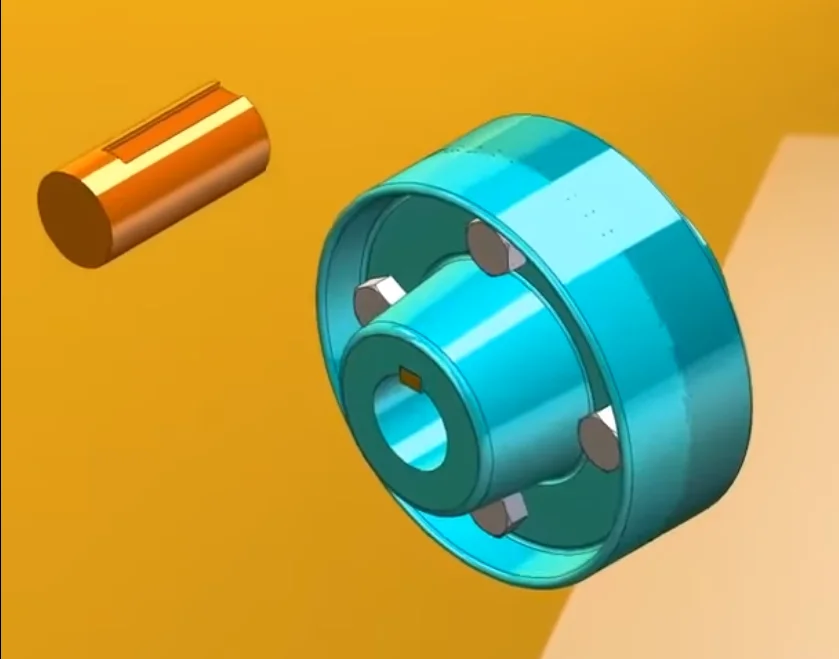
- Frame-by-frame process animation: disassembly, assembly, mechanism movement, force directions. Animation explains what a static image or photograph cannot convey.
- Professional voiceover and subtitles. A narrator's voice without excessive emotion, with proper pauses. Subtitles help study the material in a noisy workshop or without headphones.
- Editing and post-processing. We assemble the shots into a single video with titles, emphasis on important details, and self-check questions.
- Final files for any scenario: high resolution for in-person training, compressed versions for distance learning systems and mobile devices, as well as project materials. You retain the ability to update the video without placing a new order.
All this is standard configuration. If you need a special approach (animation only with minimal text or a focus on safety procedures), we will refine the video per your request. You get a working training tool, not just a video file.
Case Study: How Energy Specialists Cut Commissioning Time by 30%
For energy companies, staff training is a matter of safety and startup speed. Paper instructions do not provide a complete picture: the employee has to mentally assemble the diagram and sequence of actions.
We translate this process into clear 3D video instructions that are understandable from the first viewing.
A telling case is the project for EnergoSet. The task was to train duty electricians to work with new equipment, and commissioning was being slowed down by the lengthy learning curve for operations.
Based on engineering drawings, we created detailed 3D models and a series of short videos with a step-by-step algorithm—from readiness checks to switch-on. Employees saw the actual sequence of actions and confidently repeated it on site.
What This Gave the Customer
- Commissioning time was cut by 30%.
- Personnel began independent work 2–3 days earlier.
- Repeated switching errors decreased by half.
Managers noted that previously training took up to two weeks and required mentor supervision. With video instructions, the standard is delivered once and scales.
Equipment does not need to be stopped for training—this is critical in the energy industry, since downtime is expensive.
The case showed: 3D video instructions accelerate staff preparation and reduce costs for bringing new facilities online. After the pilot, the customer expanded the format to three more equipment groups.
We can apply the same approach for you: we will collect your source materials, show an example on your components, and integrate the training into your preparation system.
Frequently Asked Questions and Customer Concerns
Typically, energy-industry customers have three concerns: whether we will meet deadlines, whether the budget will be justified, and whether the quality will actually teach employees to work with the equipment.
That is why we address objections before the project even begins—we respond to specific fears and show our work algorithm.
What is the development timeline for a video instruction?
Timelines directly depend on equipment complexity and scene volume, but you always know them in advance. After the brief, we set a schedule: typically, a series of instructions takes three to five weeks.
Each stage—from modeling to final editing—has its own date, so you are not dependent on a "black box" and know when the training material will be ready.
What about the budget, and will there be hidden charges?
From the start, we fix the scope of work and the final cost—no surprise add-ons along the way. If, during the creation of the instruction, you want to add new elements, you will learn about the budget impact before we make a decision.
A transparent estimate and a clear breakdown by stage are the standard of our work, so there will be no financial surprises.
How do you guarantee quality for the energy industry?
We build videos from your CAD drawings, which means the video reflects the exact geometry of the real equipment. The finished material goes through an internal review: we verify the logic of actions, the sequence of operations, and compliance with technical documentation.
You receive an instruction that can be used for training right away—with confidence that employees will learn the correct procedures.
If you still have doubts—call us. In 10 minutes, we will discuss the specifics of your task and advise on format and timelines. We will show examples of our work for energy enterprises so you can see the quality level before signing the contract.Submit a Request for Video Instruction Development
To receive a cost and timeline estimate, you do not need to prepare a technical specification or study the intricacies of 3D modeling.
Simply submit a request—we will analyze the task ourselves, clarify the equipment specifics, and propose a video instruction format that suits your employees.
We work with energy enterprises and know how to turn complex processes into clear training videos.
During a free consultation, we will discuss which equipment needs to be shown, who will watch the instruction, and what result you want to achieve—from reducing error rates to fast onboarding for newcomers. Based on this, we will prepare a transparent commercial proposal.
What You Will Get After Submitting a Request
- Cost calculation for your task—no hidden charges or "surprises" along the way.
- Timeline estimate—from brief to finished video instruction, with clear stages.
- Free consultation: we will advise on the most effective format for your equipment.
- Examples of our work for the energy industry so you can see the quality level.
- A clear technical specification—it can be approved internally in a single pass.
- Usage recommendations: where to host the video and how to track views.
There are no obligations after submitting the request. We will send the estimate and plan—you can calmly decide whether the proposal suits you. If you need to clarify details, an engineer will call back and answer questions, even if you are not yet ready to start the project.
Submit your request now—it takes a couple of minutes. And by tomorrow, you will know how much a video instruction for your equipment costs and when it can realistically be done.
How to Choose a Video Instruction Format for the Energy Industry?
Choosing a video instruction format for the energy industry starts not with the visuals but with the task you are solving.
If you need to quickly familiarize an employee with the general layout of equipment, an overview video with a 3D model showing the main components and operating principle is sufficient.
If the goal is to teach a specific operation—for example, replacing a component or starting a unit—you will need a step-by-step instruction with an emphasis on the sequence of actions and critical moments.
In the energy industry, the cost of an error is especially high, so the format must account for real working conditions. Employees often need to pause, go back to a difficult fragment, or examine a part from the right angle.
This is where 3D modeling from CAD drawings gives an advantage: you can show internal structure, cross-sections, and mechanism movement—things that ordinary filming cannot achieve. Such an instruction replaces hours of mentoring and reduces the risk of incorrect actions.
When choosing a format, focus on three questions: who will watch it (a newcomer or an experienced employee), what they should do after watching, and under what conditions they will use the video—on a tablet near the equipment or in a training room.
The answers to these questions divide the video material into short 2–3 minute modules and detailed scenarios with in-depth demonstrations.
A good instruction is one that the employee reviews selectively rather than in full, which is why we recommend a combined approach: an overview video plus separate videos for key operations.
In our practice for energy enterprises, we start with a brief where you define the audience and desired outcome.
Based on this, we propose the optimal format: overview, step-by-step, or mixed—and then develop the script so that every minute of the video brings the employee closer to confident work.
As a result, you get not just a nice video but a working tool that integrates into the training system and quickly pays for itself by reducing onboarding time and lowering employee error rates.
If you are unsure which format suits your task—send us a description of the equipment and the usage scenario. We will advise on the most effective way to present the material and prepare a video instruction that will genuinely work in energy-industry conditions.