

Why Employees at Logistics Centers Waste Time on Training
A logistics center runs like clockwork — but only when every employee knows their operations by heart. New workers without experience spend weeks on onboarding.
The reason is simple: training is built on a mentor's spoken explanations and paper instructions, not on a visual demonstration of real processes.
The cost of such delays is real money. A newcomer who hasn't mastered the operations makes errors during order picking, damages goods, and misses shipping deadlines.
Every such failure hits the center's budget and reputation, while fixing the consequences takes time away from other employees.
Mentors are overloaded in the process: they need to do their own work and explain the same things to different people. One experienced employee has to cover several newcomers, and not everyone gets enough attention.
As a result, time-to-competency depends on a random factor — which mentor you get and how much time they can spare.
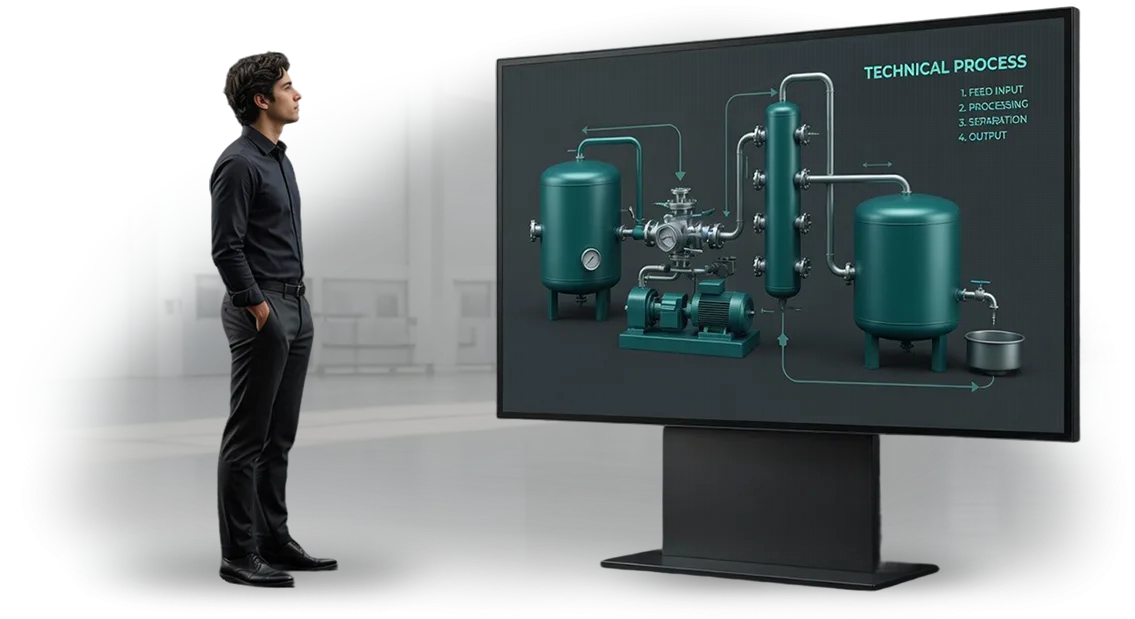
The right solution is warehouse video instructions that show the entire process on real equipment, tailored to the specifics of your center.
This kind of employee training standardizes knowledge: every new worker gets the same complete picture instead of fragments of verbal explanations. Picking errors go away, mentors return to their own tasks, and newcomer onboarding shrinks from weeks to days.
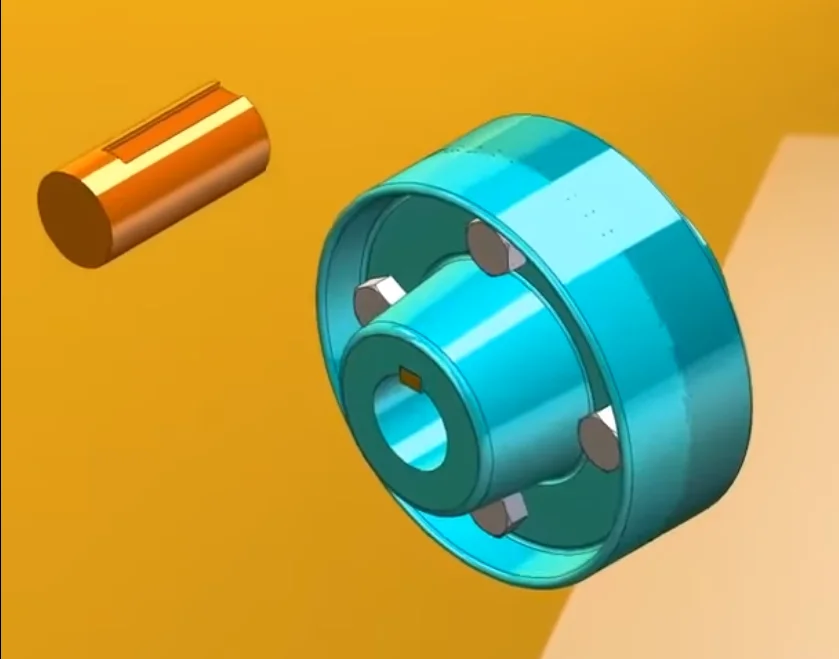
We create such video instructions based on CAD drawings and 3D models of your equipment — the employee sees the exact sequence of actions and starts working without prompts faster. This reduces the load on the team and improves the efficiency of the entire logistics center.
What Tasks Do Video Instructions Solve in a Warehouse
In warehouses and logistics centers, every employee error results in downtime, damaged cargo, or risk of injury. A newcomer has to master dozens of operations, from working with a hydraulic pallet jack to setting up a conveyor line.
Text-based regulations and presentations don't give the full picture, and hands-on training takes up experienced mentors' time.
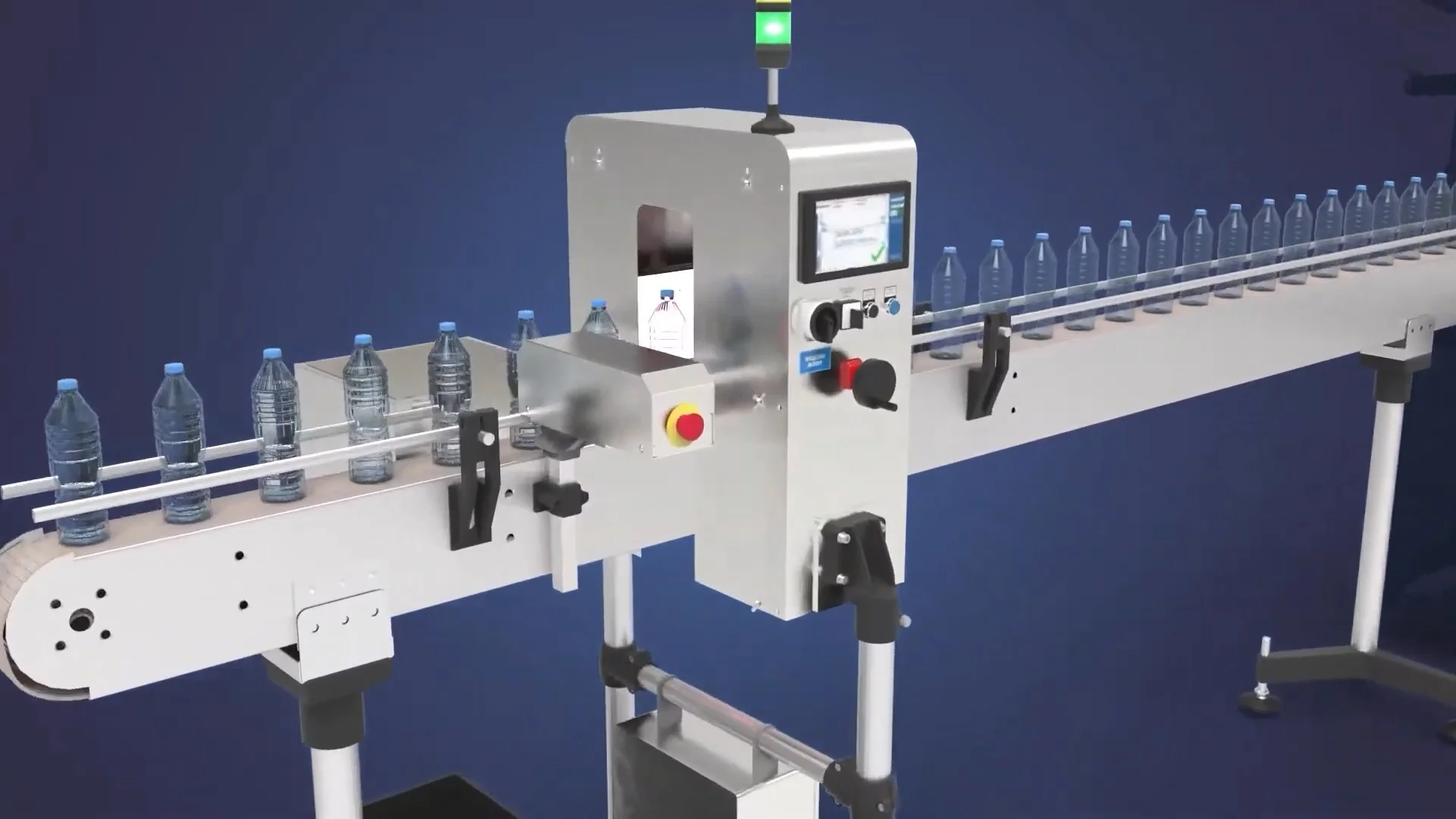
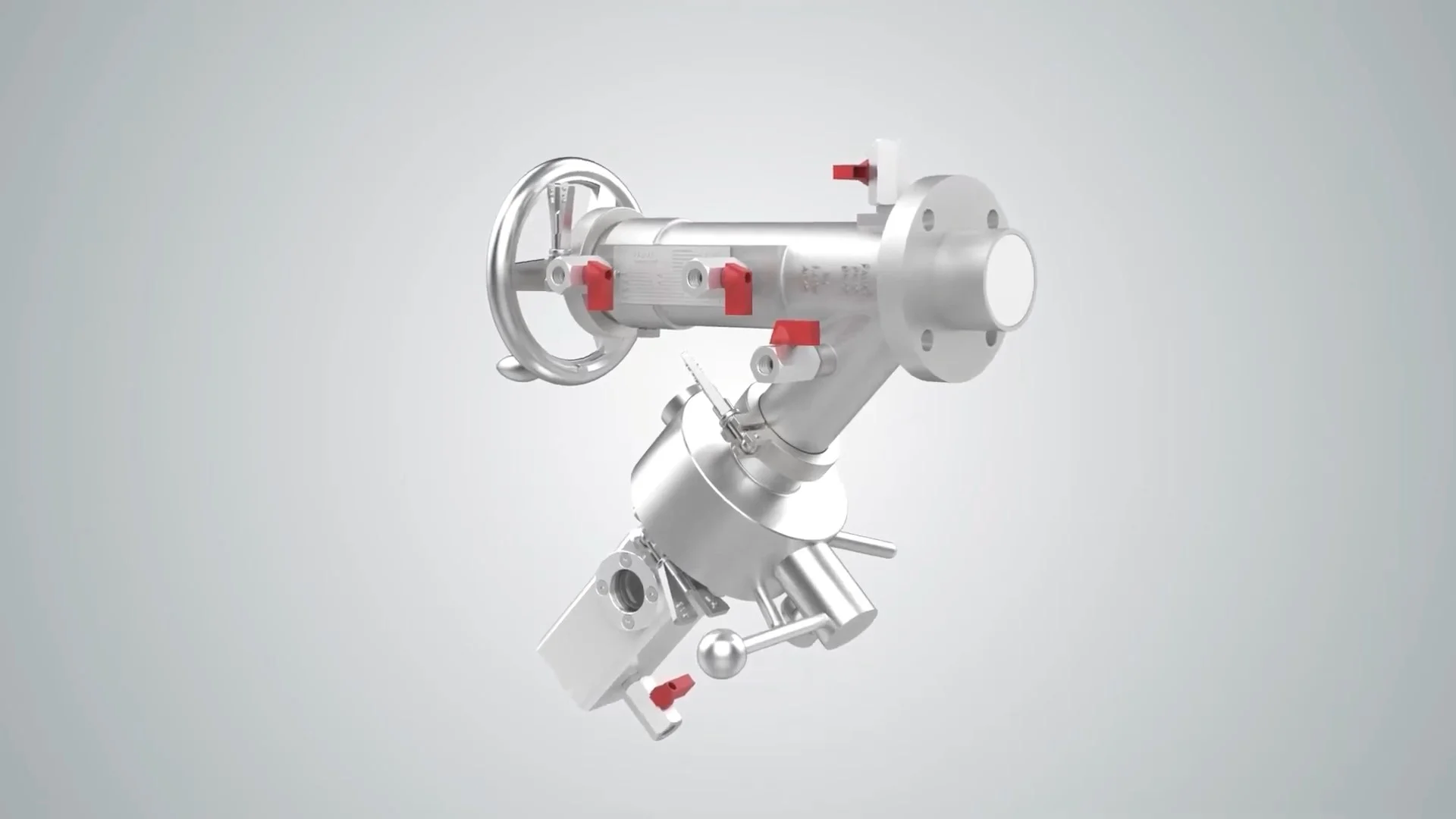
3D equipment animation based on CAD drawings solves this problem. We create visual video instructions that show every component and mechanism movement from the right angle — even what is hidden behind the housing.
The employee sees the sequence of operations at real speed and in slow motion, so they understand the logic of the work faster and remember the algorithm.
This format reduces staff training time and the number of errors in warehouse operations. The standard becomes uniform across all shifts: no need to retell things in one's own words — everyone watches the same precise videos. And updating an instruction takes days, not months — all you need is to reassemble the 3D scene.
"Previously, a trainee only started working independently after two weeks, and there were still errors in pallet assembly.
With video instructions, the training period was cut in half, and the number of damaged goods dropped by a third," notes the warehouse manager at one of the major logistics centers.
For the business, this means less downtime, faster ramp-up of newcomers to full productivity, and consistent operational quality on any shift.
Training Video Formats for Logistics Center Tasks
A logistics warehouse has different tasks that require different training formats. A new employee needs a short guide on receiving, a maintenance technician needs a detailed breakdown of a conveyor component, and a whole shift needs an animation of the sorting process.
There is no one-size-fits-all video: the format must match the task, otherwise training time grows and errors remain.
Which Format Suits Your Team
We match the format to the specific task. For each component or process, we create a 3D model from your drawings — this lets us show the equipment in cross-section and in motion without stopping the warehouse. Below are typical scenarios for logistics centers.
| Format | When to use | What the client gets |
|---|---|---|
| Full component breakdown | Training for maintenance and setup technicians | Employee sees the component's design and typical faults, less downtime |
| Short guide | Operators and drivers before a shift | 1–2 minute video, quick onboarding, fewer injuries |
| Process animation | Changes in routes and sorting | Process is clear without regulations, faster integration into work |
We choose the format at the briefing stage: we discuss who will watch the video and what action needs to be reinforced.
We make such videos practical: the videos are embedded into the training system, and the 3D model precisely matches the equipment according to the drawings. The instruction is clear for both newcomers and experienced employees.
How Video Instruction Development Works for a Client's Tasks
A transparent process is what sets a reliable contractor apart. We have structured the work so that at every stage you understand what is happening and can influence the result without diving into technical details.
You don't need to understand 3D modeling or editing — you just need to answer questions and approve intermediate steps.
Stages of Work on Your Video
- Brief and task analysis — You tell us which equipment the instruction is needed for, who will watch it, and what result you expect. We clarify the details and timelines.
- Video script — Based on the brief, we prepare a script: narrative logic, key operations, and narrator text. You see how the training will be structured before filming even begins.
- 3D visualization — We create realistic equipment models from your drawings. This stage lets us show internal components and processes that cannot be captured on camera.
- Layout approval — We present the key frames and animations. You make edits while changes are still inexpensive, not after the final cut.
- Editing and final assembly — We stitch the scenes together, add explanatory captions, voice-over, and emphasis. You approve the final version.
- Project delivery — We hand over the finished files in formats convenient for you — for an internal portal, LMS, or video hosting. If needed, we adapt them for different devices.
This approach eliminates surprises: you see in advance what the instruction will look like and control every stage. As a result, you get a training video that employees will actually understand and remember.
What's Included in the Deliverable: A Complete Package for the Training Department
For a training department, what matters is not just a video picture, but a ready-made tool that can be immediately integrated into the training program.
That is why the deliverable includes a complete set of materials — from final videos to editable source files and methodological guides for the instructor.
- Finished videos — all training video instructions in the required quality and in two formats: for viewing on a computer and on mobile devices. Employees can review the materials right at the warehouse or on the shop floor.
- Subtitles and text transcripts — synchronized subtitles are provided for each video. This simplifies comprehension of complex operations and makes training accessible to employees with different skill levels.
- Methodological materials — lesson scenarios, review questions, and recommendations for integrating the videos into the existing training program are prepared for the instructor. No need to figure out how to present the material — everything is already structured.
- Project source files — working files of 3D models, textures, and scenes based on the CAD drawings of your equipment. If the work algorithm changes or a new component is added, you can quickly update the video with your own team.
- Access to an example library — we provide a link to a private database with our past projects for logistics centers. This is convenient for inspiration and for agreeing on the style of future instructions.
- Usage guide — a brief document on how to organize viewings, verify material comprehension, and collect feedback from employees.
This package covers the entire training cycle: you get not scattered files, but a system that can be launched immediately after delivery. If needed, we can also help adapt the materials to your learning management system — this is discussed separately.
Case Study: How Animated Instructions Reduced Onboarding Time at a Warehouse
A logistics operator with a distribution center faced a problem: training newcomers to work on warehouse equipment took three weeks. Experienced mentors were distracted from their own tasks, and staff turnover meant the induction course had to be repeated constantly. Management was looking for a way to speed up onboarding without losing quality.
We proposed a series of animated video instructions created from the equipment's CAD drawings. Instead of flat diagrams, employees received visual 3D scenarios: how to receive goods, handle rejects, and work with forklifts and racking. This made it possible to standardize training and relieve the burden on mentors.
Implementation Results
A pilot program was launched on one shift at the Terminal-Vostok operator's warehouse. New employees completed the course in five days instead of three weeks and began working without a supervisor's help faster. Within a month, the company scaled the video instructions to all shifts.
The key metric — onboarding time — dropped from three weeks to one. The number of errors during receiving decreased, and turnover during the probation period fell: employees saw clear rules from day one. An additional benefit — the operations director got a single training standard for all branches.
The experience showed that animated instructions pay for themselves even on simple warehouse operations. For the business, this means a newcomer reaches full productivity faster and fewer shipments are missed due to staff errors.
How to Choose the Right Video Instruction Format for Your Warehouse's Specifics
Choosing a video instruction format is not a matter of taste, but a way to reduce errors and speed up employee onboarding at a specific warehouse.
For one task, a short 1–2 minute video is enough; for another, a step-by-step breakdown with pauses and emphasis on details works better; and where you need to show the whole process flow, animation is the best choice.
That is why we first analyze your topics, audience, and usage scenario: who will watch, how often, on what device, and what the employee should do after watching.
Based on this, we select the right format for your warehouse's specifics — from routine receiving operations to rare safety regulations.
| Format | What tasks it's for | Who it suits | What it provides |
|---|---|---|---|
| Short video | Fast training on a standard operation: working with a terminal, damaged pallet, sequence of actions | New employees, staff with high turnover | Removes the fear of "complexity," reduces first-month errors |
| Detailed breakdown | Complex processes: inventory, multi-criteria picking, actions in emergencies | Experienced employees, internal trainers | A single execution standard, fewer follow-up questions, easy to update |
| Process animation | Showing the entire logistics flow: goods movement from receiving to shipping, equipment and zone operation | Shift supervisors, staff when launching a new area | Quick understanding of the whole chain, clarity and memorability |
After choosing the format, we don't just leave the video "as is" — each video is finalized for a specific audience: we add subtitles, chapter markers for finding the right moment, and short knowledge-check tests.
We often combine formats within a single project: an overview animation for understanding the process and short instructions for individual operations.
This way, you get not just a video library, but a working tool that employees actually watch and apply. And if the warehouse's specifics change, you only need to update the relevant fragment instead of reshooting everything from scratch.
Frequently Asked Questions About Implementing Video Instructions
Before ordering video instructions for logistics center employees, the same doubts come up: how often to update the videos, what to do about breakdowns, whether the video will fit into the corporate portal. We answer the key questions so you can make a risk-free decision.
How quickly will video instructions be implemented into operations?
We align on the script, create the materials, and deliver them on a schedule that suits your workflow. Employees start training within the first week.
What if the equipment has changed or broken down?
You don't need to order a new video from scratch. For partial changes, we update the video as part of technical support — this is faster and more cost-effective than a full reshoot.
Do you provide technical support after launch?
Yes, we support the project: we answer questions and make edits if needed. You are never left without contact after project delivery.
Can the video instructions be integrated with a corporate portal?
We adapt the materials to your platform so employees can watch the instructions without unnecessary navigation. This improves training consistency and simplifies oversight.
Can you handle complex equipment drawings?
We work with drawings of any complexity, create accurate 3D models, and show every component. The employee sees the equipment's design even where photos are useless.
Order Video Instructions and Get a Complete Training Package
When you order video instructions for logistics centers, you need not just a video, but a working training tool. We structure the process so that within a few days of your inquiry, you have a plan: what we will do, in what timeframe, and what you will get as a result.
First, we clarify the task: we review what operations employees perform, what equipment is used, and which errors occur most often. Based on this, we calculate the timeline and cost, set the stages, and send you a commercial proposal.
The sequence then looks like this:
- You fill out a brief questionnaire — this takes no more than 15 minutes, and it lets us immediately see your center's specifics.
- We prepare the script and a frame-by-frame plan — you see the storyline of the future video in advance and can make edits.
- We agree on the text and logic: the narrator's voice, emphasis, operation sequence, and all important details.
- We produce equipment animation from your drawings and regulations — every component is shown exactly as it looks in reality.
- We show you a draft, you make edits — you receive the final files only after your approval.
- We deliver the package: video instructions, text scripts, and a guide for mentors — everything is ready to launch the training.
This way, you avoid uncertainty: you know in advance when training will start and can plan the logistics center's operations without downtime. To get started, leave a request — we'll send you a timeline estimate and commercial proposal within one business day.