

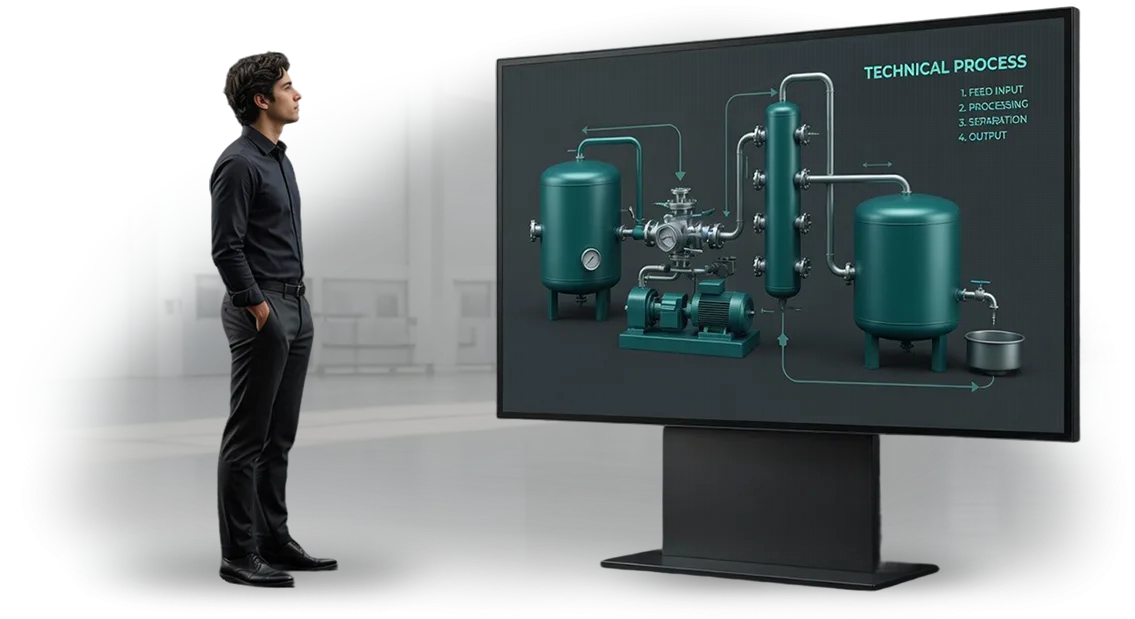
Why training video instructions are beneficial for metallurgy
In metallurgical production, the same operation is performed by dozens of employees—and each one does it differently.
An experienced master works one way, a newcomer tries another, and across shift work small deviations accumulate that sooner or later turn into defects, equipment downtime, or injury.
Each such mistake means direct losses: remelted metal, unscheduled repairs, line stoppages, and, most importantly, a risk to people's lives.
Training video instructions solve this problem systematically.
Instead of thick regulations that no one reads and verbal instructions that are forgotten, an employee receives a short video with the correct sequence of actions—from raw material acceptance to final product inspection.
The standard of execution is recorded once, and then every worker, regardless of experience and shift, acts the same way: as intended by technologists and confirmed by practice.
Standardization through video directly reduces the number of production errors. When everyone knows how to correctly set up a unit, check a workpiece, or hand over a shift, variability disappears—and with it, typical losses.
The effect is visible quickly: new employees reach full working capacity in a matter of days, not months, because training takes place on real equipment rather than abstract theory.
A separate issue is safety. In metallurgy, the cost of an error is especially high, and video materials allow employees to rehearse hazardous parts of the work without risk.
The employee sees how to properly work with molten metal, lifting mechanisms, or chemical reagents, and remembers the algorithm until it becomes automatic. This is not just training—it is insurance against accidents and their reputational and financial consequences.
We create exactly such video instructions: we film the process at a live production site or create accurate 3D models from your drawings, so the employee sees every component and every movement.
As a result, you get a tool that works equally well for mass training and for upskilling experienced specialists.
What results systematic video training for employees delivers
Systematic video training delivers measurable results where work is performed on complex equipment. In metallurgy, the cost of an error is high: defects, downtime, and safety risks.
Video instructions allow every employee to see the reference cycle of operations and work to a single standard.
The company our team develops such courses from your equipment drawings—the video sequence accurately matches the real workplace. Below is a checklist of the effects you will get after implementation.
Check yourself against the checklist:
- Fast onboarding. A newcomer watches the course at their own pace and reviews complex components. The adaptation period shrinks to a few shifts, and mentors are not distracted by repeated explanations.
- Unified standards. The video captures the reference procedure. Day and night shifts work the same way; disputes and “personal” methods disappear.
- Fewer defects. Video sets control points: where to check readings, where to tighten fasteners. Employees skip operations less often—less rework.
- Fewer emergency shutdowns. When the algorithm is practiced to the point of automation, the risk of expensive equipment breakdowns and unscheduled downtime decreases.
- Knowledge checks. Control questions are embedded after the video. You see who has absorbed the material and can return an employee to the relevant fragment.
- Mentor time savings. Experienced specialists continue to focus on production tasks instead of repeating the same things to new employees.
The overall effect is predictable qualifications for every employee. Start with one area and you will see the difference in the speed at which newcomers become productive and in the number of errors.
Video instruction formats for metallurgy: tailored to your task
In metallurgy, the cost of an error is not a document rework but furnace downtime, an accident, or an injury. A video instruction must not simply “show” but lead even a new employee to correct actions.
Regular production video often runs into problems with camera angles, glare, and unsafe scenes to shoot, so we offer formats selected for the specific task—from a short introductory video to a complete 3D breakdown of equipment.
Here are the main formats for metallurgy:
| Format | For whom | What it gives the client |
|---|---|---|
| Basic video instruction | Operators, trainees, entry-level staff | Quick introduction to the process, fewer errors in the first shifts, a unified work standard |
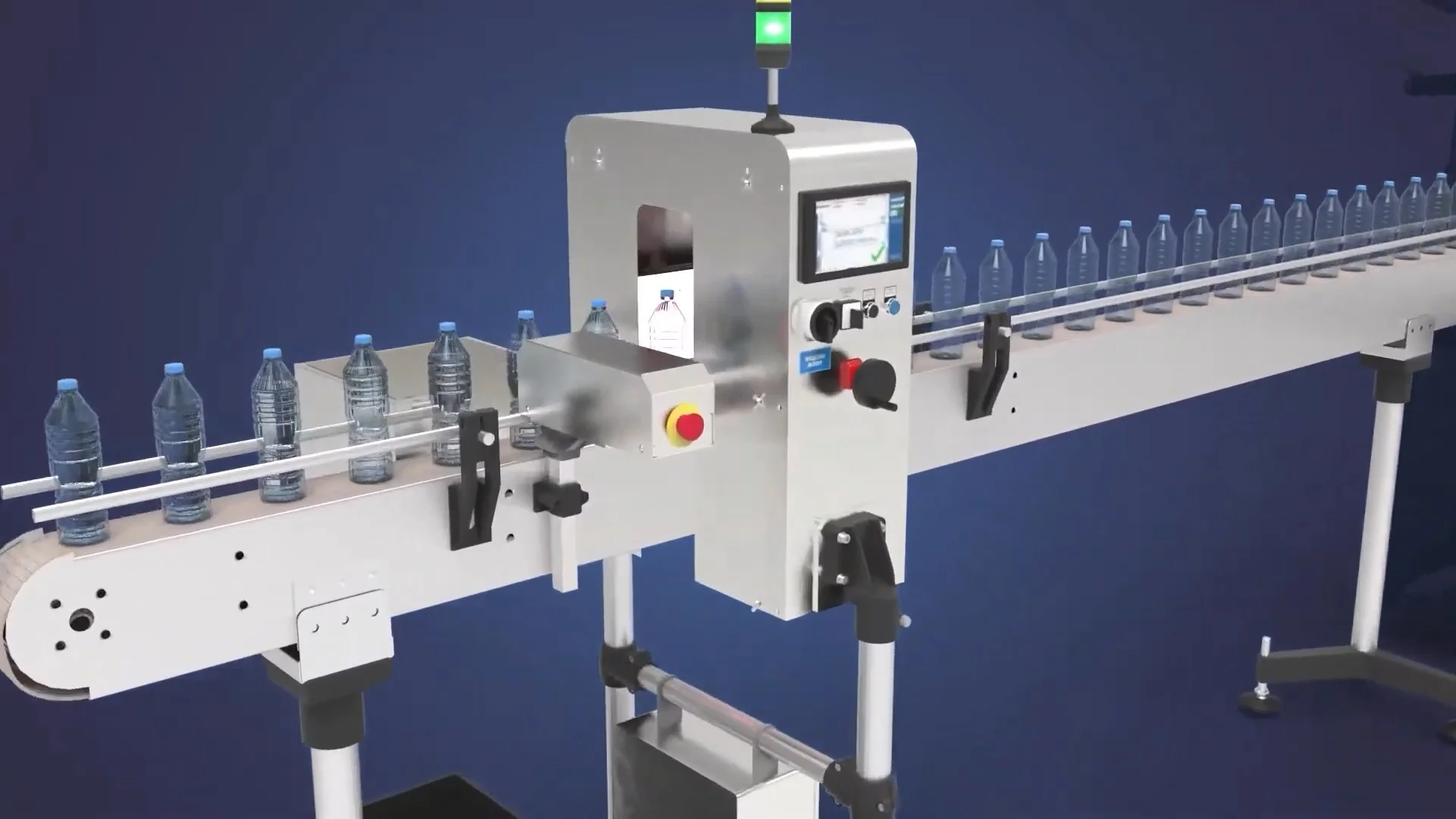
| Video instruction with 3D animation of components | Maintenance services, engineers, setup technicians | Breakdown of equipment operation without stopping production or opening up machines |
| Full 3D instruction with texturing based on drawings | Training centers, safety departments, personnel development departments | Realistic equipment model with material detail, safe training, and clear demonstration of procedures |
When choosing a format, start from your goal: a basic video covers the need to “train quickly,” complex 3D animation solves the task of “showing process mechanics,” and a full model with precise texture based on your drawings is needed where every detail matters—from clearance to direction of movement.
We film and assemble all formats according to your procedures so the instruction integrates into your existing training system and remains usable for years.
The main thing the client gets is a predictable training outcome: the employee sees the equipment from any angle, understands the sequence of actions, and makes fewer mistakes. You also get visual material that is easy to update when production is modernized.
We take on the entire process: from studying your drawings to a finished video that improves safety and speeds up onboarding.
How we create training video instructions for your production
Every project to create a production video instruction starts not with cameras but with studying your task.
We analyze how the equipment works, which operations are critical for safety, and where employees most often make mistakes—those points become the foundation of the training material.
Then a well-tuned process comes into play, combining engineering precision and production experience.
Over the years, we have completed dozens of projects for industrial enterprises and built a workflow where each stage brings you closer to a clear instruction rather than to a collection of beautiful shots.
- Brief and audit. We identify which operations to show, who the target audience of the video is, and what procedures already exist at the enterprise.
- Working with drawings and CAD models. We obtain equipment documentation to accurately reflect components and mechanisms that are difficult to show in real footage.
- Script and storyboard. We break the process into logical steps: from workplace preparation to control checks. We coordinate it with your technologists.
- On-site production filming. We film real operations on your equipment—this is the basis for employee trust in the instruction. If necessary, we supplement the footage with 3D models from the drawings.
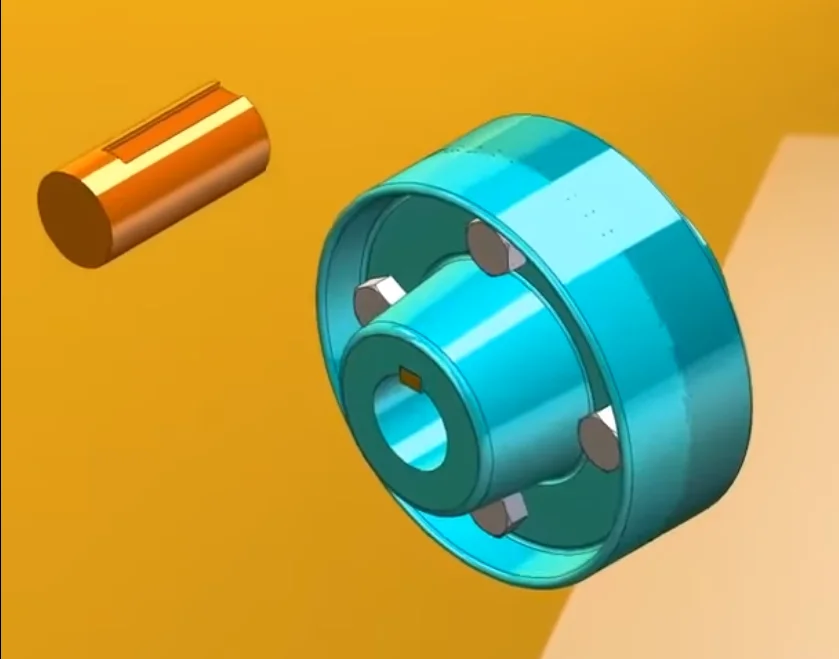
- 3D modeling and animation. We show complex internal mechanisms, cross-sections, and part movement diagrams in 3D—things that cannot be seen in regular filming.
- Editing, voiceover, and subtitles. We assemble a single video with emphasis on key actions and safety rules. We add text explanations for viewing without sound.
- Launch and refinement. We deliver files in the required formats, adapt them to your distance learning system, and take into account feedback from the first groups of employees.
The result is a step-by-step video instruction that works equally well for newcomers and experienced personnel during retraining.
It reduces the load on mentors and shortens the time to full productivity, and you get up-to-date training material created specifically for your equipment.
What is included in the training video instruction package
The delivery includes everything needed to launch employee training: from an approved script to ready-made materials that can be used immediately. You receive a comprehensive package covering all stages, not just a set of scattered videos. Below is the full list.
- Documentation package — a technical specification for each video, methodological guidelines, and procedures that define training requirements and help monitor training quality.
- Training video script — a detailed storyboard with narrator text, timing, and explanation logic. We approve the script before production to completely eliminate rework and mismatch with your procedures.
- Final videos — in the required formats and quantities: for LMS, corporate portal, in-person sessions, or mobile access. Each video is adapted to a specific operation on your equipment, so employees study exactly their own work situations.
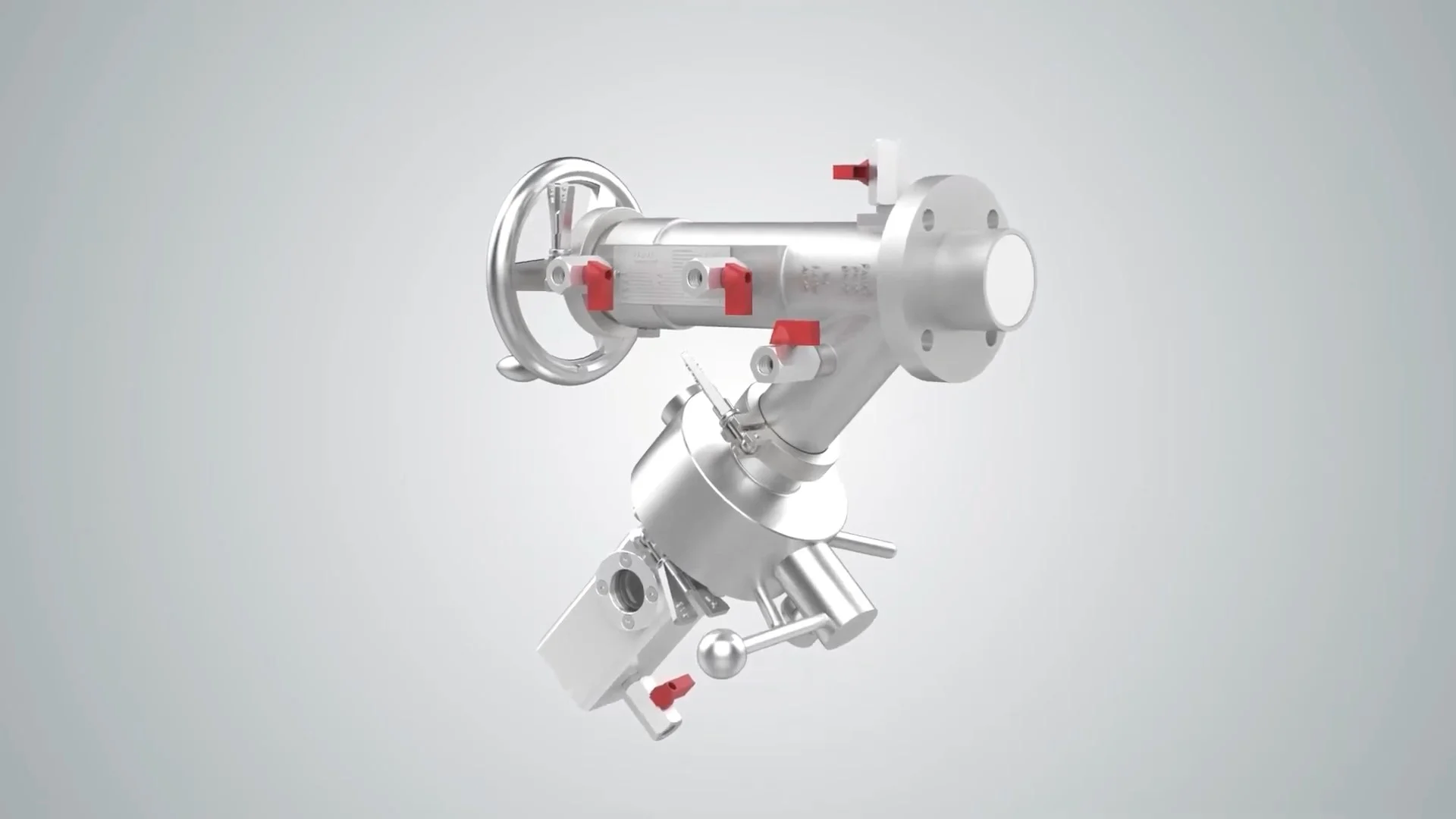
- 3D models and multimedia — visual animations of components, mechanisms, and processes created from your CAD drawings. Even complex internal equipment structure becomes clear without the need to stop production or risk employee safety.
- Text instruction — a brief reference sheet for each video instruction that can be printed, given to an employee, or used as a cheat sheet at the workplace.
- Instruction updates — support when procedures or equipment change. We make edits to scripts and videos so training materials always match current processes and safety requirements.
Such a package reduces the time it takes for a newcomer to become productive and lowers the load on mentors. You don't need to handle filming, editing, and material adaptation yourself—we take care of all stages.
All we need from you is access to the drawings and current procedures; then we organize the work so that you receive a ready-made training system within the agreed timeframe.
Case study: how video instructions reduced furnace downtime at a plant
The challenge
When a furnace stops at a metallurgical plant, every minute of downtime turns into direct losses. At MetallPro, equipment setup was taking too long: new employees studied paper instructions, mentors were constantly distracted, and preparing operators took weeks. The plant was losing time and money even before the furnace could be restarted.
Solution and result
We developed a set of video instructions for the company in which every setup step is shown on an accurate 3D model of the furnace created from CAD drawings.
The operator sees the equipment in 3D, all components, and the correct sequence of actions—instead of flat diagrams and long texts.
We trained 60 employees, and the results were not long in coming: setup time was reduced by 40%, and the number of startup errors decreased several times over.
The furnace was restarted ahead of schedule, and downtime was reduced by dozens of hours per month. The video instructions became the basis for training new operators, and the plant ordered similar materials for other equipment.
This video instruction case is a clear example of how a 3D equipment model helps achieve measurable reductions in production downtime.
How to choose a video instruction format for production training?
There is no universal video instruction format—the choice depends on what exactly the employee needs to learn and the conditions in which the workshop operates. For simple operations with visible equipment, real footage is often enough.
But as soon as the subject turns to complex units, hidden mechanisms, or hazardous areas, ordinary video no longer answers a worker's questions.
For metallurgy, 3D instructions built from your CAD drawings become the optimal solution. These are not just attractive animations but an accurate visualization of your specific equipment: internal structure, disassembly order, lubrication points, and risk zones.
The employee sees the entire process without obscured angles or unnecessary details and, when needed, can return to the relevant fragment again and again.
Three factors influence the choice of format: operation complexity, worker skill level, and safety requirements. A newcomer needs a maximally detailed sequence with emphasis on typical mistakes; an experienced worker needs a short reference for non-standard situations.
Therefore, we match the format to each task: from overview training videos to frame-by-frame breakdowns of repair work.
It is important to consider how the video will be used in training. If the briefing takes place on a single screen with a supervisor, one format works; if employees need to study the material at their own pace, a modular structure with section navigation is more convenient.
We always recommend a format based on the real conditions of the workshop and how quickly the result is needed.
We help you decide on the format even before production begins: we analyze technological processes, study drawings, and prepare a sample that you can evaluate before full development.
This way you immediately see what the training will look like and make a decision without unnecessary risks.
We answer frequently asked questions about video instruction development
Questions before a project starts are normal. Especially when it comes to complex equipment in metallurgical production: any flaw in an instruction can lead to downtime, risk for employees, and extra costs.
We have prepared answers to the main concerns so you can see the process and result before making a decision.
We have been working with metallurgy for years: we create video instructions based on your drawings and procedures, so we speak the language of your technologists rather than that of a “universal” studio. Below are the most frequently asked questions.
How quickly will we receive the finished video instructions?
The timeline depends on the number of operations and the complexity of the equipment. Usually, developing one instruction takes from two weeks to a month—from the initial brief to the final video.
We don't estimate the timeline “by eye”: first, we send a production plan and staged approval points. You see when the 3D model appears, when the draft is edited, and when you receive the final result. This way, you always know where the project stands.
How do you guarantee quality and accuracy, given that every detail matters in metallurgy?
Accuracy is achieved through three things. First, we work strictly from your CAD models and process sheets—we don't “draw from a photograph.” Second, your technologist reviews every critical component: they approve the animation and texts before the final render.
Third, we have internal control: the video is checked by an industry engineer who knows the specifics of metallurgical equipment.
As a result, you get an instruction that matches the real process down to the centimeter. The guarantee is set out in the contract: we refine the work at no extra charge until the details match your procedures.
Do you adapt the videos to our corporate standards?
Yes, we integrate your style: brand colors, logo, established terminology, and even the narrator voice already used in training. If you need to break the instruction into modules for different positions, we will do that.
We also adapt the format to your corporate learning system or portal: required resolutions, subtitles, duration. You provide a guidebook—we turn it into finished training material.
What if the equipment changes—will the video become outdated?
This is the most common concern, and it is solved at the very start. We build videos from separate scenes and modules, not as “one single file.” If a component or operation changes, we replace only that fragment without reshooting the entire video. This is faster and cheaper than ordering a new instruction from scratch.
In addition, you receive source materials and a description of the project structure—you will be able to update the video even with a different team. And subsequent revisions receive priority handling: we usually make changes within five business days.
If you have any remaining questions, we will send a detailed sample cost estimate or a demo 3D model of your equipment. Contact us, and we will discuss the details for your task.Order video instruction development and get a ready-made package
To order the development of video instructions for metallurgical production, you don't need to prepare a technical specification or look for contractors.
Simply leave a request—we will provide a consultation, clarify your tasks, and prepare a project plan for your area, equipment, and employee skill levels.
What you get after contacting us:
- Cost and timeline calculation for your task — without hidden surcharges or “surprises” along the way.
- A filming and 3D modeling plan based on your CAD drawings — you see how each instruction will be built.
- Script recommendations — how to break the process into short videos so employees master the material faster.
- Approval of key stages — brief, frame mockups, rough cut, final version.
- A ready-made package — video instructions, text reference sheets, files for the distance learning system, and updates after procedure changes.
- Post-launch support — if the process changes, we quickly make revisions.
The consultation on ordering video instructions is non-binding: you will learn which formats are right for your workshop, how to train new staff without interrupting production, and how to measure whether employees have truly absorbed the material.
Leave a request—and within one business day, we will send a cost estimate and proposals for adapting video instructions to your metallurgical specifics.