

Staff Training for the Glass Industry: The Cost of Mistakes
A modern glass production line is expensive equipment, where every operator error turns into tangible losses. Incorrect settings, improper tooling replacement, or a missed maintenance step lead to defects, equipment downtime, and missed deadlines.
The cost of such a failure is not just a ruined batch, but also hours of downtime paid for out of your profits.
The problem is compounded by the fact that knowledge is passed on "by word of mouth": an experienced mentor demonstrates once, a newcomer remembers it their own way, and within a month they are already working according to their own logic.
As a result, product quality depends on the human factor — and that is the main risk to production stability.
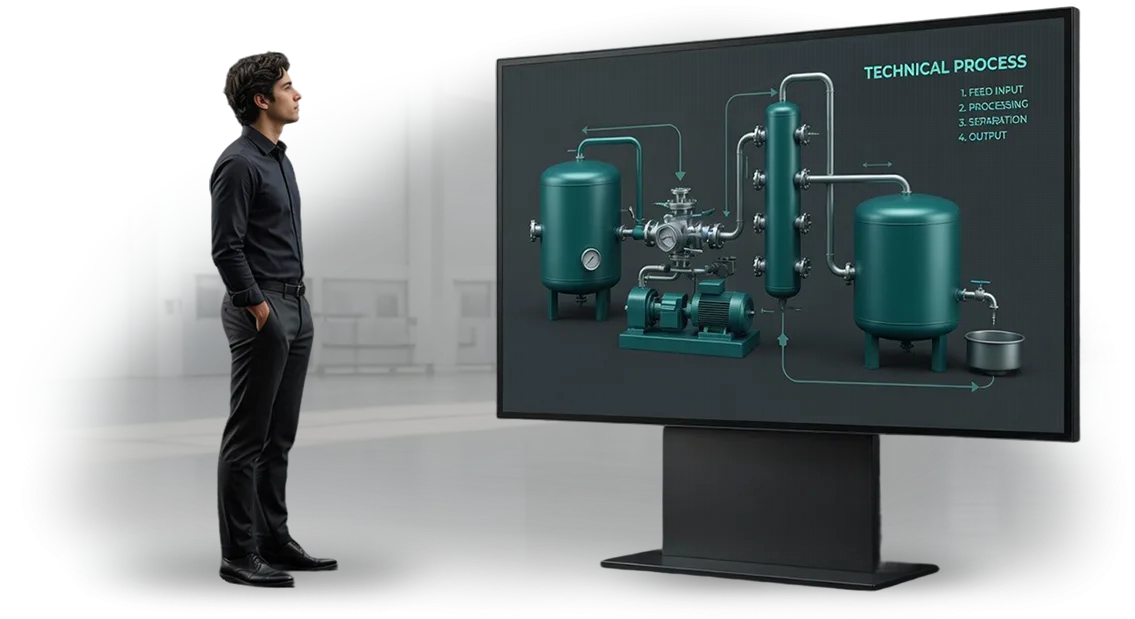
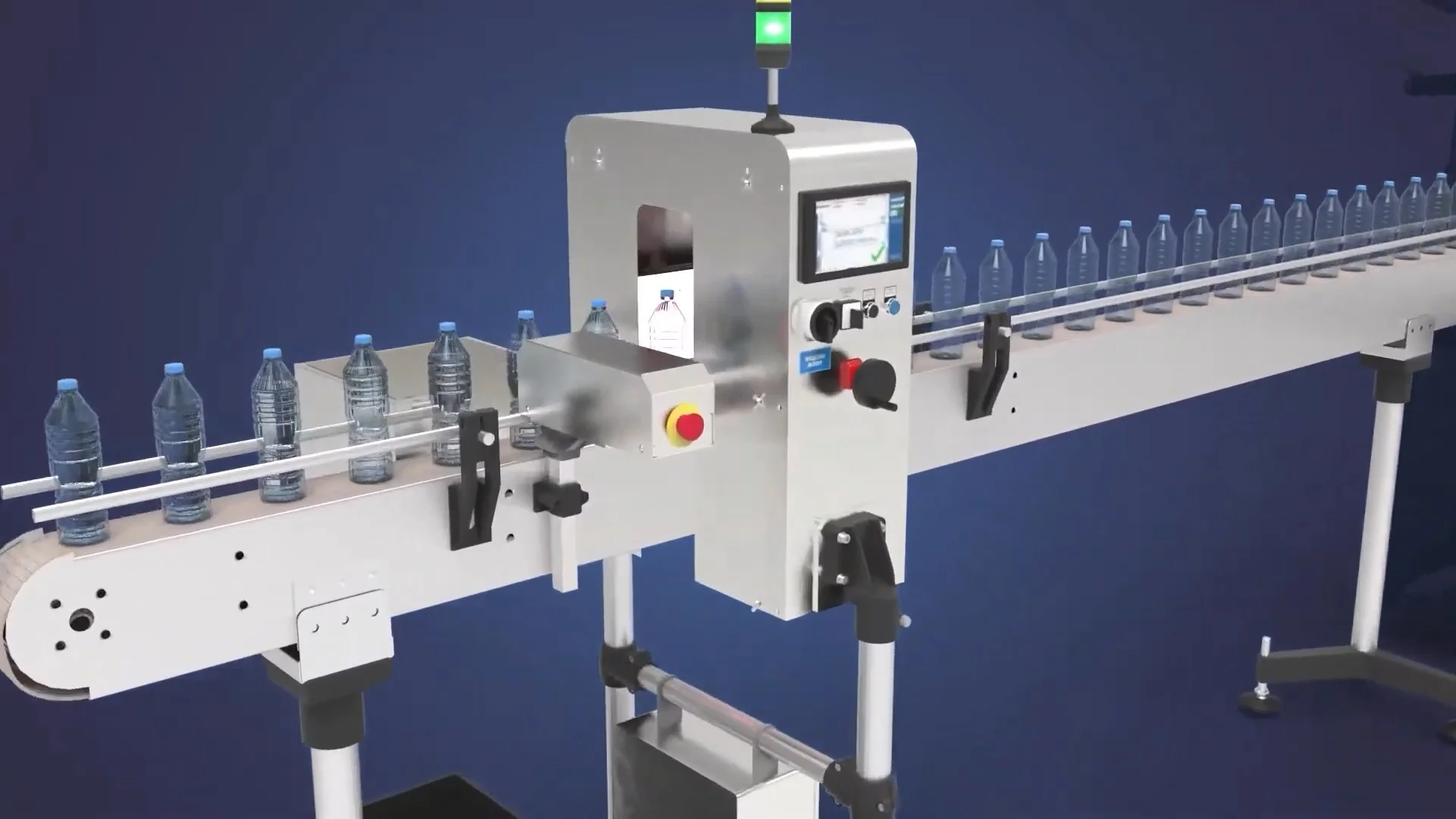
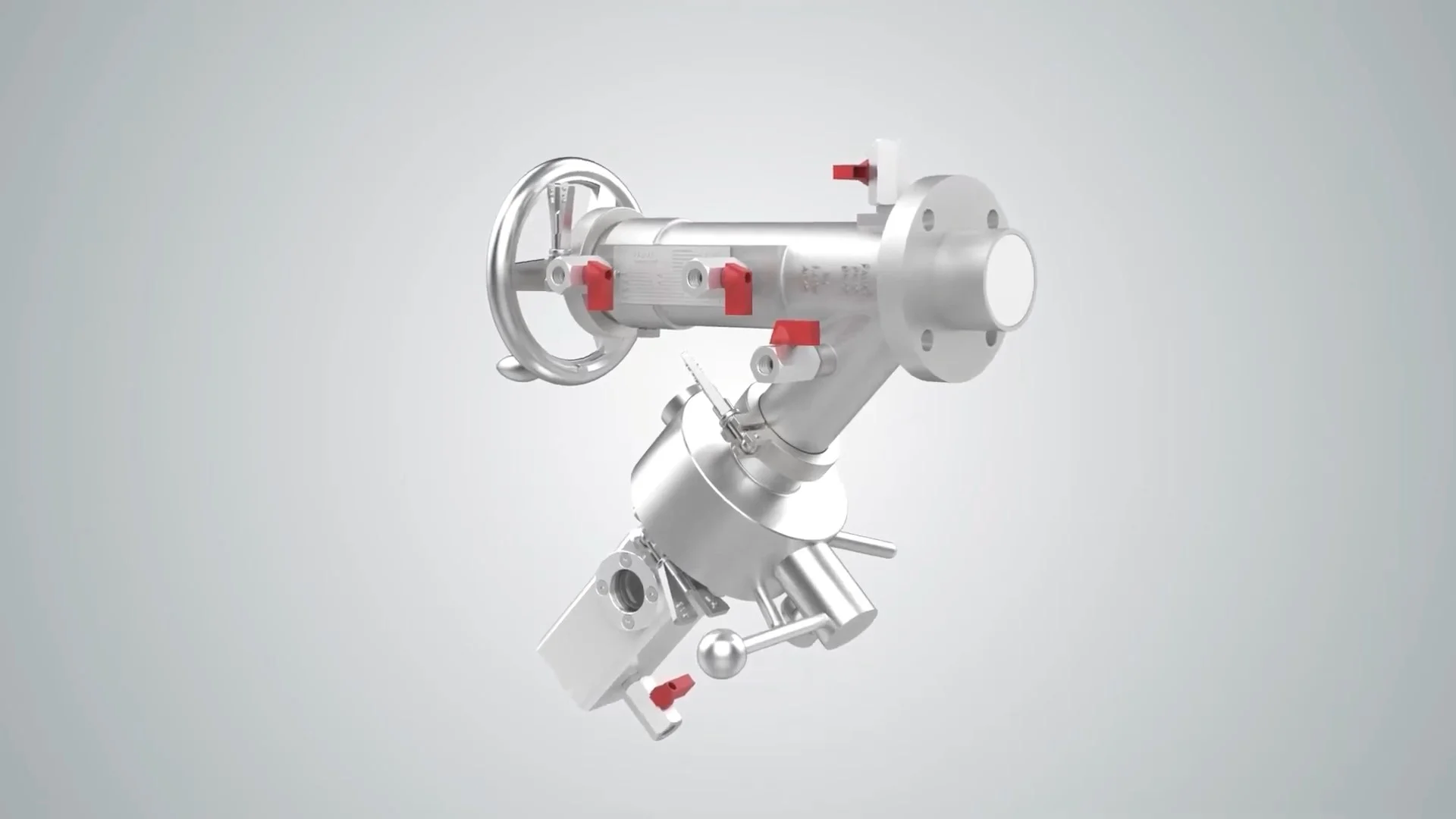
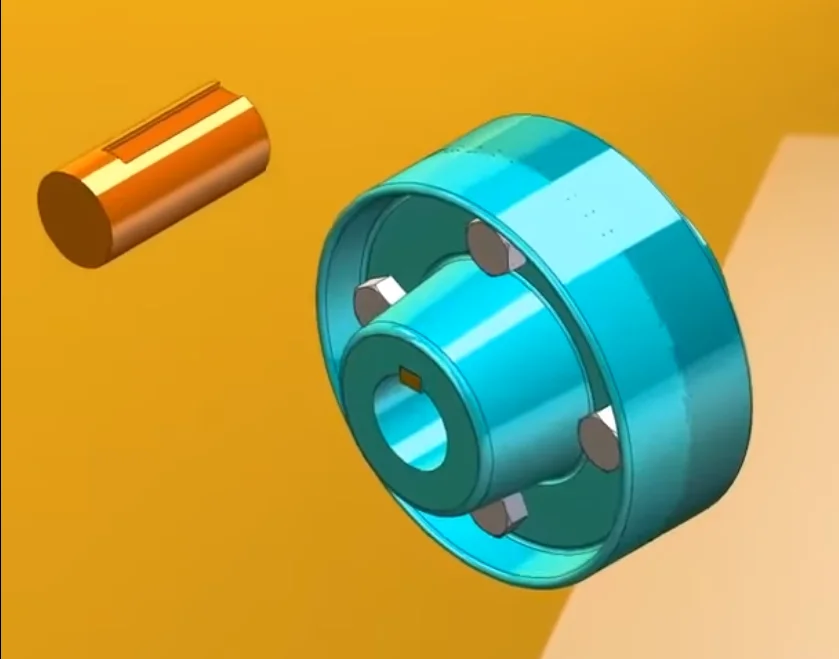
We eliminate this risk with corporate video instructions built on 3D models of your equipment. The employee sees every component in detail, understands the sequence of actions, and repeats it without guesswork.
Staff training stops being a lottery: you get a unified standard that works equally well for a newcomer and an experienced operator.
Such video instructions are especially relevant for the glass industry, where expensive tooling and sensitive heating modes leave no room for improvisation. An employee who watches the video before a shift acts with more confidence and produces fewer defects. And the time required to bring a new hire up to speed is reduced many times over.
The practical result is simple: fewer losses from defects, stable product quality, and a calm process engineer who does not have to keep re-training staff. A video instruction pays for itself after the very first prevented failure — and keeps working for you every day.
What Employee Training with Video Instructions Delivers
Production in the glass industry loses money on defects and slow adaptation of new hires. Video instructions turn the knowledge of your best specialists into a unified standard for the entire team. Our team create such instructions based on 3D models of your equipment.
Benefit: Fast Adaptation of New Hires
A newcomer sees every machine component, every movement — without reading blueprints or sitting through long explanations. Instead of weeks of shadowing a mentor, they get a video guide they can review at any time.
This accelerates time-to-shift and reduces the burden on experienced employees. Production does not lose momentum, even when new hires come on board.
Benefit: Unified Work Standards
When every operator acts according to their own logic, quality control becomes a lottery. Video instructions capture a single sequence of operations: from tooling preparation to final product inspection.
Employees compare their actions against the reference standard, and management gains a transparent evaluation system. This reduces the impact of the human factor and makes results predictable.
Benefit: Fewer Defects and Better Quality Control
In practice, video instructions reduce the number of errors several times over. Workers see the critical points — where force matters and where speed matters — and avoid typical violations.
Quality control becomes simpler: an inspector compares the product against the video reference rather than against abstract blueprints. Fewer defects mean less rework and higher revenue.
Video Instruction Formats for Your Production Tasks
The same operation is explained differently to a newcomer and an experienced setup technician. A newcomer needs step-by-step visuals; an experienced worker needs a breakdown of nuances and abnormal situations.
That is why we tailor the video format to the employee's skill level and the type of operation, rather than producing a one-size-fits-all solution.
Our approach is built on three standard formats that cover everything from initial onboarding to advanced skills training. For each task, we design the video structure and presentation logic so the employee receives exactly the amount of information needed to work confidently.
| Format | Target Audience | What It Delivers to the Client |
|---|---|---|
| Short video instructions (up to 3 minutes) | New employees, operators at the onboarding stage | Fast adaptation without interrupting production, reduced load on mentors |
| Full training courses for a production area | All employees of the area, including shift personnel | A unified standard for performing operations, fewer defects and errors |
| Breakdown of complex areas and abnormal situations | Experienced operators, maintenance services | Higher qualification, confident actions during failures, reduced downtime |
We integrate the videos into your distance learning system or display them on tablets at workstations. On request, we add tests to check material comprehension — so you see the actual skill level of each employee and can strengthen weak points precisely where needed.
How We Create Video Instructions: Stages of Work
We structure our work so that you see results at every stage and can influence the process. You do not need to understand production details — we prepare clear documents, agree on key decisions, and only then move on to filming and editing.
- Brief and task immersion. We discuss which employee group the instruction is for: new workers, line operators, or maintenance personnel. We capture which operations are currently causing difficulties and where errors most often occur.
- Workflow analysis. We study regulations, process sheets, and real actions on the production floor. When equipment is involved, we recreate it in 3D from CAD drawings — this gives an accurate picture without the need to stop the line.
- Script development. We define the video logic: from the overall view of the assembly to the specific operation, with emphasis on safety, checkpoints, and common errors. We present the script to you as text with a shot-by-shot description.
- Approval and revisions. You receive the document and add comments from your process engineers and supervisors. We make changes before filming and visualization begin — this saves your budget and time.
- Video production. We film real processes at your facility and add 3D models and animations to reveal hidden mechanisms and internal structure. At this stage, you receive a draft version for review.
- Editing and voiceover. We assemble the video into a single instruction, add emphasis through voice and subtitles, and include pauses for repeating actions. The finished draft is sent for final approval.
- Launch and implementation. We deliver the video files in the format required by your training system, upload them to the platform if needed, and configure access. After launch, we stay in touch to promptly make adjustments based on the first views.
As a result, you get a finished instruction that is clear to employees with different levels of experience, reduces time-to-competency, and lowers the risk of defects. You always know what stage the project is at and what comes next.
What Is Included in the Video Instruction Package for the Client
The package includes not just videos, but a complete training system that can be quickly implemented in production and works without our constant involvement.
All materials are adapted to glass industry equipment and are clear to operators, setup technicians, and maintenance services.
- Finished video files — videos in formats for your training platform, tablets, and desktop computers. Employees can learn in the workshop, in the classroom, or remotely, at their own pace.
- Scripts for each video — a step-by-step description of actions in plain language. They work well as reference cards when moving to a new operation or when re-certifying skills.
- Methodological materials — tests, checklists, and mentor instructions. Supervisors immediately see how to verify employee knowledge before and after training and can confirm work authorization.
- 3D equipment models — built from your drawings, they show the internal structure of assemblies and the sequence of operations without stopping the line. This reduces hands-on practice time and lowers the risk of errors.
- Implementation guide — the training launch plan, responsible roles, and estimated time requirements. It is clear how to integrate the material into the production schedule without disrupting operations.
- Source materials and update rules — the package is transferred to your company's ownership. When regulations change, instructions can be updated by your own team or revised by us on request.
Case Study: Video Instructions for the Glass Industry — 23% Fewer Defects
In the glass industry, a minute of line downtime is expensive, and an operator error means a ruined batch and a safety risk. You cannot train new hires on real equipment: the furnace cannot be stopped, and paper instructions do not convey the nuances of working with mechanisms.
We took a different approach: we built accurate 3D models of the line's assemblies from the client's CAD drawings and turned them into video instructions.
Employees see the internal structure, the sequence of operations, and typical errors — without the risk of breaking a mechanism or disrupting production. This format is equally useful for a newcomer and an experienced setup technician.
Project Results
The case for a glass container manufacturer confirmed the effectiveness of the approach. Packaging Glass Plant implemented a video course for bottling line operators and maintenance staff.
Within three months, defect-related losses dropped by 23%, and the time required for a new employee to be cleared for independent work fell from two weeks to three days.
The video instructions closed the main failure points: mold setup, temperature control, and gripper handling. Operators stopped waiting for a supervisor to perform routine operations, and support requests decreased.
The project paid for itself within the first quarter, and the client expanded the video instructions to an adjacent production area and is migrating the entire equipment line to this knowledge base.
What If We Have Specific Equipment?
That is not a problem, and it does not require building a full production cycle from scratch. We adapt the training material to your specific line — taking into account its configuration, sequence of operations, and typical personnel errors.
There are two paths here. If you have accurate drawings of your equipment, we create a 3D model and build disassembly, assembly, and setup animations from it.
If the documentation is outdated or incomplete, we use video references from your production floor and refine them with graphics, diagrams, and emphasis. The result is the same: the employee sees their own machine, not an abstract picture from a catalog.
| Adaptation Format | When It Fits | What the Client Receives |
|---|---|---|
| Based on CAD drawings | Up-to-date documentation is available | Accurate 3D model showing internal mechanisms and assemblies that are not visible from the outside |
| Based on video references | No documentation available, or it does not match reality | Quick filming on your line, editing with graphical explanations and voice instruction |
| Hybrid (model + filming) | Complex line with two operating modes | Maximum clarity: the real machine + detailed 3D inserts for hidden processes |
The second and third options usually close the adaptation question faster and more affordably than full modeling. You pay for a clear instruction, not for "perfect geometry," so we offer the format that fits the task.
In any case, you receive an instruction that takes your specific requirements into account — from rarely encountered operations to safety requirements at a particular site.
To assess the scope of work, send us photos of the line and a sample of the drawings — we will get back to you within a day with the optimal solution.
Common Client Questions About Video Instructions
Clients from the glass industry often ask us the same questions: how to motivate employees to watch video instructions, whether the material will become outdated, and whether it meets safety requirements.
We answer these common concerns — so you understand how we work and what result you will get. Our team address each of these questions at the brief stage, so the finished video truly works for your business.
How do we motivate employees to complete video training?
Video instructions save time and nerves: instead of reading long documents, an employee sees real actions on familiar equipment in 5–7 minutes. Short scripts, emphasis on typical errors, and a comprehension check at the end keep engagement high.
In addition, employees reach the required skill level faster — this reduces turnover and improves work quality.
What happens if equipment or regulations change?
Video instructions do not "freeze" forever. When a machine or process changes, we make edits to the existing video or shoot a new segment.
You get up-to-date material without retraining the entire staff — simply update the video in your distance learning system, and all employees see the new version.
Do you take safety requirements into account?
Yes, this is one of the key points. We prepare scripts together with your occupational safety specialists and reflect the mandatory procedures: equipment startup sequence, actions during emergency shutdown, personal protective equipment.
Every video undergoes an internal compliance check, so you can use the video instruction as official training material.
If you have any remaining questions about timelines, formats, or integration with your training system — ask us directly, and we will explain in detail how we will structure the work for your task.Order Video Instructions and Reduce Production Losses
Every error on a glass line means rejected products, downtime, and extra costs. An employee who trains "on live equipment" consumes your time and materials.
Video instructions with 3D models solve this problem: the worker sees the machine, its components, and the sequence of actions in advance, so they reach working mode without losses.
We recreate your equipment from CAD drawings, model the parts, and texture them down to the smallest elements. Each video exactly matches the real line — the employee sees not an abstract diagram, but their own machine.
This training format reduces time-to-competency several times over and significantly lowers the defect rate in production.
Leave a request for a consultation — we will send an implementation plan tailored to your task.
- Video instructions for your equipment, with CAD drawing detail and accurate representation of working assemblies;
- Consultation with our specialist — we will analyze your pain points, identify priority areas, and determine the right format;
- Implementation into the production process — the videos integrate easily into your existing training and certification system;
- Technical support — we promptly update materials when regulations, tooling, or equipment change;
- Adaptation for different roles: from trainee to setup technician, including test questions and instructions for mentors.
Take the first step: contact us today — and tomorrow your team can start training with materials that reduce losses. We will help you choose the scope, timeline, and implementation stages, without unnecessary bureaucracy or complicated approvals.