

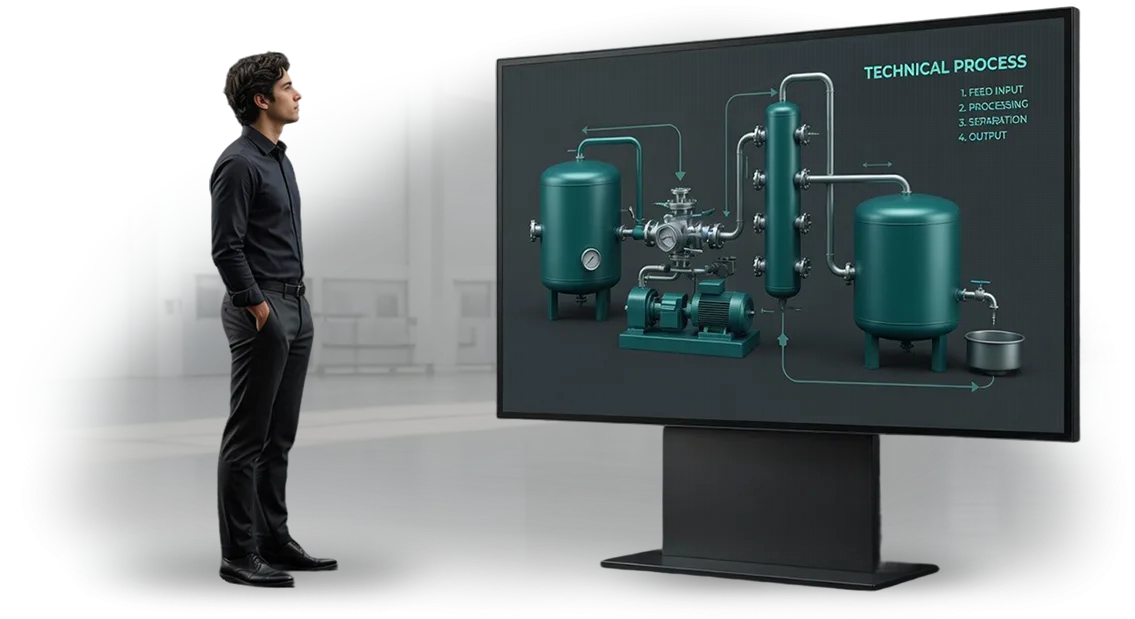
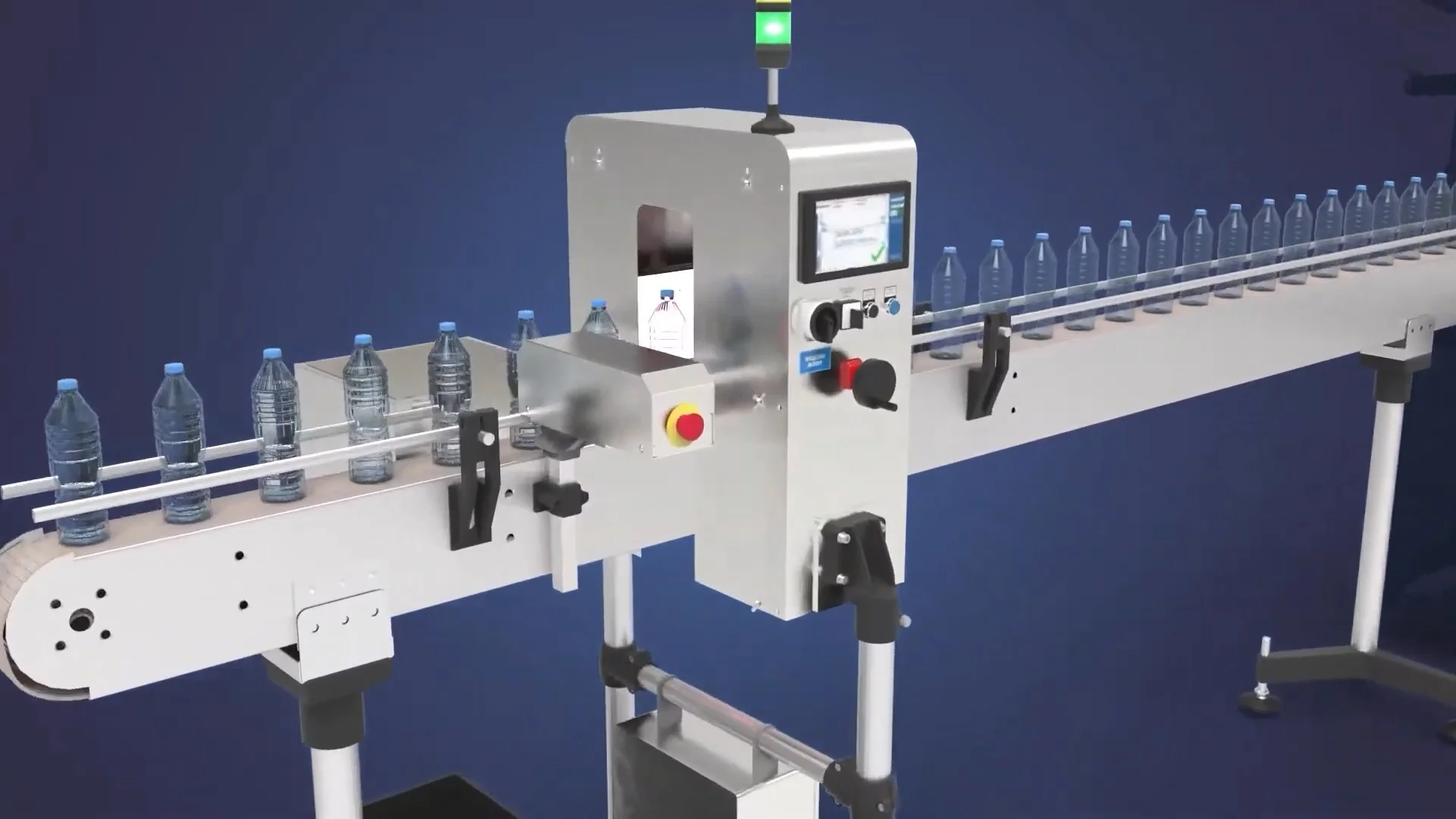
Exploded View Animation in KeyShot: Training Without Extra Words
Employees don't remember text instructions — that costs time and money. A new hire takes forever to figure things out, an experienced worker skips an important step, and rework eats up hours.
The key reason: instructions describe processes with words and flat images, while the human brain understands volume and motion much faster.
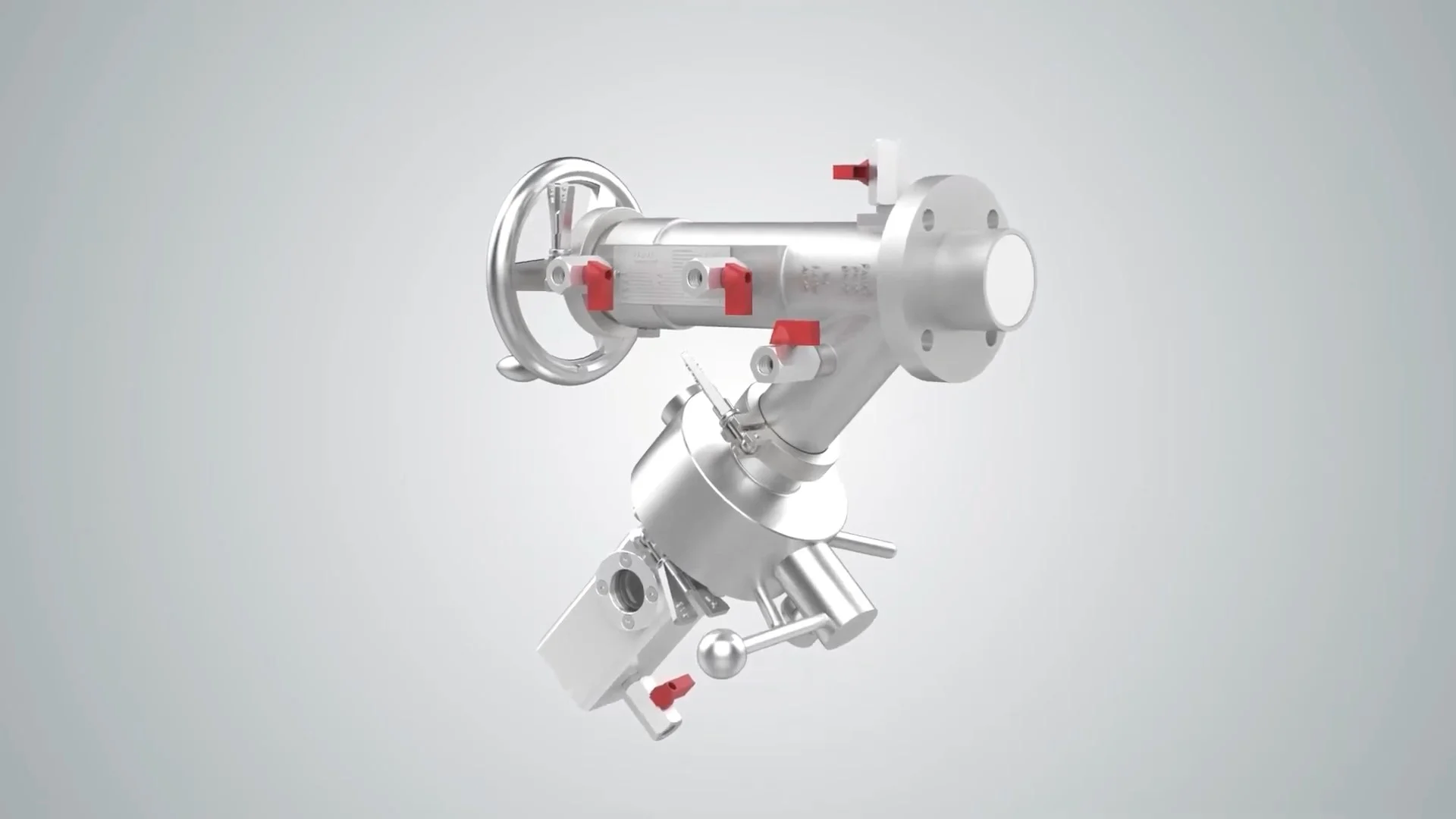
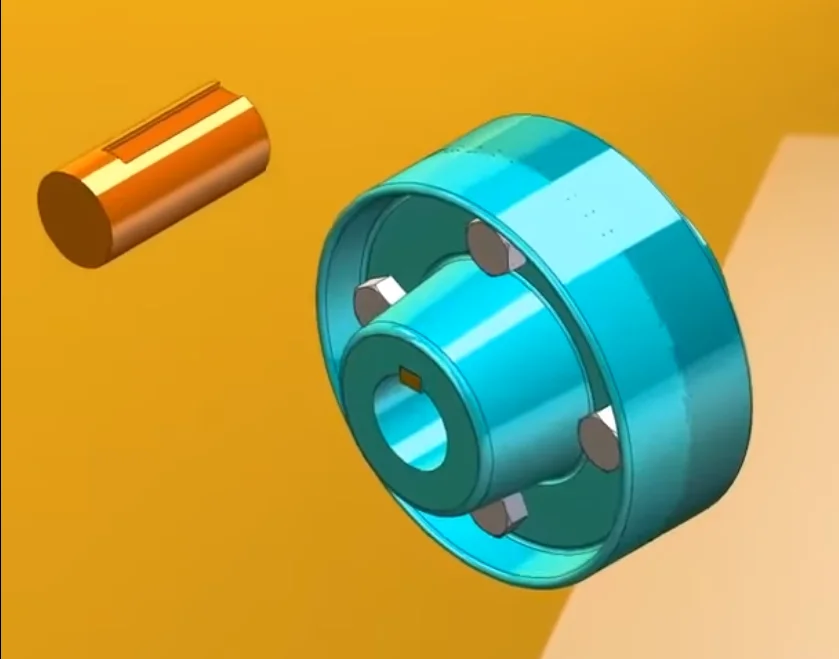
The solution is exploded view animation in KeyShot: a detailed 3D animation of an exploded diagram where the product visibly disassembles and reassembles in the correct sequence.
Such a video instruction shows every component, the order of actions, and how parts fit together without a single extra word. Watching it once is enough — and the employee acts with confidence.
We create instructions on professional equipment and in the KeyShot environment, so the video looks like a real object rather than a schematic diagram.
No need to film a live product: you can show cross-sections of mechanisms, hidden components, and small parts that the eye cannot see.
The result: less training time and fewer errors on the line. Managers get a single standard: all employees see the same correct workflow. Video instructions are easy to update when the design or procedures change — there is no need to reshoot the process from scratch. This turns training from "reading a manual" into a fast, visual learning session.
Why KeyShot Animation Is Clearer Than Any Text
Texts and static diagrams force employees to interpret things on their own: exactly how parts connect, in what order, and what happens if stages get mixed up.
Exploded diagram animation created in KeyShot removes that strain — the product's structure is shown in motion, understandable to anyone.
What business gains from this:
- Training speed. An exploded diagram explains how a product works in 2–3 minutes instead of reading a multi-page instruction. A new employee starts working independently faster.
- Fewer errors. When you can see the assembly sequence and connection points, the risk of mixing up components or skipping an operation drops significantly. That means less scrap and rework.
- One standard. The animation is the same for everyone: it leaves no room for "personal interpretation" of text. So training is identical at every branch, and quality is consistent.
- Format flexibility. The finished video can be embedded in a corporate course, shown on a tablet at the machine, or sent via messenger — the material works wherever the employee needs it.
Corporate training built on such video instructions pays off because the team reaches a working level faster and acts on guesswork less often. That is a stable result regardless of who is being trained or in which city.
Video Instruction Formats for Your Task
We will choose a format for your specific task: a short video is enough for quick familiarization, while complex equipment requires a detailed module with component breakdowns. The key is that an employee understands the sequence of actions in a single viewing and remembers it.
The table below shows typical options we use in projects. It will help you choose the best fit for your team and budget.
| Format | For Whom | What It Gives the Client |
|---|---|---|
| Short video up to a minute | New employees, mass processes | Fast onboarding without stopping work |
| Detailed module 5–10 minutes | Complex operations, repairs, setup | Step-by-step breakdown, fewer errors |
| 3D exploded diagram of a component | Technical staff, service departments | Clear understanding of the structure and assembly order |
| Series of video instructions | Training an entire department | A single standard and the ability to review any step |
| Combined course | Companies with frequent hiring | Fast onboarding and reduced load on mentors |
Each format is built on 3D animation — this provides a unified visual language and does not require an instructor to be present. You receive a complete set of files for a corporate portal or learning management system, and if needed, we update the videos when processes change.
How We Create a Video Instruction in 5 Steps
Any video instruction starts not with editing but with understanding the task. We have completed dozens of employee training projects and turned the process into five clear stages — you always know what is happening and when you will receive the finished video. Below is how the animation production works, from brief to support.
- Brief and task audit. We discuss how employees currently train, where time is lost, and what result is needed. We lock in the format, duration, and key messages.
- Script and storyboard. We write out every shot, the voiceover text, and approve the script before production starts. This removes the risk of not meeting expectations.
- 3D modeling and preparation. We adapt drawings and diagrams and refine the components that matter for understanding. We prepare an intermediate version — you see how the video will look before animation begins.
- Animation and rendering. We create part motion, component breakdowns, captions, and voiceover. We show intermediate versions — edits are made before final delivery.
- Delivery and support. We hand over the finished files in all necessary formats — for a portal, distance learning, or webinars. After launch, we make targeted edits and help update the instruction when procedures change.
This is exactly how you order a video instruction that actually works: employees master processes faster, and you don't waste time on repeated explanations. To order a video instruction for your task, contact us — we will get back to you with a plan, timeline, and estimate.
What Is Included in the Video Instruction Deliverable
When you order a video instruction, it is important to understand exactly what you receive. We deliver not just a finished video but a complete package of materials that will form the basis of training and continue working after launch.
The deliverable includes:
- Finished exploded diagram animation — the main video in the required format and resolution. You can upload it immediately to a corporate learning management system or video hosting platform.
- Audio voiceover — professional narration: a calm voice, proper pauses, and correct emphasis. You choose in advance the option that best suits your team.
- Subtitles and text version — a subtitle file for the portal and a text script. This helps employees grasp the material faster and makes the video accessible to everyone.
- Source files — working animation files and all assets used. If something changes in the product, we make edits faster and more affordably, and you don't start from scratch.
- Implementation recommendations — a short guide on where to place the video, how to integrate it into a course, and how to track whether employees actually watched it.
- Usage rights — all content in the video is created for you and is transferred with the materials. You can use the video inside your company without restrictions.
After receiving the full package, you get a working tool, not a "draft for internal use." All that remains is to assign the course — and employees begin studying the material.
Case Study: How We Reduced Training Time by 40%
A manufacturing company came to us with a typical pain point: new employees had to be trained for weeks, and they still learned complex equipment through trial and error.
Text procedures and static drawings did not help — new hires got confused about the assembly sequence, produced defects, and delayed the line start for a long time.
We proposed replacing outdated instructions with a series of animated videos where every component of the mechanism is shown visually, like an exploded diagram. Instead of dry bullet points — a visual scenario: what to remove, in what order, where to insert, how to tighten. The employee sees the entire process as a whole rather than trying to imagine it from a picture.
The result exceeded expectations. Introductory training time dropped by 40% — from eight shifts to five. Assembly error rates fell by almost half, and new employees began working independently a week and a half earlier.
The workshop manager noted that previously experienced mentors had to be pulled away every shift; now the line of new hires with questions is gone.
Client feedback:
"We used to spend a month on training, and the result was still unpredictable. After implementing your video instructions, new employees work confidently within two weeks, and the number of defective parts has dropped noticeably.
This is the best training investment we've made in years," says the head of production at MetallProm.
This project became the starting point for a series of training videos: the video instructions are now used both to upskill experienced workers and to quickly onboard seasonal staff.
Once created, the animation pays for itself many times over — there is no need to reshoot it with every procedure update; the 3D scene simply needs to be reassembled for new conditions.
What If You Need a Custom Instruction Format?
Corporate video instructions do not always fit a standard template. You may have unique equipment, a special assembly order, or internal procedures that a typical diagram cannot show.
In such cases, the team adapts the animation to a non-standard instruction: we break the product down into components exactly as it happens on your production floor and show each stage in the required sequence.
Custom animation is built from your materials — drawings, photographs, video footage, or technologist descriptions. If specific requirements involve viewing angles, hidden components, or special safety measures, we account for them at the storyboard stage.
The employee sees not an abstract diagram but their actual part, their tool, their actions — and remembers the correct workflow faster.
We are not afraid of complex tasks: unusual layouts, large components, fragile elements, the need to show tolerances and checkpoints. Our engineers approve every frame with your experts, clarify details, and verify that the video matches current instructions. The result is a video that solves your specific problem, not a generic scenario.
Tell us what format you need — we will find a solution tailored to your equipment and employee requirements.
Frequently Asked Questions About Creating Video Instructions
Video instructions are an investment in training speed and error reduction, but before starting, managers ask the same questions: how much does animation cost, how fast will we get results, and what do we do with our equipment?
We answer the main ones — without technical details, just the essentials. If you don't see your question, ask us directly — we will respond within one business day.
How much does developing a video instruction cost?
The cost of animation depends on the complexity and number of videos, but before starting you receive a fixed estimate after the audit. It will not change during the process, even if several rounds of edits are needed.
What are the production timelines?
The typical timeline is 2–3 weeks per video, including approvals. If you need to meet a specific date, we will propose a step-by-step plan with priorities.
Do we need special equipment or skills?
No, we handle everything turnkey. You only need to provide source materials: documentation, drawings, or samples. The copyright to the finished video instruction transfers to your company.
Can a video instruction be updated quickly?
Yes, when models or processes change, we make edits to the existing video faster than we create a new one. Update terms are fixed in the contract — you don't overpay for repeated work.
Order Video Instructions for Your Team
Employees don't read lengthy procedures — they would rather watch a short video. Such instructions accelerate new hire onboarding, reduce errors, and take part of the routine off mentors. To present complex products visually, we use exploded diagram animation in KeyShot.
Tell us what processes you need to explain: assembly, setup, or internal procedures. We will analyze the task, propose a script, and send a commercial proposal — free and without obligation. This way you see the budget and timeline before work begins.
How We Will Structure the Work
- You leave a request and send materials: procedures, photos, videos.
- We study the task and propose a video structure.
- We approve the graphic style and texts.
- We create the animation, add voiceover and subtitles.
- We deliver the files and make edits.
What Your Team Will Get
- A single training standard for all departments.
- Fast onboarding for new employees.
- Fewer errors when working with equipment.
- Reduced load on mentors.
- Access to instructions at any time.
Order a video instruction — start with a project cost calculation after audit. Write to us via messenger or the form, and we will send an estimate within one business day. Studio contacts are below.