

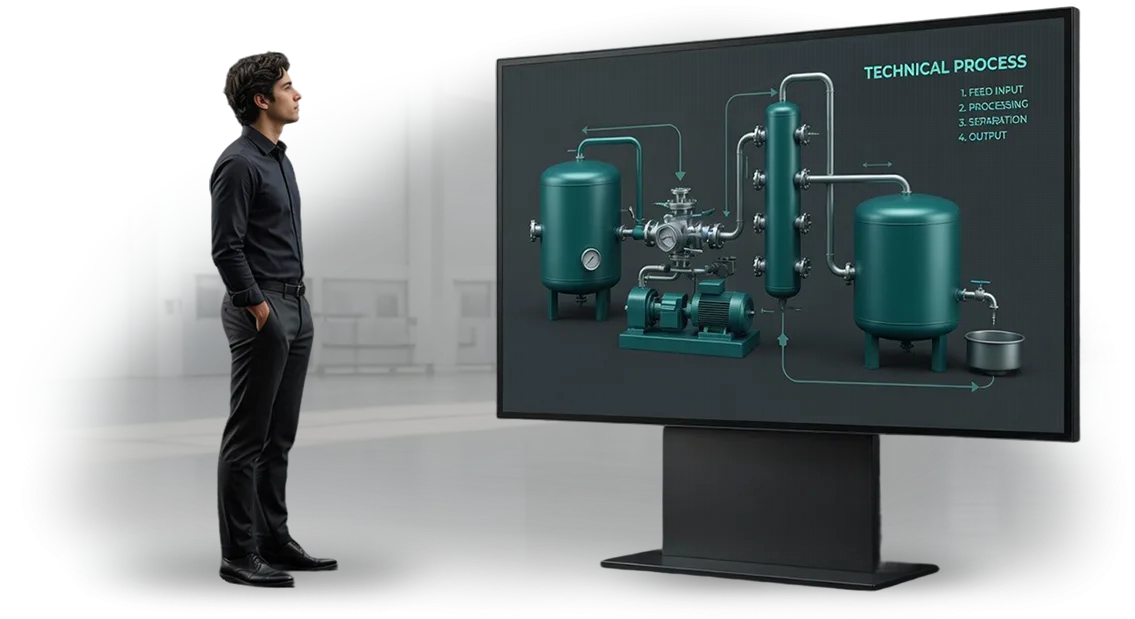
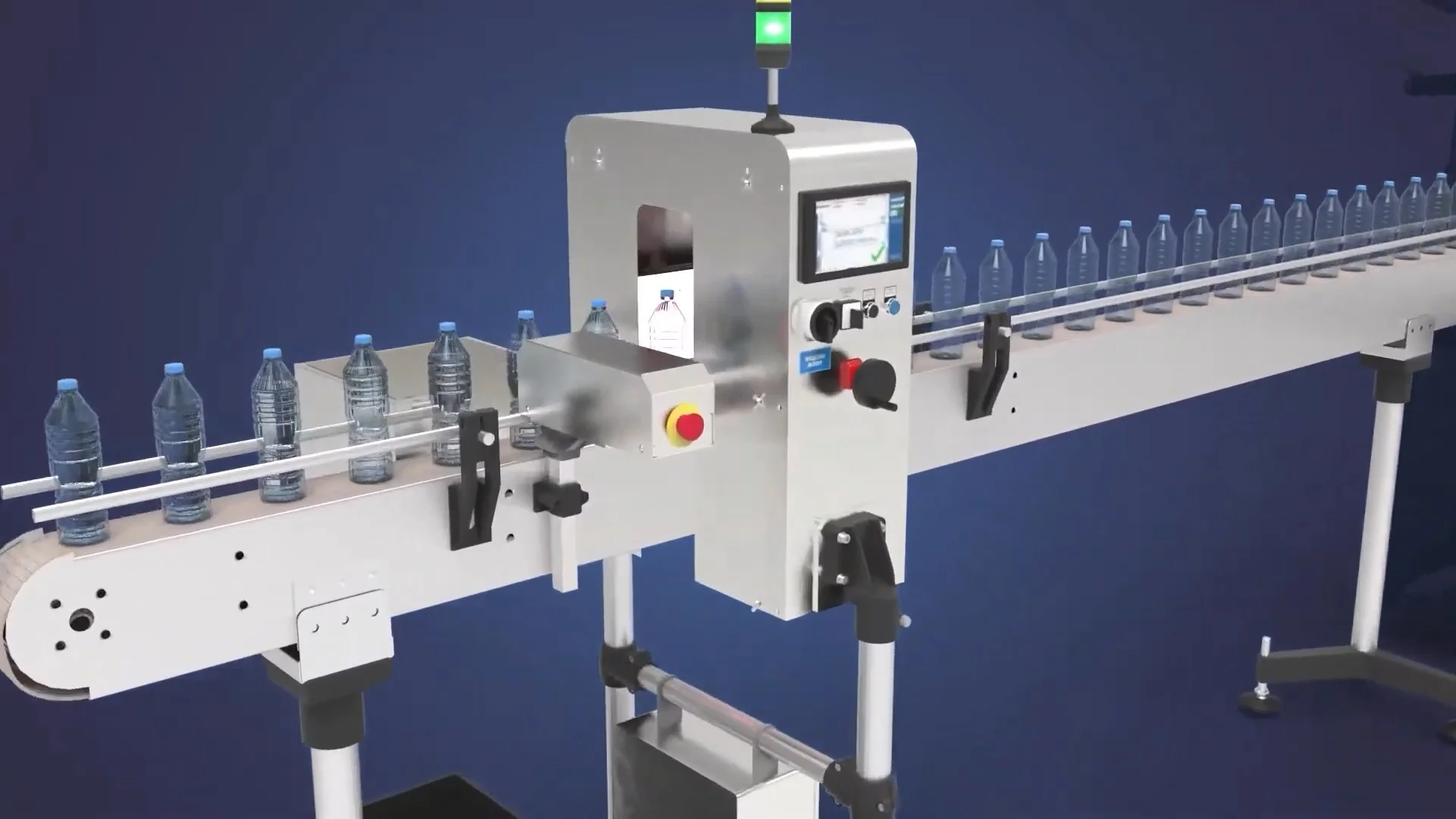
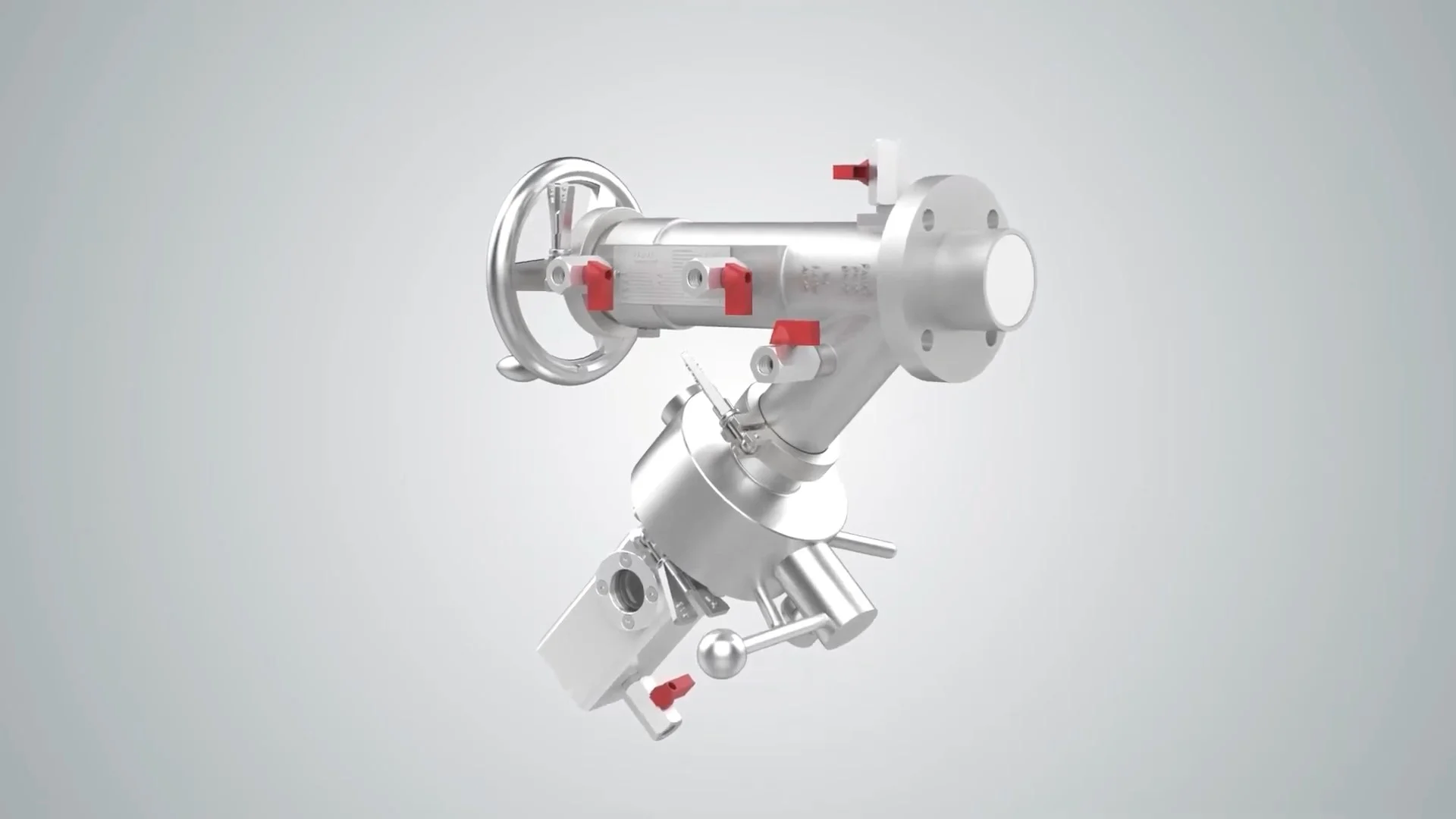
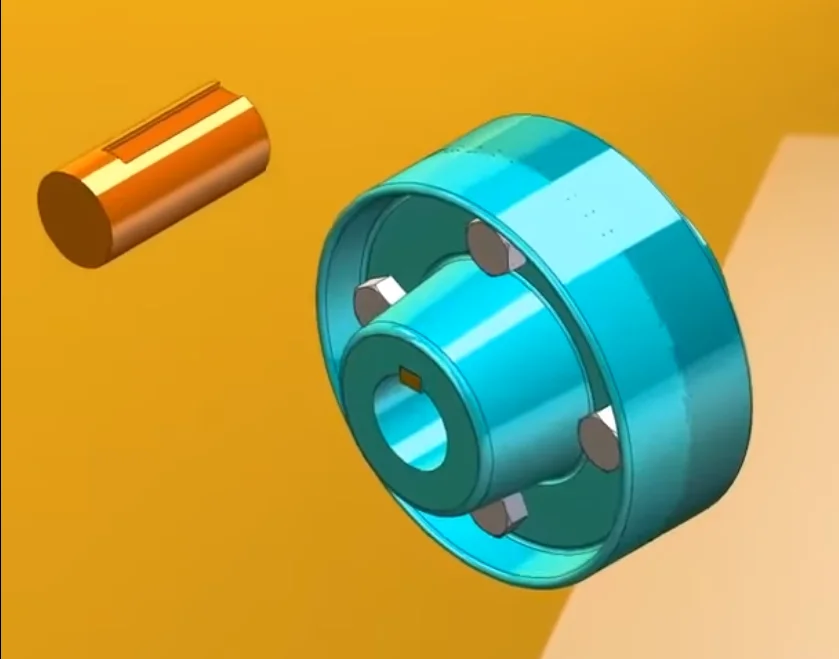
Do Employee Mistakes Cost Too Much? The Solution — 3D Animation
Think about how much employee mistakes cost per year. Each one is not just spoiled materials or lost time — it's also missed deadlines, dissatisfied clients, and extra rework costs. In high-responsibility industries, a single oversight can be extremely costly.
The cause is most often not negligence, but how we transfer knowledge. Text instructions get skimmed, flat videos don't show key details, and there aren't enough mentors for every newcomer.
A familiar picture: an employee completes training and repeats the same mistake a week later. This is a classic personnel training problem — information doesn't stick in memory without a visual example.
3D animation in video instructions completely changes the approach. Instead of abstract diagrams and long paragraphs, the employee sees an exact replica of the process: the internal structure of the mechanism, the sequence of operations, the correct movement technique.
This format is perceived intuitively, so it suits the entire team — from newcomers to experienced workers.
The result: fewer mistakes, faster achievement of target metrics, and peace of mind for the manager. Staff training stops being a formality and becomes a cost-reduction tool. The company saves on rework and defects, and employees get clear, safe procedures.
We help businesses turn instructions from a source of boredom into protection against costly mistakes.
What 3D Animation Provides for Staff Training
Employees don't like long text regulations — they set them aside and forget them. 3D animation turns training into a clear story that people want to watch to the end.
When an instruction looks like a short film, attention is held naturally, and information is absorbed effortlessly.
Retention is the main criterion for effective training. People perceive movement and visual scenarios better than static diagrams and paragraphs.
A 3D video shows the entire process from start to finish: how the mechanism works, what the correct sequence of actions looks like, and what happens when there's an error. This creates a lasting visual image that stays in memory longer than a text instruction.
The speed of onboarding new employees is another direct result. Instead of spending a week reading documents and relying on colleagues for help, a person understands the core workflows after just a few viewings.
Videos can be watched at a comfortable pace, revisited at complex sections, and used as a cheat sheet during the first month on the job. The company gets a newcomer up to working speed quickly without distracting experienced specialists.
Regular training with video instructions reduces the number of mistakes and defects. All employees see a single reference process rather than the interpretations of different mentors.
This is especially important for manufacturing, logistics, service departments, and any field where the speed and quality of customer service depend on human actions.
The bottom line is simple: 3D animation makes training shorter, clearer, and more effective. The manager gets a predictable result — employees who know their tasks, work confidently, and reach the required metrics faster.
Corporate Video Instruction Formats: How to Choose
Corporate video instructions solve an important problem: employees absorb material 3 times faster and make fewer mistakes on the job. But the same scenario can be presented in different ways, and this affects the budget, timeline, and how easily staff will grasp the material.
That's why, before starting, we help you choose the video instruction format that fits your specific task — rather than producing "everything at once."
We analyze the specifics of your operations, the skill level of employees, and distribution channels. Then we compare options by format cost, production speed, and end effect — so you only pay for what actually influences training results.
| Format | Who it's for | What it gives the client |
|---|---|---|
| 3D animation | Complex equipment, internal processes, safety procedures | Full visibility of details that can't be seen in photos or in person. Training without the risk of breakdowns or production downtime |
| 2D animation (styled graphics) | Simple regulations, onboarding, service standards | A fast and inexpensive way to explain "what to do" in clear language; easy to update when rules change |
| Live video | Live communication, client interactions, soft skills | Emotional engagement; employees see real examples and adopt behavioral models |
| Screencast | Training on software and digital services | Inexpensively and quickly shows every step in the system; convenient for mass training |
Once the format is chosen, we lock in the estimate and timeline so the cost stays unchanged throughout the project. In any case, you get a video instruction that reduces time-to-competence and lowers the number of mistakes.
All that's left is integrating the video into your training system — and we can take care of that too.
Stages of Creating a Training Video from Scratch
Video instruction development is a transparent process that you control from the first brief to launch. We've broken it down into logical stages of video instruction creation so that at each step you see the result and can make edits without wasting budget.
- Brief and task analysis. We study your audience, workflows, and training objectives. We determine which topics matter most and which format is accessible to your employees.
- Script approval. We develop a script that explains actions simply and clearly. You receive the text for approval and edits before we start production.
- Storyboard and visual style. We show what each episode will look like — characters, interfaces, animation. You approve a style that fits your corporate brand.
- 3D animation production. Our artists and engineers create models, movements, and effects. Thanks to professional equipment, the visuals come out smooth and realistic.
- Voiceover and editing. We select a narrator, add music, accents, and subtitles. For different regions, we can record multiple languages — this expands the reach of your training.
- Final approval. You watch the draft version and make edits. We refine the video until it fully meets your requirements.
- Training launch. We deliver the finished files to your LMS, help set up uploads and access, provide instructions for administrators, and make updates if needed.
The entire process takes three to six weeks depending on the number of scenes. You always know which stage is underway and when you'll receive interim materials. The result — employees get up to speed faster, and the number of mistakes drops.
What's Included in Video Instruction Delivery
You order a video instruction not for the sake of a file, but so employees learn faster and make fewer mistakes. That's why the delivery includes everything needed to launch training and keep working with the material.
The final package includes:
- Ready videos in common formats for different platforms — from the internal portal to messengers and learning management systems. An employee can open a video from any device without additional setup.
- Working project source files. If regulations change in six months, you can make edits with your own specialist or hand the files to another contractor — without reshooting everything from scratch.
- Script and shot-by-shot description. This documents what happens in each block, what words are spoken, and which elements appear. It simplifies approval and future updates.
- Administrator documentation: how to upload videos to your training system, assign a course to a group of employees, and track views. Your HR department can handle it without developer assistance.
- Text versions and subtitles. Useful for employees who prefer reading, as well as for creating cheat sheets and knowledge checks.
- Separate audio tracks. If you plan to re-voice instructions in other languages or change the narrator, you won't need to redo the animation.
All files are organized in a clear folder structure — you'll easily find the material you need. We transfer the rights to use the videos within your company and provide a guarantee on the result.
Case Study: How We Accelerated Employee Onboarding by 2x
When the retail chain «Gorizont» hired 200 new employees in a single quarter, onboarding became a bottleneck: newcomers only started working independently after three weeks, and customer service errors remained consistently high.
Verbal briefings and paper cheat sheets consumed experienced employees' time but didn't provide a unified training standard.
We replaced the scattered materials with a series of 3D video instructions. Short videos show every work operation — from greeting a customer to closing a cash register shift and handling complex return situations.
Animation made it possible to highlight important details, remove anything unnecessary, and avoid dependence on the quality of an individual shoot — the training process became identical across all stores.
Project Numbers
After six months, newcomer onboarding time dropped from three weeks to one and a half — a 2x improvement. The share of employees who successfully passed their probation period rose from 62% to 89%, and the number of cash register errors fell by 40%.
We also freed up mentors: they no longer need to spend hours explaining the same thing — they just answer questions after the video.
The HR manager at «Gorizont» notes: "We got a tool that eliminates the gap between the regulations and how employees actually work. Now every newcomer's first day looks the same, and training no longer depends on a mentor's mood or availability."
Over six months, the library grew to 14 videos, and changes to regulations are turned into videos within 2-3 days. The company also uses them for refresher training of current employees without taking them away from work. This format paid for itself on the very first intake and continues to reduce staff turnover.
How to Choose a Video Instruction Format for Your Task?
There is no universal "best" format: the answer depends on the complexity of the material, how often it's updated, and the skill level of your employees.
So the first step in choosing is not discussing technology, but answering the question "what should a person be able to do after watching." If you need to show a simple action, live video is enough; if you're dealing with complex equipment or processes that can't be filmed with a camera, 3D animation provides visibility without stopping production.
The main criterion is script complexity. When an employee must repeat a sequence of several steps, it's important to show each step from the right angle and capture details that are easy to miss during filming.
Animation makes this possible without retakes or reshoots, and when changes are needed, you don't have to rebuild the scene — just edit the 3D model. That's how choosing a video format for your task becomes simpler.
The second criterion is the instruction's lifecycle. Regulations and standards are often updated: norms change, new steps are added. With live filming, any change means a new shoot and edit; in a 3D video, you just change the model or figures and regenerate the scene.
So for instructions that will be used for several years, animation turns out to be cheaper to maintain.
The third criterion is audience characteristics. Newcomers need a detailed explanation with context and clarifications; experienced employees need a short sequence of actions without extra words.
A good format is easy to adapt: the same 3D story can be made detailed for introductory training and condensed for quick review.
Thus, the criteria for choosing a video instruction come down to three questions: what exactly are we showing, how often does the material change, and who will watch it.
We help you solve this before work starts — we analyze the tasks and audience, prepare a script, and only then propose the optimal format. That way you get a video that genuinely reduces time-to-competence and lowers the number of mistakes.
FAQ About Ordering Video Instructions
Before ordering video instructions, many people have questions about timelines, budget, and guarantees. We've collected answers to the most common ones — so you can make a decision without uncertainty.
How do you guarantee quality?
You see every stage — script, visual style, draft animation — before the final render and can make edits. All videos go through an internal review to ensure they match your task, so the result meets your expectations.
How long does development take?
A short instruction is ready in two to three weeks; a series of videos takes one to one and a half months. After the brief, we create a schedule with approval checkpoints: you always know when each part will be ready.
How much does it cost?
We calculate the cost individually — it depends on runtime, level of detail, and the number of scenes. We provide the final price before we start and lock it in the contract.
The cost is calculated after an audit of your specific task, and a series of several videos is more cost-effective.
What if I don't like the interim result?
We deliberately build in iterations: you review the version, leave comments, and we make edits. The final payment only happens after your approval, so you don't lose anything.
What materials do we need from you?
A description of the process or instructions is enough — we'll work out the script and visual style ourselves. If you have a brand book or examples of your desired style, send them along — it will speed up the work.
We deliver the finished videos in formats that are easy to integrate into your training system — for example, into Moodle or another LMS.
If you still have doubts, send us a description of your task — we'll prepare a plan, timeline, and accurate estimate within one business day. This is free and comes with no obligation.Leave a Request for Training Video Development
When you need to train employees quickly and there's no time for long briefings, 3D animated video instructions solve the task more clearly and faster.
A new employee sees the entire process without distracting a mentor, while an experienced one refreshes their knowledge without retraining. Leave a request for training video development — and we'll prepare a cost estimate for your specific task, not an abstract average price.
What you'll get after your request:
- A cost estimate for video instructions based on your script and number of videos — with no hidden extras;
- A production plan with timelines for each stage — from script to final edit;
- Format recommendations: optimal duration and structure so employees watch to the end;
- Examples of past work in a similar field — you'll see the presentation quality before we start;
- A dedicated project team: methodologist, scriptwriter, artist, and a manager who keeps you informed;
- Readiness to start immediately: we'll send the brief and first script draft within a few days.
The request comes with no obligation — it's the first step toward clear training that saves your specialists' hours and gets newcomers to results faster.
Leave your contact details, we'll get back to you within one business day, clarify the details, and prepare an accurate estimate. Ordering video instructions is simple: tell us about your task — get a transparent estimate and timeline.
From there, we'll take on all production stages so you can focus on your business rather than on editing.