

3D explainer video maker: how to accelerate employee training
New employees usually learn from text regulations and presentations. It takes weeks to absorb the material, and mentors spend time repeating the same things instead of focusing on their own tasks.
As a result, employees reach their performance targets more slowly, and process errors cost money and create risks.
Video instructions engage employees and help them remember the material: a short clip shows the sequence of actions, so newcomers have fewer questions and less fear of making mistakes.
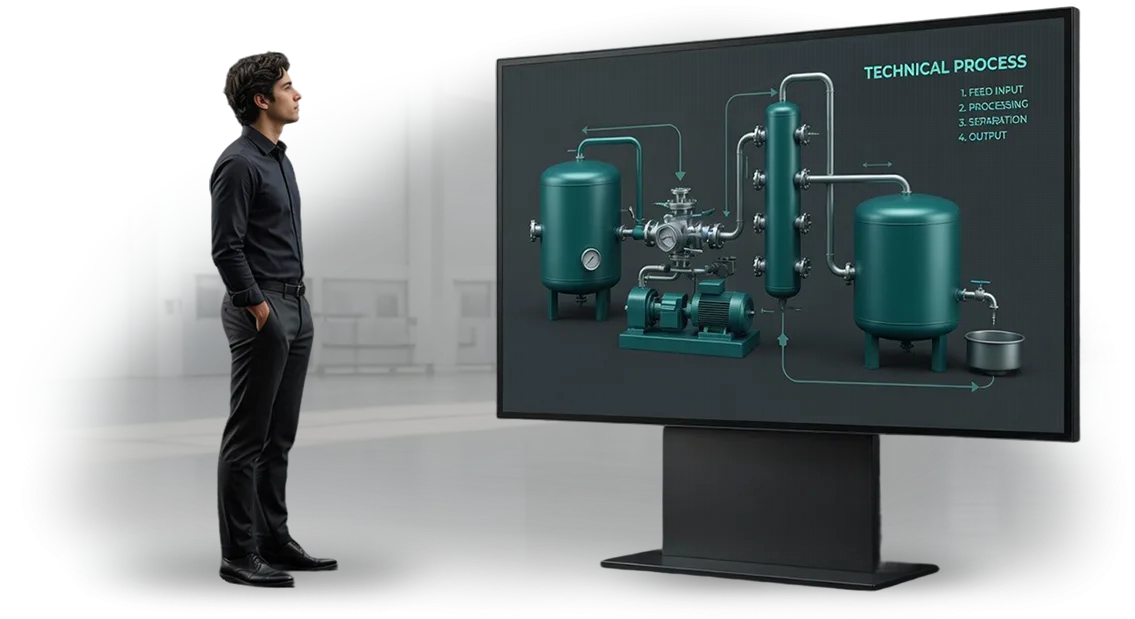
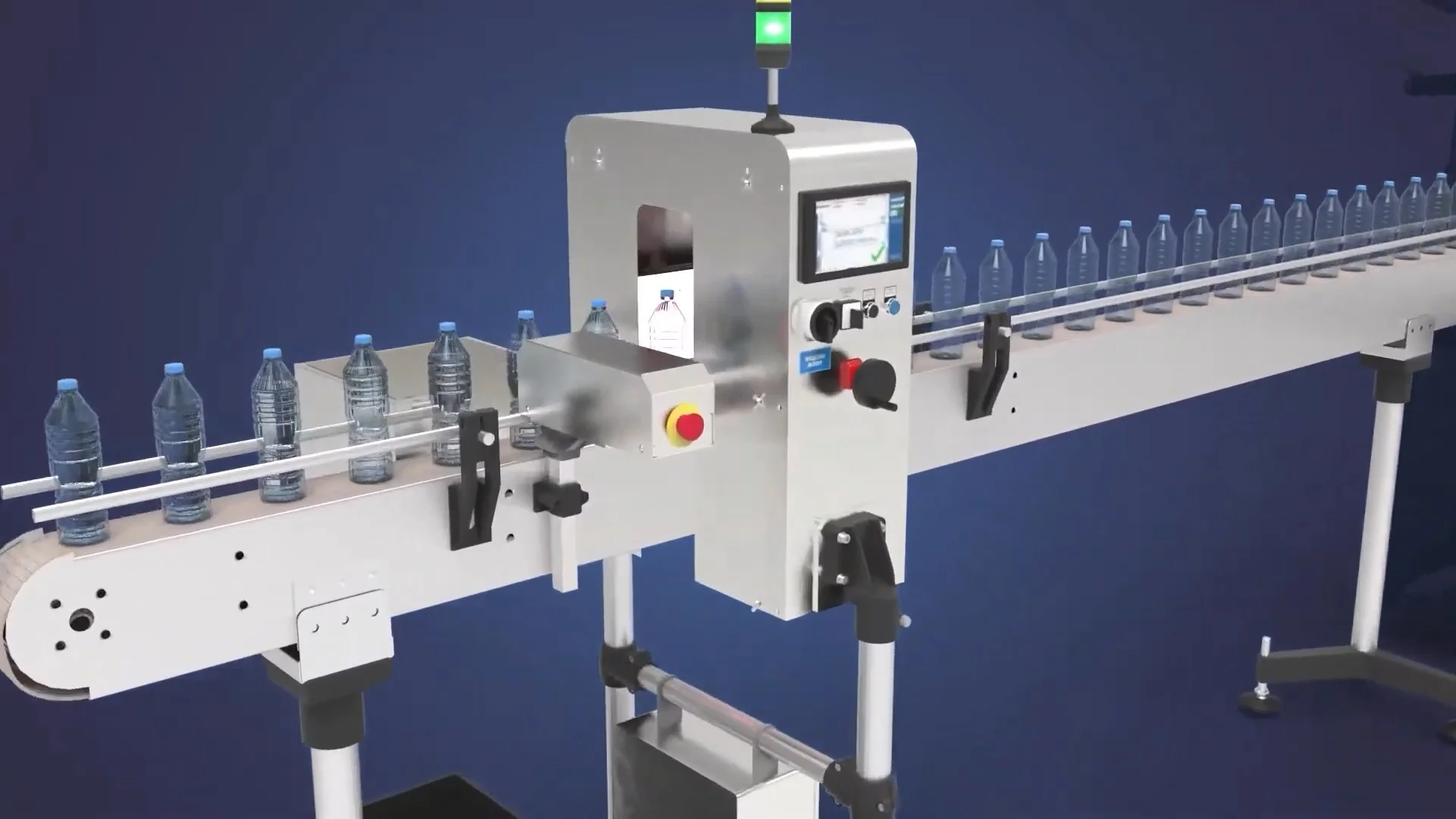
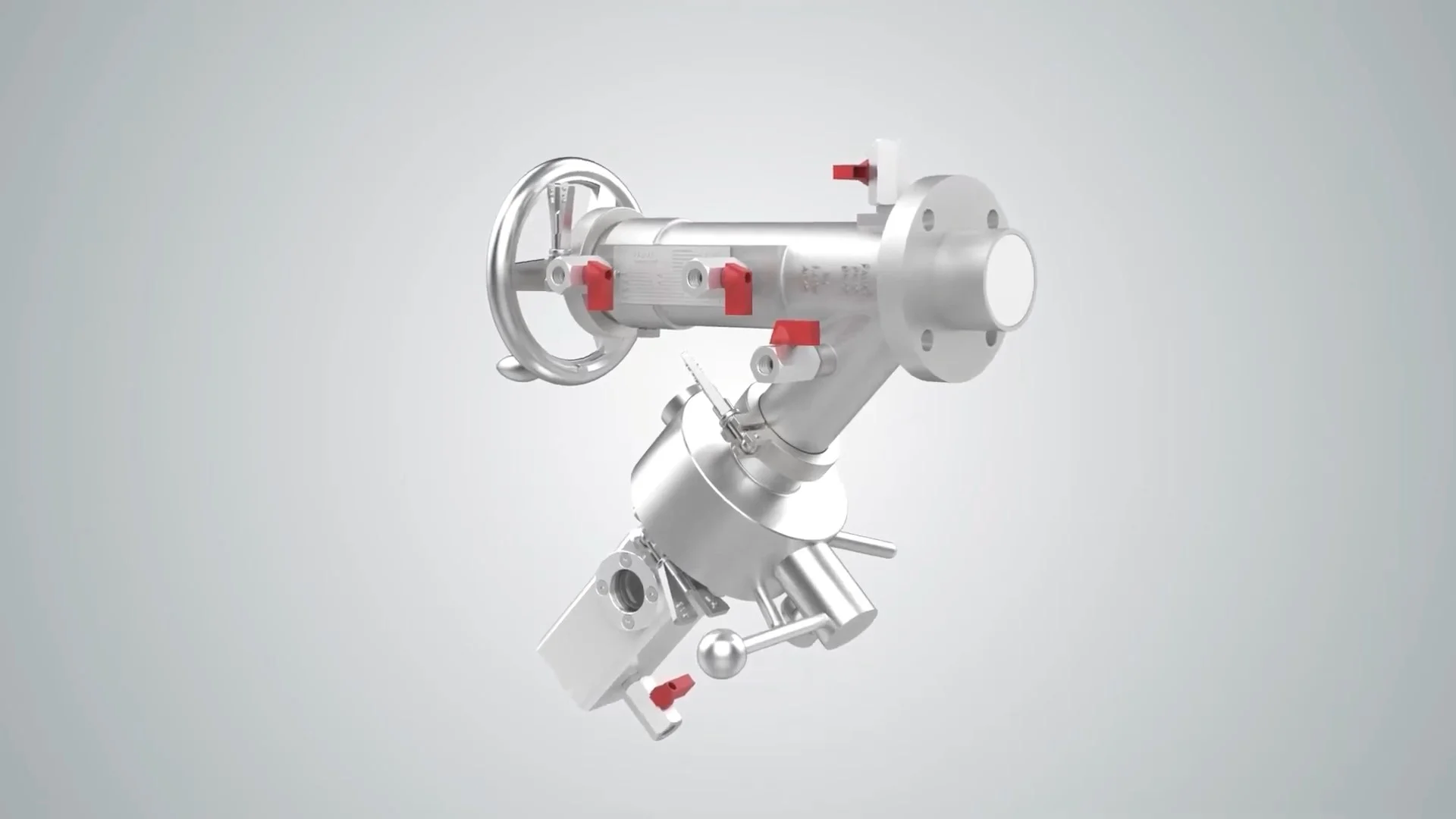
A 3D explainer video maker can present complex equipment or processes visually, with the required level of detail and without oversimplification.
Corporate training based on such video instructions shortens the time of the onboarding course and reduces the load on experienced colleagues. All employees see a single standard for performing work, independent of the mentor's personal experience.
This reduces the number of errors, accelerates adaptation, and makes the result predictable. This is especially important when a team is growing quickly or processes are changing.
We create such videos turnkey—from script to finished video, in a format convenient for you. You do not need to understand editing and animation: you get a tool that accelerates employee training and saves business time. Tell us about your task, and we will select the format that suits your team.
What an animated video instruction gives instead of boring text
It is easier for an employee to see a process once than to read about it three times. Text loses attention as early as the second screen: eyes glide over paragraphs and key steps are missed.
An animated video instruction shows actions in the correct sequence and keeps viewers engaged to the end of the video.
According to Forrester Research, video information is absorbed several times faster than text—an employee spends less time getting up to speed and immediately applies the material in practice.
This directly reduces the number of errors: a person sees what the correct result looks like and can compare their actions against it.
The company gets a single standard of work. Instead of "everyone does what they understood," there is one clear version of the process for all staff. This is important for onboarding newcomers, training related departments, and routine operations that repeat daily.
Formats we produce
| Format | For whom | What it gives the client |
|---|---|---|
| Process animation | Production staff | Clear procedure: fewer defects and less downtime |
| System operation video instruction | Office employees | Quick launch without lengthy support |
| Typical mistakes scenario | All departments | Visual warnings: employees learn from others' mistakes |
| Overview video for onboarding | New employees | First days pass without chaos and unnecessary questions |
Each video is assembled from real work operations, so the frame shows correct actions rather than abstract diagrams.
We handle the script, voiceover, and editing, and the client receives a ready-made instruction that can be integrated into the training system or sent to employees by email.
This approach pays off with the first batch of newcomers: time to get into the role is reduced, senior colleagues are distracted from their work less often, and the quality of operations becomes stable. A manager does not have to explain the same thing every time—just open the video.
Formats of training video instructions for company tasks
Video instruction formats differ not in the picture but in the result: a short video solves one task, detailed 3D animation solves another. For a newcomer, a general sequence of actions is enough; for complex equipment, a breakdown of each component is needed.
If you choose a format blindly, you can easily overpay or fail to get the required training, which is why we select it according to the team and budget.
3D animation for business shows a process without the risks and costs of filming: there is no need to stop production or look for equipment that has already been decommissioned. We build the model once and show it from any angle, add cutaways and hints. Such a video lasts longer than ordinary video and is easier to update.
To stay within budget, engineers use professional 3D environments, including Blender, and a library of ready-made elements. This is not template-based saving: you pay for unique graphics and proper presentation, while standard parts are taken from reliable sources.
| Format | For whom | What it gives |
|---|---|---|
| Short 3D video (30–60 sec) | New employees | Quick immersion without slides |
| Extended 3D instruction (2–5 min) | Complex equipment | Fewer errors during work |
| Series of modular videos | Branches and large teams | Uniform training standard |
Not sure which format is right? Start with a free consultation: we will review your task and suggest an option without overpayment.
How a video instruction is created: 6 steps from brief to launch
Creating a video instruction is a project where you participate at key stages rather than just waiting for the result. We have structured the process so that you can see how the video comes to life and can make edits before changes become expensive. Below are the six steps that every video instruction we produce goes through.
-
Brief and task immersion. You tell us who needs to be trained and in what: new employees, salespeople, production operators. We clarify which mistakes the instruction should prevent and how you will measure its effectiveness.
-
Script and storyboard. The scriptwriter turns your instruction into a short, clear text, and the artist breaks it into frames. You see what the video will look like before animation starts—this saves time and budget.
-
Script approval. You receive the script and storyboard for edits. At this stage, any changes are free because animation has not yet begun. This is the key control point where we synchronize expectations.
-
3D animation and styling. We create characters, objects, and the environment in line with your corporate style. You receive intermediate frames and approve the visual before the entire animation is ready.
-
Voiceover, music, and editing. A professional voice actor records the script, a sound engineer selects background music, and an editor assembles the video with the right emphasis. You receive a draft for final comments.
-
Launch and delivery. We provide the video in the formats you need—for a learning management system, messengers, or in-person training sessions. If necessary, we help adapt the video for different platforms so employees can watch it from any device.
As a result, you get not just a video but a training tool with a clear control process at every step. The average production time is two weeks to a month, depending on the scope and complexity of the script.
What is included in the delivery of a video instruction for the training department
After the project is completed, you receive not just a video but a ready-to-implement package for the training department.
We pass on documents and files that your specialists will use from day one: instructors will not have to fill in any gaps, and the technical team will not have to struggle to open the source project.
- Ready-made video procedure — an approved script with step-by-step timing, key frames, and the voiceover text. This is the basis for quality control, training new employees, and future updates.
- Final video files — in formats for uploading to the corporate portal, for screen display, and for mobile devices. No re-encoding required: every file has already been tested for compatibility with standard learning management systems.
- Source project — all materials used to assemble the video: graphics, audio, editing files. You can make edits with your team or order them from us without recreating the video from scratch.
- Text version and subtitles — a transcript for those who watch without sound, for employees with hearing impairments, and for quickly searching for a specific fragment by text.
- Methodological recommendations for the training department — how to integrate the video into the program, what questions to ask after viewing, and how to measure employees' knowledge absorption.
- Update procedure — a clear instruction on how to replace an outdated step or change a program interface so the video instruction remains relevant in a year.
- Implementation support — we help upload the video to your portal, check playback, and answer your specialists' questions during the warranty period.
All materials are delivered in a unified folder structure with clear names so that the training department can easily find the required version and not get confused by edits. You receive a complete, ready-to-use package—from the script to the final file.
Case study: an animated procedure cut onboarding time by half
We worked with the federal retail chain Format: 300 new employees per month, with turnover in the first three months at about a third.
Newcomers spent a week shadowing a mentor, made mistakes at the checkout, and spent a long time looking for the right items in the text procedure. Training was expensive: mentors' time was wasted, and the results differed from person to person.
Instead of a forty-page text instruction, we created a 12-minute 3D video. It shows the entire cashier workflow: opening a shift, handling returns, and closing the checkout.
Animated characters and the checkout interface help employees see and repeat rather than memorize, so a new employee moves to practice faster.
The result after two months: onboarding time was halved—from four weeks to two. Checkout errors dropped by 40%, and mentors finally returned to their own tasks. All newcomers watch the video, and some employees turn it on again before difficult shifts.
The head of the training department summed it up: "Previously, a newcomer sat next to a mentor for a week. Now, they understand how a shift works in 15 minutes and calmly go to the checkout. Speed and the same result for everyone—that is what we could not achieve with text."
For the company, this means a newcomer reaches target performance quickly and lower turnover in the first months. The training department gets a ready-made digital procedure that is easy to update when rules change.
Frequently asked questions about creating video instructions for employees
Before ordering video instructions, most managers have the same doubts: how quickly we can deliver the finished material, whether animation can handle a complex process, and whether the video will genuinely help employees.
We answer the key questions—briefly, without technical details, and only about what affects the outcome.
Can animation handle a complex process with many nuances?
Yes, and this is exactly the case where animation wins over live-action filming. In a 3D video, a process can be shown in stages: enlarge important details, remove the unnecessary, and add visual emphasis to critical actions.
The employee sees the entire logic as a whole and remembers the sequence even if the operation has more than ten steps. We break the script into logical blocks and approve it with your expert before production starts.
How long does it take to create a video instruction?
The timeline depends on the complexity and length of the script, but on average production takes two to four weeks. At the start, we set the schedule in the contract and follow it.
For urgent tasks, we strengthen the team and, if needed, deliver the first versions within ten to fourteen days. The key factor affecting speed is timely script approval: it sets the foundation for all subsequent stages.
What if the process changes or the instruction becomes outdated?
The video is easy to update—it is not a reshoot but a targeted correction of the animation. We keep the source files and, on request, make edits to the necessary scenes without redoing the entire video.
This approach is significantly faster and cheaper than creating a new instruction or adding pages to text procedures. The full update cycle takes from a few days to a week, depending on the volume of edits.
How do video instructions help different employees?
The video is equally useful for newcomers and experienced employees: for the former, it replaces long introductory training; for the latter, it quickly reminds them of the procedure during rare operations.
The video can be easily integrated into a learning management system, used in onboarding, and used during assessments. As a result, employees get into the working rhythm faster, and the number of errors caused by the human factor noticeably decreases.
Order a video instruction for your task — free consultation
Leave a request and we will consult you for free on which video instruction format will solve your task fastest. We will tell you how to integrate the video into the training process so that employees actually watch it and apply it in practice.
This is free and non-binding: you get expert recommendations and an understanding of the budget before the work begins.
Afterwards, you get a clear route with no unnecessary calls or approvals. Here is what you receive after submitting your request:
- Video instruction order: we clarify the task, the target employee audience, and the script that will form the basis of the video.
- Video procedure consultation: we will advise on how to embed the video into the work standard so that training is mandatory and verifiable.
- Video creation price: we will name the cost for your script—no hidden surcharges or "surprises" in the estimate.
- Production plan: timelines, approval stages, and the final file format—you see the entire path to launch.
- Examples and demos: we will show fragments of similar projects so you can evaluate the style and quality before starting.
- Post-delivery support: if employees have questions about the video, we promptly make edits or prepare additional versions.
After the consultation, you will receive a clear proposal: what we do, at what cost, and what result it brings to training. The decision is yours; we just help remove uncertainty and get a video instruction up and running faster—one that truly works for your team.
How to choose the right video instruction format for your budget?
The video instruction format should be chosen not by current trends but by two parameters: the complexity of the material being taught and the budget for the training video.
Simple mentoring can be covered with a screen recording and a voiceover, while training for work on unique equipment requires 3D animation that shows details unattainable in photos or video footage.
If the budget is limited, screencasts or animated slides are suitable—they convey a sequence of actions well and do not require lengthy production.
When you need to show the internal structure of a mechanism, internal processes, or simulate an emergency, a 3D explainer is more effective: it removes the limitations of live footage and provides clarity that reduces employee training time and lowers the number of errors.
We help you choose the type of video instruction for your task and budget. At the consultation, we assess the complexity of the material, the target audience, and the timeline—and propose a format that delivers results without overpayment.
Clients are often surprised that expensive 3D is unnecessary: neat 2D animation with targeted 3D graphics is sufficient.
Choosing the right format saves money and speeds up the launch of training. You get a video that solves the task rather than the most expensive option with excessive effects. We always calculate the budget and timeline before starting work.
As a result, you do not overpay for unnecessary complexity, and employees master the material faster. Contact us—we will select the optimal format for your task and budget, whether it is a simple video instruction or a full-fledged 3D explainer.