

Mistakes and excess costs: how 3D instruction video solves the problem
Every new employee is an investment, but most often training turns into an expense item: weeks of mentoring, time away for experienced specialists, and mistakes in the first months of work. Up to 30% of the HR budget goes to correcting the consequences of wrong actions.
The reason is simple — text instructions and rare in-person seminars don't provide the necessary clarity, and knowledge quickly fades.
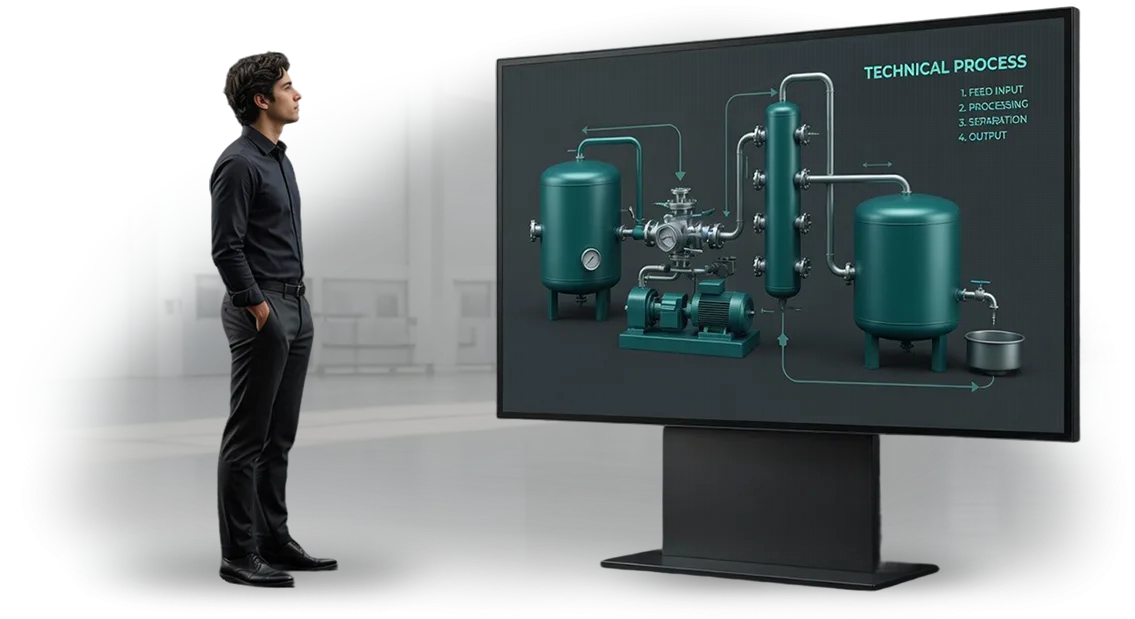
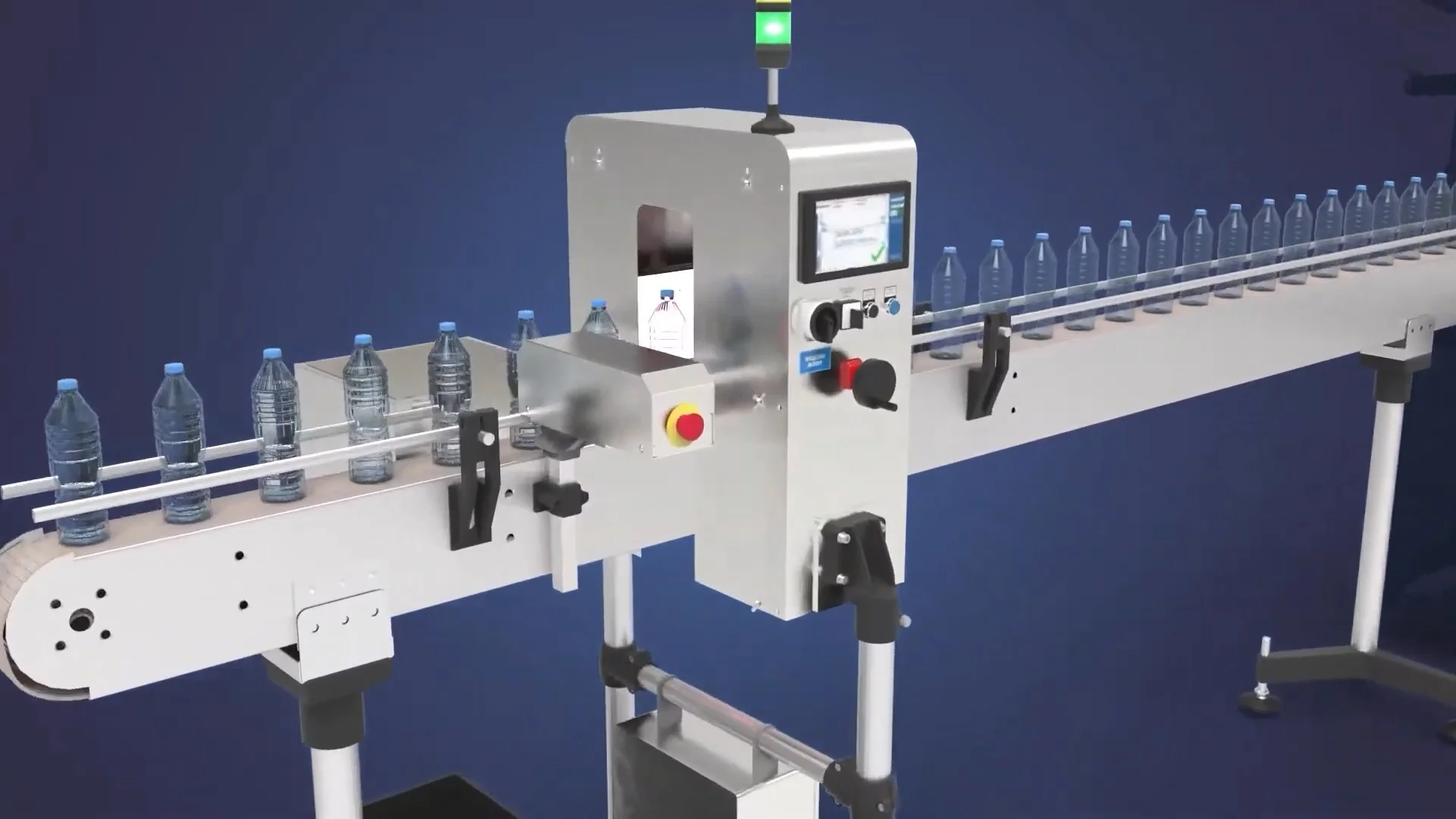
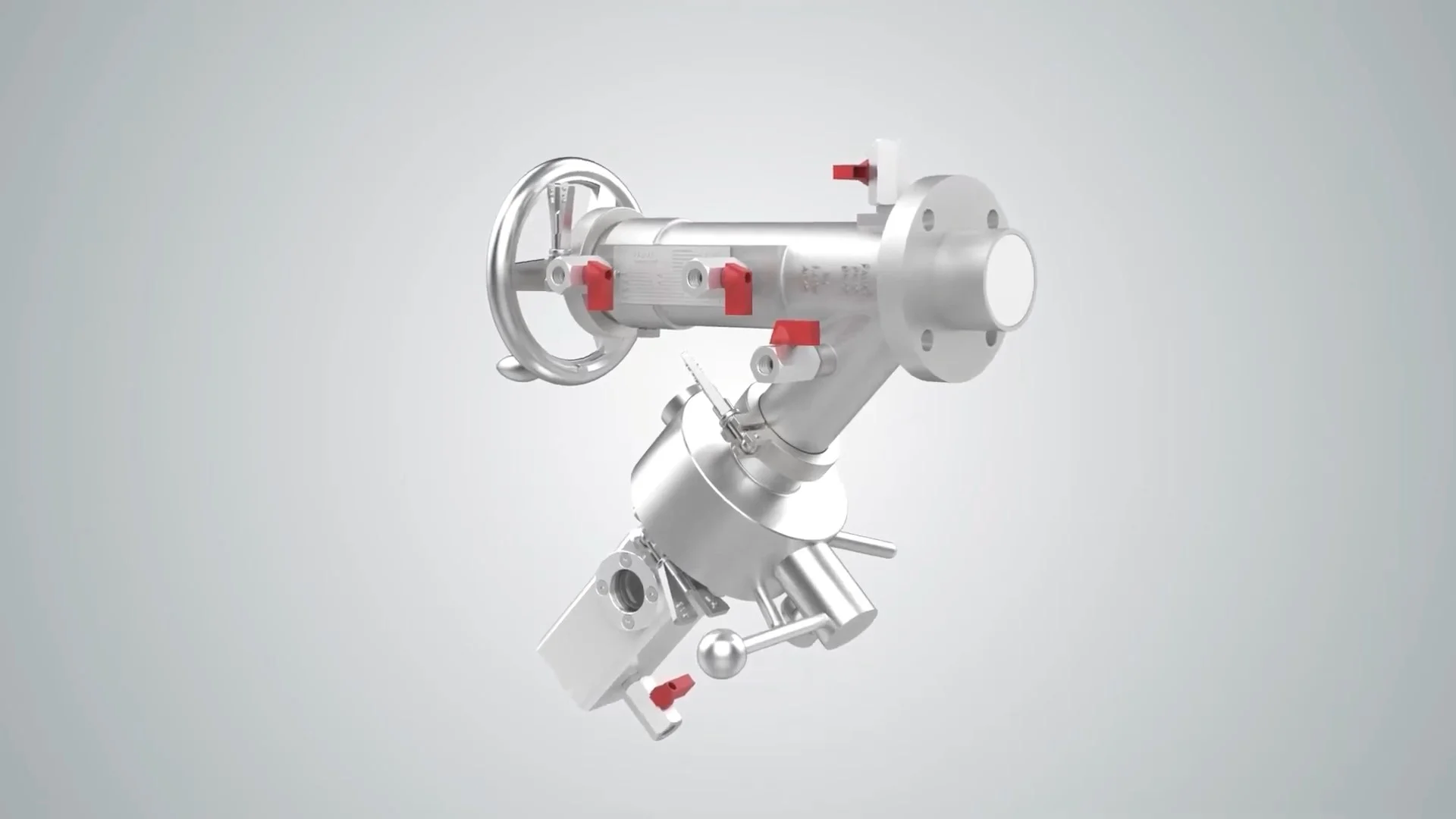
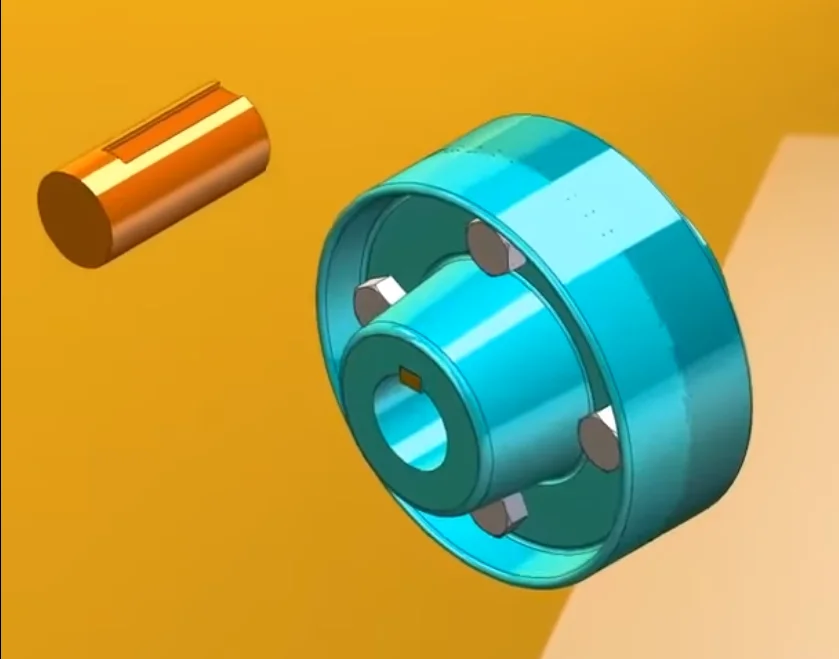
3D instruction video changes the approach: instead of abstract theory, the employee sees the exact process of assembly, setup, or maintenance of equipment — with the correct sequence of steps and emphasis on critical moments.
This format is understandable even to a beginner without technical experience, so mistakes disappear from the first days of work.
The video instruction can be reviewed at any time without waiting for a mentor — this accelerates adaptation and reduces the load on experienced specialists.
The benefit for business is direct savings. Training costs are reduced through less mentor time, quick employee ramp-up to full productivity, and reduced defects.
Employee training becomes predictable: the video instruction is available on any device, meaning a new employee starts working independently in the first week, not after a month.
Training effectiveness is confirmed by practice: visual memory works better than text memory, and the ability to pause a difficult section and review it step by step reinforces the skill.
As a result, employees make fewer mistakes, waste less material, and reach target metrics faster. 3D instruction video is not just a nice format, but a tool that pays off through increased quality and reduced personnel costs.
What you get from implementing a 3D format
Most manufacturers face the same problem: text regulations and flat diagrams don't let an employee quickly understand how to perform an operation correctly.
A beginner spends weeks studying instructions, and an experienced worker still makes mistakes when changing equipment due to ambiguous wording. 3D video instruction solves this radically — it shows each step in volume, from the right angle, and in the correct sequence.
The clarity of this format reduces the adaptation time for new employees many times over. Instead of rereading a document or distracting a mentor, a person simply repeats the actions shown in the video.
This lowers the entry threshold for beginners: they don't need special knowledge to understand the process; they just watch and repeat.
Reducing the number of errors is a direct effect of unambiguous visualization. When an employee sees exactly what each part should look like and what happens at each stage, the probability of misinterpretation is minimal. For a manager, this means less scrap, fewer reworks, and stable product quality.
Time and money savings come from several factors: accelerating the newcomer's ramp-up to full productivity, relieving mentors, and reducing equipment downtime due to human factors.
One high-quality 3D video replaces dozens of hours of verbal explanations and hundreds of pages of text instructions that few people read anyway.
Implementing a 3D format is not just a trend, but a tool that pays off by reducing operational losses. You get a single training standard for all employees that is easy to replicate and update.
Savings on every mistake and every minute of downtime quickly cover the development cost — at production scale, this represents significant annual savings (cost calculated after audit).
Our specialists create videos that are understandable to any employee: from beginner to experienced master. We handle the entire process — from studying your technological operation to final editing.
The client only needs to receive the finished set of video instructions, which will start working for you from the first day.
Video instruction formats for different business tasks
Each training task suits its own video format: what is easy to explain with text doesn't need to be shown in 3D, while some things are better seen once in real production.
We select instruction types based on process complexity and employee training levels — training takes less time and doesn't require a mentor.
| Format | For whom | What it gives the client |
|---|---|---|
| 2D animation | New employees, general regulations | Quick immersion into processes, a single standard for the whole company |
| 3D video instructions | Complex equipment, assembly, repair | Visual breakdown of components and mechanisms, fewer errors and injuries |
| Video with real actions | Sales, service, customer work | A clear behavior example that is easy to copy |
| Interactive video | Knowledge checks after training | Results are immediately visible, no separate tests needed |
Each format can be used separately or combined within one training program. For example, a short 2D animation introduces the unit's structure, while a 3D instruction details the operation sequence.
As a result, you get training videos that integrate into the existing adaptation process and don't require redoing methodological materials.
We write the script, choose the style, and do the editing — you don't need to hire subcontractors. The output is a ready-made set of videos for employees: from 1–2 minute clips to full courses with assessments. All that remains is to upload it to your learning management system and assign access.
How we create video instructions: stages of working with you
To ensure the video instruction actually works rather than gathering dust in an archive, we have built a transparent creation process. At every stage you see what is happening, control deadlines, and make edits — no "black boxes" after the brief.
Stages of work
- Brief and task immersion. We study your specifics, employee audience, and training goals. We determine which operations need to be shown and which format will best convey the material.
- Script and storyboard. Our methodologists and scriptwriters turn the technological process into a clear step-by-step story. You receive a text script and visual frames — this aligns the project before production, so you don't have to redo expensive filming later.
- Concept approval. You approve the style, tone, and narrative details. If something doesn't fit, we make edits at this stage while changes are still inexpensive.
- Video production. We assemble the material: 3D animation, filming, infographics, voiceover. We work with professional equipment and refined tools to keep the visual consistent and uniform.
- Draft editing and revisions. We show the first version. You give feedback, we make adjustments — usually two or three iterations are enough. This is included in the timeline and budget, so the final result isn't delayed.
- Launch and support. We deliver the finished files in the required formats and help with publishing on your learning platform. After launch, we stay in touch: corrections and refinements as processes evolve are discussed separately.
The whole process takes from a few days to a couple of weeks — timelines depend on the complexity and volume of the instructions. We fix dates in the contract in advance and work so that you aren't distracted from your current tasks.
As a result, you get a clear video instruction that quickly brings new employees up to speed and reduces the load on mentors.
What is included in the delivery package: complete solution composition
When employees undergo training, not only the instructions themselves matter, but also how they are integrated into the workflow.
We don't hand over disparate files; we deliver a complete solution package that can be used immediately: from final videos to methodological materials and source files.
What is included in the delivery package
- Ready-made video instructions in multiple formats — for computers, tablets, and screens at workstations. The videos open correctly in any learning management system and don't require special software to view.
- Source project materials — 3D scenes, animations, graphic files. These are your property, so you can make edits with your own team or order updates from us without paying for "from scratch" development again.
- Methodological support — a guide with ready-made implementation scenarios. It describes how to show the instructions to new employees, when to assign repeated review, and what control questions to ask to ensure the material has been absorbed.
- Text version of the videos with dialogue and subtitles — useful for translation into other languages, for employees with hearing impairments, and for quickly creating cheat sheets.
- Integration with your learning management system — videos are loaded onto the platform, assigned to the right groups, and the manager sees completion statistics and notices those falling behind in time.
- Usage rights within the organization and launch assistance — we connect the materials, set up access, and remain available until the instructions are fully operational.
Such a package resolves the main questions: where to store the videos, how to apply them, and what to do when regulations change. You receive not just videos, but a working training tool that reduces time-to-competence and lowers the number of employee errors.
Case study: how we reduced employee errors during training
When training relies on text regulations and mentors, mistakes repeat: a new employee misses something, and the consequences fall on clients and revenue.
We address this pain point with a series of 3D video instructions where each process is shown sequentially and clearly — from the first step to the result. This format is understandable even to those who have never worked in the industry.
The case of the coffee shop chain Dobry barista is a telling example. The company approached us with a request to reduce the number of errors among baristas: drinks were prepared differently, orders were remade, and guests complained about quality.
We developed 12 three-dimensional instructions for key processes. Within two months, the number of errors in drink preparation dropped by 60%, and the duration of initial training was reduced from five days to two and a half.
The chain's manager noted: "Previously, mentoring took weeks, but mistakes still recurred. Now a new employee watches the video and immediately acts correctly.
We save an amount equivalent to cost calculated after audit per year on remade orders and dissatisfied guests." It is training results, not just a "pretty picture," that are the main criterion of our work.
Therefore, the client didn't limit themselves to a one-off project: six months later, they ordered an expansion of the library for a pizzeria and fast food. Today, more than 400 employees at 45 locations use the instructions.
This video instruction case confirms: investments in visual training pay off through reduced errors and increased employee speed.
How to choose a training format for your company's specifics?
There is no universal training format: what works perfectly in an IT company may fail in manufacturing or retail. The choice depends on the company's specifics — operation complexity, working conditions, employee skill levels, and staff turnover.
For example, short videos are suitable for mass training in basic skills, while detailed 3D video instructions that show processes from any angle are better for working with complex equipment.
Choosing a format based on "trendy" or "like competitors" is a mistake. First, you need to determine which business problem the training solves: reducing errors, onboarding newcomers faster, lowering injury risks, or standardizing processes.
This determines the choice of instructions: text regulations lose attention, flat videos don't show details, and 3D models allow you to look inside a mechanism and safely demonstrate dangerous operations.
A properly selected format becomes part of the workflow, not a "must-do" at the end of a shift.
We take an individual approach: we analyze real employee scenarios, study work locations, and ask the workers themselves where they most often face difficulties.
Based on this, we propose a format that will naturally fit into training — it could be a combination of short videos, 3D instructions, and checklists for different personnel categories.
The result is not an abstract "course," but a tool employees actually use: beginners reach independent work faster, and experienced specialists make fewer mistakes.
The key point is that we don't impose templated solutions. We are ready to provide an initial consultation, review your situation, and propose a format that suits your company specifically — taking into account budget, deadlines, and the team's skill level. This saves time and money on rework, and training delivers a measurable business result.
Frequently asked questions about video instruction development
Before ordering video instructions, managers have the same questions: how long will development take, what will it cost, and what to do when the process changes.
We answer directly — the way we like to work with partners: first we analyze the task, show the script, and only then start production.
How long does development take?
The timeline depends on the complexity of the script and the number of scenes. A typical project takes 2–4 weeks, including all approvals and revisions.
If the video is needed faster, we speed things up by having scriptwriters and 3D specialists work in parallel, without losing quality.
How much does a video instruction cost?
We calculate the cost individually: video length, number of scenes, need for voiceover, and integration into the learning system. Usually the project fits within cost calculated after audit. At the start, we fix the scope and estimate — the final price does not change during the work.
What guarantees do we provide?
We fix the agreed script, timeline, and cost in the contract. Until the video is approved, we make revisions at no extra charge. After delivery, we support the project: during the warranty period, we adapt the video if process steps change.
What if the instruction becomes outdated?
We build scenes modularly: individual steps can be replaced without reshooting the entire video. You receive the source materials and a clear update procedure, so the next revision takes days, not months.
We hear these questions from clients on every project, so we have built the process to be as transparent as possible: from brief and script to delivery and support. If you still have doubts, ask us directly — we'll tell you more about timelines, costs, and guarantees for your specific task.Ready to hire us to create video instructions?
Before ordering video instruction development, it's important to understand what you'll receive. We've structured the process so that from day one you see results and control every stage. This eliminates surprises, unnecessary approvals, and downtime in employee training.
Check what's included in working with us:
- Free consultation: we analyze your task and propose a format that solves it fastest.
- Transparent estimate: we fix deadlines and cost before work starts, with no hidden fees.
- Work with your materials: we use existing regulations and scenarios; nothing needs to be rewritten from scratch.
- Approval at every stage: you see the script, storyboard, and rough cut before the final version.
- Support after launch: we make revisions free of charge for a month and answer employee questions.
- We hand over source files and rights: you remain the owner of all materials and can modify them in the future.
If at least one item matters to you, leave a request. We'll get back to you within one business day, clarify the details, and prepare an individual proposal.
You can order development right now — just write to us. The consultation is non-binding: you'll receive an honest assessment of timelines and budget, even if you ultimately decide to do it in-house. You don't need to understand the intricacies of production — we handle that for you.