

Why transformer instructions don't prevent accidents
Transformer failures are rarely random: most often the cause is an employee's incorrect action. And most enterprises do have instructions — thick regulations, diagrams, memos. But they don't prevent accidents, because nobody reads them the way they should.
Text descriptions are hard to absorb, especially when it comes to assembling, maintaining, or diagnosing equipment. An employee must mentally "convert" what's written into actions, and under stress or time pressure easily skips a critical step. The result — an error, breakdown, downtime, or a safety threat.
For business this means direct losses: production stoppage, urgent repairs, missed deadlines, rising component replacement costs. And if an error leads to injury or fire — the consequences are even more serious.
Risks grow with high staff turnover: new employees have to be trained quickly, and they don't get enough practical experience.
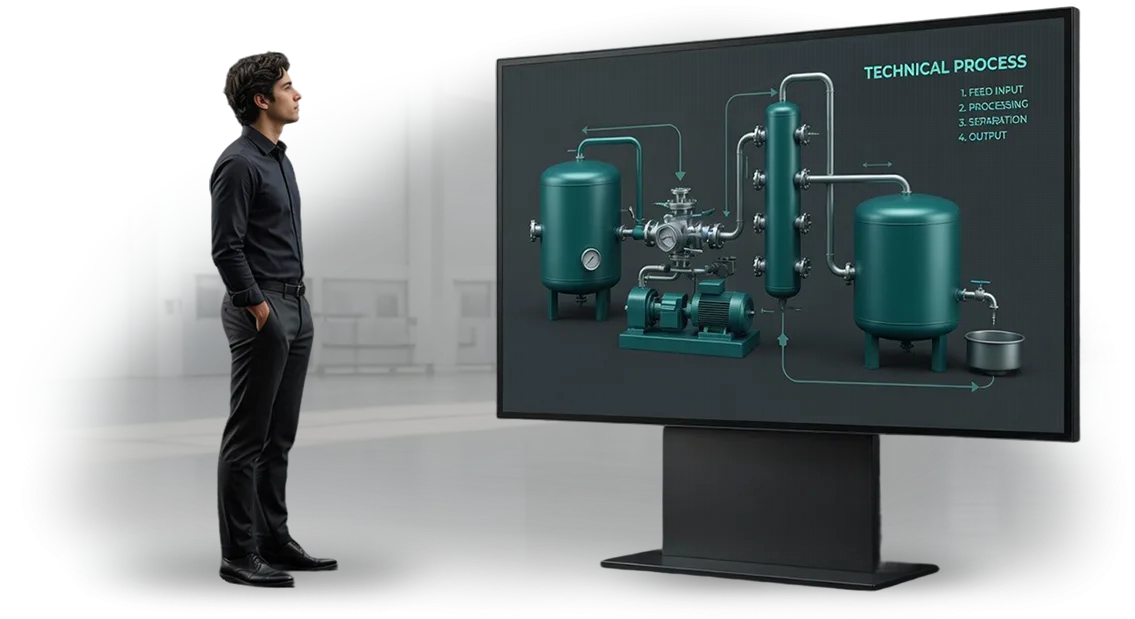
The problem is that staff training is built on memorization, not understanding. A person sees a flat diagram but can't picture the sequence of real actions. They need a visual example that reproduces the work process — step by step, in familiar surroundings.
This is exactly the kind of video instruction we make: short, clear, focused on safety and the correct sequence of operations. They turn abstract rules into concrete actions and reduce the risk of accidents.
This isn't a replacement for an experienced mentor, but a tool that makes training predictable and protects your business from unnecessary losses.
What you get: a 3D instruction as your enterprise knowledge base
Every manager faces the same issue: training new employees takes weeks, and experienced craftsmen take their knowledge with them when they leave. Text regulations and diagrams are hard to absorb, especially when it comes to complex transformer assembly.
Training videos solve this problem: a 3D instruction turns an abstract description into a visual process that's clear from the first viewing.
The time to bring an employee up to independent work decreases many times over — a newcomer doesn't sort through paper instructions and doesn't distract the mentor with trivial questions.
They see the assembly sequence in detail, including hidden components and correct tightening effort. This makes it possible to run e-learning right at the workplace, without pulling anyone off the production line and at an individual pace.
The visual clarity of 3D gives what a flat drawing or a verbal explanation cannot. The employee understands not just "how to do it" but "why this way" — which reduces the number of errors and defects.
Skills development no longer depends on whether a specialist is available: the knowledge base is accessible around the clock and survives staff turnover.
For business, controllability matters too. You see who has completed the training and on which attempt — the statistics answer certification and work-permit questions.
These aren't just training videos but a systematic tool that preserves your experience, standardizes actions, and protects your enterprise from dependence on "irreplaceable" employees.
Video instruction formats: for any training scenario
The same material can be presented in different ways: interactive, animation, or live action. The format choice determines how quickly a newcomer can work with a transformer without a mentor's supervision and how much time a specialist spends re-explaining things. Below — which format fits which training scenario best.
| Video format | For whom | What it gives the client |
|---|---|---|
| Interactive instruction | Newcomers, line staff | The employee chooses the step on their own, repeats a complex unit, and immediately sees the error — no need to wait for a mentor |
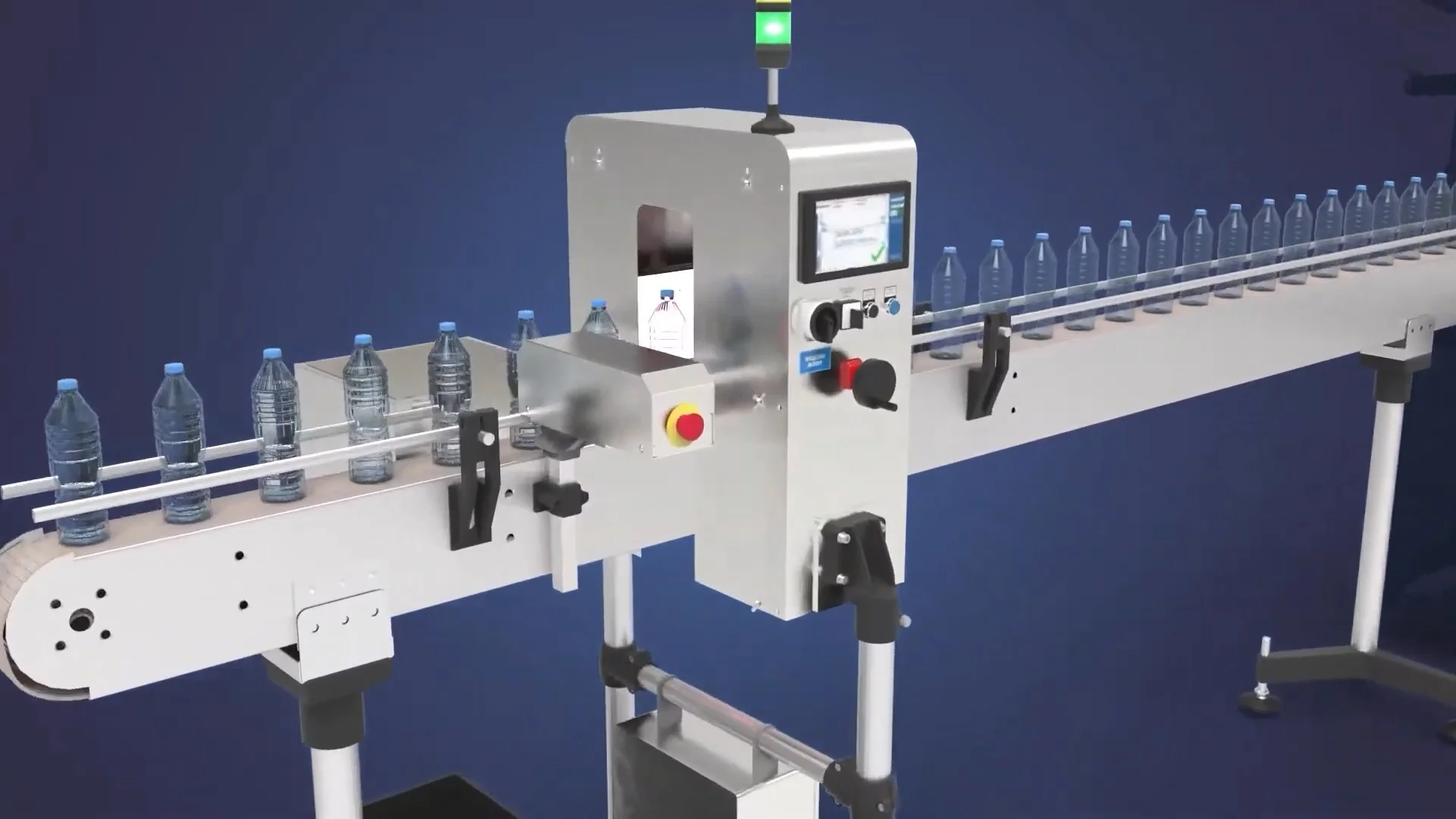
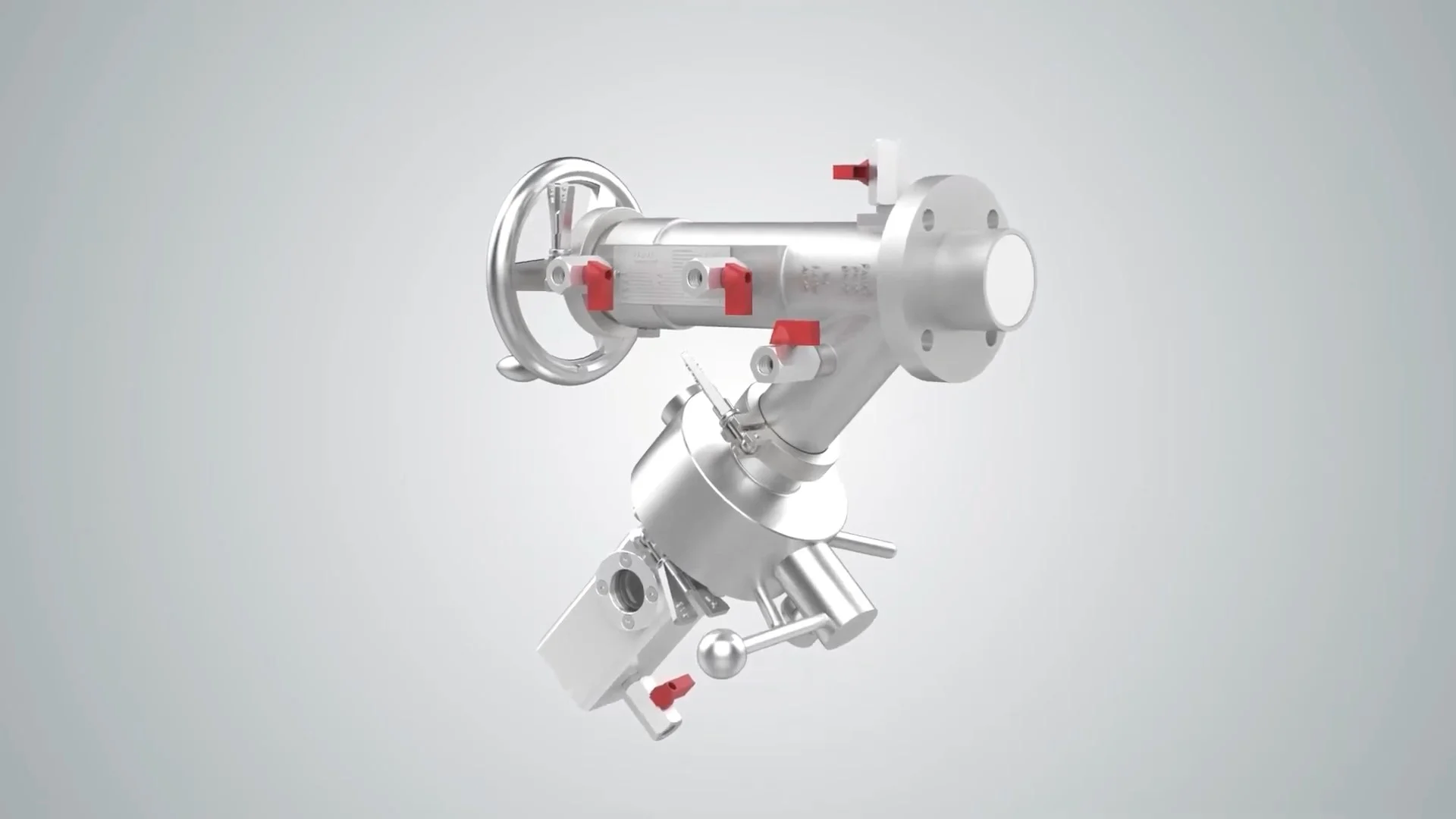
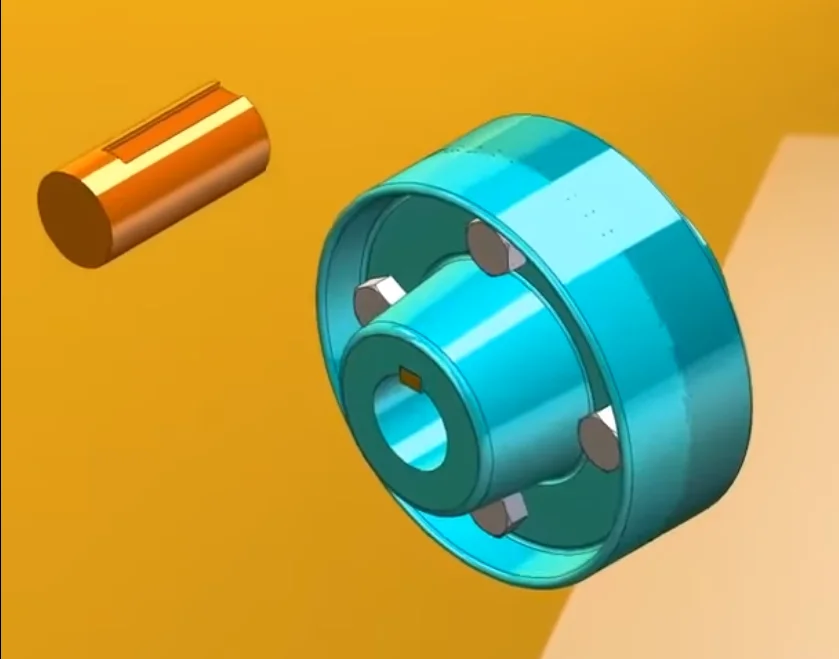
| 3D animation | Assembly and service teams | Disassembly and assembly are visible "in section," hidden parts don't remain a mystery — shortens the onboarding period |
| Corporate video | Craftsmen, internal experts | Captures the real techniques of the best workers, turns the team's experience into a quality standard |
In practice, the best result comes from combining formats. For example, a basic animation shows how a transformer works, while an interactive insert checks how well the employee has learned the order of operations.
This way you get a video that works on several training levels: from initial introduction to authorization for independent work.
How we create a video instruction: 6 steps for transformers
We structure every stage of producing a 3D video instruction for transformers so that you stay in control of the result and don't get distracted by technical details.
The process has been refined across dozens of industrial projects — from the first brief to a finished video you can hand straight to employees.
Here's how it looks in practice — 6 steps that take two to four weeks depending on assembly complexity and the number of components.
-
Brief and source material audit. You send drawings, 3D models, photos, or regulations. If something is missing, we'll tell you what to capture on site or request from the design engineers so you don't lose time.
-
Script and storyboard. We break the transformer assembly or maintenance process into logical operations. We describe every frame in words: what the employee sees, which tools they use, what to pay attention to. At this stage you see the video's structure and can make edits before production begins.
-
Key checkpoint approval. We show the script and still frames, discuss the presentation logic. We approve voiceover texts and accents — so the instruction speaks the language of your assemblers and technicians, not the language of engineering documentation.
-
3D modeling and animation. We create or adapt transformer component models and work through the movements: where to show effort, where to show a part turning, where to pause for inspection.
Complex operations are shown in section or with transparent housings to eliminate misinterpretation.
-
Editing, voiceover, and subtitles. We assemble the video, record the narrator, and add explanatory captions. We check the timing: each operation takes exactly as long as needed to repeat without rewinding.
-
Delivery of the finished material and support. We deliver the video in the format you need: for a corporate portal, LMS, or offline training. After delivery we stay in touch — if you need edits or a version adapted to a new model, it's handled quickly.
our team uses a combination of professional equipment and polished tools, so every step has clear deadlines and a documented result. You always know what you'll get at the output and exactly when the video will be available to your employees.
What's included in the delivery: a complete kit for a ready-made training system
We put together a complete package rather than just handing over a video. The delivery includes everything needed to launch training without external methodologists: from the script to files that work in your LMS.
-
Script and storyboard for every transformer assembly and maintenance operation. You approve the text and frame-by-frame plan before production — the final video meets requirements and safety standards.
-
Final video instructions in several formats: for LMS, for classroom sessions, and for viewing on a tablet on the shop floor. Employees learn where it's convenient and return to the video when questions arise.
-
An instructor's guide: how to structure a lesson, break the material into stages, and review typical mistakes. No need to build a program from scratch.
-
Test assignments and checklists for verifying knowledge before and after training. You see who's ready for independent work and who needs more practice.
-
Ready-made LMS files: courses configured with a clear structure and completion protocols. Upload them into your system — and employees get started.
-
Launch support: we'll help integrate the course into your training plan, answer questions, and make edits after a test run.
In the end, you get a working staff training system, not just a video file. New employees master processes faster, assembly errors decrease, and training results are easy to track.
Case study: cut time-to-competency by 40%
A new employee at an energy enterprise needs to confidently assemble a transformer without errors — safety and equipment commissioning timelines depend on it.
With paper instructions, this training took up to 10 weeks, and experienced mentors were constantly pulled away from their own work to supervise newcomers. We came across this in a transformer manufacturer case — let's call it EnergoMash.
Instead of text regulations, we prepared a series of 3D video instructions for assembling and maintaining key components. The newcomer sees exact movements, the sequence of operations, and typical errors — without risking damage to expensive equipment. They can learn at their own pace, and the mentor gets involved only at the final check.
The result — time-to-competency dropped by 40%: from 10 to 6 weeks.
At the same time, the number of errors during the first independent assembly fell by roughly a third, and mentors got back up to 4 hours per week — hours they reinvested in quality control and developing other skills.
After the first two months of operation, the company ordered another block of video instructions from us — for other transformer product lines and scheduled on-site maintenance.
The client's technical director described the effect this way: "Before, we were afraid to trust a newcomer with complex assembly.
Now they come prepared, ask the right questions, and start contributing faster." For the enterprise this isn't just time savings — it's lower personnel costs, fewer installation defects, and stable shop floor operation even with high staff turnover.
This case shows that 3D video instructions work not only for mass occupations but also for complex power equipment. If you have a similar challenge, we're ready to discuss a pilot area and calculate what your training time reduction would look like in your numbers.
How to choose a format for your tasks and budget?
The main criterion is not the format's price but your training objectives. Think about what the employee must be able to do after watching: perform transformer assembly without errors, follow the maintenance procedure, quickly find a fault.
If spatial actions and a strict sequence of operations matter, you need a format that conveys this visually — for example, a volumetric 3D instruction with component-level detail.
The second factor is budget and scale. For a small team, a short video is enough, while for regular training of dozens or hundreds of specialists, an interactive format is more cost-effective: it can be reused, updated, and built into the certification system. In this case, the cost per training hour drops and training quality becomes stable.
The third point is the application context. One video covers initial familiarization with the equipment, another covers a refresher before a site visit, and a third covers knowledge verification.
Clearly define where the employee will watch the instruction: on a computer, tablet, on the shop floor, or remotely. Duration, interface, and depth of detail depend on that.
We help you avoid getting lost in options and choose the optimal format for your tasks and budget. On the consultation we clarify training goals, operation complexity, the number of employees, and the usage scenario, then show examples of similar solutions.
You get a clear recommendation rather than a "price range" — and you can make a decision with confidence.
FAQ about development and implementation
Companies often delay launching training because they fear drawn-out timelines, endless iterations, and videos that are incompatible with their internal system.
We address these objections before work begins: for every project we set a schedule, a clear revision process, and result guarantees.
How long does development take?
The timeline depends on scenario complexity and the number of scenes. After the brief we lock the schedule into the contract: dates for intermediate approvals and final delivery. We treat them as a target, so revisions don't "stall."
What if revisions are needed?
All comments after the preliminary preview are collected in a single list and processed in iterations. You see the updated version and confirm the result — without endless email threads or comments lost in messengers.
What guarantees do you provide?
We take responsibility for the picture, sound, and stable playback of the video in your training system. If an error is found after delivery, we fix it within the contract. Video won't open, or audio is out of sync with the picture? We fix it at our expense.
Will the video work in our LMS?
Yes. We choose a universal format supported by most learning management systems. We verify upload and playback on your side and provide instructions for the administrator.
These are typical questions — at the brief we'll discuss your scenario and put together a work plan. You get a predictable process and a video that employees actually use.Get a cost and timeline estimate for your project
Getting a cost and timeline estimate for a project with 3D video instructions for transformers is not a ten-page questionnaire. In one short conversation we gather the essentials and turn them into a clear plan: budget, stages, delivery date. That way you know in advance when employees will start training and what it will cost.
At the free consultation we'll discuss:
- what goals the videos should solve: faster onboarding, eliminating assembly errors, standardizing maintenance;
- what part of the process to cover: the full work cycle, individual components, routine operations;
- how to present the material: a single film, a series of short modules, videos with tests;
- how many people will watch the instructions and on what devices;
- whether you have technical documentation, drawings, or current regulations;
- agreed timelines that won't disrupt your training schedule.
Within a couple of days after the conversation you receive the estimate and schedule. Then the launch follows a transparent timeline:
- we approve the script and video structure;
- we build 3D models and animations of key operations;
- we create intermediate versions — you see the result at early stages;
- we incorporate revisions and the final voiceover;
- we deliver finished videos in formats compatible with your training system.
This protects the project from missed deadlines and unnecessary costs. Leave a request — we'll call you back within one business day, clarify the details, and find a time for the consultation.