

How to Train Employees to Work with Hazardous Substances Without Risk to Life?
The rise in industrial accidents is directly linked to the quality of occupational safety training. When an employee starts a shift after a formal lecture or a paper-based instruction, they are not prepared for an emergency: a reagent spill, a leak, or a breach of containment.
Each such mistake is a risk to life, a halted workshop, investigations, and fines that run into the millions.
The problem is compounded by the fact that hands-on practice with hazardous substances cannot be conducted live without threatening people.
Training with hazardous substances on real equipment is too expensive and dangerous, while theory without practice does not build lasting skills. Employees remember the briefing only until the moment they face a real task.
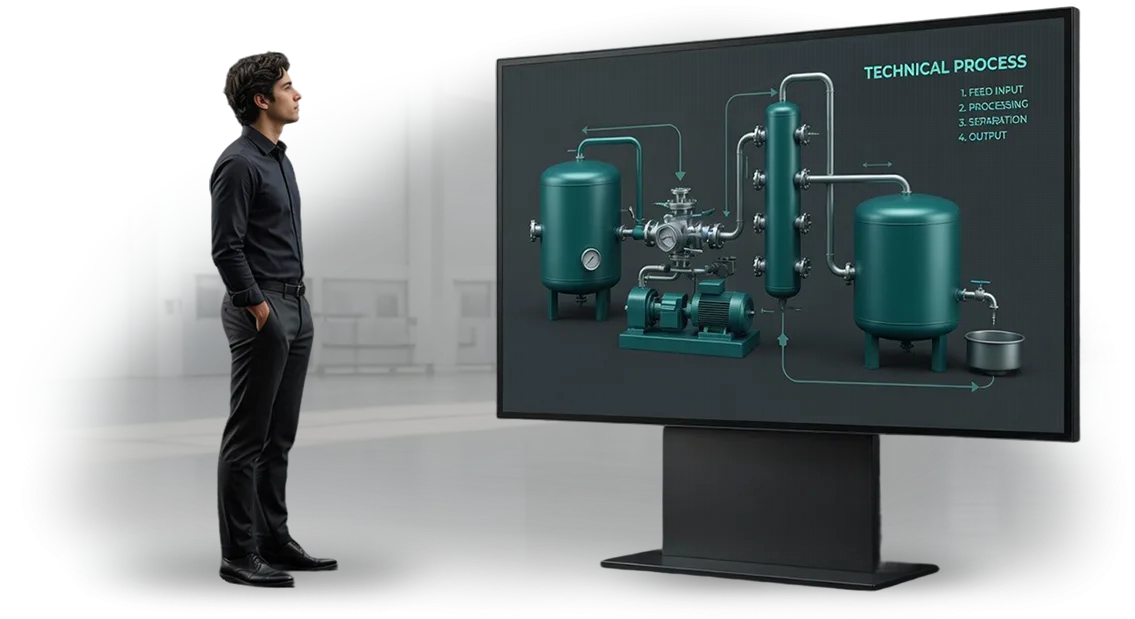
Companies that implement modern video instructions for employees solve this dilemma. CGI technologies make it possible to create virtual simulators that replicate real scenarios down to the smallest detail.
The employee sees the consequences of a mistake on the screen while remaining safe — this is exactly how a deep understanding of industrial safety is formed, one that lasts for years.
We have been developing such training programs for over 10 years. Instead of risky experiments on the production floor — a controlled virtual environment; instead of dry theory — realistic scenarios that are experienced, not just read.
This is not a replacement for briefings, but a new standard of training quality that reduces accident rates and protects your business from reputational and financial losses.
What Does a Video Instruction Give for the Safety of Your Production?
Hazardous industries — chemicals, oil and gas, metallurgy — operate under conditions where the cost of a mistake is measured in employee health and workshop downtime.
Text-based regulations are skimmed through, and each supervisor conducts live briefings in their own way: one misses a detail, another overloads a newcomer with terminology.
The result is that people with different levels of training work on site — and that is exactly what creates the main risk.
We have been producing video instructions for over ten years for industrial facilities where every second of footage insures a real process.
We turn scattered occupational safety rules into a single, visual standard that is equally understandable to a newcomer and an experienced operator. The manager gets predictable staff behavior and protection from the human factor — not another piece of paper for an inspection.
What Changes on the Production Floor After Implementing Video Instructions
Injury rates drop. The employee sees not an abstract clause of an instruction, but an exact sequence of actions: in what order to put on protective equipment, how to open a valve, where to press during an emergency stop.
When every step is reinforced visually, the number of errors when working with hazardous substances falls significantly.
Onboarding accelerates. Instead of a week of shadowing with a mentor, a new employee completes training in two to three days: watched the video, passed the test, started working.
The quality of training does not depend on the instructor's fatigue or mood — everyone receives the same standard of knowledge.
A unified safety culture is formed.
A video instruction eliminates disputes like "we were always told differently." A recorded reference standard becomes the starting point for all shifts, and managers get a simple control tool: the employee watched the material — the training issue is closed.
"Previously, the introductory briefing took half a day, and newcomers still confused the order of operations with reagents.
After implementing video instructions from our team, the number of errors during shift handover dropped by a third, and training time was cut in half. Now this is the standard for all our sites." — Production manager at a chemical enterprise
By our estimates, the client recoups the cost of creating video instructions simply through reduced downtime and fewer minor incidents. Moreover, the videos work for years: they are used during initial briefings, scheduled checks, and incident reviews. A standard created once continuously reduces the operational risks of your business.
Video Instruction Formats for Working with Hazardous Substances
When working with hazardous substances, the cost of a mistake is employee health and enterprise safety. Text instructions are read in different ways, and critical steps are skipped.
A video instruction shows the sequence of actions visually, so employees grasp the procedure faster.
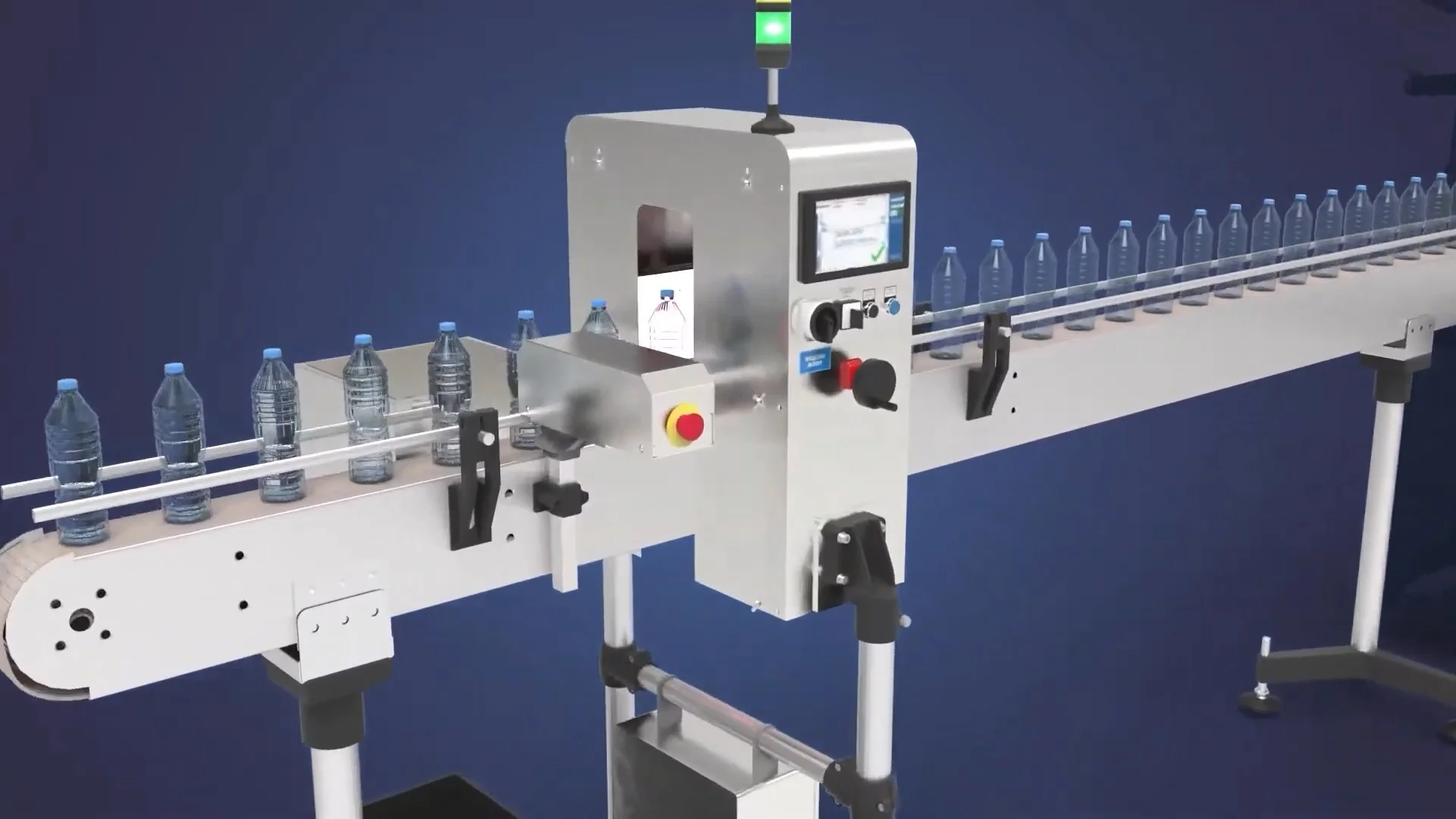
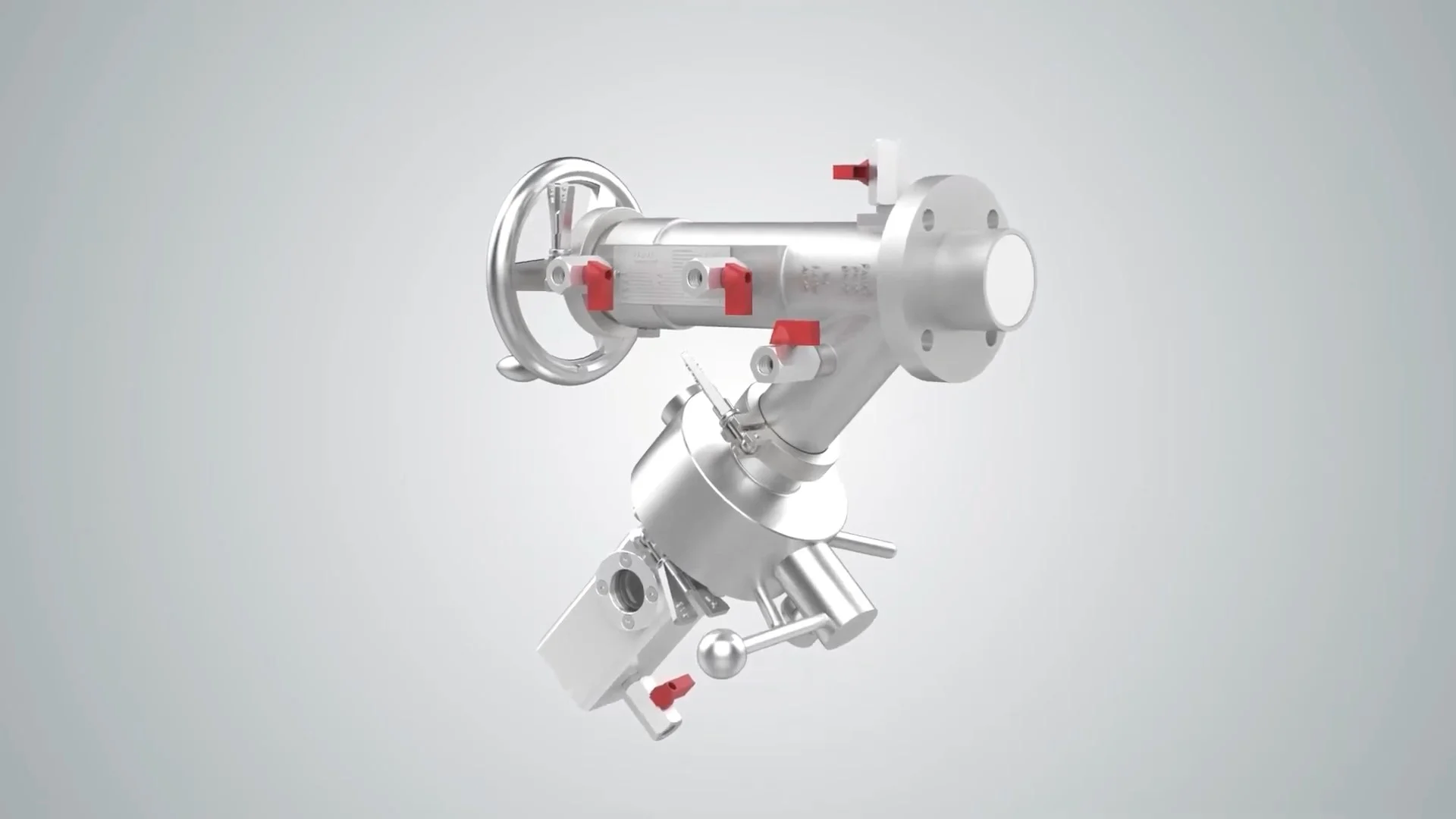
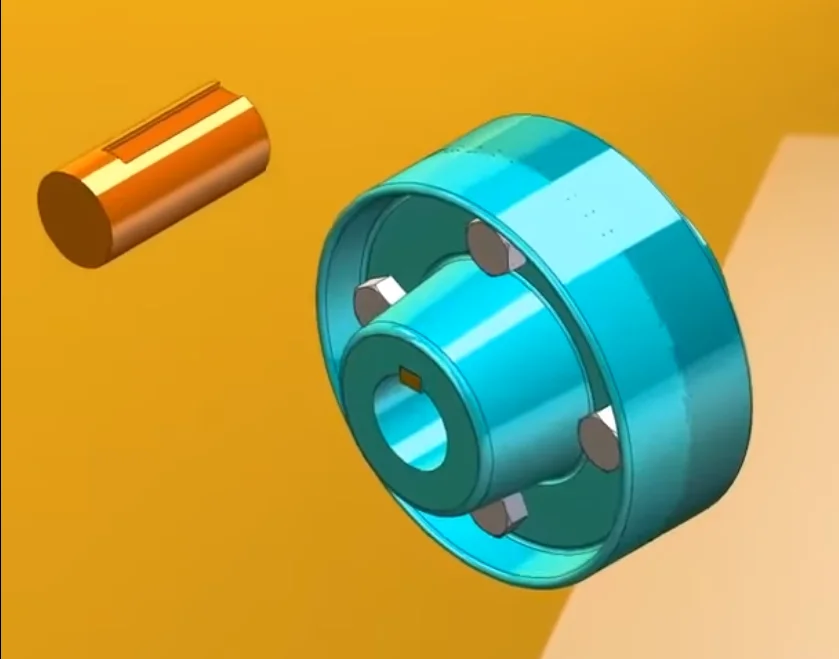
Video instruction formats vary: 3D animation, a training film, or a combination of both. The choice affects training speed and production safety.
| Format | Who It Suits | What It Gives the Client |
|---|---|---|
| 3D animation | Processes that cannot be filmed: aggressive environments, equipment interiors, accidents | Shows danger without risk, focuses on critical details |
| Training film | Real operations on specific equipment | Recognizable imagery, employee trust |
| Combined | Complex instructions: both live context and hidden mechanisms are needed | Clarity of filming + explanation through animation, a unified standard |
Most often, the combined format delivers the maximum effect. Filming provides recognizability, while 3D animation explains what cannot be seen with the naked eye. This is how a unified system of video instructions for working with hazardous substances is built.
We did a project for a chemical enterprise — training staff to work with a new reagent. We produced three combined videos with a total runtime of about 20 minutes.
Within a month, the number of errors during reagent acceptance dropped by half, and introductory briefing time fell by a third. The client sent the videos to two other plants and ordered the next cycle.
Stages of Developing a Video Instruction for Your Enterprise's Specific Needs
Each video instruction development begins with a detailed immersion into your processes — otherwise the video will be beautiful but useless.
We have structured the stages to account for the enterprise's internal regulations, safety standards, and the specifics of working with hazardous substances. As a result, you get a finished product without lengthy revisions or missed deadlines.
- Brief and review of your regulations. We gather information on how the work is actually performed: substance lists, action sequences, occupational safety requirements. We analyze existing instructions to ensure the video fully complies with them.
- Script development. We turn a dry document into an understandable visual sequence: break the process into steps, plan accents for each action. We align the texts with your technologists and safety specialists — edits are made before filming begins.
- Aligning the visual style and approach. We show what the video will look like: presentation options, level of detail, voiceover style. We approve this stage so you can see the result in advance and avoid redoing everything at the finish line.
- Animation production and post-production. We create visuals of dangerous operations that cannot be shown live — work with chemicals, emergency situations. We add explanatory captions, special effects, and voiceover, and place emphasis on critical actions.
- Final review and edits. You review the draft version, mark any inaccuracies — we make corrections and send the final file. At this stage, all comments on content and presentation are resolved.
- Delivery of the completed video instruction. We provide the video in the required formats and resolutions for your training system or video hosting platform. If necessary, we adapt it for employees' tablets and phones.
This sequence ensures you get exactly the video instruction that will work at your enterprise: employees understand it from the first viewing, and regulations are followed without additional reminders.
The entire process takes from two to four weeks depending on the complexity of the scripts and the number of hazardous operations.
What Is Included in the Delivery of a Corporate Video Instruction
You receive not just a finished video, but a complete package that your team can work with independently — review, train new employees, and update materials when regulations change.
Everything we hand over after the project is completed stays with your company forever and requires no technical knowledge on your part.
- Final versions of the video instruction — the main video, plus short versions for quick review (for example, 30–60 seconds) and a version with all the stages for full training. Each is provided in formats convenient for an LMS, internal portal, or slides on the production floor.
- All intermediate versions — you can see how the script and visuals evolved and return to any version if needed. This protects against disputes and allows you to coordinate the final result with lawyers or occupational safety specialists.
- Source materials — open project files from which the video was assembled: graphics, 3D scenes, voiceover as separate tracks. If in a couple of years you want to redo the voiceover or add a new step — this can be done without starting from scratch with us.
- Instructor's guide — a ready-made lesson plan: how to integrate the video into the training program, what questions to ask employees after viewing, how to verify material comprehension. No need to rack your brains over turning the video into a full-fledged course.
- Employee reference card — a short summary of key rules as a single sheet or PDF. The worker keeps it at hand at their workstation and can check it at any time without rewatching the video.
- Knowledge assessment test questions — a set of questions based on the instruction script for quick employee certification. You can integrate them into your distance learning system or conduct an in-person assessment.
- Maintenance agreement — during the warranty period, we make minor edits to the script text or voiceover for free, as long as they do not change the essence of the process. You also receive the contact of a dedicated manager and priority support whenever a question arises about using the materials.
The final package is designed so you do not have to figure anything out on your own. Every element is a ready-made tool for fast and safe training on working with hazardous substances — not a "raw file" sitting on a disk.
Case Study: How We Reduced the Number of Violations at a Chemical Plant
At a chemical plant, mistakes when working with hazardous substances are costly — they mean risks to employee health, fines, and downtime.
We encountered a typical situation: the enterprise had detailed regulations in place, but employees did not read them, and verbal briefings were quickly forgotten. The client — a chemical plant — was looking for a tool that would make training visual and controllable.
We proposed a series of CGI video instructions in which each process of working with a substance is shown step by step: from preparing protective equipment to emergency actions.
The videos model potential mistakes and their consequences, so the employee sees not only the correct algorithm but also what happens if it is violated. The videos were integrated into the distance learning system to track views and verify understanding with short tests.
Six months later, we compared the safety metrics: the number of violations dropped by 40%. Time for introductory briefings was cut in half, and new employees reach independent work several days faster.
Managers note that teams make repetitive mistakes less often — the video instructions serve as a constant visual reminder.
The workshop technologist confirms the effectiveness: "We used to have to explain the same thing several times, especially to newcomers. Now it is enough to send a link to a short video — the person watches, remembers, and works without reminders.
This is the best training format we have ever had." After the success of the pilot project, the company scaled the solution to all workshops and included the video instructions in the mandatory staff training program.
How to Choose the Right Video Instruction Format for Your Budget?
The answer depends on two things: the complexity of the work operations and the training budget. For a short introductory briefing, simple formats will do — screen recording or 2D animation with diagrams.
They are quick to produce and cover basic scenarios like "how to put on protective gear" or "how to act during a leak." But if an employee needs to understand a multi-step process involving a hazardous substance, flat diagrams provide little value — they are hard to translate into real actions.
Complex operations should be shown using CGI video instructions. Three-dimensional visualization allows you to break the process down layer by layer: from the movement of liquid inside equipment to human behavior during an emergency.
The employee sees the consequences of a mistake before it happens in reality. Such a training video pays for itself: one visual aid replaces dozens of hours of personal explanations and reduces the risk of costly errors.
When choosing a format, use three criteria. First — how often you update regulations: the more frequent the updates, the more advantageous a modular CGI instruction is, where an individual block can be easily replaced.
Second — the size of your audience and staff turnover: for a flow of hundreds of people, quality video works more effectively than live lectures.
Third — the criticality of consequences: if the cost of a mistake is people's health and production downtime, saving on clarity is not justified.
The key rule: the training budget is not an expense item but an investment in accident-free operations. Start with a process audit: select one or two of the riskiest scenarios and create a full CGI instruction for them. The rest can be covered with simpler formats. That way you get maximum effect without overpaying.
We help you choose a format for your needs: we analyze processes, propose the optimal solution, and justify where simple animation is enough and where a full three-dimensional model is needed. In the end, you get a video instruction that employees actually watch and understand.
Answers to Frequent Questions About Implementing Video Instructions
Implementing training video instructions for working with hazardous substances usually raises practical questions. Let's cover the main ones — guarantees, timelines, updates, and integration into current employee training. This will help you understand how we work and what you get at each stage.
What guarantees on the result do you provide?
We work under a contract with fixed stages and deadlines. You approve the script before filming begins, and after editing you accept the result — if something is wrong, we refine it at no additional cost.
How long does creating video instructions take?
Timelines depend on the number of instructions and the complexity of the scenes. At the start, we agree on a calendar plan so you know the completion dates. A typical project takes from two to four weeks, including approvals.
How do we update instructions when regulations change?
Regulations change — there is no need to reshoot the entire video. We keep the source materials and quickly make edits to individual scenes: replaced a block, re-recorded the voiceover, updated the graphics. In the end, you receive an up-to-date version in the shortest possible time.
How do we integrate the video into employee training?
We deliver the videos in formats suitable for your distance learning system, internal portal, or in-person briefings. Splitting them into short modules simplifies control: you can see who has watched the material and is ready for certification.
Still have questions? Call or write to us — we will show examples for similar tasks and propose a plan tailored to your specific needs.Get a Cost Estimate for a Video Instruction for Your Enterprise
To order a video instruction on working with hazardous substances, you do not need to dive into technical details.
Simply leave a request — we will prepare a cost and timeline estimate for your enterprise, taking into account current regulations and occupational safety requirements.
The estimate covers all stages of creating a professional video instruction — from script to final editing. No hidden payments: you know the budget in advance and can approve the work plan.
How the work is structured:
- We analyze your task, regulations, and specifics of working with hazardous substances.
- We develop a script and storyboard so that every step is clear to the employee.
- We align the visual style and details of the future video.
- We create CGI models and animation of technological processes.
- We assemble the material: editing, voiceover, subtitles, and adaptation for different screens.
- We deliver the finished video instruction and help integrate it into the training program.
Leave a request for a cost estimate — we will send it within one business day along with indicative timelines.
When you place an order, you also receive bonuses: a checklist for verifying employee knowledge and a consultation on integrating video instructions into the occupational safety training system.