

Why do employees repeat errors during equipment depressurization?
Employees repeat errors during equipment depressurization not because they don't want to work correctly, but because standard safety briefings do not build a lasting skill.
Posters, text regulations, and lectures provide theory, but in a real, stressful situation a person acts from memory—and that memory does not store the required sequence.
As a result, the same violation appears across different shifts, and the risk of an industrial accident only grows.
The human factor is the cause of most incidents involving depressurization. An operator skips a step, mixes up the order of actions, fails to recognize the first signs of deviation—and the pressure system goes out of control.
The consequences are not just injuries and equipment damage, but also workshop shutdowns, missed deadlines, and reputational losses. In such conditions, staff training becomes not a matter of “a checkbox in the logbook,” but of real business protection.
The problem is that classic training formats do not let an employee experience the scenario. When a person sees only text or a diagram, the “condition—action—result” connection is not formed.
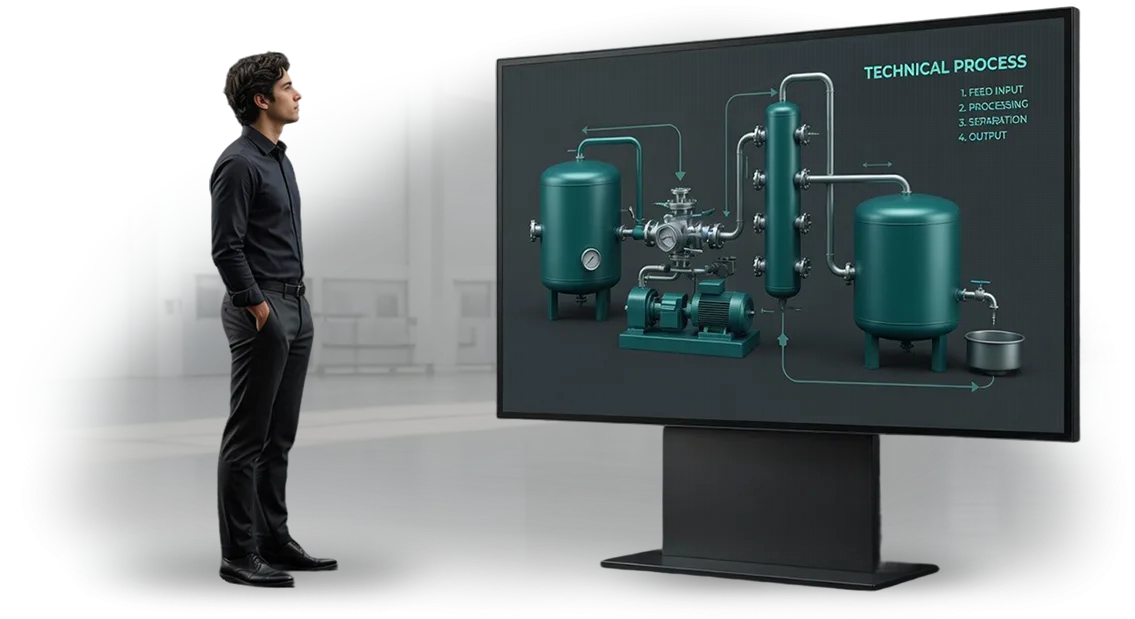
Video instructions solve this task: they show equipment depressurization in motion, with the correct sequence of steps and an emphasis on critical points.
The employee sees the consequences of an error and internalizes the algorithm through a visual image that, at the right moment, works like a prompt.
We address this need through professional development of training videos. Each scenario is built on real work situations, with typical mistakes and safe practices examined.
Employees receive a visual aid they can review as many times as needed, and you get a reduced accident rate and confidence that your staff is ready for an abnormal situation.
What results does a company get from video instructions
A typical occupational safety briefing is text that employees skim and forget. Video instructions turn training into a visual scenario: a person sees how equipment behaves during depressurization and remembers the correct actions until they become automatic. For a company, this means measurable changes in staff performance.
Results you get:
-
Reduced accident rate. Employees who have seen an emergency scenario in a video act more calmly and accurately in a real situation. Video briefing allows practicing actions during equipment depressurization without risk to people or machinery.
-
Faster training. A new employee learns the material two to three times faster than from text regulations. A visual video is clear to anyone, requires no repeated explanations, and shortens the time to full proficiency.
-
Unified safety standards. The video sets a single standard of correct actions for all personnel. There is no longer any need to rely on different interpretations of instructions or the personal experience of mentors—everyone works according to the same scheme.
-
Confirmed evidence of training. After viewing, records remain of who studied the material and when. This resolves inspection concerns and proves that employees actually know the safety requirements.
We develop video instructions based on your regulations and real equipment operation scenarios. You get material that employees watch to the end instead of closing after the first frame. Tell us about your task—we'll recommend which format will deliver results faster.
Formats of video instructions for different tasks
The same equipment depressurization scenario can be presented in different ways: short for an initial briefing, detailed for the analysis of an accident, or as a course with a knowledge check.
If the wrong format is chosen, employees either do not get the necessary depth or drown in unnecessary detail and lose attention.
We do not simply make “a video”—we select a format for a specific training task. This allows one project to cover several scenarios at once, from a quick introduction to the rules to content mastery control.
Formats for different tasks
| Format | For whom | What it gives the client |
|---|---|---|
| Short briefing video | New employees, operators before a shift | Quick introduction to key rules, reduces the risk of mistakes in the first days |
| Detailed accident review | Engineers, maintenance crews | Understanding causes and consequences, practicing the correct sequence of actions |
| Training course with knowledge check | All staff, HR and training department | Unified training standard, automatic assessment and qualification confirmation |
Short videos of 1–2 minutes can be easily integrated into regular briefings: they do not take much time and are easier to absorb than a text instruction.
A detailed accident review with a simulation of equipment depressurization helps employees see how events unfold and remember the action algorithm at the level of a ready-made reflex rather than an abstract rule.
A full course combines all scenarios and adds tests and verification elements.
You can see which employees have completed the training and where gaps remain—this removes a manager’s main fear: “what if staff formally reported completion but did not understand the material.” All formats are built on a common foundation, so they can be combined and updated as regulations change.
Stages of creating a video instruction on equipment depressurization
Developing a video instruction on equipment depressurization is not just “shooting a video,” but a structured process in which each stage reduces the risk of employee errors.
We have gone through dozens of such projects and refined a route that is clear to all participants: you don’t need to explain anything twice, and personnel remember the sequence of actions faster. Here is how it works.
-
Brief and task analysis. We study your equipment, regulations, and typical emergency scenarios. We get a complete picture of employee working conditions so the instruction solves your specific task, not an abstract “depressurization problem.”
-
Script and storyboard. We turn the instruction into a short narrative: actions, close-ups, prompts. You see the text and frames before filming and approve them—so the result matches expectations from the start.
-
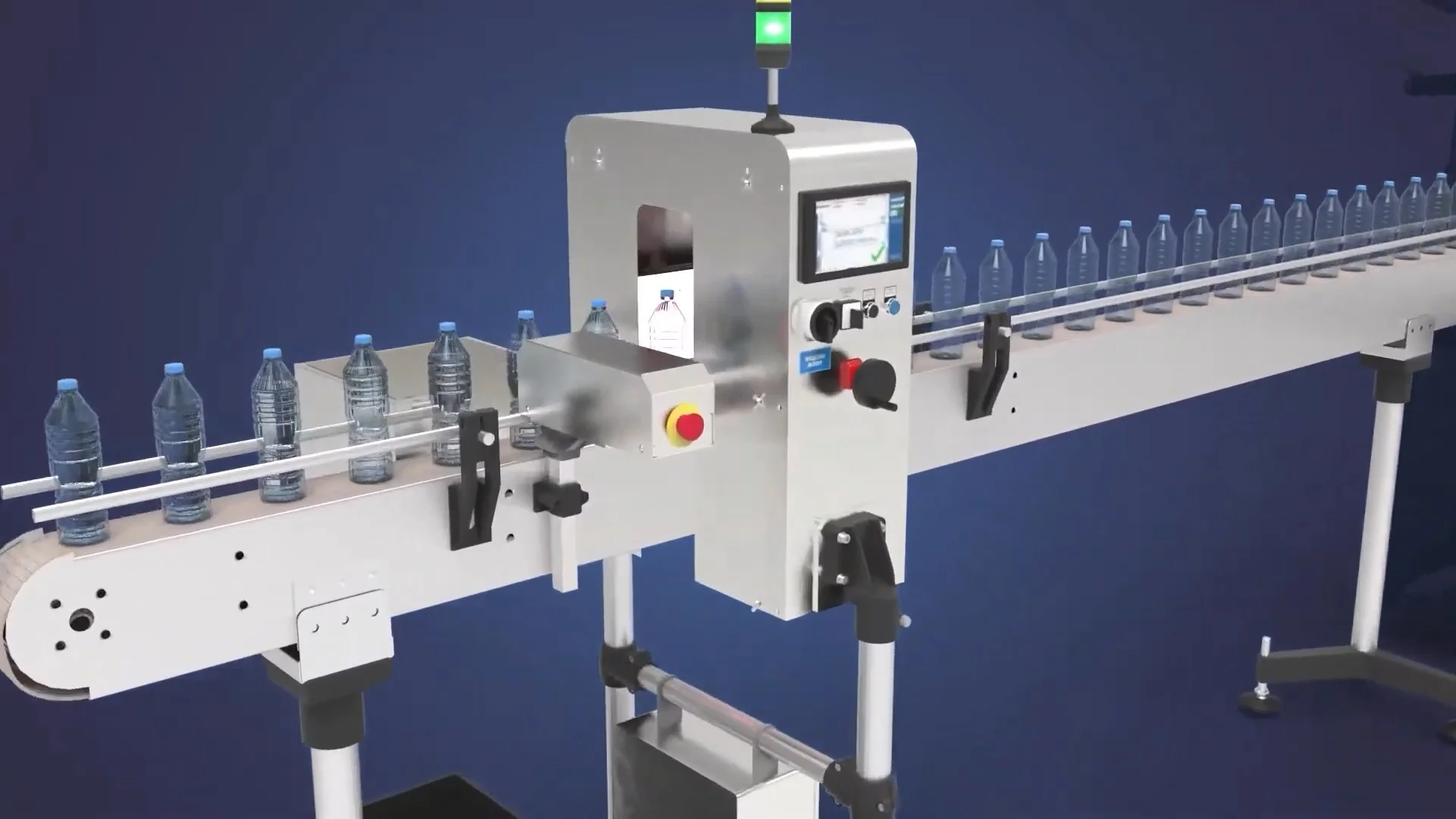
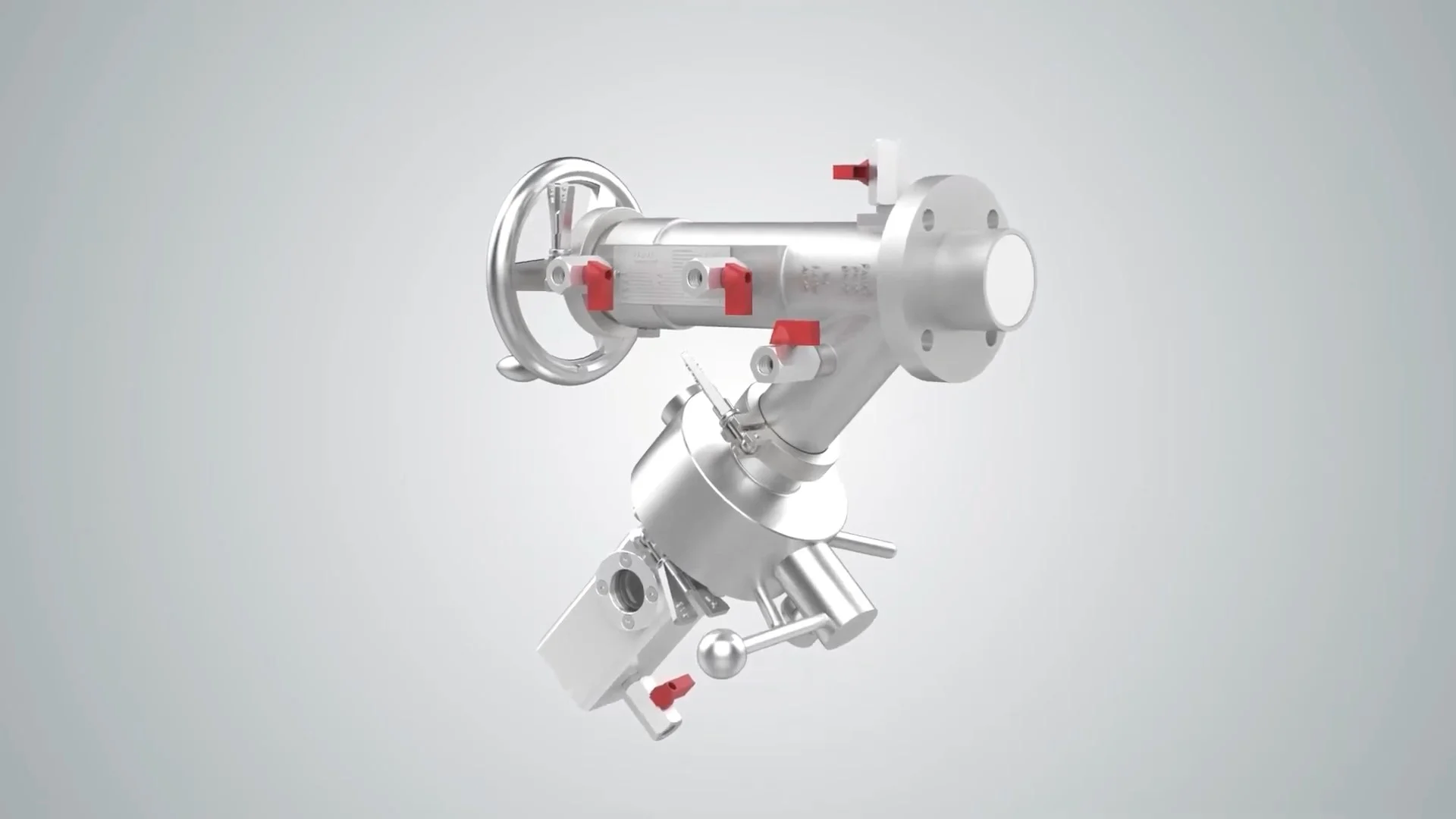
Choosing a format: filming or 3D graphics. If the equipment is in a hazardous zone or the process is difficult to show on video, we create a realistic depressurization simulation. In any case, the employee clearly and safely sees the sequence of actions.
-
Video production. We assemble the video with voice-over narration and text explanations. The material looks equally good on any screen, from a laptop to a tablet on the shop floor.
-
Approval and revisions. We show intermediate versions, receive comments, and make changes. No surprises at the final stage: you control the process at every decision point.
-
Training launch. We deliver the files in the required format and, if necessary, set up access through your corporate learning management system. Employees receive the instruction in a convenient form, and you get confirmation that the material has been studied.
-
Support and updates. If regulations or equipment change, we quickly update the video. Version history is preserved, so you are always confident that your team is learning from the current instruction.
What is included in the delivery of a video instruction
You receive not just a set of files, but a ready-to-implement delivery package that covers everything: from final videos to internal instructions. This removes routine work from your team and allows you to start employee training immediately after the materials are handed over.
- Ready-made videos—final versions of the instructions in formats that play on any workstation, from a training materials library to an internal portal. You won’t have to re-encode or adapt files—we deliver a verified image.
- Scripts and shot-by-shot plans—documentation for approval and future edits. If the regulation changes in a year, you will easily identify which episode needs replacement and can quickly brief a contractor.
- Training implementation procedure—a step-by-step plan describing how to integrate the video instructions into your current training system: when to show them, who to assign, how to check comprehension. It saves the methodologist time and eliminates the “where do we start” question.
- Employee reference card—a short version of the instruction in text form or as a cheat sheet. It can be printed, posted at the workplace, or included in the operational regulation. An employee always has a prompt without needing to rewatch the video.
- Mentor's guide—materials that help a line manager or experienced employee conduct a brief review after viewing: key mistakes, a control checklist, typical newcomer questions. This ensures training does not remain formal but is reinforced in practice.
- Final work completion report—an acceptance certificate with the list of materials, closing the project from a documentation standpoint and confirming that you have received the full package.
We assemble the entire delivery package to fit your internal document flow—you do not spend time adapting materials to your standards.
Just tell us which formats and storage channels you use, and by project delivery you will receive a folder with finished files, instructions, and procedures. This lets your team launch training within a few business days without waiting for additional calls or clarifications.
Case study: how video instructions reduced the number of accidents
The numbers the production director saw
For a manufacturing company, we created a series of video instructions on equipment depressurization.
Previously, training was done with paper regulations—employees formally signed off but in practice skipped critical steps: they did not bleed pressure, did not check indicators, and violated the order of operations.
After the video course was introduced, the pattern of violations changed within two quarters.
According to the internal audit, the number of recorded errors when working with equipment fell by 43%, the number of emergency shutdowns dropped by a third, and the time for new employee onboarding briefings shrank from two days to four hours. The company continued to use the video instructions in annual recertification.
What the chief engineer said
The production manager noted: “Previously we relied on the experience of senior workers, but newcomers still made the same mistakes. The video analysis shows every step—it became clear exactly where a person loses control of the process.
A month after launch, we noticed that shifts began to verbally walk through the sequence of actions before starting work.”
For us, this is the main indicator: employees did not just watch the video, they changed habits. Video instructions work as a single standard—equally clear to experienced personnel and newcomers—so the risk of the human factor decreases across the entire equipment line.
How to choose the right video instruction format?
The choice of a video instruction format depends not on fashion, but on three parameters: the number of employees who need training, the complexity of operations during equipment depressurization, and the project budget.
There is no universal solution, but there are proven options that cover the task under any combination of these conditions.
| Format | For whom | What it gives the client |
|---|---|---|
| Basic animated video | Mass staff training | Unified standard of actions during depressurization, fast training launch |
| Detailed 3D simulation | Operators and maintenance personnel | Practicing complex scenarios without risk, clarity of every step |
| Interactive video course | Mixed teams | Knowledge check after viewing and repetition of key actions |
The table shows three typical scenarios. For mass training, a basic video works; for hazardous operations, a detailed simulation; for a mixed group, an interactive format. We help you choose, then adapt the scenario to the specific equipment depressurization instruction.
Whatever the format, you get a video that employees watch to the end and remember the algorithm. And we handle production from brief to final file so you don’t have to get distracted by technical details.
If you are unsure which format is right, send us a description of your task. Within 1–2 days we will propose an option for your conditions and show examples of similar projects.
Frequently asked questions about creating video instructions
Any responsible manager ordering a video instruction wants to understand timelines, cost, and how the video will fit into existing processes. Below are short answers to questions about production time, the cost of a video instruction, client equipment, and updating videos. If your question isn’t listed, call us—we will discuss your case in detail.
How long does it take to create a video instruction?
Production time depends on the complexity of the scenario. On average, an instruction is ready in 2–3 weeks: we approve the script, visualize the stages, and do the editing. If the source materials are ready, we can meet a 5-business-day deadline.
How much does developing a video instruction cost?
The cost depends on the volume of content and the level of scene detail. We prepare the cost calculation after the brief and fix it in the contract—the price does not change during the work. You pay exactly what was discussed at the start.
Do we need to provide your equipment?
No, we work with our own professional equipment. A description of the process, photos, or diagrams are enough. If necessary, we visit your site to capture real details.
How do we update videos after changes?
At the development stage, we build in the possibility of edits: you receive the source project. When a regulation changes, you send us the updates—we quickly modify the relevant scenes. This is cheaper than completely re-shooting the video.
Get a video instruction plan for your production
Submit a request—and we will prepare a video instruction plan for your production without unnecessary introductions.
You describe the operation you need to cover (for example, the sequence of actions during equipment depressurization), and we propose the video structure, format, and timeline estimate.
In the plan, you will see specific steps:
- analysis of the task, employee audience, and current safety regulations;
- format selection: animation, live action, or CGI simulation of equipment depressurization;
- video structure: introduction, process demonstration, typical mistakes, control questions;
- timing and an approximate script for each block;
- production timeline estimate based on your launch schedule;
- a list of materials we need from you and a convenient way to provide them.
This way, you understand what you will get and when even before the start. For industrial companies, this is especially important: the instruction must not just introduce theory, but form correct actions in emergency situations.
We work remotely, so we will send the plan within a couple of business days after the brief. Over 10+ years, our team has produced hundreds of training videos—from short reference videos to full courses on safe operation in manufacturing.
Fill out the form—we’ll discuss your task and calculate the video production timeline. ---