

The Risk of Choking in the Workplace: How to Train Without Risk to Life
Choking is one of the most critical risks in manufacturing. It occurs when working with equipment, bulk materials, packaging, or in confined spaces.
In an emergency, employees act on instinct rather than instructions: they freeze, fail to raise the alarm in time, or cannot provide assistance. The cost of that delay is a person's health and life — and for the company, serious consequences.
A choking accident is not just an injury — it also brings fines, production stoppages, investigations, and reputational damage. Even a single incident costs more than any prevention.
Traditional induction — a lecture, posters, a signature in the logbook — does not create a ready action plan. When the airway is blocked, the employee must react instantly, not try to recall a manual.
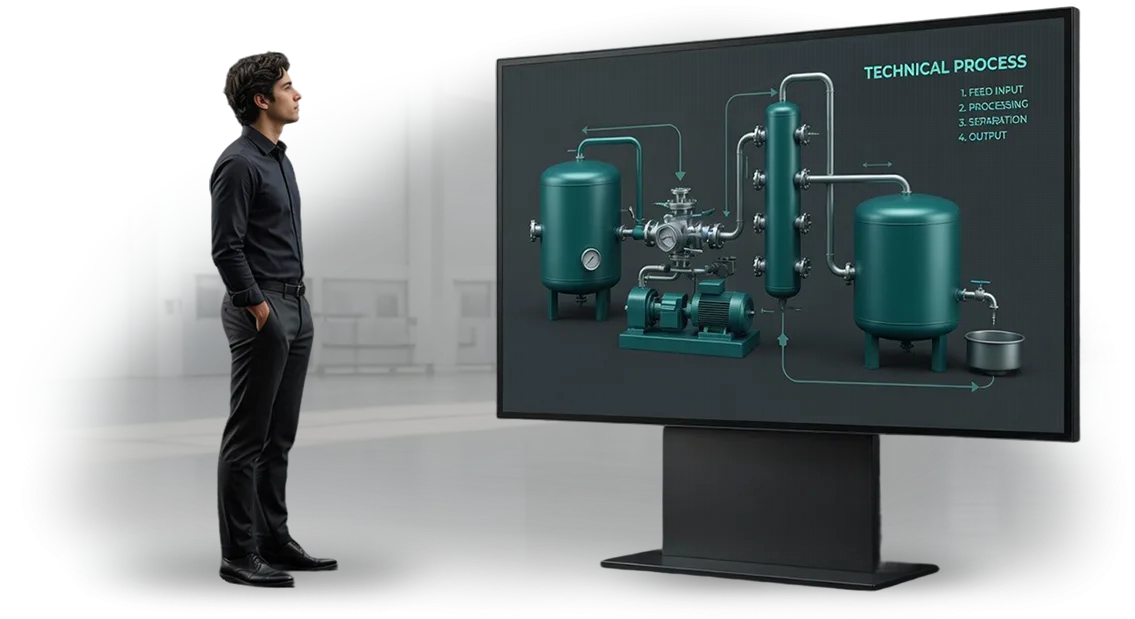
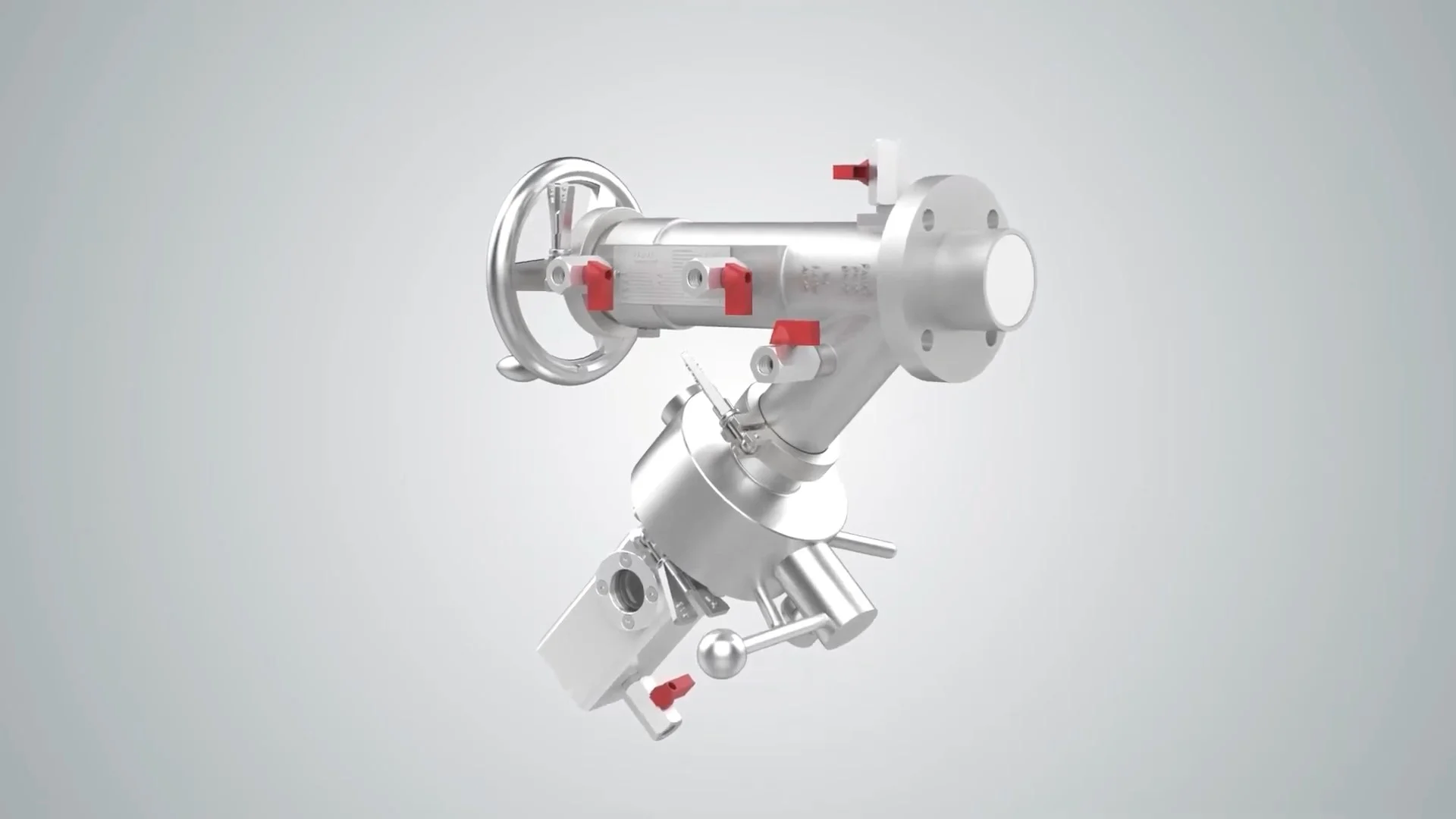
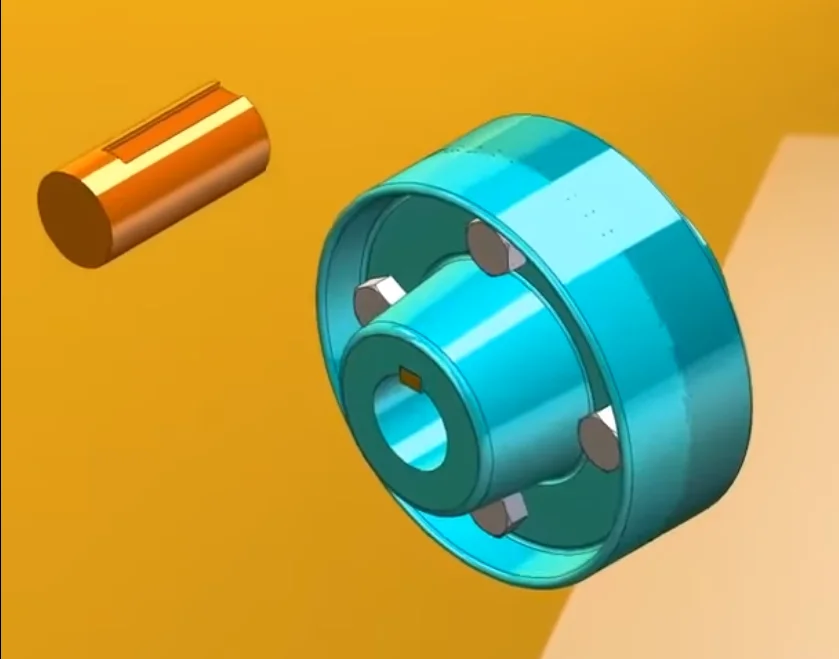
Video-based training with choking simulation solves this problem. We create realistic scenarios that show the actions of both the affected person and those nearby: how to clear the airway, how to call for help, how to provide first aid before medical professionals arrive. This training happens without risk to life — employees see the correct sequence and remember it.
The video can be rewatched, played at team meetings, and used during onboarding. Employees see their own work area, their own tools, and a clear procedure. This is workplace safety in practice, not just on paper. Regular video-based training helps reinforce the skill and prevent choking in a real situation.
We develop corporate video-based training tailored to your processes and equipment. You receive a ready-made tool that reduces the risk of choking in the workplace, saves training time, and protects the company from downtime and fines. Tell us about your task — we'll select a scenario for your specific needs.
What a Ready-Made Safety Video Instruction Gives a Company
Fast Retention of Correct Actions
Employees better understand what to do in a choking situation when they see a clear scenario. A video instruction shows the procedure from start to finish, so the sequence stays in memory rather than a set of disconnected points.
Corporate training becomes more effective: a second viewing reinforces the skill without taking employees away from the workplace.
Staff Engagement
Ordinary occupational safety inductions are perceived as a formality. An educational video with a realistic simulation holds attention and triggers an emotional response.
Employees rewatch the material before shifts themselves, and HR gains a reason to discuss safety at team meetings. This engagement reduces resistance to training and improves attendance at safety sessions.
Measurable Results
After implementing a video instruction, you can compare test results before and after. Management can see how many people absorbed the material and where additional reviews are needed. It becomes possible to track each employee's training progress.
This turns occupational safety from an abstract obligation into a manageable process with clear metrics.
Reduced Injury Risks
When employees have memorized the correct actions, the likelihood of error in a real situation drops. That means fewer accidents, less downtime, and fewer insurance payouts. The investment in a training video pays off through team safety and stable enterprise operations. The client gains peace of mind for the workforce and protection from reputational risks.
CGI Video Instruction Formats: From Choking Simulation to a Full Course
Most workplace incidents happen not because instructions are missing, but because employees react incorrectly at the critical moment. According to the Ministry of Labor, people act impulsively in stressful situations, and standard text or slides don't "kick in" in time.
That is why training videos with CGI animation and simulation of dangerous situations show employees not only the sequence of actions but also the consequences of a mistake.
We select the format to fit your task: from a short demonstration to a full course with skill practice. The table below will help you navigate and choose what your team actually needs.
Formats We Develop
| Format | For whom | What it gives the client |
|---|---|---|
| Short CGI video (1–2 minutes) | For quick inductions and reminders | Clearly shows how to recognize choking and what to do in the first seconds. Convenient for team meetings and before a shift begins. |
| Series of 5–7 training videos | For regular training and onboarding | Builds a solid action routine and helps newcomers get up to speed faster. Each video covers a separate scenario. |
| Full course with simulation of dangerous situations | For practicing skills to the point of automation | Lets employees "experience" a critical situation without risk and reinforce the correct reaction. Suitable for annual certification. |
Video instruction formats can be easily combined: a short video can be used as a teaser for the full course, and a series can be embedded into annual training. In any case, you get video material that employees actually watch and remember.
How Video Instruction Development Works: 6 Steps for the Client
Developing a training video is a project where content, clarity, and accuracy must come together. We broke the process into 6 steps so you can see how the work progresses and influence the outcome without wasting time. All approvals, script, animation, and editing — we handle that.
- Brief and task analysis. You tell us about regulations, typical mistakes, and challenges; we propose the scenario and video structure.
- Script and storyboard. We describe every shot and the voiceover; for choking simulation — a safe demonstration of actions with no risk to employees. You approve the text before animation begins.
- Layout approval. We show the style, characters, and graphics. At this stage, it's easy to change colors, design, and presentation — without redoing finished animation.
- Draft animation. You see how characters move and how clear the sequence of actions is. We make adjustments to pacing and emphasis.
- Final animation and editing. We add subtitles, explanations, and the narrator's voice. We assemble the video into a single piece and verify it against your regulations.
- Delivery of the finished video course. You receive files for your LMS, corporate portal, or other channel — in the required format and resolution.
The process usually takes 3–4 weeks, but urgent scenarios can be done faster. After launch, we don't disappear: if regulations change or a new version is needed, we quickly update the video.
What's Included in Delivery: A Complete Training Package
You don't get just a video — you get a complete training package. All materials integrate into your distance learning system and instructor-led sessions — employees start acting correctly from day one, and you don't need to develop anything yourself.
- Script and methodical instructor guide — a detailed lesson plan using the video instruction: how to embed the video into training, what points to highlight, how to answer employees' questions.
- Video instruction in multiple formats — the main choking simulation video for the LMS and a shortened version for in-person screen presentations. Adapted for any equipment without losing quality.
- Employee reminder card — a short one-page action guide: print and hand out after training so knowledge stays accessible at all times.
- Test questions for knowledge assessment — a ready-made LMS block with questions on the first-aid choking algorithm. Allows you to objectively assess each employee and meet certification requirements.
- Guide for managers — recommendations on how to train the team without an external trainer, how to reinforce the skill, and how to track that employees apply it in practice.
- LMS-ready files — a ready-made course in a format compatible with most learning management systems. Upload it, assign it to employees, and get completion statistics without extra configuration.
- Update instructions — if first-aid standards change, you can quickly adapt the materials yourself or order an update from us.
The entire package is delivered as a single archive with a clear folder structure. No technical hassle: receive it, upload it into the system, and start using it — from delivery to training launch takes no more than one working day.
Case Study: How a Manufacturing Company Reduced Injuries
Ural Industrial Equipment Plant — a company with 600 employees, where most operations involve dangerous machinery and conveyors.
Despite regular inductions, new workers often confused the sequence of actions: they forgot to secure workpieces, ignored lockouts, and stopped the belt incorrectly. Each such mistake was a direct risk of injury, production stoppage, and extra compensation costs.
Management ordered from us a series of corporate video instructions with realistic 3D simulation of dangerous situations.
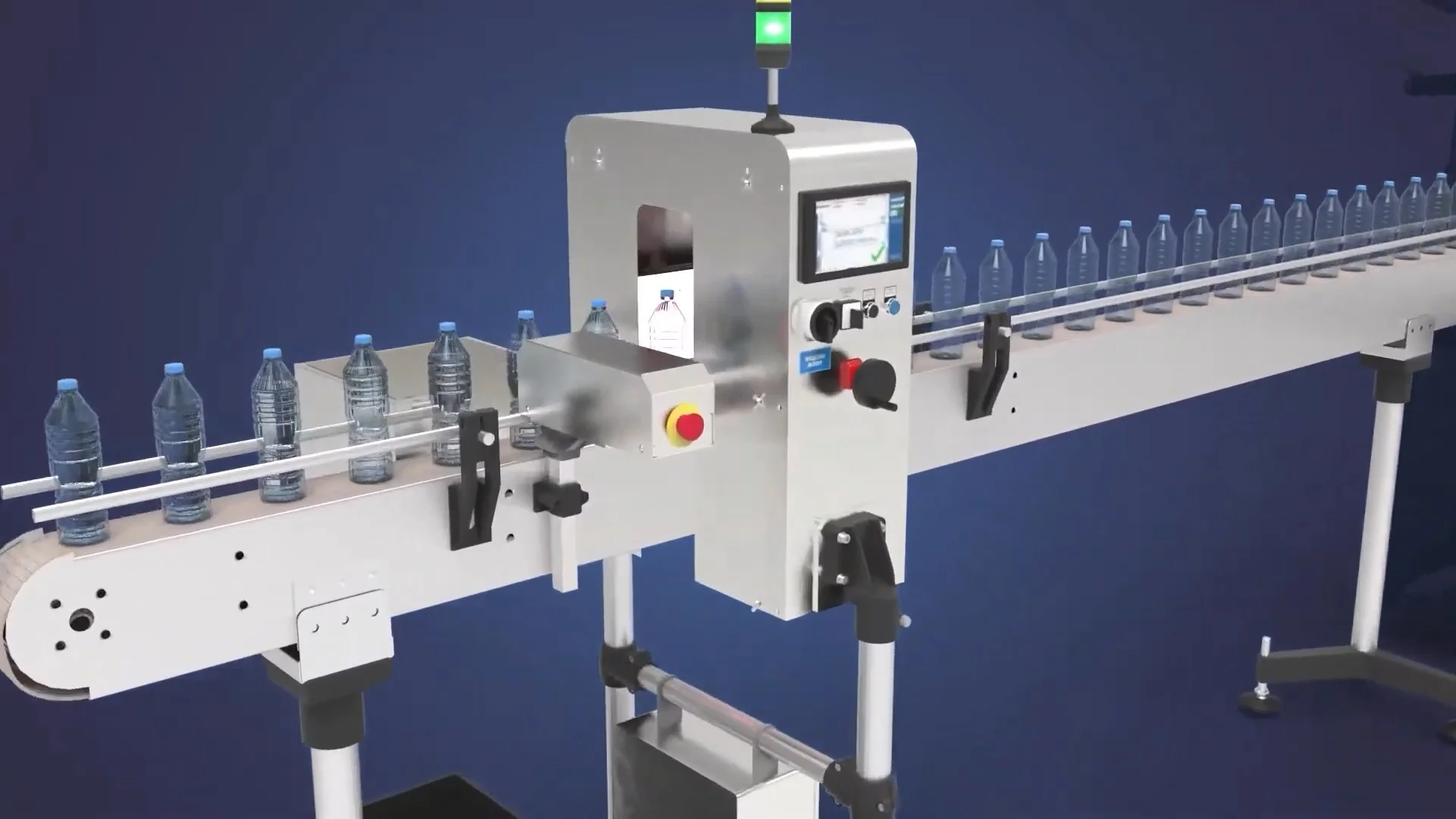
A separate video was dedicated to the choking scenario on a belt conveyor: it showed what happens when regulations are violated and how the emergency stop responds in time. Employees saw the process through the operator's eyes, not as dry bullet points in a manual.
That changed the approach to training — instead of reading material, people started remembering actions.
The result was quick to arrive: within a quarter, the number of errors when working with dangerous equipment fell by 40%, and micro-injuries in the shop became rare.
Newcomer onboarding speed doubled, and staff turnover during the probation period noticeably decreased — the video instructions helped employees gain confidence faster.
A repeat order followed soon: the plant added the videos to its mandatory onboarding program and ordered additional series for other workshops.
This case clearly shows: occupational safety in manufacturing stops being a formality when instructions speak the language of visual images.
Video with hazard simulation works better than any text — it creates an emotional imprint and reinforces the correct routine at the level of muscle memory.
For business, this means not only fewer injuries but also stable production lines, less downtime, and predictable personnel costs.
How to Choose a Video Instruction Format for Your Budget and Deadlines?
Format choice comes down to two questions: what result you need as early as tomorrow and how many employees need training. If it's one critical skill — for example, correct actions during choking — a short 2–3 minute video solves the task fastest.
It requires a minimal budget and fits any deadline: shoot, edit, and deliver to the training system within a couple of weeks. This format addresses a specific problem and gives employees a shared baseline without lengthy lectures.
When you need ongoing training and practice of different scenarios, choose a series of video instructions. One scenario per video: first aid for choking, actions for partial airway obstruction, specifics of working with different equipment.
The series allows you to build materials gradually and doesn't require a large budget upfront — you can release one video per month and implement it into training right away.
This is convenient when processes change: each instruction is updated individually rather than the entire course.
A full course makes sense when training needs to scale across branches or multiple departments. It's a single program made of blocks: theory, demonstration, skill practice, knowledge assessment.
Yes, this format requires more production time and a larger budget, but you get a standard that works consistently across all locations. No need to re-explain every time — all employees go through the same program, and you can see who has mastered the material.
The practical rule is simple: if the deadline is urgent — take a short video; if you want to build a system — a series of scenarios; if you need a unified standard for all branches — a full course.
At a consultation, we'll show examples and calculate exact video production timelines for your budget, so you don't overpay for what you don't need or wait longer than necessary.
Frequently Asked Questions About Developing Safety Video Instructions
Clients come with concerns: "What if we don't make it before certification?" or "What if there's a mistake in the finished video?" We understand: the video instruction determines how well employees absorb safety rules. So we answer common questions directly — no fine print, no hidden conditions.
How long does video instruction development take?
Usually three to six weeks, depending on the scenario and the number of scenes. For a typical instruction, we fit into a month; for a video with detailed simulation of a dangerous situation (for example, demonstrating actions during choking) — up to a month and a half.
We set deadlines in the contract and send a progress report every week. If the internal training date is urgent, we offer an accelerated schedule with shortened approval stages.
What if the video needs edits after delivery?
Two full rounds of revisions are included in the price. Send your comments on the script, storyboard, or draft edit — we implement them without extra charges or lengthy approvals.
If edits come in after the final version, we also take them on: we fix, reassemble the video, and send the updated file. You always keep a working version for training.
How do I update the instruction when regulations change?
We keep the project source files, so edits are made quickly. Rules changed — write to us, we adjust the relevant scenes, re-record the voiceover, and deliver the current version.
An update takes far less time than filming from scratch, and you pay only for the actual changes. No need to search for new contractors or review the entire video.
We also prepare a "video instruction passport" with change versions and dates — convenient for internal audits and for regulatory authorities.Order a Video Instruction That Really Protects Employees
An employee who knows what to do during choking is not just a trained person — it's a saved life and protection of the business from reputational and legal consequences.
A video instruction works at the most critical moment: it shows the exact sequence of actions with no ambiguity and no unnecessary words.
We have been creating training video instructions for over 10 years, including realistic choking simulations.
We shoot videos on professional equipment and refine them to the level where an employee only needs to watch the video once to confidently repeat the procedure in practice.
Leave a request — and within one working day we'll send a commercial proposal with the development cost, examples of employee training work, and format recommendations for your task. No obligations: you get concrete details that make it clear exactly how we solve your problem.
What You Get When You Order a Video Instruction
- A precisely written choking response scenario — no ambiguities, no "play it by ear."
- A realistic simulation that earns employee trust and is remembered better than text or diagrams.
- Adaptation to your industry: manufacturing, office, food service, logistics — procedures for your conditions.
- Ready-made material for initial induction and regular training — employee training doesn't depend on a lecturer.
- Company protection: documented proof that personnel were trained under the correct methodology.
- Implementation support and video updates when internal regulations change.
Order a video instruction today — and soon you'll have a video that really protects employees. Write to us, we'll discuss the task and offer a solution that fits your budget and deadlines.