


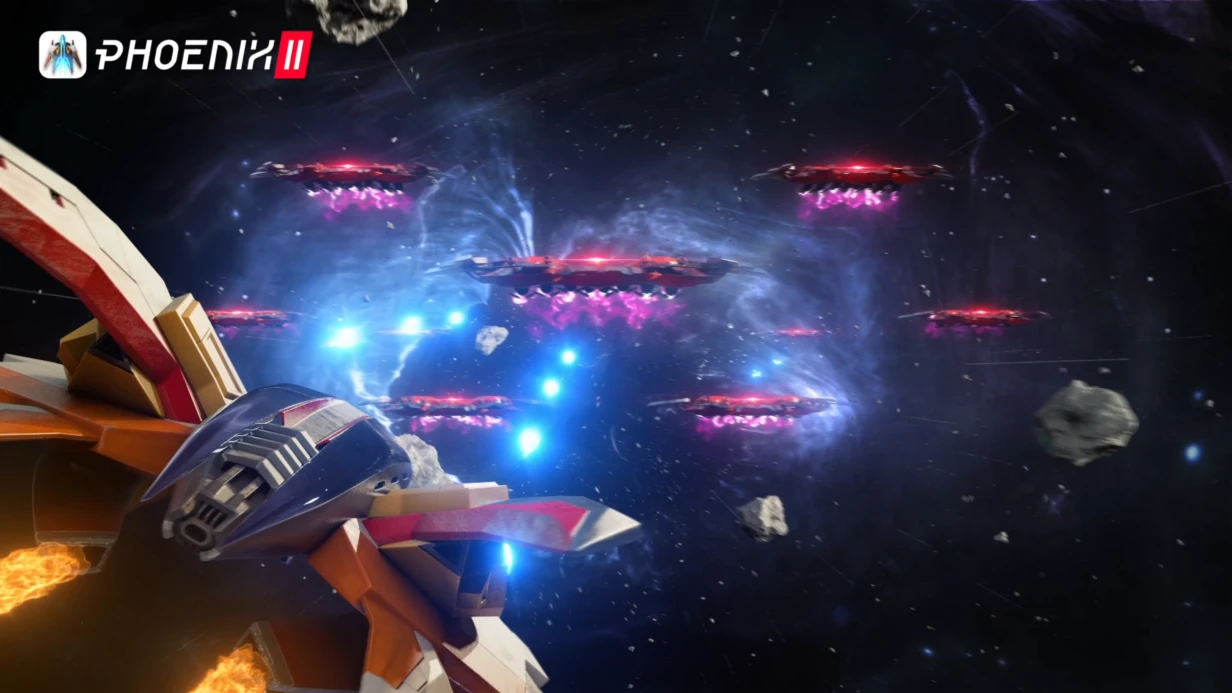

A platform that blends into the background—the player misses the jump. Green spikes instead of red—the player steps on them and is surprised. These are not control errors; they are architecture errors of the 2D location. We design architecture so that visuals and gameplay work as a single mechanism. Our experience: 5 years in game development, over 30 projects. We guarantee compatibility with Unity 2022 LTS and Unreal Engine 5. Every location passes QA for readability and colliders.
Effective 2D location design requires careful planning. 2D location architecture is about designing the space where gameplay will occur: where colliders are placed, how depth layers (parallax) are arranged, how tiles join without artifacts, and how the player reads movement direction and danger zones without additional hints. Let's break down key aspects using examples from real projects. In this article, we'll examine layering, tilemap, and readability through specific cases from mobile and PC games. You'll learn how to avoid common mistakes and speed up development. We also focus on 2D level architecture to ensure gameplay flow.
Proper Layering for a 2D Location
A modern 2D location consists of many rendering layers. In Unity, these are Sorting Layers + Order in Layer; in Godot, CanvasLayer with z-indices. A typical structure:
- Background (BG): static sky, distant mountains—minimal parallax or static
- Far Parallax: slowly moving distant objects (0.2–0.4× camera speed)
- Mid Parallax: midground (0.6–0.7×)
- World Layer: gameplay space—platforms, floor, walls with colliders
- Character Layer: characters, NPCs, enemies
- Foreground: decorations in front of the character (0 parallax or 1.1–1.3× for reverse effect)
- UI: interface above everything
A common error in layer order: the character renders behind foreground trees when it should be in front. This is fixed in 30 seconds in settings, but is often only discovered during final level testing. Unity layering must be set correctly.
Avoiding Artifacts at Tile Seams
For tilemap locations, the key is tile connection rules. Unity Rule Tile automatically selects the correct tile based on the presence of neighboring tiles of the same type. A properly configured Rule Tile eliminates visual artifacts at seams—inner corners, transitions between surface types. Rule Tile works 3–5 times faster than manual tile placement.
A frequent problem: tiles are drawn with incorrect dimensions. A base tile of 16×16 px at scale 1.0 should give exactly 1 unit in Unity (if 16 PPU—pixels per unit). Mixing tiles with different PPU in the same scene causes "floating" objects—they don't align visually.
Collision tiles vs visual tiles. In complex locations, colliders should not exactly match visual tiles. Grass on top of a platform is a visual element; the collider runs along the bottom edge of the grass layer, not the top. This gives the feeling that the character stands "on the grass" instead of "on a box." TilemapCollider2D + CompositeCollider2D combine tile colliders into one mesh—important for performance with many tiles.
Why Location Readability Is Critical for Gameplay
The player should understand within 1–2 seconds where they can go, what is dangerous, and where to move next. This is a location architecture task, not UI.
Silhouette rule. Platforms are read as separate objects through contrast silhouette. Dark platforms on a light background, or light on dark—but not identical brightness. If a platform blends into the background, the player misses jumps—not due to imprecise controls, but visual confusion.
Color code for hazards. Spikes—warm colors (red, orange). Acid—green. Lava—red-orange. Electric traps—yellow/blue. This is a genre convention, and breaking it without a clear reason is a mistake. Players know these rules from other games.
Guiding lines. Parallax layers, lighting, and object placement create "sight lines" that guide the player. A coin trail leads to a bonus zone. Brighter lighting at the end of a corridor indicates the goal. This is an architectural solution, not a UI element. Visual navigation is enhanced by these guiding lines.
Workflow Steps
Work Structure for a Location
- Reference and mood board—analogues from genre games + unique style elements.
- Blockout—rough geometry layout with colliders, gameplay test. No final art.
- Layer scheme—define number and type of layers, parallax coefficients.
- Tileset design—tiles considering Rule Tile rules, PPU, sizes.
- Art pass—final graphics, lighting, atmospheric effects.
- Polish—animated elements (grass, water), particle effects, ambient sounds.
- QA—test colliders, test readability on different screen resolutions.
Typical Mistakes During Blocking
- Forgetting to set correct layer sorting—rendering artifacts.
- Using one PPU for all tiles but importing sprites with different resolutions—objects "float."
- Not leaving a gap between colliders for smooth movement—character gets stuck at seams.
Tile Resolution Comparison
| Tile size (px) | PPU | Size in units | Application |
|---|---|---|---|
| 16×16 | 16 | 1×1 | Retro, pixel art |
| 32×32 | 32 | 1×1 | Mobile 2D |
| 64×64 | 64 | 1×1 | HD-oriented games |
| Location scale | Timeline |
|---|---|
| One screen (tilemap, 3–4 layers) | 3–7 days |
| Multi-screen location (scrolling, 6–8 layers) | 2–4 weeks |
| Biome/thematic set (tileset + several locations) | 4–8 weeks |
What's Included
When you order 2D location design, you receive:
- Documentation of the layer scheme with parallax coefficients;
- Configured Rule Tile for the tileset;
- Colliders considering gameplay and readability;
- Final art pass with lighting and atmospheric effects;
- Readability test on target resolutions.
Contact us to evaluate your project and suggest the optimal architecture. Get a free consultation. Typical pricing starts at $500 for a single-screen location. These techniques are essential in 2D game development.