


3D Modeling for Games
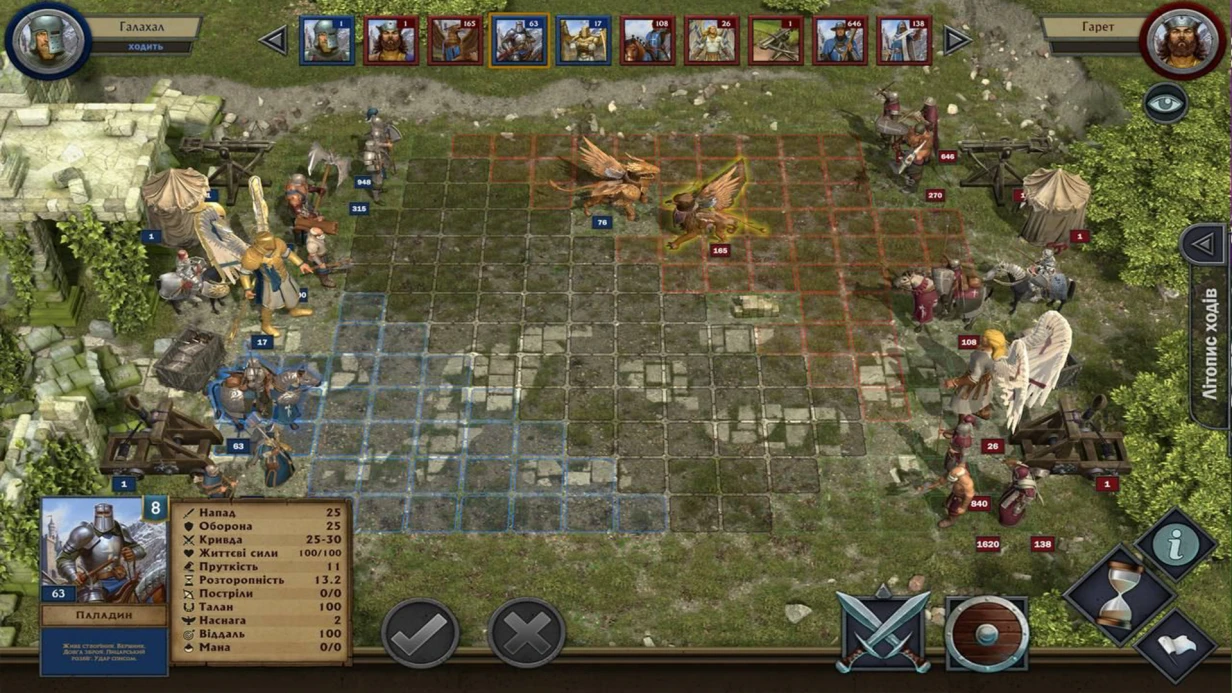
An artist delivers a character at 120,000 triangles and insists it “looks better this way.” In a mobile scene, ten such characters tank FPS below playable. We solve this daily: every model passes strict polygon control and per-platform optimization. We have shipped over 50 game projects — from mobile hyper‑casual to PC action titles — and guarantee each asset fits technical constraints without losing visual quality.
3D modeling for games is not “make it look good.” It is prioritising within a limited budget of triangles and draw calls. Every pipeline stage affects runtime performance. Skipping retopology or producing bad UVs forces rework during integration — we eliminate that from the start.
We design models for specific target platforms: mobile uses low texel density (512 px/m), PC up to 2048 px/m. All decisions are backed by engine benchmarks and profiling on real hardware.
How Are Polygons Distributed for Different Platforms?
This aspect is often overlooked at project start — and later causes rework.
Mobile Platforms (iOS / Android)
Mobile is the toughest environment. Character budgets:
| Character Type | Polygons (triangulated) |
|---|---|
| Main hero (close‑up) | 3,000 – 8,000 |
| Secondary NPC | 1,000 – 3,000 |
| Crowd / distant enemies | 300 – 800 |
Environment objects (single prop):
| Object | Polygons |
|---|---|
| Large interactive (chest, door) | 500 – 1,500 |
| Medium decorative | 100 – 400 |
| Small (rock, branch) | 20 – 80 |
More critical than polygon count are draw calls and batching. A 200‑triangle model with a separate material can be more expensive than a 2,000‑triangle model that batches with the scene. SRP Batcher and GPU instancing cut draw calls by up to 40% — two to three times more efficient than per‑object rendering — giving headroom for richer assets.
PC / Console
Budgets are looser but not unlimited:
- Main character in a first‑person shooter: 15,000 – 60,000 triangles (enemy constantly visible).
- Character in a third‑person RPG: 8,000 – 25,000.
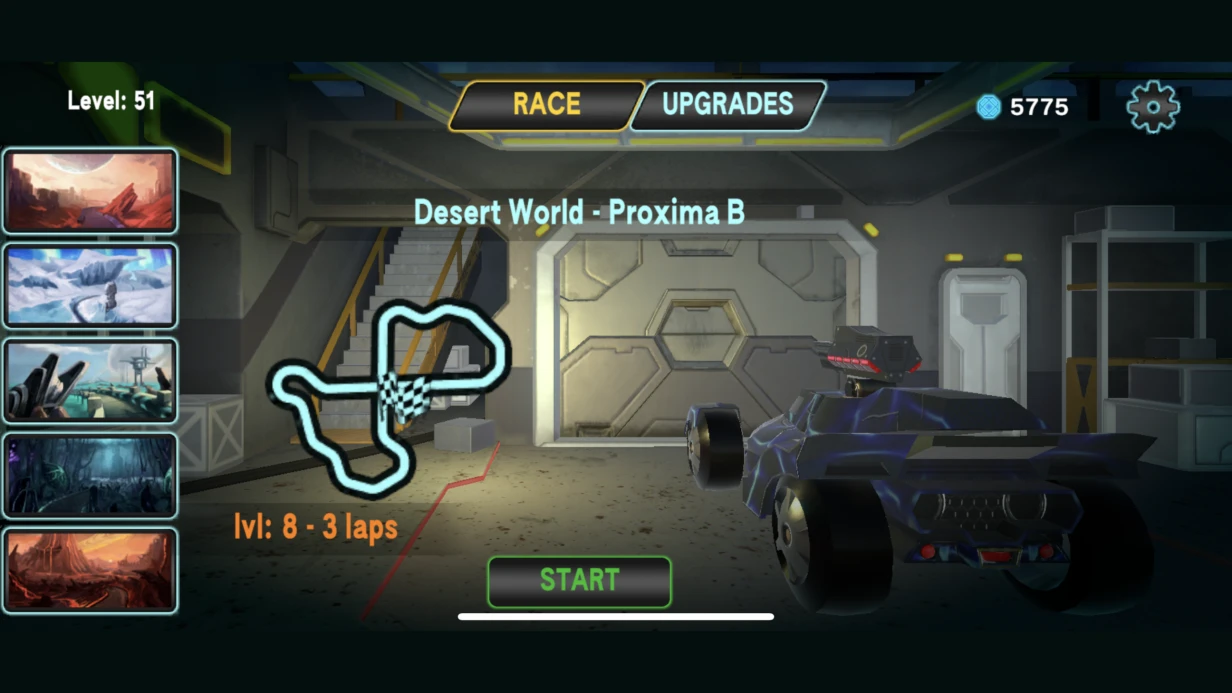
- Vehicle in a racing game: 30,000 – 80,000 (requires LOD).
Key tool — LOD (Level of Detail). In Unity it is LOD Group, in Unreal — automatic HLOD plus manual LOD levels in Static Mesh Editor. Rule: LOD0 → LOD1 loses ~50–60% polygons, LOD1 → LOD2 another ~50%. Occlusion culling and clustered rendering further reduce GPU load.
VR
VR renders for two eyes at 90 fps (Quest) or 120 fps (PSVR2). Any freeze is physically felt — the player gets dizzy. Character budget: 4,000 – 12,000 triangles (depends on simultaneous NPCs). Environment requires aggressive optimisation: portal system, occluder culling, clustered rendering. We use Frame Debugger and RenderDoc early in the pipeline.
Why Is Retopology an Artistic Task?
Retopology — creating a clean polygon mesh over the sculpt. Many see it as a boring technical step and rely on auto‑retopology (ZRemesher, Instant Meshes, Auto Retopology in Maya). That is a mistake.
Auto‑retopology fails in three critical areas:
- Joints — knees, elbows, wrists need even edge loops perpendicular to the rotation axis. Auto‑retopology produces chaotic diagonals; during animation the joint collapses unattractively.
- Face — concentric loops around mouth and eyes are mandatory for correct blend‑shape deformation. Auto‑retopology ignores muscle structure.
- Silhouette edges — shoulders, chest, large forms. Polygons must be consciously distributed so the silhouette reads even on LOD2.
Manual retopology reduces skinning artifacts by 60% compared to auto‑retopology. Tools: Maya (Quad Draw), Blender (BSurfaces + Shrinkwrap), 3ds Max (Graphite Modeling Tools), ZBrush (ZRemesher with guide curves). Density is uneven: face and hands get more polygons, back and lower legs fewer — because the camera spends more time there. This is not arbitrary; it is driven by silhouette and animation needs.
How Does UV Unwrapping Affect Texture Quality?
UV is another underestimated step. Texel density must be uniform across the entire character. If the boot has twice the density of the face, the texture looks inconsistent. In Maya we use UV Toolkit with normalization; in Blender — the TexTools addon.
UDIM (U‑Dimension) combines multiple UV tiles into one object, allowing 4K–8K textures without single‑UV‑space limits. Used for characters with high detail — cinematic games, hero assets. Pipeline then requires Substance Painter in UDIM mode and separate export per tile.
Baking — transferring high‑poly detail to maps for low‑poly. Tools:
- Marmoset Toolbag — industry standard, cage‑based with fine tuning. According to its documentation, batch baking saves up to 30% time.
- xNormal — free, stable for batch baking.
- Substance Painter — built‑in baker for quick results within texturing, less flexible.
- Blender Cycles — slower, but free.
Typical baked map set: Normal Map, Ambient Occlusion, Curvature, Thickness, Position, World Space Normal. Curvature and Thickness serve as generator masks in Substance Painter for automatic procedural texturing.
What Does 3D Modeling for Games Include?
| Stage | Details | Deliverable |
|---|---|---|
| High‑poly sculpt | Detailed sculpt in ZBrush / Blender | .zpr / .blend, screenshots |
| Manual retopology | Clean low‑poly mesh with proper edge loops for animation | .fbx / .ma |
| UV unwrapping | Normalized texel density, optionally UDIM | .fbx with UV set |
| Baking | Normal, AO, Curvature, Thickness (Marmoset / xNormal) | Texture set (PNG/TGA) |
| LOD chain | LOD0–LOD3 with polygon and distance thresholds | .fbx per LOD |
| Integration | Import into Unity / Unreal, material and batching check | .unitypackage / .uasset |
| Documentation | Asset naming, hierarchy, triangle budget | PDF / Notion |
We also provide one hour of support after delivery — helping with LOD Group setup, collisions, and animation. Source files (.zpr, .blend, .ma, .fbx) are fully transferred.
Common UV mistakes we prevent: different texel densities on adjacent parts, overlapping UVs, insufficient padding between islands, missing UDIM for complex characters.
Reach out for a detailed project assessment. We'll analyze your requirements and recommend the optimal pipeline — from mobile hyper‑casual to PC action and VR. Contact us to discuss your project and receive a tailored commercial proposal.