


Players Are Dropping Your Game on Epic Games Store — What to Do?
Every game install on Epic Games Store represents spent advertising budget, team effort, and user time. But after 10-15 minutes, some players leave: not because the project is boring, but because the interface makes them stumble.
Confusing menus, unfamiliar navigation logic, lengthy tooltips — all of this makes people close the game and return to competitors.
The player doesn't think about how your UI actually works. They expect quick entry into gameplay, and if the menus cause irritation, retention drops and churn grows. According to statistics, users spend most of their sessions in menus, settings, and inventory screens.
If these screens make players think or annoy them, the game's usability becomes a weak link, and people leave the project within the first few minutes.
Every lost player means not only missed in-game purchase revenue, but also negative reviews that scare away new audiences. Fixing the interface at the start is many times cheaper than attracting replacement users. Reducing churn directly increases player lifetime value and positively impacts project revenue.
We design game interfaces so they don't distract from the game, but help players quickly enjoy themselves. With 10+ years of experience, we have accumulated patterns that reduce churn during the onboarding phase and increase return rates. Let's tell you where to start your UI/UX audit for Epic Games Store.
What Professional UI/UX Will Bring to Your Game
A quality interface is not a "pretty picture" but a working sales tool. On the Epic Games Store, users make purchase decisions in seconds: if page design, icons, and screenshot previews look amateurish, trust in the product drops even if the game itself is excellent.
Professional UI/UX turns the product page into an entry point to your product rather than a barrier between the player and the purchase.
A well-thought-out interface directly affects player retention. When someone first launches a game, they shouldn't have to figure out where to click and what each button does.
An intuitive menu, clear hints, and logical navigation lower the entry barrier and encourage users to come back the next day. This reduces support load and increases customer lifetime value: the longer a player stays in the project, the more they spend.
Monetization depends on how easy it is for players to make a purchase. An in-game shop styled on the same principles as the main interface doesn't cause rejection.
Clear buttons, neat product cards, and a storefront highlighting a "good deal" increase payment conversion.
The player shouldn't have to search for where to top up their balance or activate a bundle — your job is to remove every unnecessary step between desire and purchase.
Finally, a consistent interface style supports brand recognition. When menus, settings, and store elements share the same visual language as the game world, it creates a cohesive experience.
This approach sets the product apart from dozens of similar projects and reinforces the image of a professional studio in players' eyes.
An interface built on these principles is an investment that pays off through increased retention, higher average order value, and repeat purchases.
We design UI/UX with Epic Games Store specifics in mind, so the game not only looks decent but delivers measurable business results.
Interface Development Formats for Epic Games Store
Each game needs its own approach to the interface. An indie project may only need neat menu and settings screens, while a major title requires an entire system connecting the store, in-game purchases, and social features.
Epic Games Store sets its own design and navigation standards, from storefront to cart. Players expect familiar logic and quick access to content from games in this store.
We match the work format to the scale and stage of your project. This can be a one-off task, such as designing a menu, or months-long support with regular updates. Below are the main formats we offer for games launching on Epic Games Store.
| Format | For whom | What you get |
|---|---|---|
| Turnkey UI/UX | Indie games and mid-sized studios | Full cycle: audience analytics, design of all screens, adaptation to store requirements and your players' needs |
| Audit and refinement | Projects with an existing interface | Assessment of the current UI, improvement plan, implementation of fixes to increase retention and donations |
| Individual screens | Teams with limited budget | Specific elements: main menu, HUD, store, or settings — fast and without overpaying |
| Release support | Large online projects | Post-launch interface support: patches, seasonal events, new screens for updates |
All formats aim to make your game look professional and sell itself. We don't just draw screens; we think through user behavior: where to click, how to structure a purchase, which hints don't distract. This directly affects catalog ratings and revenue.
How We Create a Game Interface: Stages of Work
Working on a game interface is a structured process where the client sees the result at every step and can influence the direction.
We've been through the journey from brief to releases on Epic Games Store, so our development stages are fine-tuned down to the smallest detail: you know in advance what you'll get and control the budget without surprises.
-
Briefing. We lock in tasks, target audience, and key usage scenarios. The result is a document with goals and success criteria so everyone is speaking the same language.
-
Analysis and prototype. We study similar projects, collect examples of successful solutions, and create an interactive prototype of the main screens. You see how players will move through the menu before implementation even begins.
-
Design development. We design all screens in a consistent style, from the start menu to settings and the store. Every element — button, window, tooltip — is created for a specific player task.
-
Review and revisions. You receive drafts for review and leave feedback. We make changes and track versions so no decision gets lost.
-
In-game implementation. We build the interface in the game engine, adding animations and interaction logic. We make sure everything displays correctly across resolutions and devices.
-
Testing and interface launch. We verify scenarios, response speed, and navigation ease. We test in conditions close to real ones and prepare the solution for release on Epic Games Store.
-
Support. After launch we stay in touch: quickly fix any issues, adapt the interface to game updates, and keep it running smoothly.
What's Included: A Complete Launch Package
You receive not just a set of images, but a working launch package.
We resolve Epic Games Store compatibility issues in advance, check the interface against the platform's requirements, and prepare all materials so you can hand them to developers or use them directly in the project.
Here's what's included in the delivery:
- Scope of work. From screen structure to final polish, every stage is described and agreed upon — you always know what you're getting.
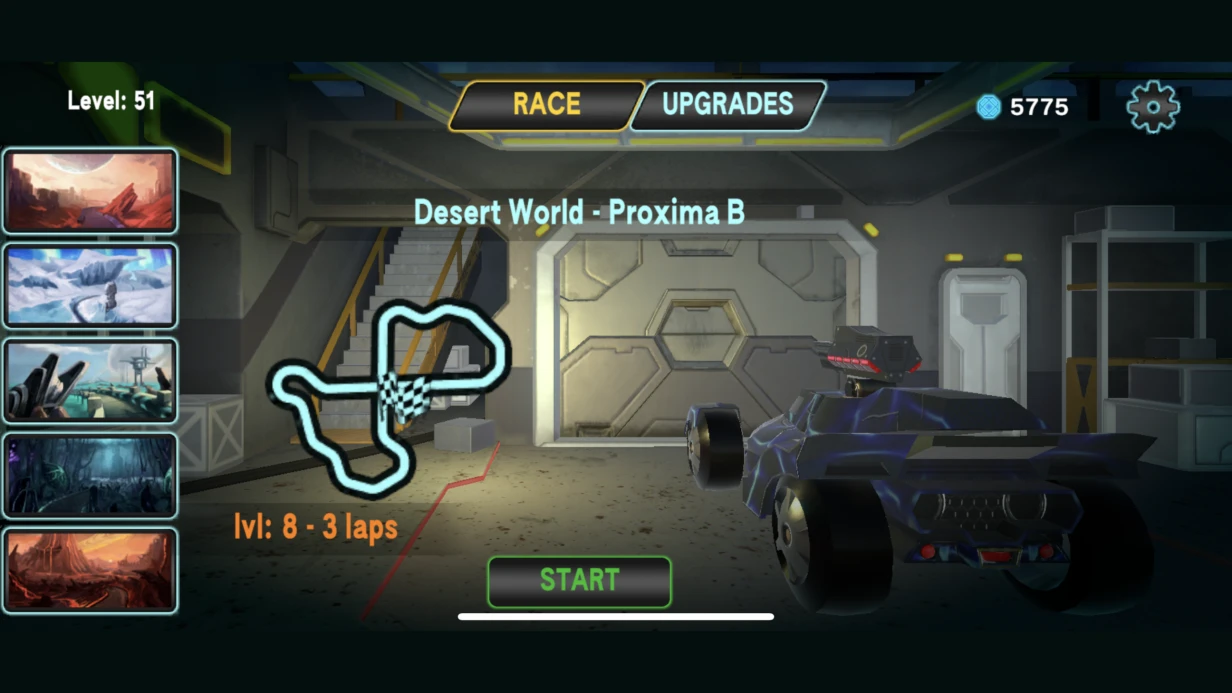
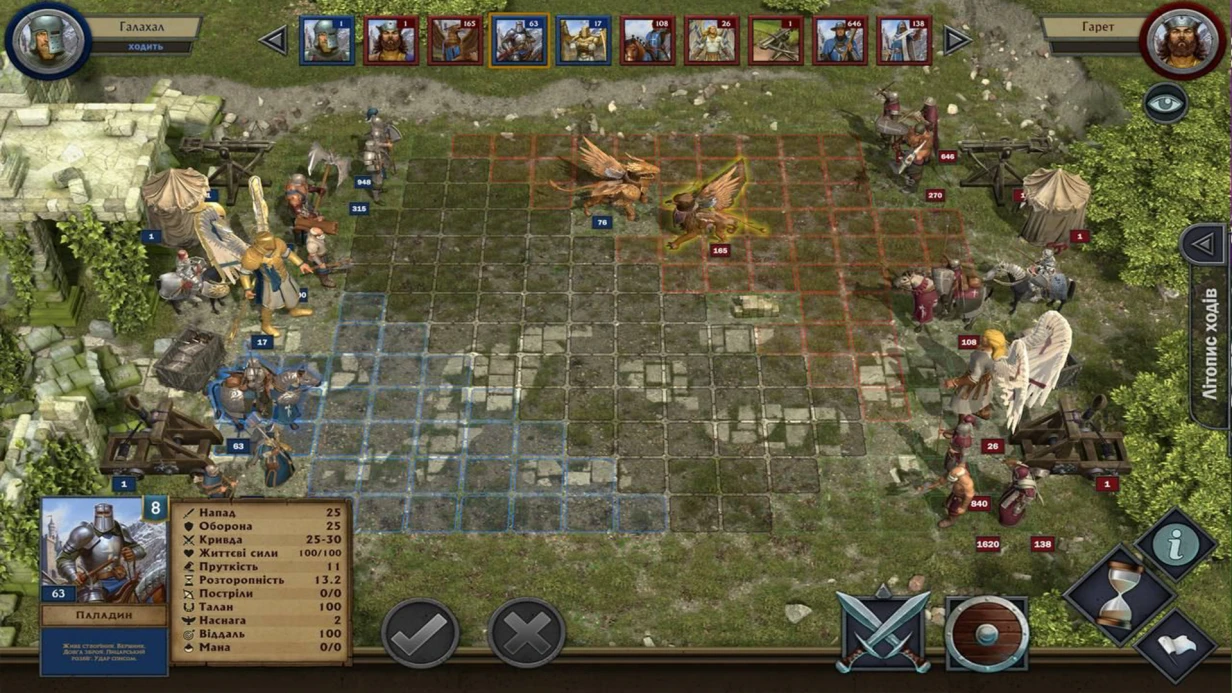
- Mockups of all key screens. Main menu, settings, store, inventory, error windows — everything the player sees, in a consistent style.
- UI guidelines. Rules for colors, fonts, buttons, and spacing. The design remains cohesive even if different teams work on the game.
- Design source files. Editable files, not just images. You can make changes yourself or hand them to a contractor without losing quality.
- Technical support. We answer questions about the mockups, help with implementation, and explain how to adapt the interface to Epic Games Store updates.
We also record deadlines and scope agreements in a document — you get a predictable result with no "surprises" mid-project. And if needed, we'll prepare developer documentation so the mockups can be moved into the game interface without lengthy back-and-forth.
This package saves your time and money: no need to look for specialists for each element separately or rework the interface after store review. You get a clear product that can be put to work right away.
Case Study: How We Increased Player Retention by 40%
A studio that had released an action game with in-game purchases on Epic Games Store approached us.
The game received good reviews, but most new players dropped it after the third session: they got lost in the menus, didn't understand where to click, and left without ever seeing the key mechanics.
The task was simple in words and difficult in practice — redesign the interface so it could be understood without a tutorial.
What We Did
We audited the screens and studied player behavior in the early sessions to find bottlenecks. We reworked the main menu, the battle screen, and the hint system: removed visual noise, brought key actions to the foreground, and made a beginner's first steps intuitive.
The changes affected only the interface layer — the gameplay stayed the same, so implementation took less time than a full rework of the project.
Development Results
One month after the update, player retention grew by 40%, and average session length increased 1.5 times. Support requests with "how do I get past" questions dropped by half — people stopped abandoning the game due to interface confusion.
The client's project manager shared their assessment of the result:
"our team understood the task from the first attempt and quickly turned it into a working interface. We saw retention growth in the first week after release, and players started noticeably returning to the game more often. This is the best UI improvement result in the entire life of the project."
The game continues to receive updates — each new version of the interface is based on collected metrics. This way the product improves precisely rather than at random.
How to Choose the Right Format for Your Task?
Choosing an interface development format isn't about the number of screens or picking the most comprehensive package. It's important to understand what tasks the interface solves in your game and where it benefits the player — and therefore your business.
Otherwise, it's easy to overpay for unnecessary functionality or, conversely, save on things that directly affect user retention.
Game specifics are the first criterion. A simple puzzle or hyper-casual project only needs basic screens: menu, settings, store, results screen.
But if you have an RPG, simulator, or a project with progression, inventory, and social features, the interface becomes the connective tissue of the entire game. In that case, you need player onboarding, system windows, and pop-up hints — that's a different scale of work.
Project budget helps set priorities. We don't sell "everything under the sun"; we offer a format that covers the player's key scenarios at the chosen stage.
You can start with a minimal set and gradually expand it after launch — the important thing is that the basic interface architecture is set up correctly from the very beginning.
We also account for Epic Games Store platform requirements — it has its own rules for design, descriptions, and user experience. For our clients, this means the interface won't need to be redone after moderation.
The most reliable way to choose a format without overpaying is a consultation. Tell us about your mechanics, platform, and timeline, and we'll suggest the optimal scope of work and lock in the cost before we start. That way you get a clear plan, an accurate budget, and confidence in the result.
Answers to Frequently Asked Questions About UI/UX Development
Before a project starts, clients usually have three main questions: deadlines, budget, and platform compatibility. These determine how to plan the release and what resources to allocate.
Below are honest answers without technical details, based on our experience working on games for Epic Games Store.
How long does UI/UX development take?
It depends on the number of screens and the complexity of the logic. For a typical project with 10–15 screens, plan for 4 to 6 weeks: part goes to prototypes, part to final design. If you already have mockups and a description of the mechanics, the timeline can be shortened.
How is the cost of services calculated?
We calculate the cost individually after a short discussion of the task: it depends on the number of screens, the level of animation, and the number of revisions. First, we study the task, then we fix the estimate in the contract. For initial projects, extended support during the implementation phase is already included.
Will the interface work correctly in Epic Games Store?
Yes, we account for platform requirements: elements pass compatibility checks, and clickable areas meet standards. We test the interface with different resolutions so the game looks just as good in a window as it does on large monitors.
Get a Free Consultation for Your Project
Ready to discuss your project and calculate the cost of interface development for Epic Games Store? We'll advise you for free, break down the task, and propose a solution that brings real value to your product.
Leave a request, and we'll get back to you within one business day, discuss the details, and answer all your questions.
Why you should order Game UI/UX development from us:
- Free consultation and project assessment — you get a transparent work plan and understand the budget before collaboration begins.
- Experience from dozens of completed projects across different genres — from mobile games to major PC projects, including interfaces for digital distribution platforms.
- We meet deadlines and keep you informed at every stage — no surprises and no drawn-out approvals.
- We create interfaces that boost player retention and purchase conversion, not just ones that look nice.
- Transparent payment system with cost fixed after the brief — no hidden fees or unexpected overruns.
- We provide post-launch support so you can quickly make changes to the interface.
Contact us now — we'll calculate the cost of your task and choose the optimal solution. Fill out the feedback form or message us in a messenger: it doesn't obligate you to anything, but you'll get clear answers and a plan of action. We're here to discuss your project today.