

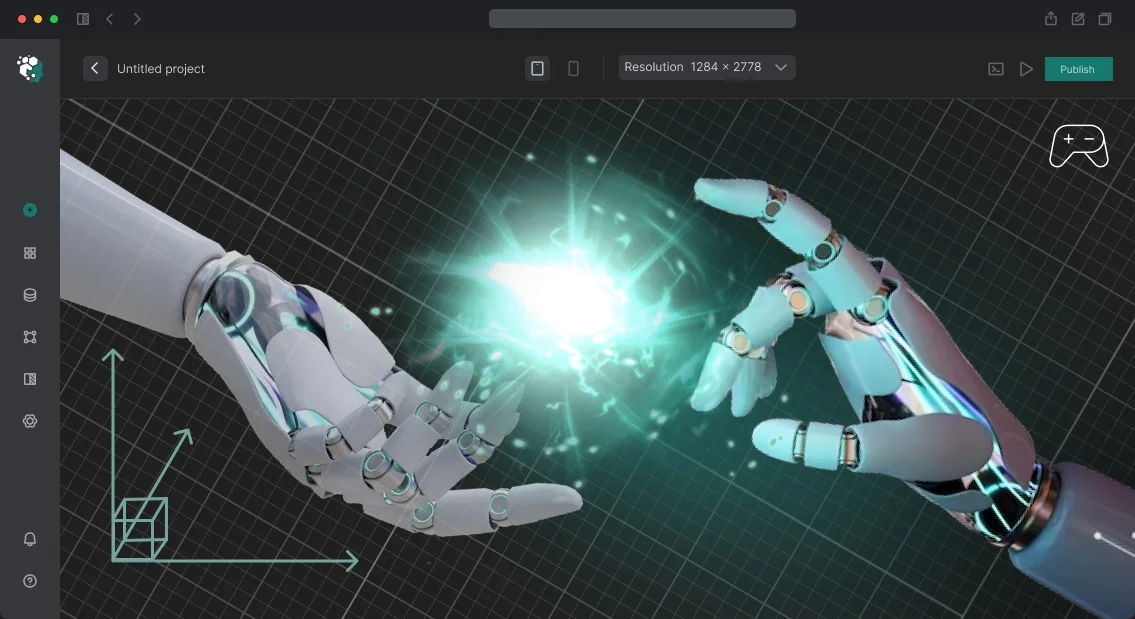
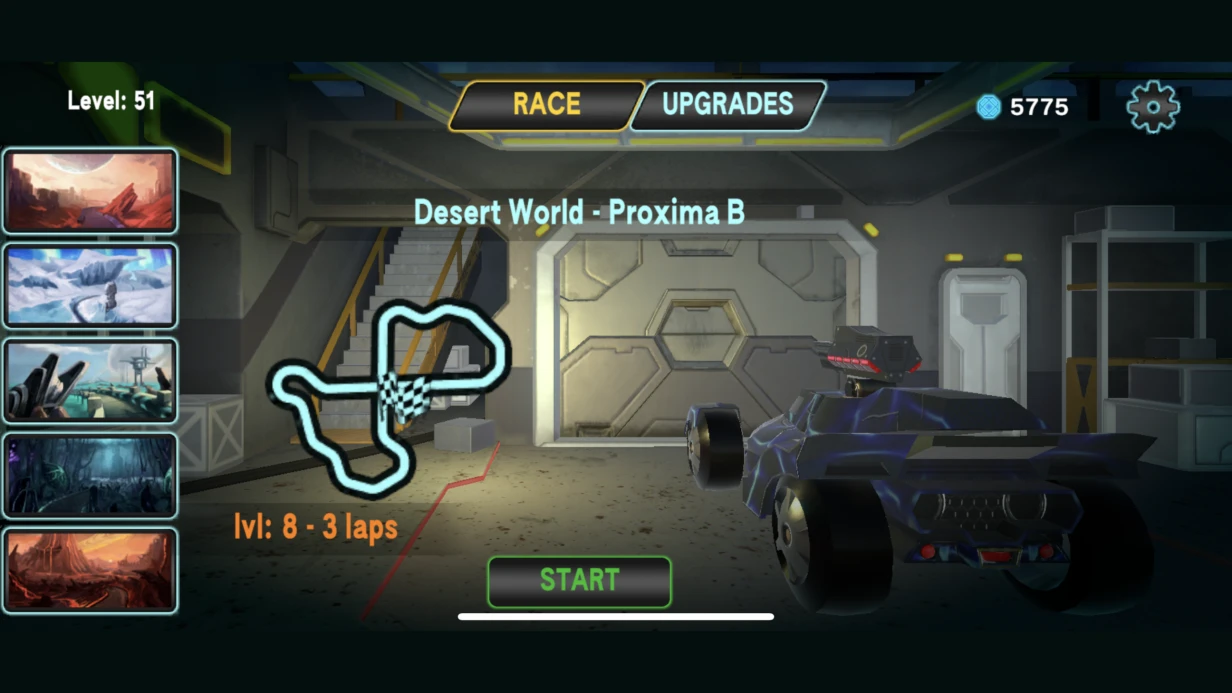
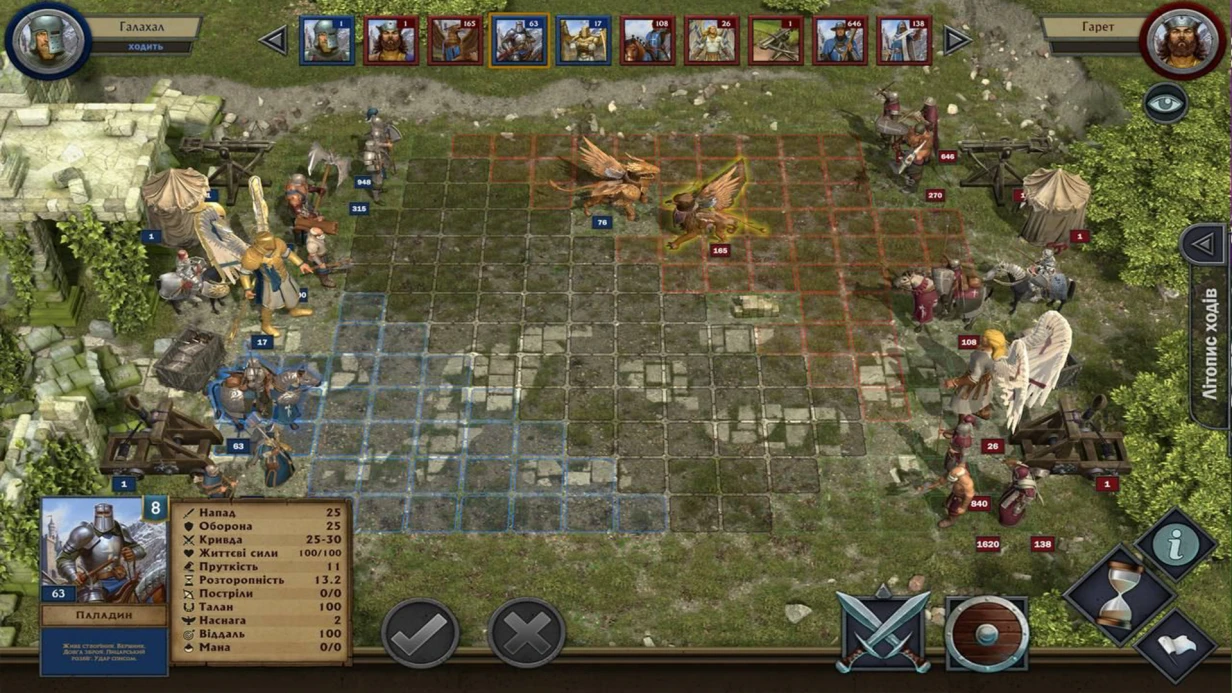
Why do Fantasy-style games lose players without high-quality 2D art?
In the fantasy genre, players choose with their eyes. In a couple of seconds in an app store or on a banner, they decide whether the project is worth their time. Thousands of competitors sit next to your game, and most have already invested in high-quality graphics.
Without strong 2D art, the project looks like a template clone, even if the mechanics and story are excellently crafted.
Poor visuals are not just lost installs. They mean low first-screen retention, short gameplay sessions, and negative reviews. Users won't bother exploring the depth of a combat system if the characters and environment look faceless. Every departed player is lost revenue that flows to projects with expressive fantasy visuals.
Quality art directly affects the game's economics. An atmospheric world hooks at first glance, increases install conversion by 30–40%, and keeps users around to explore details.
Players share screenshots and discuss art in communities — this gives the brand free recognition and a steady stream of new users.
Our task is to turn visuals into a tool for your results. We create fantasy-style 2D art that sets your game apart from similar titles, extends gameplay sessions, and increases revenue per customer.
Characters, locations, interface — everything is developed with an eye to engagement and the competitiveness of your product.
What benefits does stylish 2D art bring in the Fantasy genre?
The advantages of 2D art in fantasy are visible at a glance: stylish graphics single out a project among hundreds of similar games and immediately grab attention. In an app store or in advertising, visuals decide whether a user will be interested within a couple of seconds.
When the art looks professional, the game gets more clicks and installs, meaning metrics improve from the very start.
Style recognition is a separate business value. A consistent fantasy world helps players understand at a glance what awaits them and remember the project. Such art creates a brand association, lowers acquisition cost, and increases the number of repeat visits.
Player engagement directly depends on how much the world invites you to look around and explore. Well-crafted characters and environments hold attention, increase session time, and gently steer players toward in-game purchases.
Satisfied players are more likely to share screenshots and discuss the game — this is additional reach without an advertising budget.
Professional 2D art saves time on rework and reduces risks at the start. We think through style, composition, and details in advance, so the result is a cohesive image that works for your project's goals.
We use proven tools and experience in Unity — the outcome is predictable in terms of timeline and quality.
In the end, investments in art pay off through increased conversion, retention, and audience loyalty. For the client, this means measurable results and stable metrics over the long haul.
2D Art Formats for Fantasy Games: From Concept Art to Animation
Every fantasy game stands out not by spells but by visual style. That's why the art format is chosen deliberately, for a specific task: concept art to define the style, sprites and backgrounds for gameplay, animation to bring characters to life. The right format saves development time and makes the visuals competitive.
Below are the basic formats we use in projects.
| 2D Art Format | Suitable for What Purposes | What It Gives the Project |
|---|---|---|
| Concept art | Finding a style, presenting to investors, aligning a vision | A common direction for the team, fewer reworks during production |
| Character and item sprites | Filling out gameplay, creating elements for Unity | Recognizable heroes and objects, fast level assembly |
| Background and environment | Developing locations, level atmosphere | Immersion in the world, emotional player engagement |
| Sprite animation | Bringing characters and objects to life | Dynamics, response to player actions, increased retention |
A sensible set of formats covers the entire cycle: from the initial concept to finished animated art. We help you choose the right items, so you don't pay for extras and the game gets a cohesive visual line.
Ask which art format suits your project specifically — we'll show examples of similar work and propose a scope that fits the budget.
Stages of Working on 2D Art for Your Game
Developing art is not "bring us an image in a month." We've structured the process so you can see intermediate results and influence them at every step. Below are the typical stages, but we adapt to your project.
- Brief and immersion. We study your game, target audience, and references. We lock down style, palette, timeline, and budget — so you always know exactly what you'll get and when.
- Concept and sketches. We propose several design options for characters, environments, and objects. You choose the direction before detailed rendering — this saves budget and time on rework.
- Approval. We show drafts at intermediate stages and make edits. You see how the art develops and approve key decisions before detailed work begins.
- Rendering and detailing. We create final sprites, animations, and all necessary angles. Every element passes an internal check for style consistency and gameplay fit.
- Integration into the game. We deliver art in a format that's easy to plug into Unity. We help with setup so everything looks cohesive on screen without requiring a song and dance.
- Launch and support. After delivering files, we stay in touch: we answer questions, support implementation, and quickly refine art if something changes in the project.
As a result, you get not just a set of pictures, but a finished visual style that enhances the game's impact. Good art sells itself: it holds attention, boosts player ratings, and increases install conversion.
What Is Included in the Art Delivery for a Fantasy Game?
When you order art for a fantasy game, it's important to understand exactly what you'll receive. Not just "pictures," but a ready-to-work kit that can be handed straight to developers, dropped into a build, and used in marketing.
A transparent delivery scope saves weeks of back-and-forth and eliminates surprises at the final stage.
Here's what's included in the final art delivery for a fantasy game:
- Full graphics set — all sprites, backgrounds, icons, and UI elements in a cohesive style. You get a complete visual system, not scattered files.
- Editable source files — all layers and elements are separated, so you can make edits, change colors, or scale objects without needing an artist.
- Files for all platforms — the art is prepared for different resolutions and formats, including mobile devices and desktop. Screen adaptation won't require new rendering.
- Style documentation — a brief guide describing the color palette, lighting, and character construction principles. It's your benchmark for hiring new artists or external contractors.
- Texture atlases and slicing — optimal sprite packing so the game runs fast even on weak devices, without hitches or long loads.
- Mini-presentation for publishers — a few key art pieces compiled into a separate file. This is ready-made material for negotiations, crowdfunding, or an app store page.
The delivery includes not only the images themselves but also a clear instruction on what to plug in where. You don't need to be a technical specialist to pass art into development — the package comes with a file inventory and the order in which to use them.
We hand over all sources and documentation immediately, with no hidden fees. No "file only after paying for the second stage" — you get the full package, with which your team can continue working even after the project is complete.
That's our guarantee that the art turns into a working game rather than staying a pretty presentation.
Case Study: How Atmospheric 2D Art Increased Player Retention
For the studio Severny Veter, we developed a set of atmospheric 2D art in a fantasy style — and it directly affected the metrics. Before we got involved, the game was losing players after the first day: default assets didn't create the right mood, and the story went unnoticed.
Our task was not just to "redraw the picture" but to make the environment, characters, and interface keep users engaged.
We created a cohesive visual language: warm tones, expressive locations, memorable portraits. Every screen in the game started working for the atmosphere — from the splash screen to dialogue.
Players began to immerse themselves in the world from the first minutes instead of skipping the tutorial.
What the results showed after the release of the updated art: day-one retention increased by 18%, and day-seven retention by 24%. The average session length grew by 1.5 times — players started reaching story points that almost no one had reached before. The case confirmed a simple idea: art is not decoration but a tool for managing attention.
What This Project Gave Us
The case became a benchmark for the whole studio. After the success, Severny Veter ordered art for a second season from us — with the same principles of cohesion and atmosphere.
We've already built a process that we repeat in every similar project: first, an analysis of the game's pain points, then concept and implementation, so that art drives business metrics rather than just pleasing the eye.
This example shows that quality 2D art in a fantasy style can boost retention without changing mechanics or marketing investments. If your game loses users, the cause is often how it looks, not just how it works. We help fix that and measure the result.
How to Choose the Right 2D Art Format for Your Game?
Choosing a 2D art format starts not with the picture but with the question: what role does this art play in your project, and in front of what audience will it appear?
If the game needs a striking face for the app store and ad campaigns, that's one format; if it needs content for the game world that keeps players engaged for hours, that's quite another.
Understanding the goal saves you from overpaying for unnecessary details and from wasteful spending on "just pretty pictures."
The second guide is the project stage. Early on, you need concepts and references to lock in the style and test it with a focus group. That's faster and cheaper than redoing the entire asset set after a direction change.
Once the style is approved, character sprites, environments, UI, and promo materials come in. This phased approach keeps the budget under control and delivers results in pieces, rather than waiting for one big, risky release.
Budget is the third but no less important factor. It determines not quality but the scope and depth of detail. With a limited budget, it's effective to focus on 2–3 key art pieces that drive reach: the cover, the main character, the key scene.
These create the first impression and the desire to download the game. In-game elements can be simplified or use ready-made solutions without losing style cohesion.
The optimal strategy is to start with a small pilot piece of art in the chosen style, gauge the reaction, and then scale up to the whole project.
At our team our team, we help you choose the right format by aligning the task, style, and budget, and offer a step-by-step plan that shields your project from unnecessary expenses.
That way, you always understand what you're paying for and how each piece of art benefits your game.
Common Client Doubts About 2D Art and How We Address Them
Before ordering 2D art, clients often have doubts: will the style fit, will deadlines be missed, will there be endless rework? We've worked with games for over 10 years and are used to the fact that good results require transparent rules of engagement. So we address the main fears in advance.
How do you guarantee art quality?
We don't draw "by eye" — every project begins with a brief and style examples. We show sketches before rendering and align on key characters and backgrounds. You approve mockups at every stage, so the result matches expectations precisely.
What if I don't like the result?
We work in stages: first a draft, then clean rendering, then the final version. You leave comments after each stage, and we make edits. If we make a mistake, we fix it at our expense. Usually two or three rounds are enough, and the number of rounds is fixed in the contract.
Will you miss the deadlines?
We create a schedule with intermediate delivery dates — you can see progress at any time. For urgent projects, we bring in additional artists. Deadlines are stipulated in the contract, and delays happen only due to force majeure, which we warn about in advance.
What if complications or new tasks arise along the way?
That rarely happens, but we're prepared. If additional art is needed, we assess the scope and integrate it into the schedule. If something doesn't work the first time, we change our approach and offer a solution. You always know what it costs and when it will be ready.
Doubts are resolved by a clear process: transparent stages, approval at every step, and a contract with fixed deadlines. You get turnkey art — with a quality guarantee and reasonable revisions. Tell us about your game — we'll propose a work plan and delivery calendar.Ready to Get High-Quality 2D Art for Your Game?
Fantasy games live on atmosphere, not just mechanics. A player may forgive simple graphics, but not the absence of magic in the visual style. Quality 2D art is an investment in retention and viral effect: characters and locations become screenshots that bring in new players.
When you order 2D art from us, you get:
- A unified style for all elements — from icons to bosses, with no mismatched colors or lines.
- Well-developed concepts before rendering begins: you see the direction before we spend weeks on final versions.
- Characters with personality and story — art that sells the game even before release.
- Adaptation to the technical side of the project: all graphic elements are ready to use, without unnecessary rework.
- Source files and layers included — you remain the owner of all materials and can make edits even after delivery.
- Revisions built into the cost: we lock down requirements at the brief stage and don't charge for every little thing.
We work with Unity at a professional level, so we understand how the art will fit into the technical side without surprises. To calculate the cost and timeline, send us a description of your project in any convenient way.
You can reach us through the form on the website or via messengers — we'll respond within one business day.
Don't put off visual quality for later: the sooner we start on the art, the sooner you'll have material for tests, trailers, and store pages. Ordering 2D art today means visible results in just a few weeks. Write to us, and we'll show you how your project will win.