

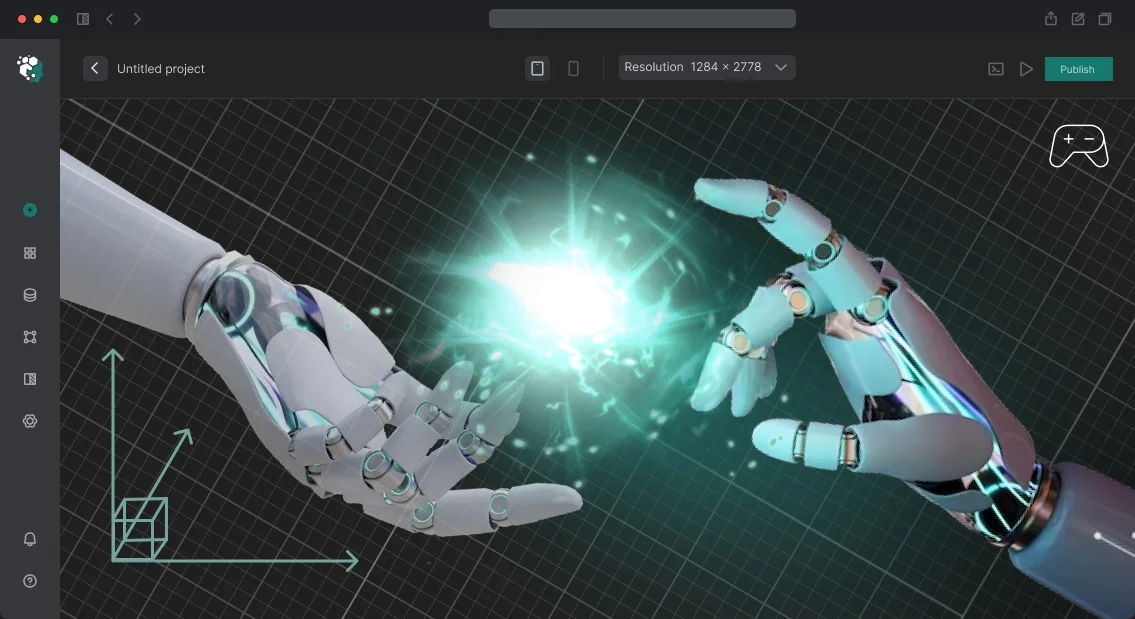
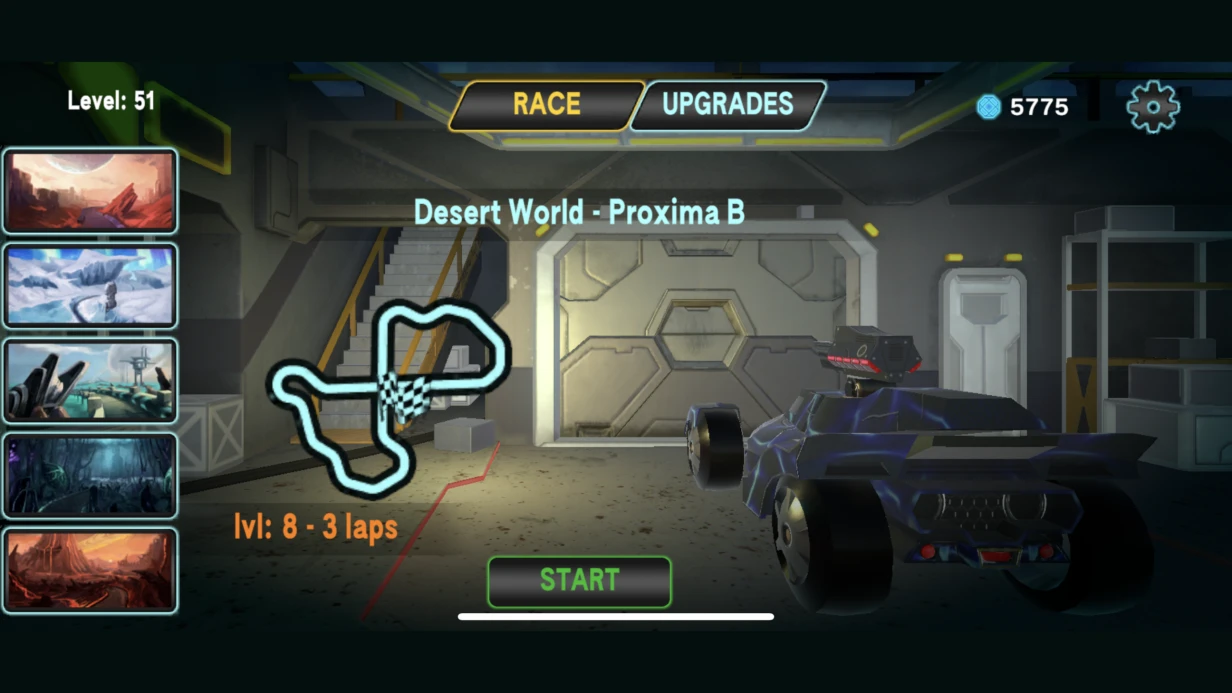
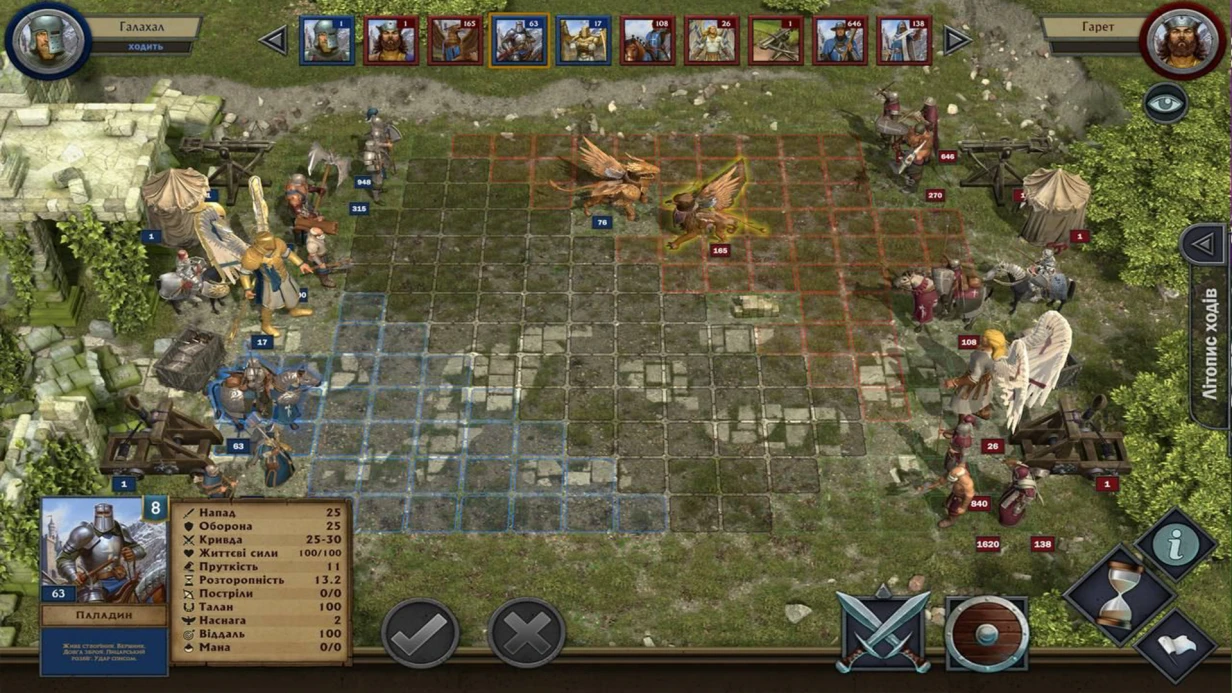
Your Players Are Leaving for Competitors: Infographics as the Key to Understanding
Players leave as soon as they stop understanding what is happening on the screen. Complex mechanics, confusing interfaces, cluttered screens — all of this creates a barrier between the player and the gameplay.
Even beautiful art can't save the game if the player can't figure out where to click and what to do next. As a result, a potentially successful game never gets its chance.
For a business, this translates into lower retention, short gaming sessions, and poor conversion to payment. Players get halfway through the tutorial and abandon the project, while paid levels remain untouched.
You invest money in development and marketing, but the audience doesn't stick around — your marketing budgets simply burn away.
The solution is clear infographics in 2D art. This isn't just pictures — it's a visual hint system that makes the interface comprehensible: arrows guide the eye, colors encode important objects, and icons explain mechanics without text.
In Unity, such infographics are integrated through well-crafted atlases and animations — and they look organic in any game style.
When a player quickly understands the rules, they enjoy the experience and come back again. Retention grows, return sessions become longer, and players are more willing to reach paid levels.
We create 2D art with infographics that solves these problems — and you see the results in metrics, not just in the beauty of an individual texture. That's the key to understanding: a clear visual keeps players engaged and brings them back.
What Quality 2D Art Brings to Your Project
A player decides within seconds whether to stay in the project or close it. Quality 2D art is the first impression that captures attention and encourages further exploration.
When graphics are clear, vivid, and consistent in style, the user dives into the mechanics faster and comes back again.
Infographic-style art is especially powerful because it turns complex rules into clear visuals. The player doesn't need to read lengthy instructions — they see how the character works, what threatens them, and where to go.
This kind of visual explanation lowers the barrier to entry and increases engagement even among newcomers.
A recognizable style is a brand asset that keeps working for you after release. Screenshots, avatars, and ad creatives form a cohesive image of the project.
If your art is easily distinguishable from competitors, the game becomes memorable and talked about — reach grows without an additional ad budget.
Thoughtful 2D art directly affects conversion as well.
In app stores and advertising, it's the image that convinces a user to tap "Install." Professional graphics build trust in the product, reduce the risk of deletion after the first launch, and increase the share of return sessions.
Finally, quality art strengthens game design. Visual cues guide the player, highlight key elements, and make progress obvious. Combined with well-designed mechanics, this creates a cohesive product that retains the audience and delivers results for the business.
Infographic Formats for Games: Choosing What Fits Your Goal
Infographics in a game are a way to speak to the player without words.
The right format shortens the journey from "what's happening here?" to "I get it, let's go." We've identified three scenarios — interface, tutorial, and marketing — so you don't overpay for extras and get exactly the result you need: retention, fast onboarding, or attracting a new audience.
The table below compares the formats by typical use cases. Look at your goal and choose the one that solves it right now. All three can be easily combined and delivered in a single consistent style matching your game.
| Format | Target Audience | What It Delivers |
|---|---|---|
| Interface | Players during gameplay | Clear hints and navigation — players don't get lost, stay longer, and return more often |
| Tutorial | Newcomers in the early levels | Fast mastery of mechanics — fewer mistakes, higher engagement from the first minutes |
| Marketing | Press, bloggers, social media | Visual features and benefits — higher recognition, more installs |
Clients often start with one format and realize a month later that they need another. We design infographics with room for expansion — adding a new format to an existing one takes half the time and cost. This way, you solve the current problem and leave room for further gamification and teaching.
How We Create Art: From Brief to Launch
We work with you as a partner at every stage — from the initial brief to the delivery of the finished art package. We're transparent about the process so you always know what's happening with the project and can see results from the early stages. No black boxes: you always know what you're getting and when.
- Brief and task analysis. We study your game, target audience, and style. We define the goals of the infographics: what they should explain, who they should engage, and which channels they'll be used in. The result is a clear technical specification agreed with you.
- Concept and references. We explore visual directions: color, shape, style, and information density. We present 2-3 options so you can choose the approach that best fits your project.
- Creating the first art pieces. We produce the key element of the package — for example, the main infographic screen or a central diagram. At this stage, you see the style in action and can adjust it before the full series is created.
- Developing the full package. We create the remaining elements: icons, diagrams, hints, and backgrounds. We maintain a consistent style, ensure readability across different screens, and optimize for the Unity interface.
- Iterative approvals. We show art in batches rather than as one large deliverable at the end. You provide feedback when changes are cheap — no downtime or rework after the final handoff.
- Assembly and adaptation. We prepare the art package for your team: correct formats, layers, and engine-ready slicing. Everything is delivered in a structured form so developers can integrate the graphics without extra questions.
- Delivery and support. After the project is handed over, a short support period is included: we answer questions, fix minor issues, and help with integration. The result is a complete visual language you can use in your game right away.
The process is designed so you don't have to wait until the end or guess about the outcome. Every stage goes through your approval — you control the timeline and budget, while we take responsibility for quality and pace.
What's Included in the Art Package Delivery
You don't just get pictures — you get a complete, production-ready art package. It includes source files, guidelines, adaptations for different devices, and documentation — everything your team needs to integrate the art quickly and make future edits on their own. This saves your budget on ongoing revisions and speeds up updates.
Here's what you'll find in the delivery:
- Source files for all elements in editable layers — you can change colors, text, and composition without redrawing. This is convenient when you need to adapt the art for promotions or seasonal events.
- Usage guidelines: grid, spacing, fonts, palette, and style — your team will quickly get up to speed and avoid mistakes.
- Adaptations for different screens: from smartphones to widescreen displays — the interface looks cohesive on any device.
- Ready-to-use images for the game — no loss of quality and no extra hassle.
- Documentation for the art package structure: a clear naming and folder system so you can find any element in seconds.
- Instructions for replacing art elements inside Unity — integrate new art in a couple of hours without waiting for us.
- Presentation mockups and usage examples — show the result to management or clients before implementation.
All materials are packaged into a single bundle with a table of contents for easy navigation. We support the delivery: we answer the team's questions and make adjustments if needed for two weeks after handoff — no extra charges, no lengthy approvals.
Case Study: How Art Style Increased Purchase Conversion by 31%
A game studio came to us with a pain point typical for the market: players liked the game, but few actually made a purchase. The interface was functional but overloaded — newcomers got lost, not understanding where to click or why to pay.
We proposed reworking the key screens in an infographic style: instead of "just buttons" — clear progress diagrams, visual bonuses, and short hints that guide the player toward the target action.
Within the project, together with the studio team, we identified the key scenarios: first game launch, character selection, and the purchase moment.
For each scenario, we created concise icons, color accents, and mini-infographics that explain the value of the offer in literally 5 seconds. No unnecessary animation — only what speeds up the decision.
The result exceeded expectations: purchase conversion grew by 31% in the very first release update.
Players also noted in reviews that the interface became "friendlier" and "clearer at first glance." Average first-session time increased — people started exploring the world longer instead of tapping around aimlessly in search of the right button.
For us, this case confirms a simple rule: quality art in the interface works not as decoration but as a sales tool. When a player understands why they should stay and pay, they pay more willingly.
That's exactly the task we solve for every client — turning visuals into measurable business results.
How to Tell Which 2D Art Format Your Game Needs
Choosing a 2D art format in game development starts not with the image but with the task the game solves on each screen. Do you need to quickly explain a mechanic, show the hero's path, or convey the world's atmosphere?
If clarity and quick readability are the priority, infographics become the ideal solution: they simplify complexity, direct attention, and don't overwhelm the interface.
The genre also points to the answer. Casual and educational projects benefit from clean lines and accent illustrations, while strategies and simulators need schematic maps and clear icons.
Story-driven quests and visual novels more often require detailed graphics to immerse the player in the narrative. These are the cues we use to determine where infographics work best and where they should be combined with other styles.
Budget and timeline are equally important factors. Full realistic art requires lengthy drawing and approval cycles, while infographics let you get a series of ready-made elements quickly and launch the game sooner.
You get a predictable result within a tight schedule while saving resources for mechanic development and testing.
That's why we don't start with drawing. First, we analyze your game: goals, genre, and usage scenarios. We select a 2D art format that fits the gameplay, platform, and audience expectations, then show several options before the main work begins.
This way, you make the decision before committing significant resources — and within just a few days, you see what your game will look like.
Frequently Asked Questions About Ordering 2D Art
Before entrusting us with 2D art for your game, you probably want to address the key questions: how long it takes, how the process works, and what you get in the end. Here are answers to the most common client concerns — short and to the point.
How long does a 2D art order take?
The timeline depends on the scope and complexity of the tasks: drawing a single key character usually takes a few days, while a comprehensive art package for an entire level takes two weeks or more.
At the start, we set an exact schedule in the brief, so you always know when you'll receive the final files.
How is the price calculated and what does it depend on?
The cost depends on the number of objects, their level of detail, and the style. Infographics are simpler and faster to produce than, say, a realistic detailed illustration — so they're more cost-effective for games with lots of sprites.
After the brief, you receive a transparent quote with no hidden fees, and the final price doesn't change during the process.
What if we don't like the art or need changes?
We build several approval stages into the workflow. First, we show concepts and sketches — this is the easiest point to adjust the direction. You provide feedback, we refine, and only after the concept is approved do we create the final versions. This way, the result matches your expectations and major rework is avoided.
Who owns the rights to the finished art?
After full payment, all rights to the created images transfer to you. You can use the art in the game, marketing materials, website, and social media without restrictions or additional fees. We don't sell your work to other clients and keep the project confidential.
Will the art work with Unity and other engines?
Yes. We prepare files in formats that open correctly in Unity and other popular development environments.
The art is delivered with transparent layers in high resolution, and if needed, we adapt dimensions and scaling to your game screen so you don't have to rework sprites during integration.
If you still have questions about timelines, style, or work stages — write to us. We'll walk you through the process and find the optimal solution for your task.Ready to Discuss Your Project? Get a Preliminary Estimate and Work Plan
Leave a request for a consultation — we'll discuss your idea and show how infographics turn boring data into a game players will want to finish. We work with clients across industries: education, corporate events, mobile apps, and advertising campaigns.
After your inquiry, you'll receive:
- A preliminary estimate of the timeline and budget for your format — no hidden items.
- A work plan: from task definition to the final version, with clear stages and checkpoints.
- A review of your materials and examples — we'll show which infographic mechanics will work best for your audience.
- A couple of ready-made visual style options — so you can picture the future art before development starts.
- Recommendations for using infographics in advertising, social media, and at the event itself — how to maximize reach.
- A fixed cost estimate and a contract securing the rights to all created images.
The consultation is free and non-binding. We'll ask a few clarifying questions to understand your task and honestly tell you what will and won't work.
Over 10 years We've delivered projects for events ranging from 50 to 5,000 guests — and we know how infographics hold attention and boost engagement.
Submit your request through the form or message us in a messenger — we'll respond within one business day and suggest a convenient time for a call. We'll start with a brief conversation, and then you decide whether to move forward.