

Why Games Lack Medical Illustration
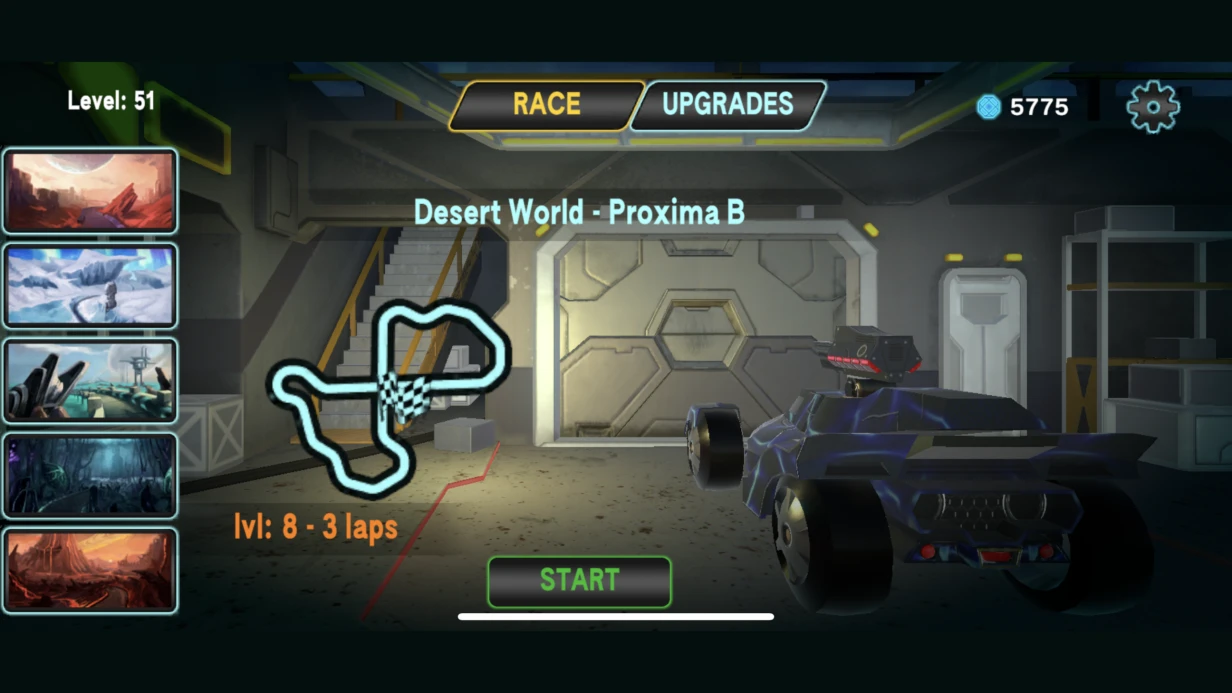
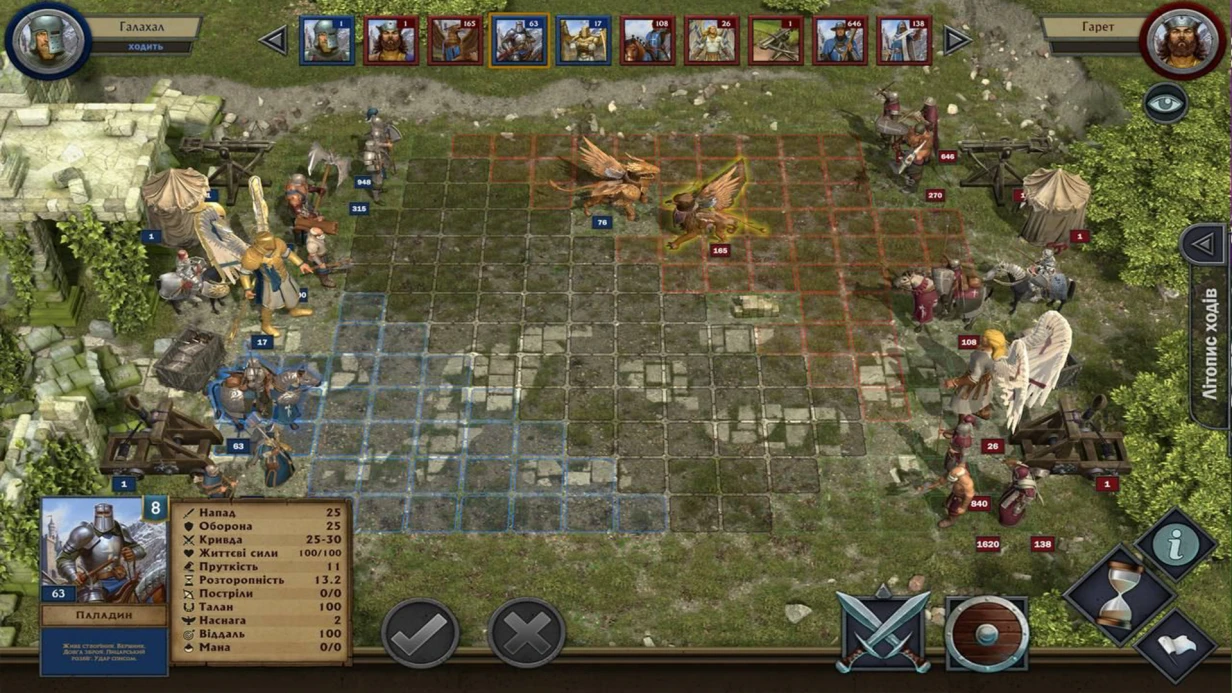
Players decide whether to install a game in a matter of seconds. In the app store, they evaluate a game by its screenshots and cover art, and if the 2D art looks simplistic or anatomically unconvincing, trust in the project drops immediately.
This is especially critical for medical games and health education apps: errors in how organs and processes are depicted are noticeable even to non-specialists.
Users increasingly pay attention to such details — anatomical inconsistency raises questions about developer competence and makes them doubt the quality of the entire product.
The absence of credible medical illustration in graphics is a direct loss of install conversion. Players perceive subpar art as a sign that the whole game is poorly developed: mechanics, story, and onboarding included.
Instead of the impression that "these people know their subject," doubt creeps in, and the user turns to competitors.
High-quality graphics for medical games solve this problem. Medical illustration in 2D art conveys anatomy accurately and aesthetically, helping players quickly understand the interface and mechanics.
Such graphics build trust in the game: users see that developers invested in details and are more willing to stay with the project.
We create 2D art that combines scientific accuracy with game aesthetics. Our illustrations are adapted for Unity and integrate easily into any gameplay while maintaining a consistent visual style.
This increases trust in the game and boosts install conversion — without sacrificing development speed.
What 2D Art in Medical Themes Delivers
Why shouldn't medical themes in games be drawn "by eye"? An error in anatomy destroys trust: a doctor or medical student will immediately notice the inaccuracy, and an ordinary player will sense that something is off.
Our team combines the academic precision of medical illustration with the requirements of game art — so the image is both accurate and expressive.
What this kind of 2D art delivers:
- Anatomically accurate graphics. Every organ, vessel, and tissue matches the real structure — this increases the educational value of the game and the trust of a professional audience.
- Recognizable game art. A consistent style, from muted diagrams to vivid interfaces, makes the project cohesive and sets it apart from generic "drawn pictures."
- Medical style in games. A restrained palette, clear lines, and legible labels create a serious tone and put users in the right mindset.
- Increased engagement. Users spend more time examining the illustration, return to it, and share screenshots — this increases time in game and reach through mentions.
- Audience trust. Accurate details, cross-checked against atlases and medical references, remove doubts about the product and build loyalty.
At the same time, it's a practical tool: ready-made sprites go straight into the build, without unnecessary rework at the programming stage.
We structure the process so art production doesn't hold up the release, and the client gets a result that fits into the game design from the first attempt.
Check yourself before starting development: does the game have a unified visual language for medical objects? Is it clear to the player what each element means? Does the graphics match real anatomy?
If answering "yes" is difficult for even one question — you need medical illustration, not just a set of icons.
Formats of Medical Illustration for Game Projects
Medical illustration is not a single "frozen" format but a tool that adapts to a project's scale and goals.
One game needs several expressive images for its interface; another needs dozens of anatomical diagrams for a simulator; a third needs a full artbook with all characters and environments.
Choosing the right format saves budget, speeds up the team's work, and makes the game world convincing.
| Format | Best for | What the client gets |
|---|---|---|
| Standalone illustrations | Short games, casual projects, promo materials | Quick coverage of specific tasks: icons, portraits, animated inserts. Low entry threshold and instant results for testing an idea |
| Sets of anatomical diagrams | Simulators, educational programs, research quests | A consistent style across dozens of assets: organs, systems, pathologies. Speeds up level assembly and makes the game recognizable without words |
| Full artbook | Large RPGs, strategies, long-term projects | A ready-made style guide — from characters to interface. Ensures visual integrity across hundreds of screens and simplifies onboarding of new team members |
We select the right format for your project: for an MVP, five to seven illustrations are enough, while for a full-scale release we prepare a 2D art package with anatomical diagrams and an artbook for the medical game.
This package covers not only current tasks but also serves as a foundation for sequels, DLCs, and licensing.
We work remotely, run projects stage by stage, and hand over source files. You always see intermediate versions — revisions are made before the art goes into the build.
In the end, you get not just images but a complete visual system that enhances immersion and makes the game more memorable.
How We Create Turnkey Art: From Brief to Source Files
Artwork is always a dialogue. We've built the process so you see the result at every stage and can shape it before final rendering. No "surprises" on delivery: only approved decisions, predictable timelines, and source files that are easy to use in the game.
- Brief and references. We lock down the art objectives, style, scope of work, and target audience of the game. You send examples you like — we refine the details and prepare a technical specification.
- Sketches and concepts. We offer 2–3 visual directions. At this stage, you choose the overall style — from a schematic approach to photorealistic illustration.
- Sketch approval. We discuss the chosen option and make edits to composition, palette, and details. After your "okay," we move to final rendering.
- Detailed development. We create the final illustrations: anatomically accurate elements, textures, light, and shadows. At every significant stage, we send intermediate versions for review.
- Engine adaptation. We prepare the art for use in Unity and other environments: slice layers, set sizes and formats, and prepare animation sprites when needed.
- Source file handover. We deliver the complete package: layered working files, exported images, and a short integration guide. You get everything your developers need to assemble the game.
Rendering timelines depend on the complexity and number of objects — we provide them after the brief and record them in the contract. If revisions are needed during the project, we include them in the process before the final version is approved.
This approach gives you art that precisely matches your task, without unnecessary iterations on the developer's side.
What's Included in the Delivery of Medical Game Art
When ordering medical 2D art for a game, it's important to know in advance exactly what you'll receive. We assemble the package so you don't have to order missing elements, look for outside artists, or redo the style after release.
The delivery includes all the visual components needed to launch an educational or game product with a medical theme.
- Characters for the medical game — doctors, patients, nurses in a consistent style, with several emotion and pose options for standard scenarios: consultation, examination, diagnosis.
- Anatomical diagrams — simplified illustrations of organs, systems, and tissues. Suitable both for educational mechanics and for in-game reference materials.
- Simulator backgrounds — operating rooms, examination rooms, laboratories. Each background is built with gameplay in mind: zones are left for interface and characters.
- Game interface elements — icons, buttons, diagnostic windows, progress bars. Styled as medical illustration so the interface stays in tune with the atmosphere.
- All game source files — editable files with separate layers and vector elements. Your team can change colors, labels, and sizes without paying for additional work and without losing quality.
This delivery set covers the full cycle: from characters to ready-made screens. You aren't dependent on the contractor after project handover and can quickly adapt the art for new tasks — a new setting, localization, or scenario updates.
Case Study: Anatomical Art for a Clinic Simulator
Educational simulators thrive as long as users see their value. In medical education, that value is accurate anatomy: if the diagrams are schematic and unclear, students can't connect them to the real body and quickly lose motivation.
This is exactly the task the creator of the Anatomy Trainer simulator brought to us. The platform was used by medical students, but retention was declining: the anatomical graphics were flat, overloaded, and inconsistent with academic atlases.
We reworked the entire visual range — from the musculoskeletal system to nervous system diagrams — in the style of modern medical illustration.
Each drawing became not just an image but a learning aid: clear labels, correct proportions, a calm color palette without distracting details. The art fully integrated into the Unity interface, so there was no need to rewrite code or change gameplay — only to update the assets.
Result
After the redesign, user retention grew by 37%, and the simulator's average rating reached 4.9 out of 5. Students began completing modules to the end and coming back to revise.
The client received not just beautiful graphics but a measurable increase in a key metric — and ordered the next stage: expanding the anatomical atlas for new courses.
This case confirms: medical illustration is a tool that directly affects engagement and retention. Anatomical graphics pay off through increased trust in the product and repeat engagement.
How to Choose an Art Format for Your Project
Choosing 2D art for a game starts not with the image but with a question: what should the player feel and understand? In a medical theme, a mistake in details can destroy trust in the project, while excessive realism can slow development.
That's why the art format is chosen according to the project type: indie game, education, or simulator.
The choice of medical graphics format directly affects the scope of art work. Stylized illustrations are faster and cheaper to produce, but they aren't suitable for serious educational products.
Realistic anatomy requires more iterations and cross-checking against sources, but it makes a simulator convincing for professionals.
Below is a quick cheat sheet to estimate the format and scope of work before the brief.
| Art format | Best for | What the client gets |
|---|---|---|
| Stylized medical illustration | Indie games, casual projects, prototypes | Recognizable style, quick launch, low entry barrier for players |
| Educational schematic graphics | Educational apps, courses, atlases | Accuracy and clarity — students absorb material faster |
| Hyper-realistic anatomy | Large-scale simulators, VR trainers | Maximum immersion, trust of a professional audience |
These aren't rigid limits: a large simulator can use a mix of formats — schematic inserts for learning and realistic models for practice. The key is to define this in the brief so the scope of work is transparent.
We follow this approach: at the initial consultation, we clarify the genre, audience, and purpose of the art, propose a suitable format, and estimate the scope. You get art that solves your problem — without overpaying for unnecessary detail and without revisions at late stages.
Frequently Asked Questions Before Starting a Project
Clients most often ask the same things before starting: how long the art will take, how many revisions are included in the price, who owns the files, and whether the picture will fall apart when moved into the engine. We answer briefly and to the point — the rest we'll cover on the brief.
How long does it take to create 2D art?
The timeline depends on the complexity of the task: from 3–5 days for a simple asset to 2–3 weeks for a fully animated character. Before starting, we record deadlines in the contract and stick to them, so you always know the exact date the art will be ready.
How many revisions are included in the price?
We include two rounds of revisions at each stage — that's enough to bring the art to perfection. First you review the sketch, then the detailed version, then the final image. If additional changes are needed, we'll discuss them separately, but in most cases they aren't necessary.
Who owns the copyright to the art?
After full payment, the rights to the finished illustrations transfer to you. We don't use your art in our portfolio without written consent and don't share source files with third parties. This is clearly stated in the contract.
What happens if the art doesn't display correctly in the engine?
We draw in professional tools with Unity requirements in mind: we control canvas size, pixel density, and formats. Before delivery, we check the art in a test scene, so the image looks the same as in the source when transferred.
If you still have doubts — write to us, and we'll review your case on a free brief. Our team has been working with medical illustrations and game graphics for over 10 years, so we'll suggest the optimal format, timeline, and budget without overcharges.Leave a Request — Let's Discuss Art for Your Game
Before we take on your art, you should know exactly what you'll get and in what time frame. So leave a request — during the free consultation we'll analyze your project and show how medical illustration will fit its style and mechanics.
We want you to make a decision without rushing, with complete clarity on budget, timeline, and results.
As part of the request, you'll receive:
- A 2D graphics consultation — we'll determine which medical illustration style will strengthen your game: from realistic anatomical diagrams to soft educational images.
- An art timeline estimate for your scope — we'll evaluate each stage of work and propose a schedule synchronized with your production cycle.
- Sample sketches for your project — we'll make 2–3 quick drafts so you can see the artistic direction before full rendering starts.
- Relevant portfolio cases — we'll show medical illustration projects in games close to your subject matter and complexity.
- A transparent estimate with no hidden fees — we'll record the scope of work and the cost in the contract, so there won't be unexpected expenses at the final stage.
After the consultation, you'll receive a short document describing the art concept, stages, and timeline. This is convenient for alignment within your team or with other contractors — everyone sees a single plan.
Leave a request right now — we'll get back to you within one business day, answer your questions, and suggest concrete next steps. The sooner we start the discussion, the faster your art will appear in the game and begin driving user attention and retention.