

Why Games Without Cyberpunk Style Lose Player Attention
Players decide whether to buy within the first few seconds. Even before the story begins, they evaluate the visuals: how alive, atmospheric, and distinct the world feels compared to dozens of other projects.
Today's audience is spoiled — expectations are high, and if a game looks faceless, if it has no style of its own, players close it and move on to the next title.
This applies to both demos and full releases: visual expressiveness directly affects the desire to stay, buy the game, or recommend it to friends. In a dense stream of releases, a project gets lost without striking visuals, even if the mechanics are solid. Players aren't willing to spend time on "yet another gray game."
For the cyberpunk genre, this is especially critical. Players have already seen plenty of neon cities, and simply adding "wires and rain" isn't enough.
You need cohesive game graphics: thoughtful architecture, distinctive characters, lighting, and environmental details that create a sense of immersion and a unique universe of their own.
That's exactly what 3D models for games deliver, helping you stand out from competitors and making players believe in this world rather than feeling they've already played through it a hundred times.
When a game has a distinctive cyberpunk style, word-of-mouth kicks in: players take screenshots, share them on social media, and discuss world details. That's free marketing that brings in new users and increases project recognition.
Bad visuals, on the other hand, become a reason for negative reviews and lower sales, even when the gameplay is good. Players won't dig into where the problem is — they'll just leave a low rating and move on to competitors.
We cover this need: we create 3D models for games in cyberpunk style for Unity that make a project captivating from the very first frame. You get not just a set of assets, but a ready-made atmosphere that holds attention, boosts purchase conversion, and builds a loyal audience.
Game development on Unity with us is a way to stand out in an overcrowded market and get a game people will remember.
What Quality Cyberpunk-style 3D Graphics Give the Client
Player Attention From the First Seconds
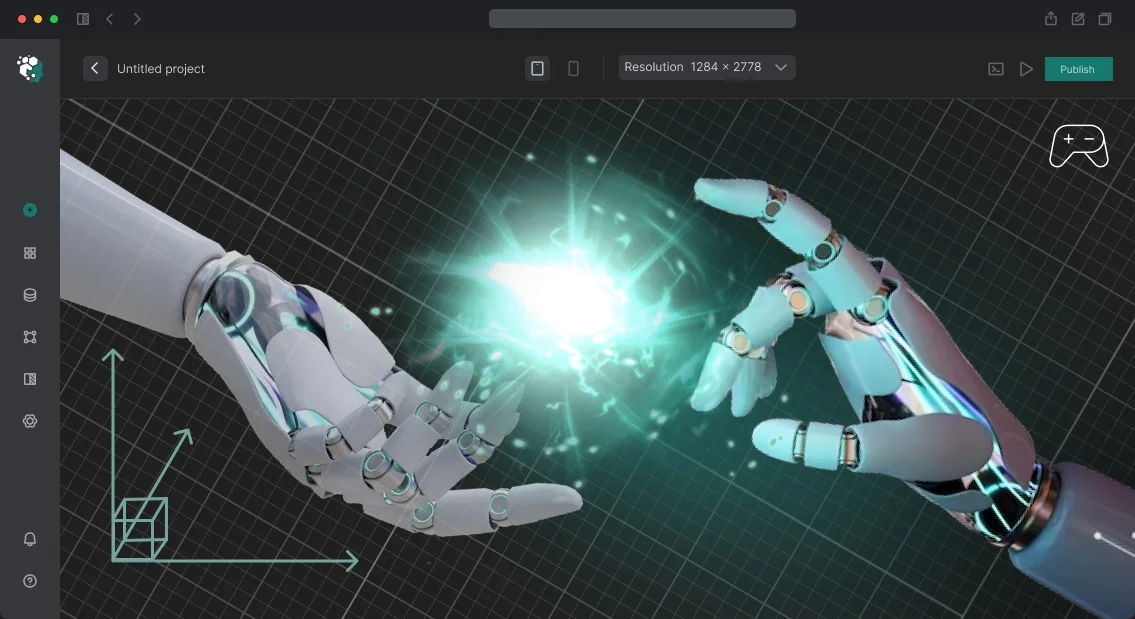
Quality 3D graphics for games in cyberpunk style capture the eye before the player even starts acting. Neon signs, reflections on wet asphalt, and detailed models create a wow effect that holds attention from the very first screenshot.
Players are more willing to share screenshots with impressive visuals, which means your project gets free advertising on social media.
A Recognizable Atmosphere in the Game
Cyberpunk isn't just dark glasses and neon — it's an entire aesthetic that shapes the mood. Think of the depth of immersion Cyberpunk 2077 is famous for — we aim for the same atmosphere in your project.
When the style is consistent from the interface down to background objects, the game is memorable, and players come back again.
The atmosphere in a game directly affects emotions and engagement: the deeper the world is fleshed out, the longer players stay in it.
Standing Out From Competitors
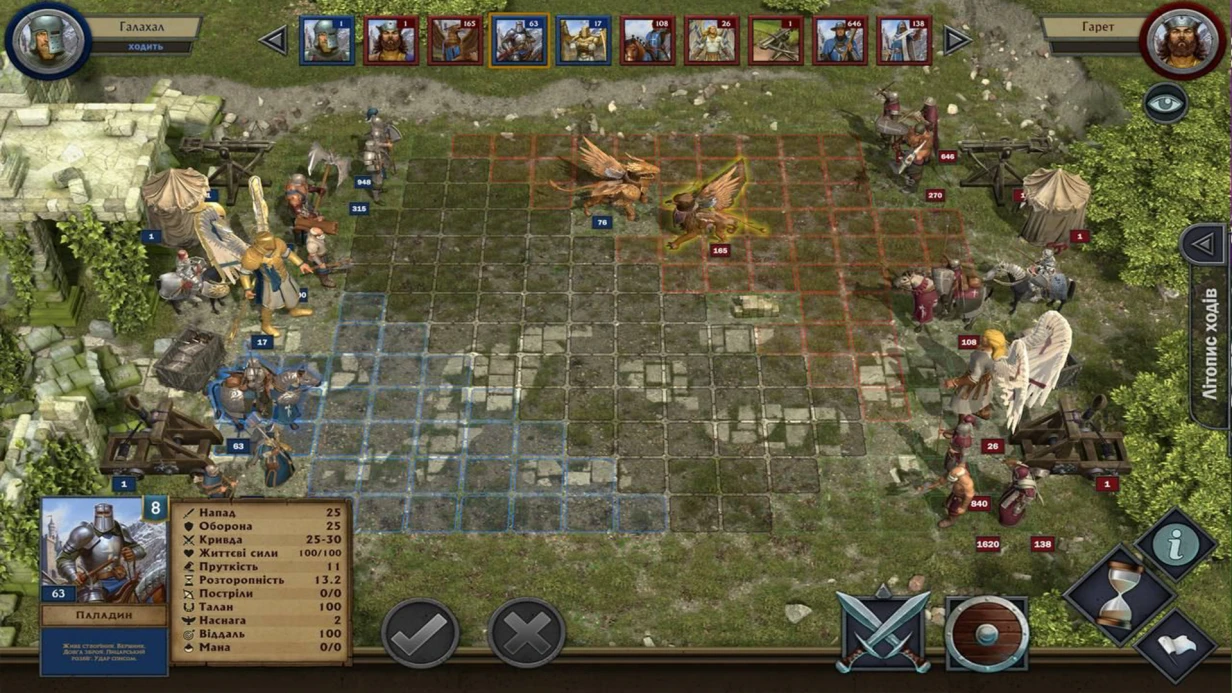
There are thousands of games on the market, and most of them look alike. Thoughtful 3D graphics in cyberpunk style set your project apart in storefronts and screenshots, helping you attract an audience before release and avoid getting lost among similar new titles.
This is especially important for small development teams competing with major publishers for user attention.
Game Brand Recognition
The visual style becomes part of the brand: players recognize your project by its color palette and details, even without seeing the logo. This works for game brand recognition, word-of-mouth, and loyalty — your fans recommend the project to friends on their own.
Over time, visual recognition grows into an association with quality, and every new game from the studio is met with a warm welcome.
3D Model Creation Formats: Choose the One That Fits Your Task
Every project comes with its own task: some need a single striking detail for a scene, while others are building an entire cyberpunk city and filling it with objects step by step. The budget, timeline, and work format with the contractor depend on this.
You don't always need to order the whole scene at once — sometimes one detail is enough to give the game its character.
We've divided 3D model creation into formats so you pay exactly for the scope you need, without overpaying for unnecessary stages. Here's how it looks in practice:
| Format | For Whom | What It Gives the Client |
|---|---|---|
| One-off Model Order | Games with an already built world that lack a single item or character | Quickly fills the gap without hiring an entire team |
| Turnkey Model Pack | Creators launching a new project who want a cohesive style right away | A set of models in a unified style, ready to place in a scene |
| Project Support | Studios and teams on a long-term basis | A predictable flow of models on schedule, without missed launches |
| Optimization of Existing Models | When a game exists but lags due to heavy models | Smooth performance across devices and satisfied players |
| Creation from Your References | Those who have images of the desired result | Accurate match to expectations from the first try |
If you're not sure which format fits best, come for a consultation — we'll look at your task and recommend the optimal option. In any format, you get a model ready for Unity and adapted to the cyberpunk style.
How 3D Model Development Works: Step-by-Step Process
A clear process is half the success of a project. If you want to order 3D modeling without surprises, we structure the work as a transparent route: the stages of 3D model development are known in advance, and you control the project's progress and budget. No "black boxes" — only clear agreements and results you can verify at every step.
- Brief and immersion. We discuss your game: genre, cyberpunk atmosphere, target audience, and the tasks the models need to solve. We clarify which objects are needed — characters, environment, vehicles. As a result, you get a clear description of the scope of work.
- Plan and cost estimate. We lock in the list of models, timelines, and the cost of each stage. You see what you're paying for and in what order the work proceeds. This eliminates unexpected expenses and delays.
- Concept sign-off. We show style options, silhouettes, colors, and details. You make edits before the labor-intensive production starts — this saves time and your budget.
- 3D model production. We create highly detailed models, optimize them for Unity, and select textures and materials. You don't need to understand the technical details — we guarantee the models will look great and run reliably in the game.
- Game development control. At every stage, you receive intermediate results: images, screenshots, and sometimes a test build. You see how the models look in the game context and adjust course in time.
- Final delivery. We assemble all models, set up materials, and prepare integration documentation. You get source files and a clear instruction — all that's left is to add them to your project.
- Post-launch support. We answer questions, help with integration, and fix minor issues. You're never left alone with problems.
What's Included in Delivery: A Pack Ready for Launch
After the project is completed, you don't get scattered files — you get a packaged delivery of 3D models, ready to launch in the game.
We test the pack in a real scene, so your team won't have to spend days on manual polish — everything works right away and looks cohesive.
What exactly is included in the pack:
- A complete set of 3D models in cyberpunk style: heroes, vehicles, buildings, interior items — tailored to your task and project scale.
- Configured textures and materials: a cohesive look in the scene without lengthy adjustments to match the lighting.
- 3D model integration into the project: models are already placed and verified in the engine, nothing needs to be rebuilt.
- Documentation for the game: a short guide to file structure, scene setup, and asset usage.
- Editable source files: your team can make changes without our involvement.
- Performance optimization: models handle large-scale scenes and don't lag on mid-range devices.
- Post-delivery support: we answer questions during implementation and help with small refinements.
And more — you won't need to hunt for details across chats and emails: the entire 3D model delivery, integration, and documentation are collected in one place. You get a clear result that can be handed straight into the production pipeline and launched in the game.
Case Study: Cyberpunk-style 3D Models Increased Game Conversion
Usually, a client comes to us with working game mechanics already in place: the logic works, but players quickly lose interest and never reach the point of paying.
In such cases, visuals are the main retention factor: an empty "gray" world doesn't make anyone want to stay, explore locations, or come back again. That's exactly the problem quality 3D graphics solve.
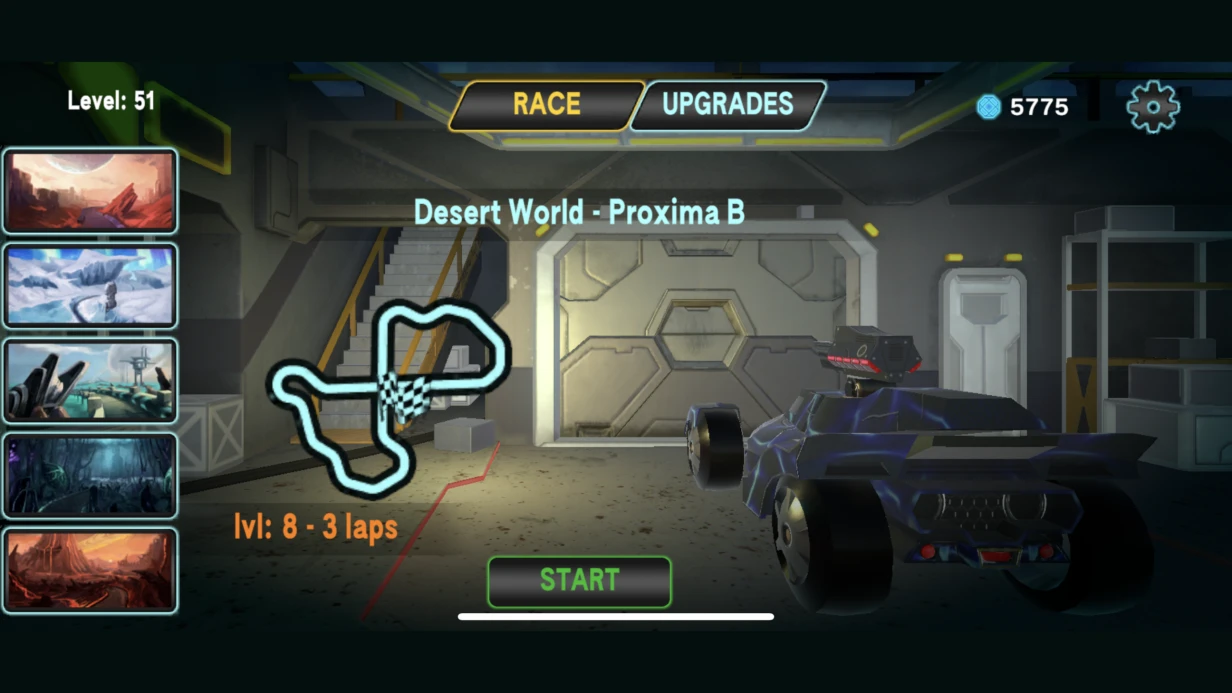
In one project, we created a full set of models for a cyberpunk-style game: city locations with neon lighting, characters, vehicles, and interactive objects.
Before that, users would finish the first level and close the game — they were missing the atmosphere and visual immersion in the world. After replacing the models, average session time nearly doubled, and conversion to in-game item purchases increased by 30%.
Why the Visuals Solved the Problem
It's not just about a "pretty picture." In a cyberpunk setting, atmosphere drives the story: neon signs, dark alleyways, and detailed building facades create the feeling of a living city.
Players want to examine the environment, discover hidden details, take screenshots, and share them. This increases time spent in the game and organic reach — every screenshot becomes a mini-ad for the project.
We work on professional equipment and use well-tuned tools, so we maintain a balance between model detail and game performance. Even on mid-range devices, the graphics look cohesive and don't lag — for the project owner, that's a stable result without user complaints.
Numbers That Speak for Themselves
After the project, we got not just an improved picture, but measurable business results. The key metric was the growth in in-game purchase conversion and audience retention: players started returning to the project several times more often.
The client was satisfied and continued the partnership: models from this set are now used in marketing materials and trailers, further strengthening the game's recognition.
What If I Have a Non-Standard Task in Terms of Style and Mechanics?
This is the question we get asked most often — and it's great that you're asking it. Most studios have polished templates, so non-standard tasks scare them: they start "fitting" your project into their existing work.
We're built differently: non-standard 3D models and unusual mechanics are exactly what we exist for. The uniqueness of your project doesn't add risk — it makes the result stronger.
When you come to us with the idea "let's do it differently from everyone else," we don't ask "are you sure?" We gather a brief, ask the right questions about your audience and game goals, and propose a solution that fits your tasks.
That's what custom game development means: we don't sell a "box" — we build a solution for each specific project, taking into account its style, genre, and technical constraints.
Flexible 3D terms aren't just empty words. For one project, we render dark industrial locations with photorealistic details; for another, we stylize the environment into bright comic-book graphics. In both cases, the client gets exactly the look and mood they envisioned.
We know how to hear "I need it to be unusual" and turn that into concrete sketches, prototypes, and finished assets.
Let's also address special requirements for the game. If you have complex mechanics, an unconventional camera, or an experimental genre, we work out their impact on graphics and performance in advance. That's not a technical difficulty — it's a matter of proper planning.
You get clear timelines and a transparent cost estimate before work starts, and during the process you see intermediate results and make edits without losing quality.
The bottom line is simple: with us, you stop worrying about "what if this is too complicated." Come with any idea — we'll analyze it, offer options, and build a game you'll be proud of and your players will enjoy. That's the level of freedom worth working with a team for, rather than a single freelancer.
Frequently Asked Questions About 3D Model Development for Games
Doubts before starting are normal. Every client wants to understand how long the work will take, what happens to the model after delivery, and who's responsible if something goes wrong.
We've collected answers to the main questions about timelines, guarantees, and revisions — so you can make a decision with peace of mind.
How long does it take to develop one 3D model?
The timeline depends on complexity: a character with animation and detailed equipment takes longer than an environment prop. We give realistic timelines after the brief, usually 5–10 business days per model.
What matters most to you is predictability. That's why we lock timelines into the contract and stick to them without "stretching" the project.
If the task turns out to be more complex than it seemed, we warn you in advance and offer options rather than presenting you with a fait accompli.
What happens to a model if it doesn't fit the game's style?
Before we start, we collect references and approve the direction with you: silhouette, materials, key details. This approach eliminates the risk of "delivering the wrong thing" before the final rendering stage.
We work in stages: first rough shapes, then detail refinement. You see intermediate results and can adjust direction before the main budget is spent.
Can a model be revised after project delivery?
Yes, revisions are part of the workflow. We build several rounds of edits into the project so you can fine-tune details: color, proportions, small elements.
If new tasks come up after release — for example, adding a model variation or changing inventory — we continue working with you under a support contract. Your models don't end up unattended.
What guarantees do I have that the model will work in the game without issues?
We create models with your technical requirements in mind: optimization, formats, build specifics. You get files that open and work correctly in the project, plus a short integration guide.
A guarantee on the result isn't just words. If a model doesn't display or works incorrectly, we fix the problem free of charge within an agreed period after delivery.
What are the risks when ordering 3D models, and how do you cover them?
The main risk for a client is investing in a model that doesn't match expectations or delays the release date. We cover this with three tools: a detailed brief, stage-by-stage payment, and timelines fixed in the contract.
You pay for stages, not "promises." If we miss deadlines — you receive compensation or a refund. Transparent terms protect both sides and let us work without tension.
If you still have questions about your task — write to us. We'll explain how we'll handle your specific case, show examples of similar work, and give you a sense of timelines and budget.Shall We Discuss Your Cyberpunk-style Project Today?
Ready-made 3D models in cyberpunk style can completely change how your game is perceived: they catch the eye, create a unique atmosphere, and make players come back again.
But to get that result, you don't have to start with a lengthy technical specification — just discuss your game project with our specialists.
After you reach out, you'll get a task breakdown, a work plan, and a timeline estimate — no complicated forms, no waiting in line. We'll advise on which solutions will strengthen your project and help you order cyberpunk-style 3D models with maximum value for your budget.
What you get when you contact us:
- a review of your original idea and a style direction matched to your gameplay;
- a work plan with clear stages — from concept to finished model;
- a cost and timeline estimate right after the first discussion, with no hidden fees;
- models adapted for Unity — ready for integration;
- the ability to make edits before final delivery;
- support at every stage and a guarantee on the result.
Leave a request on the website or call us — we'll discuss the details and propose a solution for your task. Cyberpunk-style 3D model development doesn't wait: the sooner we start, the sooner your game reaches players.