

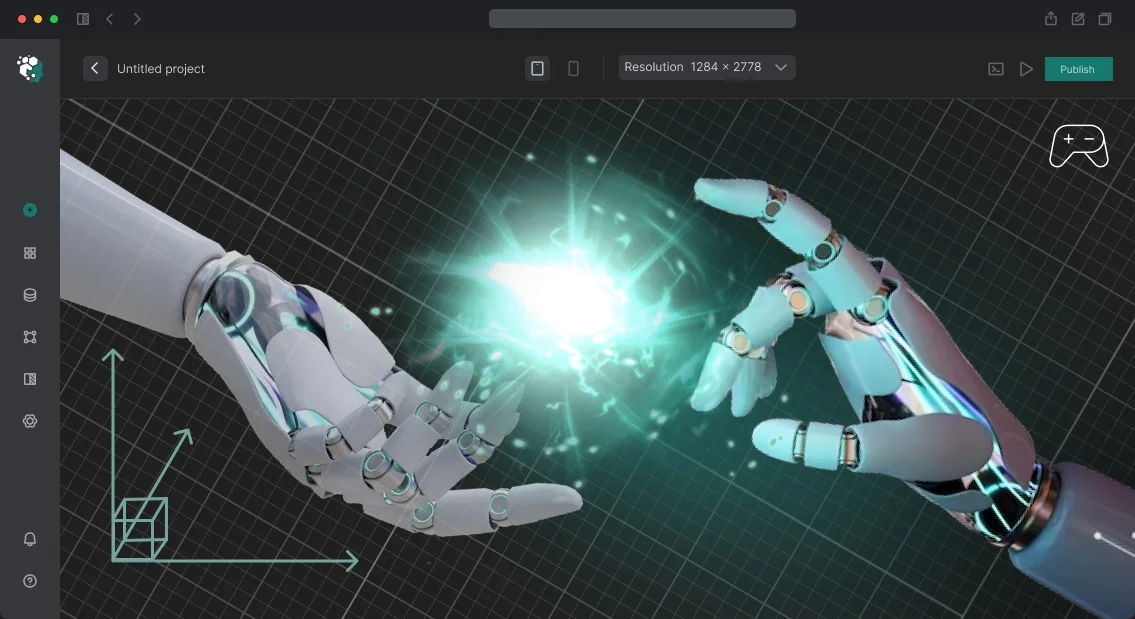
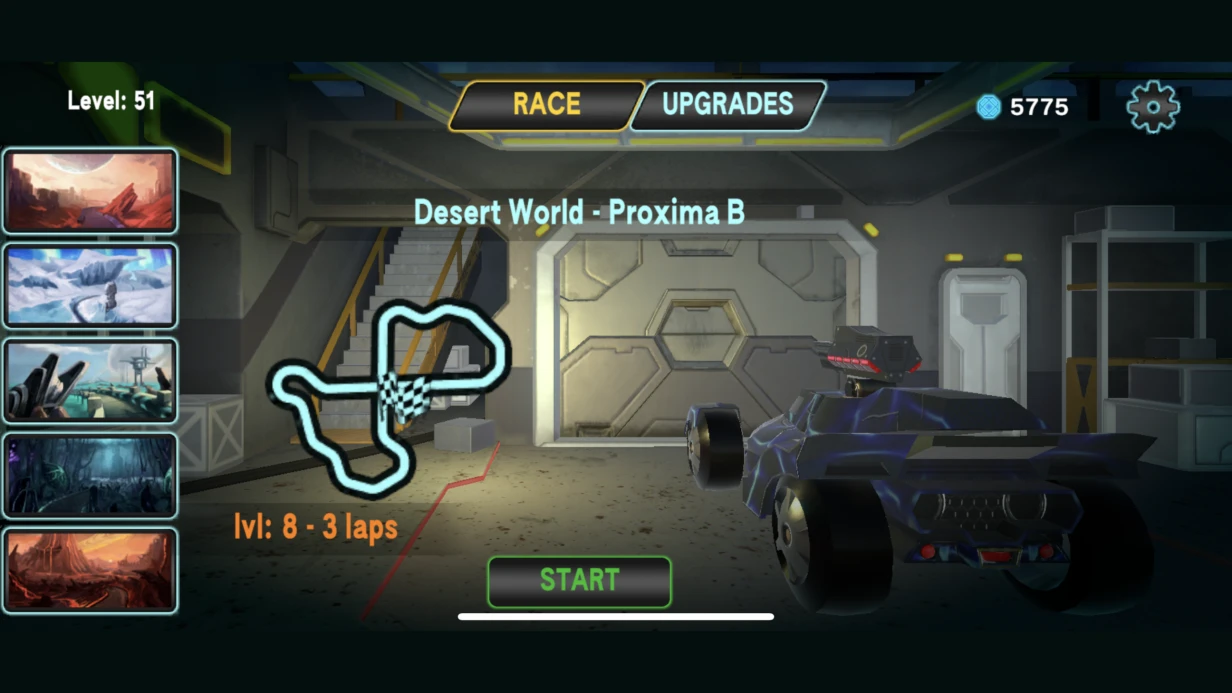
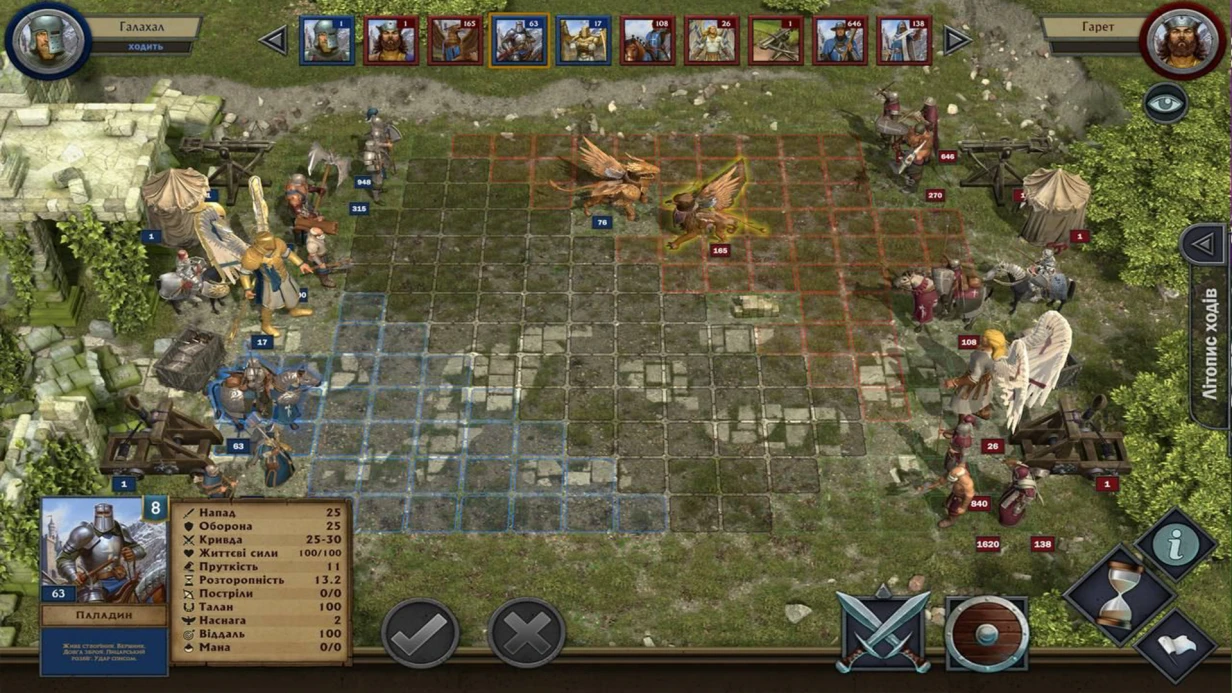
Players Judge by the Picture: Why Photorealistic Is Critical
Players make decisions in seconds: a screenshot, a storefront cover, the opening frames of a trailer. If the picture doesn't convince — even polished gameplay goes unnoticed.
Photorealistic graphics remove this barrier: they instantly create trust, immersion, and a sense of product quality.
Photorealism directly affects retention and sales. Beautiful graphics are free marketing: players take screenshots, streamers hunt for visually striking projects, and the community spreads the word about your game on its own.
As a result, wishlist additions grow, conversion to purchase rises, and players spend more time in the project.
To achieve this effect, you need not just 3D models, but models that look believable in any scene. We make photorealistic assets for Unity: we refine materials, lighting, and detail so the graphics work as a unified image of your world. This removes the main risk — when the picture looks "cheap" and drives away paying users.
In the end, you get a game you're not ashamed to display on a storefront, and a product people are willing to pay for. Photorealistic models become the foundation for engagement, and investments in graphics pay off through higher retention and revenue. We help you close this stage quickly and with predictable quality.
What You Get from High-Quality 3D Graphics
In the gaming industry, the picture isn't decoration — it's a factor that directly affects revenue.
Photorealistic 3D graphics create a sense of presence, and it's this presence that keeps the player engaged: they want to examine details, return to the world, and buy more content.
We produce graphics at a professional level, using Unity's capabilities for a stable and predictable result — not just "drawing something pretty."
Engagement and Retention
Players believe in a realistic world, so they're more willing to explore locations and interact with objects. High-quality 3D models extend the session: players don't quit after five minutes but keep progressing through levels.
For business, this means higher retention metrics — the audience stays with the project longer without additional ad spend.
Time in Game and Monetization
The more time a player spends in the game, the higher their value: more ad impressions, more in-app purchases. Photorealistic graphics motivate players to reach the end, unlock new items, and return for rewards.
As a result, average revenue per user grows — with the same traffic, revenue increases without raising the marketing budget.
Loyalty and Organic Growth
A realistic picture is a visual mark of quality that sets the game apart from competitors. Users take screenshots themselves, share them on social media, and recommend the project to friends.
Such a community lowers customer acquisition cost and builds a stable audience that stays with the brand even after release.
High-quality 3D graphics work for all key project metrics: engagement, retention, monetization, and loyalty. By ordering models from us, you get not just a picture, but a tool that increases revenue and strengthens the game's market position.
Formats of Photorealistic 3D Models for Your Task
Photorealistic models aren't just a pretty picture — they also affect performance, stability, and project budget. The same object can look great on PC but "kill" a mobile device, causing lag and overheating. That's why choosing the right model format is so important — and that's where we can help.
We create 3D models for Unity in a photorealistic style, adapted for different platforms. Below are the main formats we use so you can understand which one fits your project.
| Format | Who It's For | What It Gives the Client |
|---|---|---|
| Mobile (optimized) | Casual games, iOS and Android projects | Fast loading, smooth performance even on budget devices, wide audience reach, and more installs |
| PC format (maximum detail) | PC games, high-requirement projects | Photorealistic visuals, full immersion effect, impressive screenshots and streams that promote the game on their own |
| Cross-platform | Games for mobile and PC simultaneously | Unified visual style on all devices, flexibility in settings, development savings, and easy scaling |
| VR/AR | Virtual and augmented reality projects | Deep immersion without motion sickness, stable frame rate, and positive reviews |
| For advertising | Trailers, promo materials | Cinematic look that boosts brand recognition and pre-order conversion |
Format choice directly affects game ratings, reviews, and revenue. We select the optimal option for your target platform, considering project scope and audience expectations. Contact us — we'll discuss your task and propose a solution that delivers results.
How the Work on 3D Models Proceeds
So you understand where the budget and time go, we've structured the Photorealistic 3D model creation process as a clear sequence of steps. You control every stage, see intermediate results, and make decisions before the work moves into final polish. No magic and no surprises — only a brief, approvals, and a predictable outcome.
-
Brief and task definition. We define what project the models are needed for: platform, gameplay, visual references, number of objects, and required level of detail. The output is a document with tasks, acceptance criteria, and deadlines.
-
Research and reference selection. We study how real objects, materials, and lighting look in your niche. We prepare a selection and a style collage — you approve the direction before the labor-intensive work begins.
-
Concept approval. We create draft versions of key models or one representative object. We show how the final Photorealistic style will look and make edits until you're satisfied with the result.
-
Creating the full set of models. After concept approval, we model all objects: shapes, textures, materials, and engine optimization. We keep you updated on progress at checkpoints so there are no surprises at the finish.
-
Verification and testing in Unity. We assemble the scene and check how the models behave under different lighting and from the player's camera. We fix visual artifacts and performance issues before handing them over to you.
-
Final delivery and support. We hand over source files with settings and integration instructions. After implementation, we stay in touch: if something needs fixing or adding — we refine it without a long onboarding cycle.
In the end, you get not just files, but a ready visual result that fits into the project and requires no rework. Key approval points protect against extra expenses and missed deadlines.
What's Included in the 3D Model Delivery Package
When you order a Photorealistic 3D model, you get not just a picture, but a complete working package that can be used in the project right away. We package the result so your team spends time building the game, not on rework and hunting for the right files.
Here's exactly what's included in the delivery package:
- Ready 3D model. A fully assembled object with correct geometry adapted for the game engine. The model is optimized for use in frame without losing visual quality.
- A set of realistic textures. Multiple material layers — from base color to specular, normal, and reflection maps. This delivers the photorealistic look that holds up under different lighting conditions.
- Editable source files. We provide files in an open format — you can make edits with your own team or return to us for refinement. This is a safety net in case the concept changes.
- Technical documentation. Concise but sufficient: which materials were used, how to load the object into the scene, and what render settings it's designed for. No need to figure things out by trial and error.
- Compatibility check. Before delivery, we run the model through the main Unity usage scenarios: loading, lighting, interaction. You get confidence that the object works "out of the box" in the game.
- Final render preview. A few example renders of the model under different conditions — a report on how it looks in the end and a reference for your team when setting up the scene.
This package covers the entire cycle: from idea to product integration. You know what you'll get, see the result in advance, and don't depend on a single specialist who's the only one who understands the files.
For us, it's important that you feel in control at every stage, not receiving a "black box" at the end. That's why all materials are structured, documented, and ready for use in your workflow.
Case Study: How 3D Models Increased Conversion in a Game
The developer of the mobile RPG Northlight Games came with a non-obvious pain: despite solid mechanics and regular updates, the game lost users as early as the first levels.
Trailers and screenshots looked "plastic" — players didn't believe in the world, so install conversion and first purchases stayed below business expectations. This situation is typical for many game products where strong gameplay isn't backed by visual trust.
We audited the game's objects and reworked key 3D models under a unified Photorealistic standard: characters, weapons, environment, and interior items.
Each object received natural materials, believable lighting, and detail that reads well both on a large screen and on a mid-range phone.
What Changed in Numbers
After the model update, conversion from the demo version to the full version grew by 37%, and the share of players who made a purchase increased 2.1 times. Average session length grew from 6 to 11 minutes — users began exploring locations longer and returning to the game.
The studio got not just files, but a streamlined production process: we updated 45 objects, assembled them in the final Unity build, and provided optimization recommendations.
A month later, the client ordered a model set for a new level, and later — moved to ongoing support for all releases. A repeat order and contract expansion are the main indicators that Photorealistic graphics paid off.
How to Choose a 3D Model Format for Your Project?
Choosing a 3D model format directly affects budget, timelines, and how your project looks on different devices. There's no one-size-fits-all solution: what works perfectly on a powerful PC can ruin the performance of a mobile game or web version.
That's why the main question isn't "which format is better," but "what is your project's goal and where will users interact with it."
If you're making a photorealistic game for PC and consoles, the format should deliver maximum detail: complex materials, accurate textures, believable lighting.
This requires more resources to create and render, but these are exactly the models that create the full immersion effect. The budget here is set higher — but the result immediately sets the project apart from competitors and strengthens its marketing potential.
If your project targets mobile devices or web platforms, optimized characteristics come to the forefront: controlled polygon counts, compact textures, and balanced geometry. The challenge is maintaining visual appeal and a "premium" look without overloading the device.
This saves budget on technical support and allows the game to run stably even on not-so-new phones — reaching more users.
We help with format selection at the briefing stage: we study the project, target platforms, and the tasks the models need to solve.
Based on that, we propose the optimal balance of detail and performance so you don't overpay for unused characteristics and don't get a "lightweight" but unexpressive result.
Solutions refined on Unity projects allow us to build the right model architecture from the start, saving your time and revisions at later stages.
In the end, choosing the right format is a compromise between visual impact, speed, and budget.
You don't have to understand technical nuances: just describe where and how the game will be used, and we'll select a format, package it into clear estimated timelines, and offer a transparent quote.
That way you get a photorealistic picture exactly where you need it without spending on excessive complexity.
Frequently Asked Questions About 3D Model Creation
We understand: before ordering 3D models, you have the same questions — timelines, budget, rights to the result, and the ability to make changes. We've gathered answers so you can see in advance how we work and what you get.
How long does it take to create one 3D model?
The timeline depends on complexity and detail. A simple object takes 3–5 business days; a character or location with photorealistic textures takes from two weeks.
Before starting, we set dates in the contract and send intermediate versions so you can see progress and not worry about the deadline.
How much does it cost to order a 3D model?
We give the exact cost after the brief: it depends on the number of objects, level of detail, and usage volume. We work with a fixed quote — the final amount doesn't change during the process.
For volumes of five models or more, we offer a discount, and we spell out all details in the contract before work begins.
Who owns the rights to the finished models?
All intellectual property rights transfer to you after full payment. You can freely use the models in the game, advertising materials, and any other projects — without additional fees. This is a separate clause in the contract, so no surprises six months down the road.
Can I make changes after delivery?
Yes, we include two rounds of revisions in the cost. You send a list of changes — we make them and show the updated version. If something needs reworking beyond what was agreed, the price is fixed in advance. This way you get a result that truly fits your game.
What guarantees that the result will be high quality?
We work in Unity on professional equipment and check every stage against references. Before delivery, you see the model in the engine and approve it yourself. If something is wrong, we fix it under our revision policy. That's why you get models that can go into the project right away.
Still have questions? Write to us — we'll share the details for your task and prepare an estimate within a day.Order 3D Models and Get a Game People Fall in Love With
Think photorealistic 3D models are slow and expensive? In fact, the right process speeds up production and pays off through player interest. We take on modeling, textures, and Unity preparation, and you get a game people fall in love with at first sight.
Leave a request for a consultation — we'll explain how we'll structure the work for your task and calculate the cost of the 3D models. No complex technical details: just a clear plan, timelines, and budget.
We'll advise which objects to create first so you can quickly assemble a playable prototype and show it to investors or publishers.
What you get by ordering 3D models from us:
- Player immersion: photorealistic characters and environments hold attention and amplify the game's emotional impact.
- Transparent process: we show draft versions at every stage; you see the result before final delivery.
- Fixed deadlines: we set a work schedule and stick to it without "someday" delays.
- Quality guarantee: if a model doesn't meet expectations, we refine it at no extra charge.
- Complete package: Unity adaptation, optimization, and configuration — you get ready-to-integrate objects for the game.
- Post-launch support: we help with edits and model updates once the game is live.
Ordering 3D models means saving months of development and getting a game people fall in love with. We cover the entire cycle: from references to final render. Tell us what you need — we'll send a cost estimate and answer your questions today.