

Environment and Location Concept Art
We create concept art that is production-ready from day one — with readable modular schematics, orthographic projections, and prop lists. No beautiful but useless illustrations that later get redrawn. Our goal is to provide level designers and 3D artists with technical references, not just mood. A technical concept is 3–5 times more effective than an illustration for conveying precise dimensions and scale — this is confirmed by major studio practice. According to a Game Developers Conference survey, concept art with orthographic schematics reduces 3D art time by 40%.
Why environment concept often fails in development?
The main reason is that the artist draws what looks "beautiful" rather than what "works." As a result, the level doesn't match the gameplay: scale drifts, navigation gets lost, and the level designer spends weeks adapting. A good environment concept is architectural documentation, not a painting. It must include: coordinate axes, scale markers, modular grid, references to basic 3D primitives. That's how we work.
How does an environment illustration differ from a production concept?
An illustration is mood. A production concept is a technical assembly. It includes:
- Readable planes (floor/ceiling/walls, open sky for exteriors);
- Navigation markers (passages, stairs, key props);
- Breakdown into modular zones (for tile-based systems);
- Orthographic layout (top or side view) — mandatory for the 3D team.
For the 3D team, orthographic schematics are far more useful than perspective renders: they give exact dimensions. Therefore, a good concept consists of multiple sheets: perspective view for atmosphere, orthographic layout for dimensions, detail sheets for unique props. Our experience shows that this approach reduces 3D art rework by 40%.
How does environment concept work?
Technical brief. First, we define: size of the game space, gameplay type (arena, exploration, puzzle, cutscene), platform, graphical level, art style. Without this, any sketch is guesswork.
Moodboard and research. We gather a PureRef with historical architecture, real materials, references from similar games. We take the best and adapt to the task. This is not a "finding inspiration" stage but a systematic data collection.
Blockout in Blender. For complex spaces — a quick 3D blockout using primitives. We set dimensions, check readability from camera, trace the player's path. 2–4 hours of work — and we already know the location won't "drift" in 3D.
Sketch stage. 3–5 perspective thumbnails with different lighting solutions. The client chooses a direction.
Final concept. Detailed perspective view + one or two projections + material breakdown. For modular locations — a separate sheet with assembly rules and a prop list with priorities (hero vs filler).
Case study: dungeon location for an isometric RPG
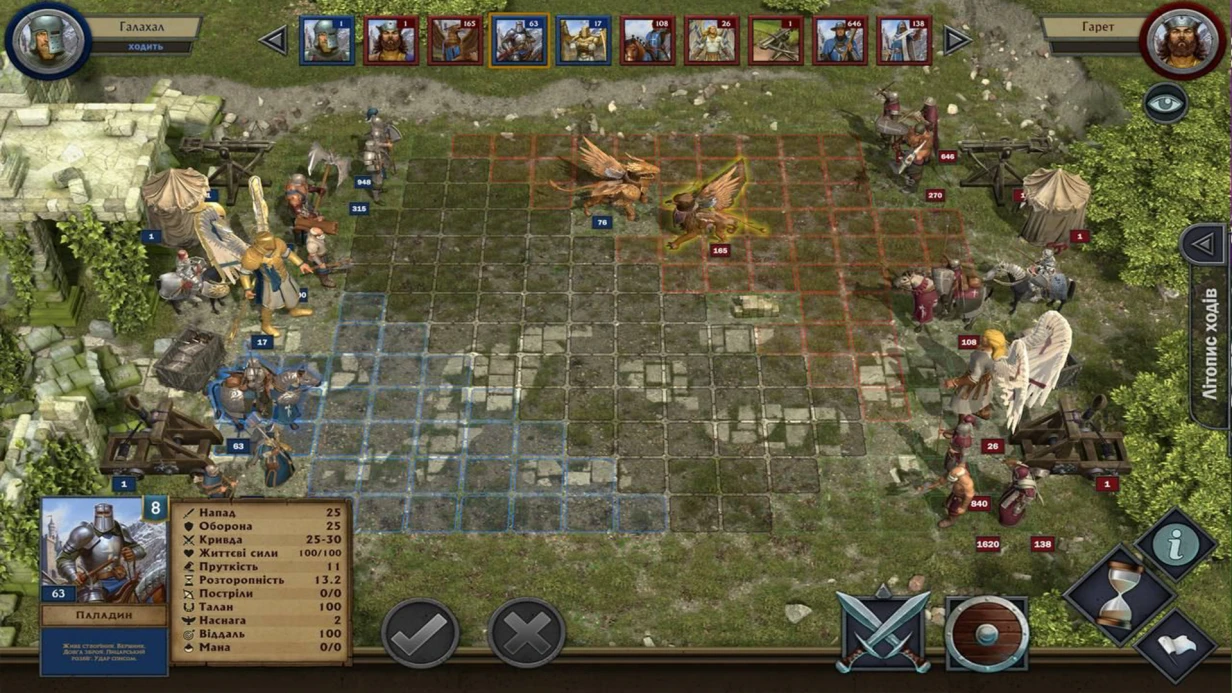
We made three parallel sketches: Norse-inspired, generic fantasy, Greco-Roman. The client chose a mix of the first and third. Then — a detailed concept with a 4×4 meter modular grid for a tile-based system. The level designer received a document that allowed them to start working without a single question. Result: the location was assembled in 2 days instead of 6.
What's included in our environment concept art package?
Package breakdown
- 2 to 5 views of the location (perspective, orthographic, breakdowns);
- Prop list with priorities (hero props, filler props);
- Modular layout for tile-based systems;
- Colour script with palette and mood references;
- Source files in PSD/Procreate + ready previews.
Optionally — basic 3D blockout in Blender for scale verification.
Comparison: concept illustration vs technical concept
| Parameter | Illustration | Technical concept |
|---|---|---|
| Goal | Mood | Assembly instructions |
| Scale | Artistic | Precise, with grid |
| Orthographic projections | No | Mandatory |
| Prop list | No | Yes |
| Time to adapt in 3D | 2–5 days | 0–1 day |
In practice, this reduces the art department budget by 30–50% by eliminating rework.
Typical timelines per location type
| Type | Deliverables | Timeline |
|---|---|---|
| Simple (room, corridor) | 1 perspective view + layout | 3–5 days |
| Medium (level, zone) | 2–3 views + prop list | 7–12 days |
| Key (boss room, hub) | Full package + detail sheets | 12–20 days |
| Open world / large zone | Multiple zones + overworld map | 3–6 weeks |
Pricing is calculated individually based on package scope. To get an estimate for your project, contact us — we'll send a portfolio of similar work and a quote.
As a studio with years of experience in gamedev, we guarantee that every concept undergoes technical verification for scale, modularity, and readability for the 3D team. We have completed over 50 projects — from indie to AAA. Get a free consultation for your project — we'll estimate scope and timeline. Contact us to discuss details.