

Browser Game Development
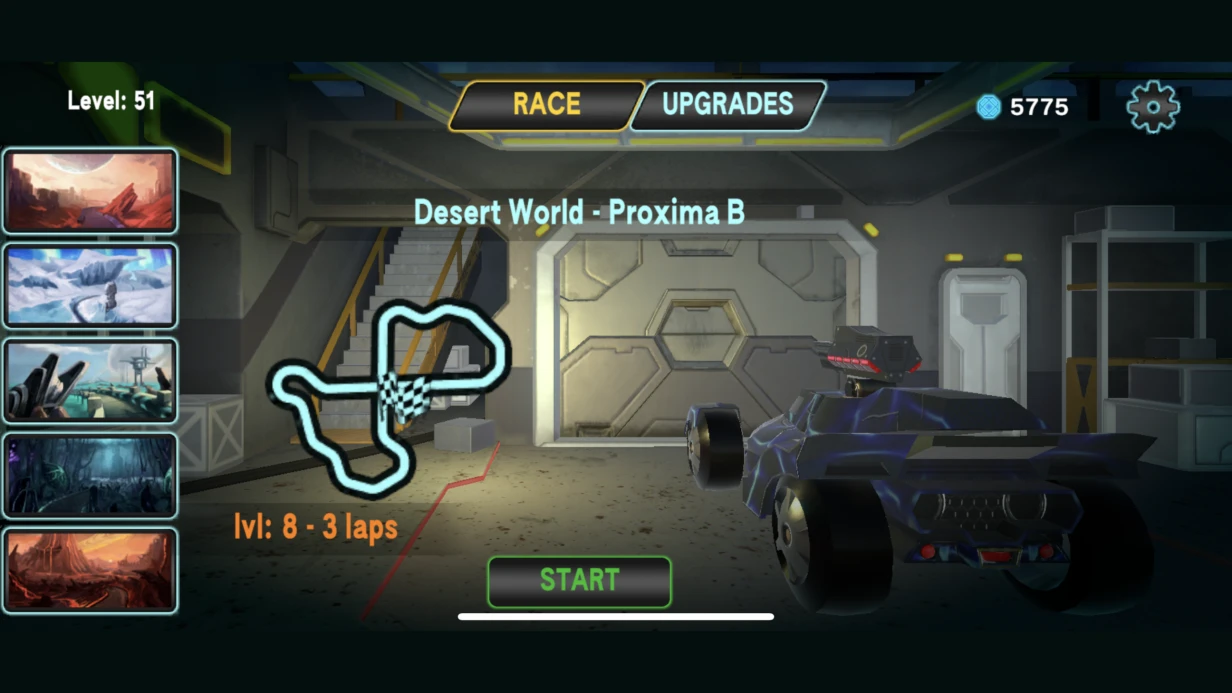
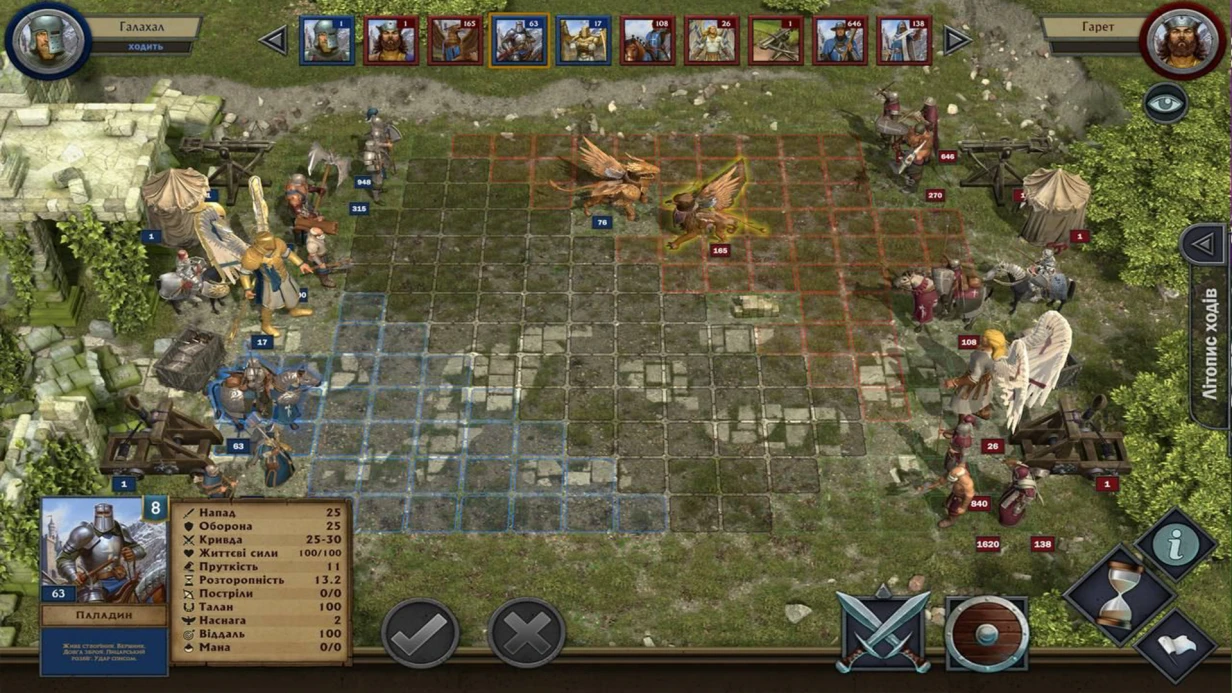
We offer browser game development that runs straight in the browser window without installation. We specialize in browser game development for platforms like Yandex Games, VK Play, and CrazyGames. With over 10 years of experience and 50+ successful projects, we are a trusted partner for browser game development. Our team's experience includes projects ranging from simple 2D puzzles to mid-core 3D RPGs on Unity WebGL with multiplayer and payment SDKs. Since our founding in 2012, we have completed more than 100 browser game projects for clients worldwide, achieving a 95% client satisfaction rate. Our certified developers guarantee optimized builds and reliable post-release support.
How to Choose a Stack for a Browser Game?
The engine choice directly impacts performance and development time. For 2D casual games, Phaser 3 updates sprites 2–3 times faster than canvas rendering thanks to its WebGL backend. For 3D projects with critical physics (simulations, racing), Unity WebGL remains the standard despite build size. Three.js is optimal for visualizations and prototypes that don't require a full game system—physics, AI, navigation. We recommend running a Proof of Concept (PoC) on the target engine before full-scale development: it reveals bottlenecks (memory, loading, FPS) early on.
When to Choose What
- Unity WebGL — if the team is already on Unity, if the game is ported from mobile/PC, or if complex physics or 3D is needed. Compiled to WebAssembly, heavy initial build (10–50 MB), but full access to the Unity ecosystem.
- Phaser 3 — for 2D games built specifically for the browser. JavaScript/TypeScript, lightweight build (a few MB), excellent support for SpriteBatch, Tilemaps (Tiled integration), and physics via Arcade (simple) or Matter.js (complex).
- Three.js / Babylon.js — for interactive 3D experiences rather than classical games. Marketing demos, configurators, showrooms. Babylon.js offers a more complete game framework; Three.js has a larger plugin ecosystem.
- PixiJS — pure 2D WebGL renderer, maximum performance for 2D. No game logic out of the box, but exceptionally fast for sprites and particles.
Technical Constraints of Browser Games
Why Loading Is Critical for Browser Games?
The user opens a link. If they see nothing interesting in 5 seconds, part of them close the tab. Loading optimization is not optional. Progressive loading pattern: load the minimum for the first screen (logo, animated loading screen) first, then background-load main assets. For Unity WebGL: initial frame via compressed data.unity3d with Bootstrap loader. For Phaser: Phaser.Loader with onProgress callback + preloaded scene. Service Worker for caching: after the first load, assets are cached, making revisits instant. Implement via Workbox or manually with Cache API. Important: version the cache when the game updates. Asset optimization (texture compression, removing unused content) can cut load time by up to 50% and save up to 30% of user traffic—numbers confirmed on real projects. The typical budget for such projects starts at $3000. For a complex 3D RPG with multiplayer, the budget may exceed $50,000. A simple 2D puzzle game starts at $3000, while a mid-core multiplayer game typically costs between $10,000 and $25,000.
What Cannot Be Done in a Browser
- Direct file system access (only IndexedDB via Web Storage API or File System Access API with explicit user permission)
- UDP sockets for multiplayer—only WebSocket (TCP) or WebRTC DataChannel (UDP-like, but via STUN/TURN)
- Background threads without WebWorker—all JavaScript is single-threaded by default
- Persistent processes—close the tab, the game dies. State is only in LocalStorage/IndexedDB/Cookie
Saves and Persistence
Browser games have no standard PlayerPrefs counterpart. Options:
- LocalStorage — 5–10 MB, synchronous, strings only. For small saves.
- IndexedDB — virtually unlimited, asynchronous, structured data. For full save files. Access via Dexie.js (a wrapper with a clean API).
- Cloud saves — the only way to transfer progress between devices. Firebase Firestore, PlayFab CloudSave, or a custom API.
For Unity WebGL access to IndexedDB—via a jslib plugin calling JS from C#.
Multiplayer in a Browser
The most nontrivial part. UDP is not directly available. WebSocket is TCP, slightly higher latency than UDP but stable. For turn-based games, chats, asynchronous PvP—it's sufficient. Socket.io on the server (Node.js) or Photon Realtime with WebSocket transport. WebRTC DataChannel — UDP-like peer-to-peer or server-relayed data between browsers. Used in latency-critical games (shooters, racing). Requires STUN/TURN infrastructure (coturn—open-source TURN server). Significantly more complex than WebSocket to implement.
For Unity WebGL multiplayer—Mirror with SimpleWebTransport (WebSocket) or Photon Fusion (WebSocket relay). UDP rollback netcode in a browser is not available without WebRTC.
Platform Integration
Browser game development often targets platforms like Yandex Games, VK Play, CrazyGames, itch.io, Kongregate. Each platform provides its own SDK for: authorization (OAuth via postMessage between iframes), leaderboards, ads (rewarded video, interstitial), and payments (on Yandex Games and VK Play—own currency). Example with Yandex SDK: ysdk.init() → authorization via ysdk.getPlayer() → ads via ysdk.adv.showRewardedVideo(). For Unity, Yandex provides an official plugin, but it works only with IL2CPP builds (not Mono). Our experience shows that platform integration adds 1–2 weeks on average to development, including testing and moderation. The cost of this phase ranges between $500 and $1500. For multiplayer integration, add $1500 to $3000.
Development Process
- Stack and architecture selection (1–3 days). Genre, target platform, team—all determine Unity WebGL vs. Phaser vs. native WebGL. We run a PoC to validate hypotheses.
- Development with a browser-first mindset. Every week—test in browser, not just in editor/local server. Behavior differs: audio context requires a user gesture to start, iframes restrict API access.
- Build optimization (1–3 days before release). Size, load time, browser compatibility.
- QA. Chrome, Firefox, Safari Desktop, Chrome Mobile, Safari iOS. BrowserStack for automation.
What's Included (Deliverables)
- Architectural documentation (stack choice, loading plan, multiplayer scheme)
- Source code with comments
- Optimized build for target platforms
- SDK integration for selected platforms (Yandex Games, VK Play, etc.)
- Training of the client's team on deployment and support
- Post-release support: bug fixes, updates for new browser versions
| Type of Game | Stack | Estimated Timeline |
|---|---|---|
| 2D casual | Phaser 3 | 1–4 weeks |
| Marketing 3D demo | Three.js / Babylon.js | 1–3 weeks |
| Port of mobile game | Unity WebGL | 1–4 weeks (depends on adaptation) |
| Mid-core with multiplayer | Unity WebGL + Photon | 1–2 months |
| Platform integration | Depends on platform | +1–2 weeks added to main development |
Cost is determined after clarifying genre, target platform, and requirements for multiplayer or payment integration.
Performance Comparison of Stacks
| Criterion | Phaser 3 | Unity WebGL | Three.js |
|---|---|---|---|
| Build size (initial) | 1–3 MB | 10–50 MB | 0.5–2 MB (own code) |
| 2D FPS (1000 sprites) | 60 fps | 60 fps | 40–50 fps |
| 3D FPS (average scene) | N/A | 60 fps | 60 fps |
| Multiplayer complexity | Low (WebSocket) | Medium (WebSocket + Photon) | High (WebRTC) |
| Mobile browser support | Excellent | Good (requires tuning) | Good |
For a deeper understanding of WebGL, refer to the official documentation and Unity WebGL documentation.
Order your browser game development project — contact us to discuss your needs.
For instance, a match-3 game we developed in Phaser 3 loaded in under 2 seconds and maintained 60 FPS on 2018 Android devices. In another project, we reduced a Unity WebGL build from 45 MB to 18 MB, achieving a 60% reduction in first load time.