



Balancing Game Parameters and Item Stats
Often after release, players pick only one character while other classes sit idle. We've encountered this dozens of times when balancing projects on Unity and Unreal. Each time, we build a DPS matrix per class, calculate Time to kill (TTK) for every pair, find outliers, and explain their cause. With 10+ years of experience and over 50 completed projects, we guarantee mathematically sound balance that retains users and keeps the game engaging.
What Metrics Do We Calculate Before Tweaking Numbers?
DPS (damage per second) — the basic attack metric. Calculated with attack speed, critical chance, and critical multiplier: DPS = baseDamage * attacksPerSecond * (1 + critChance * (critMultiplier - 1)). If the mage has DPS = 450 and the warrior has DPS = 280, but the warrior has 3x HP, their EHP/DPS ratio needs to be examined in pair.
EHP (effective hit points) — HP accounting for armor and evasion: EHP = HP / (1 - damageReduction). With damageReduction = 0.4 and HP = 1000, we get EHP = 1667. This is an honest comparison of survivability across different archetypes.
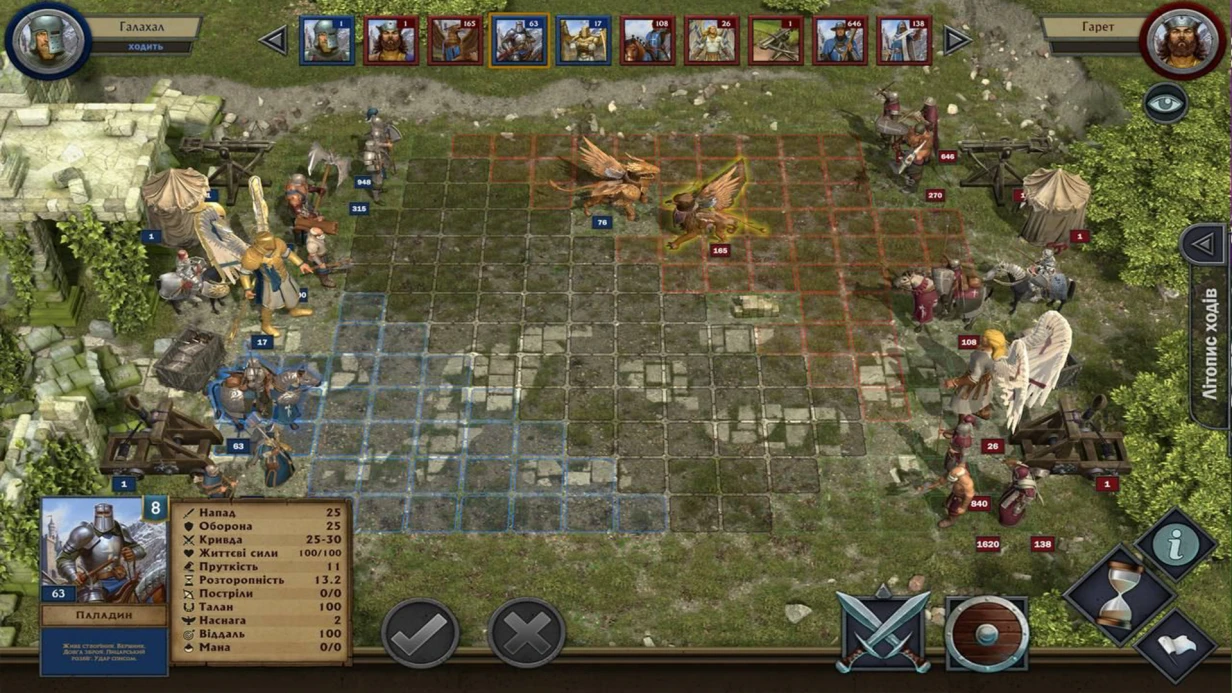
TTK — for PvP and encounter design. TTK = EHP_target / DPS_attacker. Target TTK for PvP is 8-15 seconds according to game design guidelines. If TTK for all class combinations falls within this range, fights are interesting. TTK < 3 seconds means one class simply annihilates another before the first reaction. The TTK matrix reveals imbalance 5x faster than manual testing.
These three metrics are built into a table for all classes, levels, and key equipment sets — and updated with every change to base parameters.
How Does Item Budget Work?
Each item in Unity is described by an ItemDefinition ScriptableObject with stat fields. We don't tweak numbers directly in the editor — data is exported to CSV, opened in Excel/Google Sheets, where pivot tables and charts are built.
Budget system — a standard approach to item balancing. Each item has a "budget" of stat points proportional to its rarity and level. For example:
| Rarity | Budget (lvl 20) |
|---|---|
| Common | 100 |
| Rare | 150 |
| Legendary | 220 |
Stats inside the item spend this budget according to a "cost per stat" table: 1 point of damage = 2 budget, 1 point of HP = 1 budget, 1% critical chance = 3 budget.
This allows quick verification: if a Legendary sword of level 20 exceeds 220 budget, it's broken. If it's far below, it's useless. After tuning coefficients, new items can be added without individual checking — they automatically fit the balance.
How to Balance Procedurally Generated Items?
In games with procedural generation, balance is defined by ranges, not fixed values: damage: [min, max] for each level. The spread shouldn't be too wide — an item with damage: 10-90 with average 50 gives the player too much lottery feeling and blurs progression. A spread of ±20-30% from the average is a working range for most RPGs.
Affixes on random items are also pulled from a pool with weights. An AffixPool ScriptableObject stores List<AffixDefinition> with a weight for each — the rarer the affix, the lower the weight. WeightedRandom selection during generation. Important: sum of weights does not have to equal 100 — the algorithm calculates probability as weight / totalWeight.
Why is PvE Encounter Balance Important?
Encounter design is also math. For each encounter, an encounter budget is calculated: sum of "costs" of enemies placed by the designer. Enemy cost = HP * (1 + damageModifier) using a simplified formula scaled to the group's DPS at that level.
If the DPS of a 4-player group at level 15 totals ~800/sec, and an encounter with three enemies has a total EHP of 12000 — that's 15 seconds of combat with zero losses. Add a mechanic like interrupt or area attack — and TTK for the group becomes longer. This is designed in a table before placing enemies in the level.
Tools and Process
Balancing work is always iterative. Standard cycle:
- Edit table in Excel/Google Sheets.
- Export to CSV.
- Auto-import into ScriptableObject via an Editor script.
- Playtest with automated metric collection.
- Analyze data and re-edit table.
Manual number entry is excluded from day one. For online games, hot-update capability for balance without redeploying the build is critical. In that case, balance data is stored on server in JSON/CSV and loaded at session start. Unity client reads it via Remote Config (Unity Gaming Services) or a custom endpoint.
How to quickly check item balance?
Take the item's budget (e.g., 150 for Rare level 20) and allocate stats using the cost table. If the total deviates from budget by more than 10%, the item is broken. Use our spreadsheet for automatic verification.What Our Work Includes
- Full DPS/EHP/TTK matrix for all classes and levels
- CSV export with auto-import into ScriptableObject
- Budget System and Affix Pool configuration
- Documentation of current balance and recommendations
- Test run on a build with metric capture
- Support during patching and hot-update cycles
Additionally, we provide a per-class report and iteration recommendations. Our methodology reduces balancing time by 30% — saving project budget.
Estimated Timeline
| Task | Duration |
|---|---|
| Balancing one class/item type | 2-4 days |
| Full balance of 3-5 classes + equipment sets | 2-3 weeks |
| Balancing + import tools + analytics | 4-6 weeks |
Five Things to Check Before Final Balance
- Are there any TTK pairs with TTK < 3 sec (instant kill situations)?
- Is the entire level range covered by items with correct budget values?
- Is there a stat with zero or negative "usefulness" (that players always ignore)?
- Are edge cases checked: max crit stack, max attack speed, zero damage from armor?
- Does each class have at least one dominant role in encounters, so none is "strictly worse"?
Get a consultation on balancing your project — we'll estimate the scope and propose a work plan. Contact us to order full balancing with import tools and analytics.