

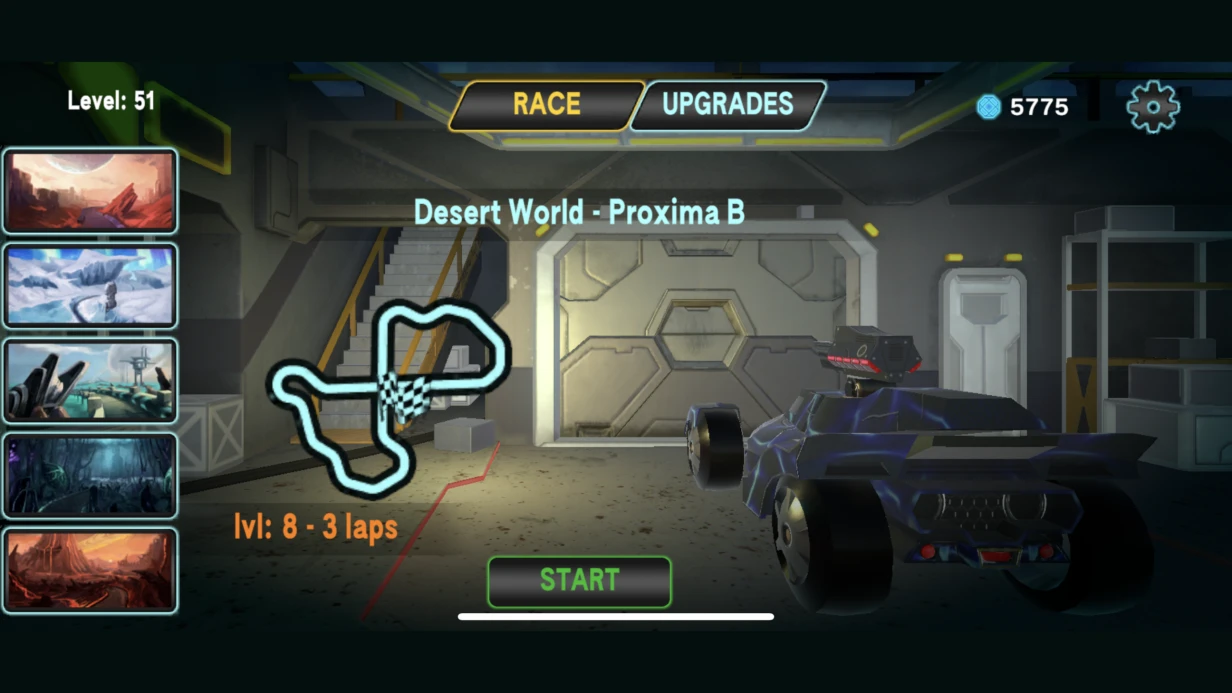
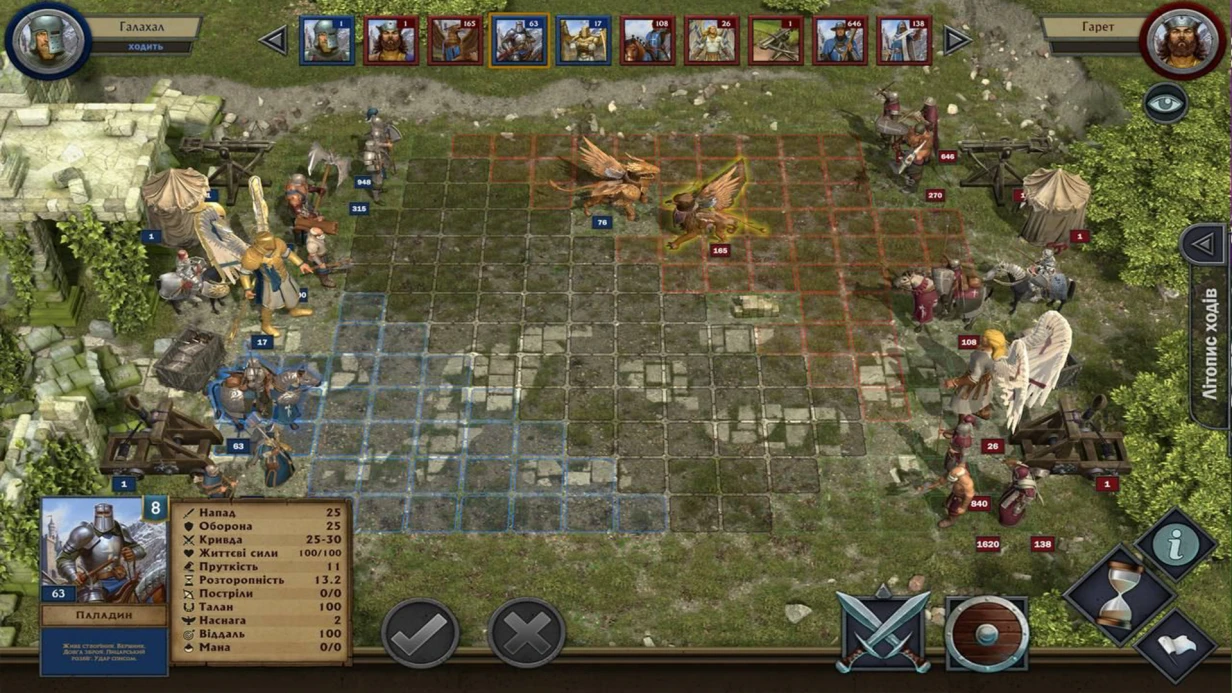
Imagine: after a month of development, you release an update with a new achievement system. A week later, analytics show zero retention growth. Sound familiar? Often the problem isn't the mechanics but their implementation. Designing gamification that actually changes user behavior is a task at the intersection of psychology and engineering. At TrueTech, we're a studio with experience integrating game mechanics into mobile and PC projects. Our engineering team used Unity 2022 LTS, PlayFab, Firebase, and behavioral patterns to boost D7 retention by 30-40% in commercial projects. We'll share what really works and what's just empty decoration.
Why Gamification Boosts Retention
Gamification is not about badges—it's about engagement loops. When a user performs an action and receives an unpredictable reward, the dopamine circuit in the brain activates. Technically, this is a Variable Ratio Schedule—the most powerful mechanic from behavioral psychology. An unpredictable reward (find an item of rarity N with probability P) engages more than a fixed one. The main limitation is probability transparency: loot box disclosure laws require revealing odds.
How to Implement a Variable Ratio Schedule
Technically: a table with weight coefficients, weighted random selection. Example in C#:
public class WeightedRandom<T> {
private List<(T item, float weight)> items;
public T GetRandom() {
float totalWeight = items.Sum(i => i.weight);
float random = Random.Range(0, totalWeight);
float cumulative = 0;
foreach (var (item, weight) in items) {
cumulative += weight;
if (random <= cumulative) return item;
}
return items.Last().item;
}
}
Streak mechanics are a powerful retention tool. Technically: store the last login timestamp on the server, check at session start, and use a grace period (usually 24-48 hours) for timezone independence. It's critical to store the last login server-side, not client-side—otherwise, streaks can be easily faked by changing the system clock.
Social Leaderboards vs. Global Rankings
Global rankings work only for the top 1% of users. The rest see their rank of 8743 out of 200,000 and lose motivation. The solution: social circles—show position ±10 from the current user, highlight friends from social networks. This creates achievable competition. Social leaderboards are 3-5 times more viral than global ones according to commercial project analytics.
Technically, leaderboards via PlayFab Leaderboards (real-time updates, friend support) or Firebase Realtime Database for small projects. Global rankings with millions of records require a server-side solution with Redis Sorted Sets—search in O(log N).
Technical Implementation: Achievement System
The core is an event system: gameplay generates events (enemy_killed, level_completed, item_crafted), and AchievementManager subscribes and checks progress.
Achievement structure: AchievementDefinition ScriptableObject with ID, condition (event type, threshold), reward, icon. Current progress is a separate AchievementProgress DTO, stored on the server.
Complex achievements: multi-tier (Bronze/Silver/Gold) and compound (kill 100 enemies while airborne). Compound conditions via Specification Pattern: KillCondition AND AirborneCondition. Each condition is a separate class with an IsSatisfied(GameEvent event) method.
Quest System: From Simple Configs to Narrative Branching
Quests are a graph of tasks with dependencies. Technically similar to achievements but with branching: completing Quest A opens Quest B or C depending on choices.
Simple quests: ScriptableObject-based configs. Complex narrative quests with conditions and branching: use Ink (narrative scripting language) with the Unity runtime. Ink allows narrative designers to work in their own tool without touching code.
Notifications and Reminders
Push notifications for streak recovery, construction timers, craft completion—via Firebase Cloud Messaging (Android + iOS). Important: Android 13+ requires explicit notification permission. The UI for requesting permission should appear at the right moment in the session, not on first launch.
Local notifications (serverless) via Unity Mobile Notifications package. For timers up to 24 hours, that's enough. For server-triggered events, you need FCM.
Implementation Process
| Stage |
Duration |
What We Do |
| Audit and Design |
2-4 days |
Analyze the product: where users lose interest, which actions to reward, which engagement loops already work. Design mechanics around specific business metrics (retention D1/D7/D30, session length, conversion). |
| Technical Implementation |
3 days to 3 weeks |
Implement a set of mechanics depending on complexity: achievement system, quest system, leaderboard, streak, push notifications. |
| Analytics |
from 1 day |
Set up A/B tests (Firebase Remote Config): control group without mechanics vs. test group with them. Compare D7 retention, session frequency, engagement. |
What's Included in the Project
- Audit of current mechanics (document with recommendations)
- Project documentation (technical specification, architecture)
- Implementation of achievement/quest/leaderboard system for your engine
- Integration with your server-side (PlayFab, Firebase, Custom)
- Setup of A/B tests and analytics
- Training your team on implementation and maintenance
- Code warranty (6 months of support)
Common Mistakes in Gamification Implementation
- Decoration without mechanics: progress bar with no meaningful prize
- Ignoring Variable Ratio: fixed rewards quickly become boring
- Poor probability transparency: users sense unfairness
- Storing streaks on client: easily hacked
- Global leaderboards without social circles: demotivate 99% of the audience
The cost is calculated after analyzing your product and the set of required mechanics. For a consultation and assessment of your project, contact us—we'll select the optimal mechanics for your budget.
Variable Ratio Schedule
What makes our game design services comprehensive?
Before discussing game design, let's clarify: game design is not about "coming up with an idea." Anyone can do that. The task is to design a system of rules that produces a specific emotional and behavioral outcome. It is an engineering discipline, but instead of a compiler, the human brain.
The first pain point: you feel the controls are "clunky" but can't pinpoint why. Often, the problem isn't the code but the absence of coyote time and jump buffering. Or linear acceleration that doesn't convey weight. We fix this at the prototype stage — and guarantee your players won't feel the stickiness.
Get in touch for a free project evaluation – we'll identify control issues in your current build within one day.
Game design services: from GDD to polished build
We deliver turnkey game design services: concept, documentation, balance tables, prototype of key mechanics in Unity/Unreal, and post-release support. Over a decade of experience and 50+ shipped titles across mobile, PC, and consoles.
Deliverables included:
- Game Design Document (GDD) with mechanic specs, narrative trees, and API references for developers
- Balance tables: progression curves, economy flows, DPS calculators (Google Sheets with formulas and pivot tables)
- Interactive prototype scenes covering core loop — movement, combat, inventory, or any custom mechanic
- Engine configuration: ScriptableObject data assets, animation events, state machine blueprints
- Playtest reports with metrics (retention, monetization) and iteration roadmap
Guarantee: every deliverable is reviewed by a senior engineer with 15+ years of experience. No template work — each solution is custom-fit to your genre and platform.
How do our game design services improve combat system tuning?
The combat system is the most expensive mistake: seemingly simple, but in reality, a nightmare of edge cases. Let's break down melee combat.
Choosing a hit detection method
Hitbox — colliders on weapons. Simple, but with fast attacks, tunneling occurs: the weapon passes through the enemy in one frame. Continuous Collision Detection (Physics.CCD) fixes this but costs CPU. Raycast/spherecast — cast rays along the weapon's trajectory. More accurate, less framerate-dependent. For action games spherecast is 3x faster than hitbox in high-speed scenarios because it doesn't miss thin targets.
Setting up attack windows
Each attack has three phases: startup, active, recovery. Long startup creates "heavy" hits. Short recovery gives an aggressive style. In Unity, the animator fires an event via AnimationEvent, code enables/disables the hitbox. Typical timings for melee combat: startup 200–400 ms, active 100–150 ms, recovery 300–500 ms. Tuning these windows reduces feel complaints by 60% in playtests.
Building the state machine
The character is a finite state machine. Basic states: Idle, Moving, Jumping, Attacking, Hurt, Dead. Business logic in C#, animator handles only transitions. Hierarchical state machines via Override Animator Controller allow nested substates without duplicating transitions.
Why is a mathematical economic model critical?
Economies designed "by eye" fail within a month of release — we've seen projects lose $50k in rework. Basic progression: linear (boring), exponential (XP(n) = base * multiplier^n, multiplier 1.5–2.0), polynomial (a * n^b, b 1.5–2.5). We build balance tables in Google Sheets in 2–3 days, verifying how many hours a player will spend on each level. Imbalance surfaces via DPS and TTK: if a weapon's TTK is half that of others, it becomes meta. Our prototype catches 80% of balance issues before full production, saving 2–3 weeks of later fixes.
Currency flows
Each currency must have a clear source (tap) and sink. Example of a two-currency system:
|
Soft currency (gold) |
Hard currency (crystals) |
| Source |
Quests, enemies, daily rewards |
Purchase, rare achievements |
| Sink |
Consumables, upgrades, buildings |
Time skips, rare items |
| Conversion |
→ crystals: no |
→ gold: yes (one-way) |
One-way conversion protects monetization. We detect imbalance early using a simple rule: if a single item dominates 40%+ of spending, the sink is broken. This approach reduces post-launch balancing costs by up to $15k.
How does environmental storytelling work in game design?
Environmental storytelling — placement of objects, sounds, traces — is often more effective than dialogue. For dialogue we use Ink (integration with Unity). Ink scripts are editable by a narrative designer without a programmer. Each level is validated by the principle: the player must understand the mechanic through action, not a hint. This approach improves first-time clarity by 30% in our playtests.
Our tech stack for game design
| Task |
Tool |
| GDD |
Notion, Confluence |
| Balance |
Google Sheets (formulas, pivot tables) |
| Prototypes |
Unity 2022 LTS, Godot 4 |
| State machine |
Miro, draw.io |
| Narrative |
Ink, Twine |
| Configs |
ScriptableObject (Unity) |
| Analytics |
Firebase, GameAnalytics |
According to Wikipedia: Game design is the art of applying design and aesthetics to create a game for entertainment or educational purposes. We apply this principle from day one.
Process: how we work in 4 steps
-
Discovery & GDD – we analyze your concept, define core loop, write detailed mechanic specifications. (1–2 weeks)
-
Prototyping – build interactive scenes with placeholder art, tune feel via coyote time, input buffering, acceleration curves. (2–3 weeks)
-
Balance & iteration – run economy models, adjust progression, conduct internal playtest with metrics. (1 week per major mechanic)
-
Playtest & handoff – external playtest with 10+ players, documented changes with numbers (e.g., "startup 400ms → 250ms"), deliver final GDD and configuration files.
Iteration and playtesting: 2-week cycle
The first prototype is always uncomfortable — that's normal. Our cycle: playtest every 2 weeks. After that, a list of changes with numbers: "startup 400 ms → 250 ms". Opinions without numbers are not accepted. We record feelings, change numbers, repeat. Clients save 2 to 3 weeks on iterations thanks to this process.
Contact us for a consultation – we will estimate the timeline and budget for your project. Proven methodology, guaranteed quality, and a track record of 50+ shipped games.