

Need PlayStation games that hold guests' attention?
Your guests arrive at the event with high expectations: they want experiences, not passive observation.
If there's no interactive entertainment at the venue, attention starts to drift within a few minutes — people begin to leave, and along with them go potential sales and the event's reputation.
This is especially noticeable at events and exhibitions, where the competition for attention is waged over literally every square meter. Ordinary booths and souvenir giveaways no longer work: guests want an activity they can participate in themselves.
PlayStation games are a format that combines excitement, competition, and ease of participation, so they hold guests' attention several times longer than static content.
When someone sits down to play for a couple of minutes, they stay for 10–15, call their friends, share their result, and come back again. Such guest retention has a direct impact on dwell time, the number of brand touchpoints, and ultimately the venue's revenue.
Every guest who stays longer is an additional opportunity to tell them about your product or service.
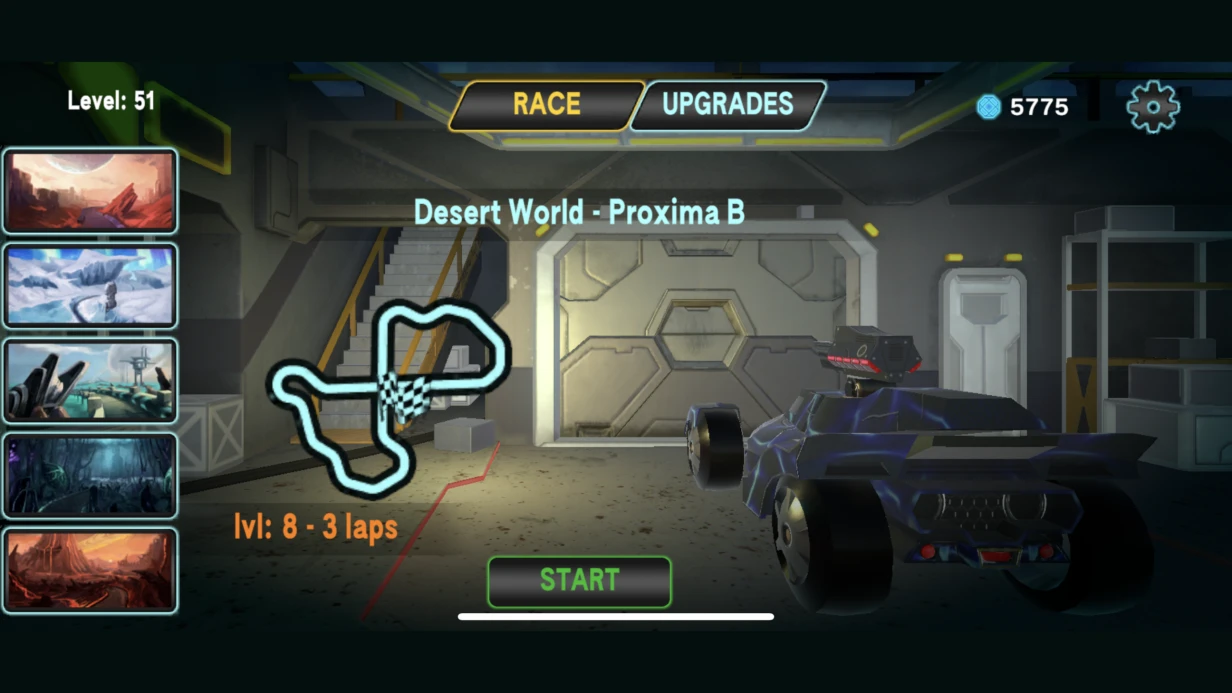
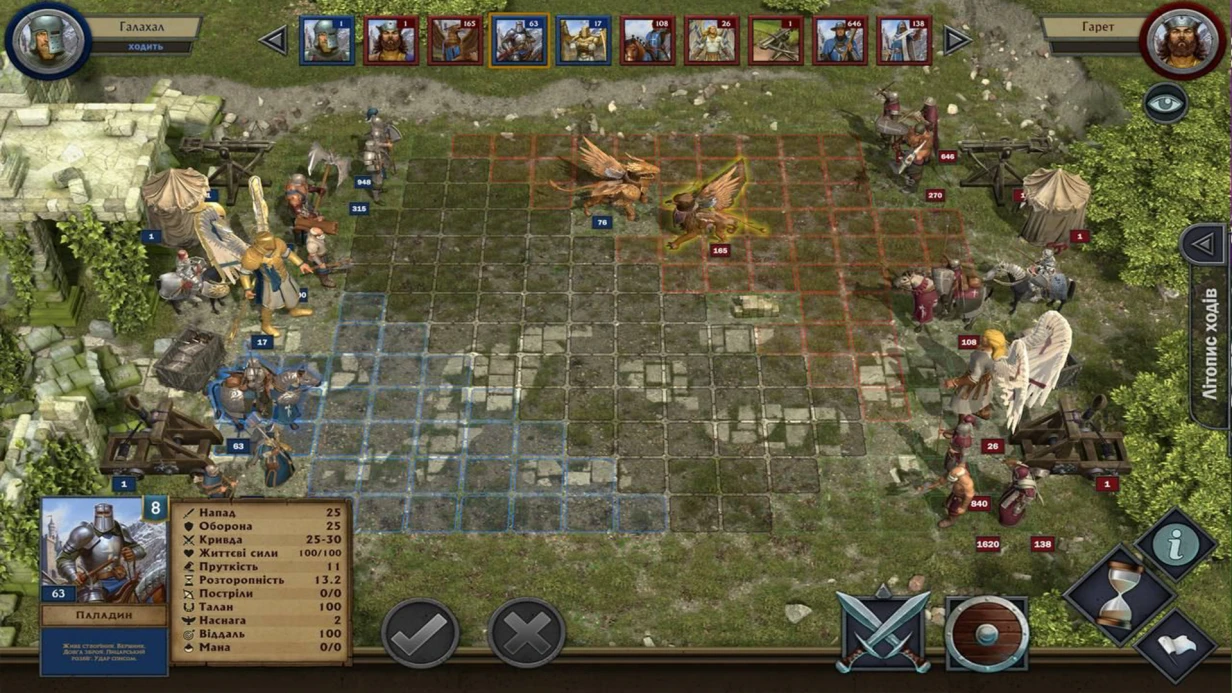
We develop puzzle and Match-3 games for PlayStation that solve exactly this problem: they attract attention, engage players within seconds, and create an emotion they want to repeat.
We take on the entire implementation — from concept to launch — so you get a ready-made activation that works for your results.
What does a quality puzzle game give your venue?
A quality puzzle game on PlayStation is more than just a game — it's a working tool for bringing your venue to life. Guests come for emotions: a bright puzzle delivers them from the very first second, turning an ordinary event into one people talk about.
Here's what your venue gets when it features a truly engaging game:
- Guests' genuine interest. No one walks past. The puzzle hooks people in and sparks the urge to "play one more time" — the line keeps growing while a crowd of spectators gathers around.
- A long queue and the "must-visit" effect. People deliberately look for your zone when they see the buzz. The longer the queue, the higher the event's perceived value — and the more reason for guests to come.
- Visitors engaged for 5–10 minutes or more. Every guest stays at the screen, tries different levels, and calls friends over. The average time spent at the zone increases — the venue feels alive and full of energy.
- Brand mentions on social media. Guests photograph the action, record videos, and tag your venue. Every PlayStation session is free reach that keeps working after the event has ended.
- Higher ancillary sales. While guests wait in line, they browse the displays, order drinks, and try services. An active zone quietly raises the average check — cafés, shops, and neighboring activities get additional traffic.
At our team we make puzzle games that reliably build a queue and hold attention. Characters, adaptive difficulty, and short sessions — every guest gets a memorable experience and leaves wanting to come back.
Test it yourself: place a game like this in the center of your venue — within an hour, the queue will become the best advertising your event could have.
PlayStation game formats for different objectives
Different objectives require different game formats. A short promo action is one thing, a permanent attraction zone in the lobby is another, and a spectacular on-stage contest is a third.
We pick the format for your goal so the mechanics deliver results instead of being just entertainment.
Match-3 is perfect for this: the rules are clear at first glance, guests get involved without instructions, and session length and level difficulty can be easily tuned to the scenario. Below are the basic options, which we adapt to your specific event and venue.
| Format | Who it's for | What it gives the client |
|---|---|---|
| Short promo activity | The goal is to quickly attract attention for a few minutes | Maximum reach in a short time, easy engagement without queues |
| Permanent zone | Runs all day at an expo or in a showroom | Holds guests, creates a steady flow, and collects contacts |
| Spectacular contest | For stage activities or a focus zone | A vivid show, adrenaline, and emotions that guests remember and talk about |
The table shows typical scenarios, but these aren't rigid limits. We combine formats, adjust session length, level difficulty, and rules for your audience and venue — on PlayStation this works especially well thanks to the big screen and comfortable gamepads.
How we build the project: from brief to launch
A clear process means a predictable result. We work through transparent stages, and you always know what's happening at each step and when your PlayStation game will be ready.
- Game brief — we fix the goals, audience, platform, and scope of work. You get a clear plan and realistic timeline before development even begins.
- Concept and prototype — we define the genre, style, and key mechanics. You see how the game feels before we start full-scale development.
- Approval — we validate the concept, production stages, and checkpoints. All changes are discussed in advance, so there are no surprises at the finish.
- Iterative development — we assemble the game: levels, visuals, sound, controls. Every few weeks we show you a working version, and you adjust the course.
- Testing and release preparation — we test the game on different PlayStation models, fix bugs, and bring it up to platform requirements. The release never gets delayed by "sudden" issues.
- Game launch and support — we go live on PlayStation, set up the store page, support the release, and update the game based on player feedback. The game keeps working after launch instead of being left on its own.
The entire process is structured so you control quality and budget rather than relying on a "black box." You don't need to change the development stages — you simply follow them and get a predictable outcome.
What's included in the delivered game
You receive a turnkey product — with no hidden stages and no unexpected surcharges. We hand over the PlayStation game exactly as it will run for your guests: installed, configured, and ready to launch.
Here's what's included in the default delivery:
- Finished game build — a fully configured build that has already been tested on target devices. There's no need to dig into technical details — just turn it on and play.
- Parameters and configuration profiles — pre-selected configurations for different scenarios: from a solo playthrough to a tournament or team competition. Switching modes takes minutes.
- Operation manual — a clear guide for your staff: how to launch the game, change difficulty, solve typical issues, and end a session correctly.
- Staff training — a short walkthrough for your team, online or on site. Administrators and operators confidently use the game from day one, with no lengthy onboarding.
- Content rights — a complete set of documents confirming your right to use the game, graphics, and sounds for commercial purposes. No legal risks and no third-party claims.
- Source materials — the key project files you might need for future refinements. You're not tied to us and can develop the product with any team.
- Warranty support — assistance during the agreed period: bug fixes, updates, and consultations. We stay in touch after the launch.
We've put this package together so you can run the game right after handover and handle everyday tasks without depending on the developer. Everything needed for stable operation is already included.
Client story: how a game doubled the average check
The family restaurant chain "Warm Evening" faced a pain point typical of the restaurant business: during peak hours, guests waited 15–20 minutes for a free table, got bored, and one in ten left for a competing establishment.
They needed to keep the waiting guests engaged without changing the familiar interior or adding staff.
We proposed a move uncommon for the industry — placing a PlayStation with a puzzle game built specifically for the brand in the waiting area.
The game was simple and intuitive: in 3–5 minutes a guest completed a level and received a nice bonus — a discount on dessert or the signature drink. That's how the entertainment seamlessly became part of the customer service and the restaurant experience.
The results showed up within the first month. The average check doubled: guests who used to leave because of the wait now stayed, ordered more, and came back again.
Waiting time stopped being a downside — on the contrary, visitors asked to come back to the console, and parents noted that children specifically asked to visit the restaurant to finish their level.
The chain's manager shared her feedback: "We expected the game to simply keep guests occupied, but we got a real customer-attraction tool. People take photos of the screen themselves and post them on social media — that's free advertising.
And the bill for the evening often comes out higher than usual." The investment in development paid off through revenue growth within the first month of the game's operation.
For us, this is a telling development case: a single well-designed game mechanic placed at a customer touchpoint can change a business's financial performance.
And this isn't a one-time campaign — it's a permanent asset that delivers value daily and scales easily across any chain, from a coffee shop to a car dealership.
What if you have specific requirements for your game?
Specific requirements are not a problem — they're common practice. Every client has their own audience, style, and business goals, so ready-made templates rarely fit.
We specifically focus on custom turnkey puzzle and Match-3 game development — with your mechanics, story, and venue specifics, including PlayStation, in mind.
Non-standard tasks can involve anything: unusual controls, brand identity, integration with your services, custom monetization, or special event modes. Instead of squeezing the game into constraints, we look for a solution that preserves the idea and delivers the intended result. You get a product that works exactly as designed and solves your specific task.
The process starts with a brief and a discussion: we clarify the goals, audience, and constraints, then propose a concept and implementation plan. If a requirement seems complex, we explain the options and choose the best one for your timeline and budget. That way you always understand what's happening at every stage and stay in control of the outcome.
As a result, specific requirements become your advantage: the game stands out from competitors, matches your audience's expectations better, and brings more value to the business. If you have a non-standard task — tell us about it, and we'll find a way to bring it to life.
Common concerns before starting a project
Every project starts with questions: will the game hold up under peak-hour load, will we hit the target date, and how easy will the system be to manage without a technical team. These are normal questions — they help avoid risks from the very start. We've gathered typical client concerns and answer each one directly.
How do you guarantee the game's stability on the day of the event?
Stability is our priority from day one. The game goes through load testing, is tuned to the venue's specific conditions, and runs on professional equipment that has already proven itself at dozens of events.
On the event day, our specialist will be alongside you, ready to resolve any situation quickly, and key scenarios are duplicated in case of force majeure.
What if we don't make the target date?
We plan schedules with a 20–30% buffer for refinements and approvals. You receive a phased timeline with clear checkpoints: you see the project's progress at each stage and adjust details without losing time.
The deadline is set in the contract, and a delay on our part means compensation — so we're on the hook to deliver on time.
Will we be able to manage the game without a programmer?
That's exactly why we build an easy-to-use administrator screen — launching, pausing, switching levels, and adjusting difficulty take a couple of clicks. Before the event, we do a short training session: in 15 minutes, your staff confidently manages the entire system. No commands, no code — just a convenient interface in Russian.
What guarantees do we have if something goes wrong?
You get support before, during, and after the event: our engineer is on site, and in remote setups there's a hotline with fast response. We duplicate key components and keep backup equipment ready so that even a technical failure can't disrupt the program. Details are fixed in the contract, so you always know what to expect.
Concerns are not an obstacle — they're a reason to think through a reliable solution in advance. Tell us about your project, and we'll show you how we cover each risk and exactly what you'll receive on time.Order game development for your venue
Let's start simple: submit a request for PlayStation game development — and within a few days you'll get concrete next steps for your project. We specialize in puzzles and Match-3, which means we know exactly what makes such games successful on this platform.
Here's what happens after your request:
-
Project consultation. We discuss your idea, target audience, and PlayStation specifics, and recommend which mechanics work best for puzzle games.
-
Timeline and cost estimate. We determine the scope of work and provide a transparent estimate and schedule — no hidden stages, no unexpected extra charges.
-
Format proposal. We develop the game concept — from the core mechanic to the level system — so you can see in advance what the product will look like.
-
Demo version. We create a playable prototype on the target platform — you personally test how the game feels on the gamepad.
-
Production plan. After the demo is approved, we put together a detailed work plan, assign roles, and launch full development.
-
Post-release support. We stay in touch — helping with updates and support so the game keeps delivering results for you.
All of this lets you control the process and see a concrete result at every stage instead of waiting blindly for a finished game. Submit your request — the consultation is non-binding.