

Why Your Game Should Run on macOS
The macOS audience is not a small niche—it's made up of paying users who are accustomed to paying for quality products. They play on Mac, choose games in the official app store, and are willing to spend money on things that work smoothly and look great.
If your game doesn't have a macOS version, you're simply handing these players to competitors who took care of compatibility.
Developing a game without macOS in mind is a deliberate reduction of your market. Mac users are often opinion leaders, actively discuss games on social media, and influence their friends' choices.
By skipping this audience, you lose not only direct sales but also free word-of-mouth recommendations that bring in new players.
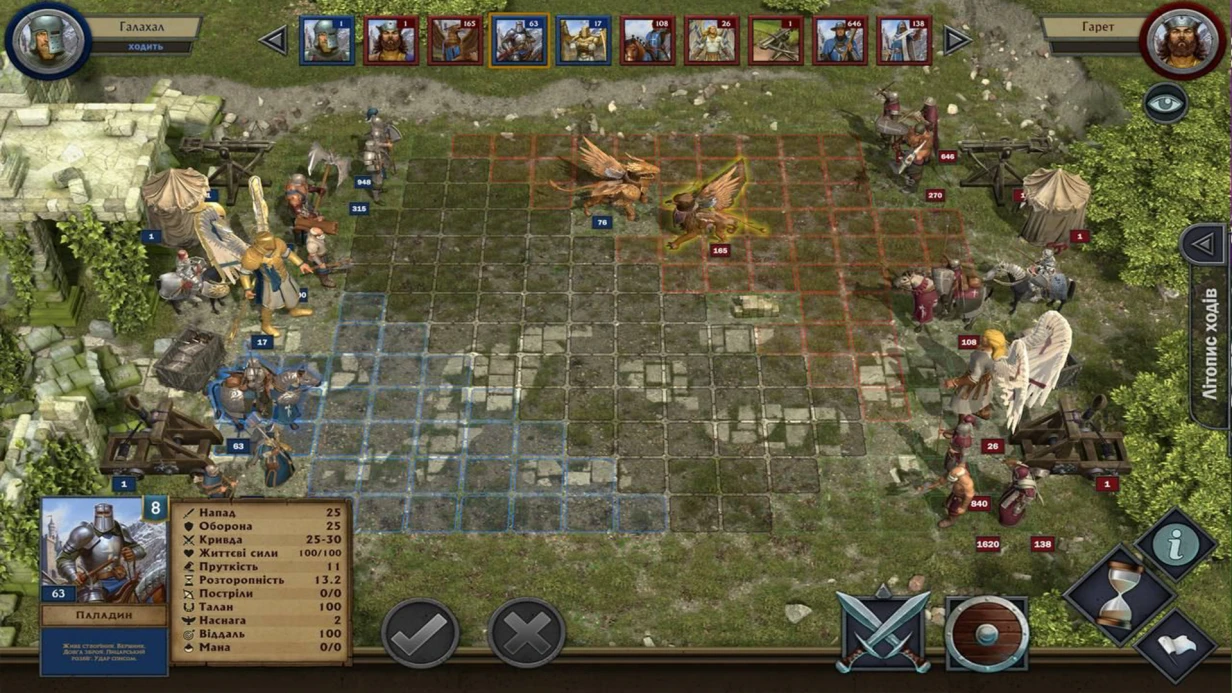
This is especially important for RPGs on macOS: the genre implies long sessions, deep immersion, and comfortable controls. Mac players are looking for exactly such projects but face a limited selection.
A game for Mac that runs without glitches immediately stands out from competitors and earns a loyal audience for years.
We handle game development with all the specifics of macOS in mind: system optimization, proper graphics handling, and a user-friendly interface. As a result, you gain access to the macOS audience and expand your reach without additional marketing costs.
Advantages of RPG Development for macOS
The macOS audience is financially capable and accustomed to buying quality content. An RPG developed for this platform becomes not just entertainment but a tool for promoting your brand.
We work on Unity—this allows us to create RPGs with rich graphics and a deep storyline that run stably on all current Apple devices. The client receives a product that doesn't require constant technical support or rework.
Recognition and Reach
A game is an additional point of contact with your audience. Viral mechanics and brand mentions woven into the storyline attract new users. Every player shares their experience on social media, multiplying your reach without advertising investments.
Monetization and Repeat Sales
macOS users readily pay for subscriptions, in-game purchases, and add-ons. An RPG with well-designed economy brings you steady income long after release. Regular updates keep players engaged and turn them into loyal customers.
Support and Loyalty
We support the project after launch: activity analytics, updates, and responses to feedback. This helps maintain audience interest and build long-term relationships with players who become ambassadors for your brand.
All of this together makes RPG development for macOS a worthwhile investment that works for your image and delivers measurable results.
Game Development Formats for macOS
Each task has its own format of work. Some need a turnkey project, while others already have a ready-made foundation and want to expand its capabilities. We tailor the scope of work so you don't overpay for what you don't need and get exactly the result that solves your task.
| Format | Who It's For | What the Client Gets |
|---|---|---|
| Turnkey development | Those who don't yet have a product or their own team | Full cycle: from idea and storyline to a finished macOS game. You get a working project, its rights, and clear documentation. |
| Building a game from scratch per spec | You have a clear vision, mechanics, and project description | We implement the game exactly to your technical specification: storyline, levels, interface, balance. Stages are agreed upon—you always see what's happening. |
| Expanding an existing game | You already have a macOS game and need to add levels, characters, or features | We quickly add content and mechanics without losing quality. Players get updates, and you get increased retention and interest in the project. |
| Support and further development | You need regular support, fixes, and updates | We extend the game's life: fix bugs, adapt to new macOS versions, and add in-demand features as the project evolves. |
If you're unsure which format suits you best, start with a short consultation. We'll assess the task, propose the optimal scope of work, and plan the stages—so you understand the timeline and result before we even start.
How We Develop a Game: Work Stages
Game development is a process where it's important not to lose sight of your idea or budget. That's why we've divided the work into clear stages: you always know what's happening, can make changes, and control the outcome. Below is how we create a game for macOS and beyond.
-
Brief. You tell us about your task: who your users are, what kind of project you need, and what result you expect. We clarify details, offer options, and lock in the initial data—this eliminates misunderstandings from the start.
-
Plan and timeline. We create a step-by-step work schedule with clear milestones. You see how long game creation will take, when intermediate results will be ready, and what approval stages are planned. No "black boxes"—only a transparent sequence.
-
Concept approval. We think through the gameplay, visual style, and key mechanics. We show you a prototype and mockups, discuss them, and make edits. At this stage, you approve the direction—and we move forward confidently without wasting time on rework.
-
Implementation. Direct development begins: programming, graphic creation, sound and interface setup. We regularly show intermediate versions, and you see the game come to life. If something needs adjustment, we make changes on the spot.
-
Testing and launch. We test the game on various macOS devices, fix bugs, and optimize performance. After that, we prepare the release: packaging, description, and launch instructions. You get a finished product that works reliably.
-
Post-launch support. The game is out, but the work doesn't end. We stay in touch: update for new macOS versions, fix any issues found, and help add new features. You can focus on promotion while the technical side is our responsibility.
This approach lets you participate in game creation at every stage, make decisions on time, and get a result that meets expectations. If you have a project idea—we'll start with a brief and show you how it turns into a game.
What's Included in the Delivery of a Developed Game
You get not just code, but a launch-ready product that your team can work with independently.
We put together the package so that project handover doesn't become a headache, but rather a transparent stage after which the game lives its own life and delivers results for the business.
- Working version of the game for macOS. A fully assembled and polished product that opens in one click on Mac. No "run it through the terminal" or jumping through hoops—just download, install, and play for your users.
- Clear structure for future updates. You can see what logical blocks the game consists of. This allows you to quickly make edits, add content, or expand functionality with your own team or hired specialists.
- Project source code. All work remains yours and is your intellectual property. You're not tied to a specific contractor and can continue developing the project with any other team at any time.
- Administrator documentation. Clear instructions: how to run the server side, where user data is stored, and how to roll out updates. Written in plain language so your administrator can handle it, not just a developer.
- Training for your team. We conduct a short hands-on project review: we show key control points and explain what to pay attention to. Your employees stop fearing "someone else's code" and work with the product confidently.
- Internal developer documentation. If you decide to expand the game, any new specialist will quickly understand the architecture. This saves weeks of onboarding and reduces the cost of future changes.
In essence, you get not just a game, but a manageable business asset. Transparent delivery protects your investment and gives you confidence that the project won't stop halfway.
Case Study: How We Developed an RPG for macOS
One of our most memorable projects was a custom RPG for a family entertainment chain. The client faced a typical pain point: guests spent little time in the venue and rarely returned.
We proposed turning the visit into a game—a narrative RPG that runs on macOS and immerses each visitor in their own story.
The player created a character, completed quests, and earned rewards and bonuses from the venue. For the owner, this became a loyalty tool: instead of one-off trips to the center, guests started building their own game strategy.
The Panda Entertainment Center received a fully branded world with unique characters and simple controls—guests connected without staff assistance.
Results in Numbers
The average game session lasted 18 minutes—three times longer than the usual waiting time. The share of repeat visits increased by 25%, and every tenth player brought an acquaintance along.
The center's owner saw a direct link between the game and revenue: the project paid for itself within four months.
We developed the game on Unity, so it runs stably on any Mac, updates quickly, and scales easily to new scenarios. For the client, this means minimal technical hassle and maximum guest engagement.
Staff mastered the controls in a single day, and further support was handled remotely—with no downtime.
If you want a similar result for your business—let's discuss which game scenario would work for you. Write to us, and we'll show examples and estimate the timeline.
How to Choose the Right Development Format?
There's no one-size-fits-all answer: the same project can be built as a small internal corporate game, a flashy promo app, or a full-fledged commercial product. The format is determined by your goals, audience, and timeline.
For example, employee training only requires a compact story with a clear scenario, while a launch in the App Store demands much deeper refinement.
If you need a unique product with original mechanics and its own storyline, choose custom development. This format gives you maximum control: you get a game that precisely matches your business objectives and can continue developing it further.
When the priority is testing an idea, presenting it to investors, or meeting a tight deadline, it's more rational to build on ready-made modules and adapt them to your mechanics—that's faster and more cost-effective.
To decide, answer a few questions for yourself: where will the game be used, who will play it, and how long should it stay relevant. For macOS, this is also a question of convenience: Mac users expect an app to launch instantly, run stably, and require no special setup. So the format must account for the specifics of this platform.
We help you choose the optimal option at the start: we analyze your task, propose a suitable format, and show the plan and timeline. You get not an abstract concept, but a clear roadmap: what we'll do, how long it takes, and what result you'll get.
After approval, we start with a pilot version—you can show it to your team or partners within a few weeks.
Frequently Asked Questions About Game Development
Before starting a project, clients usually have a few key questions: will we meet the deadlines, will the budget balloon, and who's responsible for the result.
We've gathered the typical concerns and answer them honestly, so you understand the process before you start and can make a decision without hidden risks.
How long does RPG development take and what determines the timeline?
The baseline timeline for a full-fledged RPG for macOS is 2 to 4 months. It depends on the number of locations, storyline branches, and character progression systems. At the start, we collect a brief and lock in the scope, so you can see the dates on the calendar.
No "maybe a little later"—dates are written into the contract, and we're accountable for them.
What makes up the cost and can it be locked in?
The cost is calculated after audit based on your mechanics and content. We don't give a "range"—we provide a commercial proposal broken down by stages: game design, graphics, programming, testing.
After the brief, the amount is fixed in the estimate and doesn't change unpredictably. Any additions are agreed upon in advance as a separate stage.
What guarantees are there that the game will run stably on macOS?
As a client, you're protected by acceptance reviews at every stage. We test the build on current macOS versions and verify a clean-install launch, not just on our own test bench.
As long as our stack is in play—a professional Unity setup with proven tools—you get a predictable result, not a "rough prototype."
Will the game be available in the App Store and how does publishing work?
Yes, we'll publish the game in the Mac App Store on your behalf. We'll help you set up a developer account, configure the product page, pass moderation, and release.
We'll also check performance separately to ensure the game doesn't lag on mid-range configurations—this reduces the risk of rejection and poor ratings.
Can I influence the process and see intermediate versions?
You don't just observe—you approve every key step. Through demo access, you see a playable version live, not just screenshots. Edits are made iteratively, so the result always matches expectations rather than turning into an "unexpected mess" on delivery day.
To get an accurate estimate of timeline and cost for your idea—leave a request. We'll send you the brief, calculate the estimate, and provide a start plan within a couple of business days.Start Developing Your Game Today
Ordering RPG game development for macOS seems risky only until you start working with a team that has a clear process and measurable results. We structure the project so you can see progress from the first week: brief, prototype, test build, release. No "everything's done, but it doesn't work yet"—only concrete stages with approvals.
At our team, ordering development starts with a free consultation. During the call, a producer and lead developer analyze your idea and audience, clarify goals, and show how the game will deliver value: retaining players, boosting recognition, and creating a new sales channel. After the consultation, you get a plan and understand how much time and resources are needed.
What you get when you start a project with us:
- A clear technical specification and a fixed estimate before work begins—you know the budget and scope in advance.
- Stage-by-stage development with intermediate version demos—you control the process and refine details.
- Full rights to the game, source materials, and documentation—the product is entirely yours, with no hidden conditions.
- macOS adaptation and testing on current devices—players launch the game without issues or support calls.
- Focus-group testing and refinement based on results—a balanced product goes to release.
- Post-launch support: maintenance, updates, fixes—we stay with you after delivery.
Starting a project is simple: send us a few sentences about your game and task. The producer will respond within one business day, give you a sense of the timeline, and suggest the next step.
During the consultation, you'll get answers to the key questions: what mechanics will make the game engaging, how to monetize an RPG, and which platforms to cover after macOS. And after work begins—a guarantee that the game will be carried through to release and accepted by you.
Take the first step right now: leave a request for a consultation, and within a few days you'll know the plan, timeline, and development cost. Your game will start taking shape today—not someday later.