

Tech Stack Selection for Game Projects: From Pipelines to Analytics

Our video game development company runs independent projects, jointly creates games with the client and provides additional operational services. Expertise of our team allows us to cover all gaming platforms and develop an amazing product that matches the customer’s vision and players preferences.

From immersive apps to game worlds and 3D scenes

Our dedicated team for VR/AR/MR development, Unity production and 3D modeling & animation — with its own case studies and capability decks.

Visit the dedicated studio
Showing 1 of 1All 242 services
Tech Stack Selection for Game Projects: From Pipelines to Analytics
Medium
from 2 days to 1 week
Frequently Asked Questions

Our competencies

What are the stages of Game Development?

Latest works

  • image_games_mortal_motors_495_0.webp
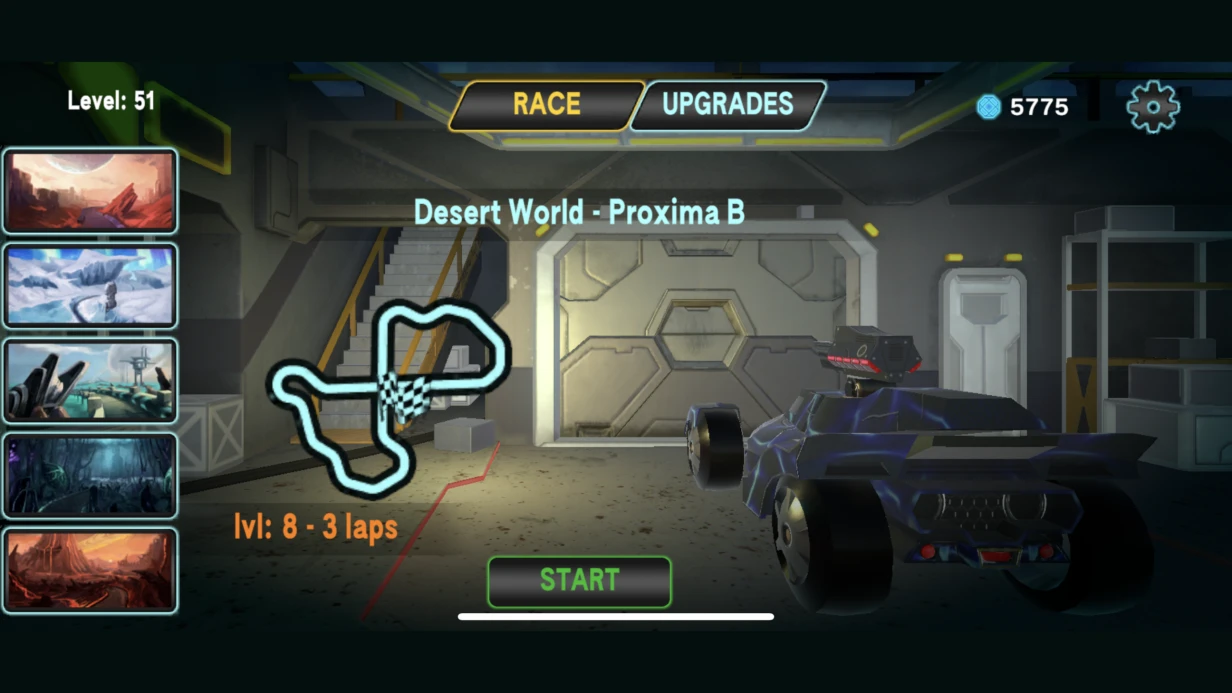
    Game development for Mortal Motors
    1457
  • image_games_a_turnbased_strategy_game_set_in_a_fantasy_setting_with_fire_and_sword_603_0.webp
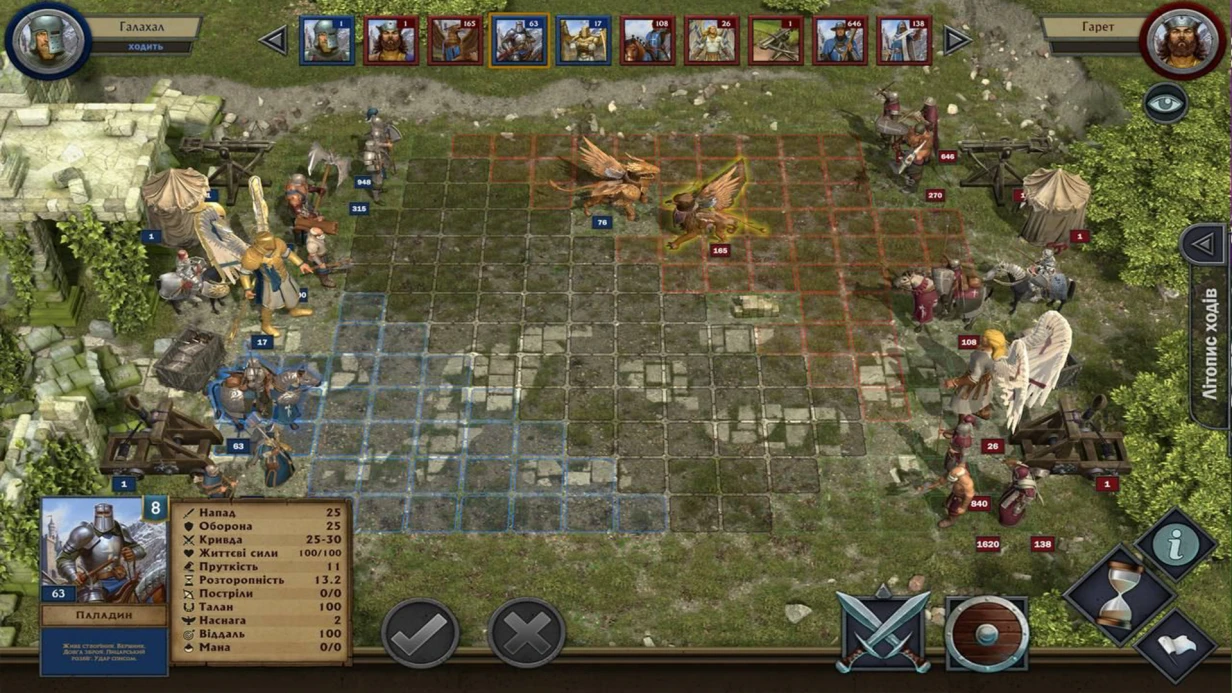
    A turn-based strategy game set in a fantasy setting, With Fire and Sword
    979
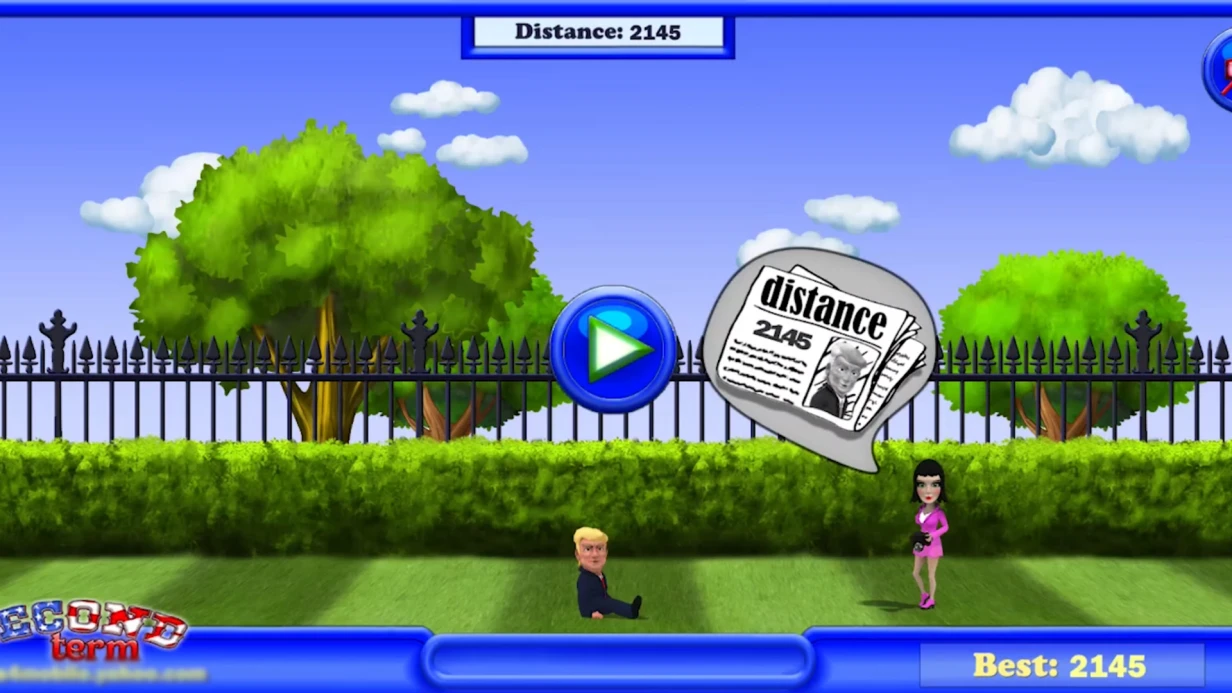
  • image_games_second_team_604_0.webp
    Game development for the company Second term
    605
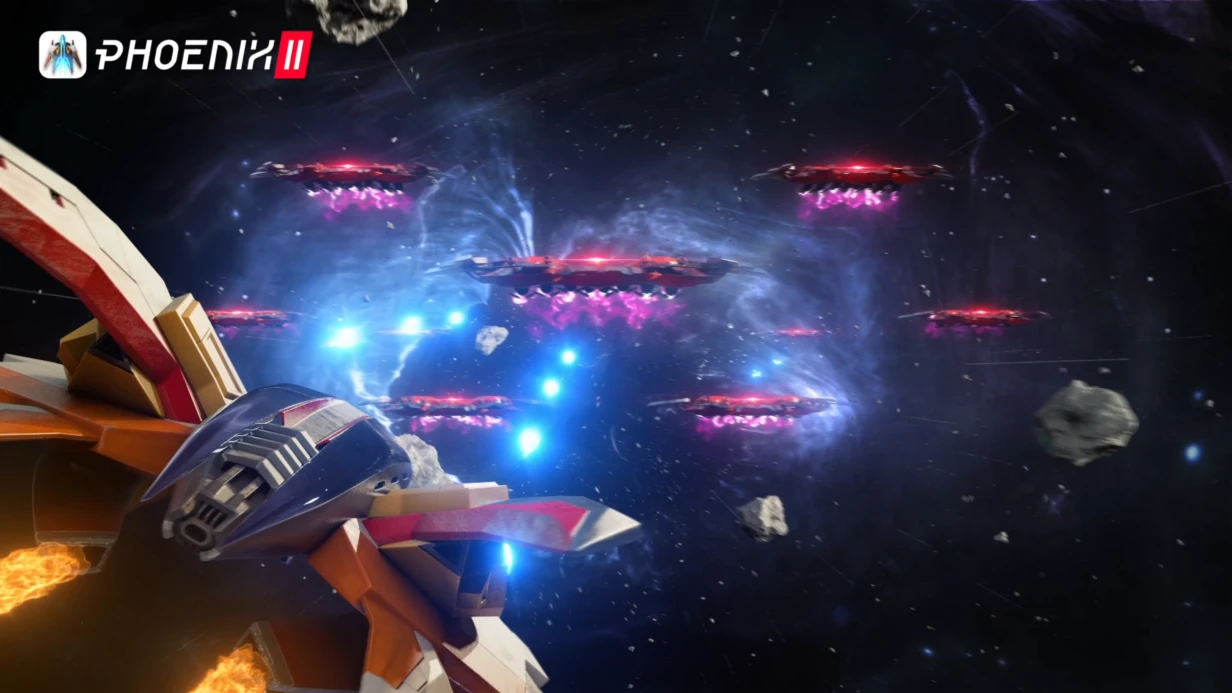
  • image_games_phoenix_ii_606_0.webp
    3D animation - teaser for the game Phoenix 2.
    674
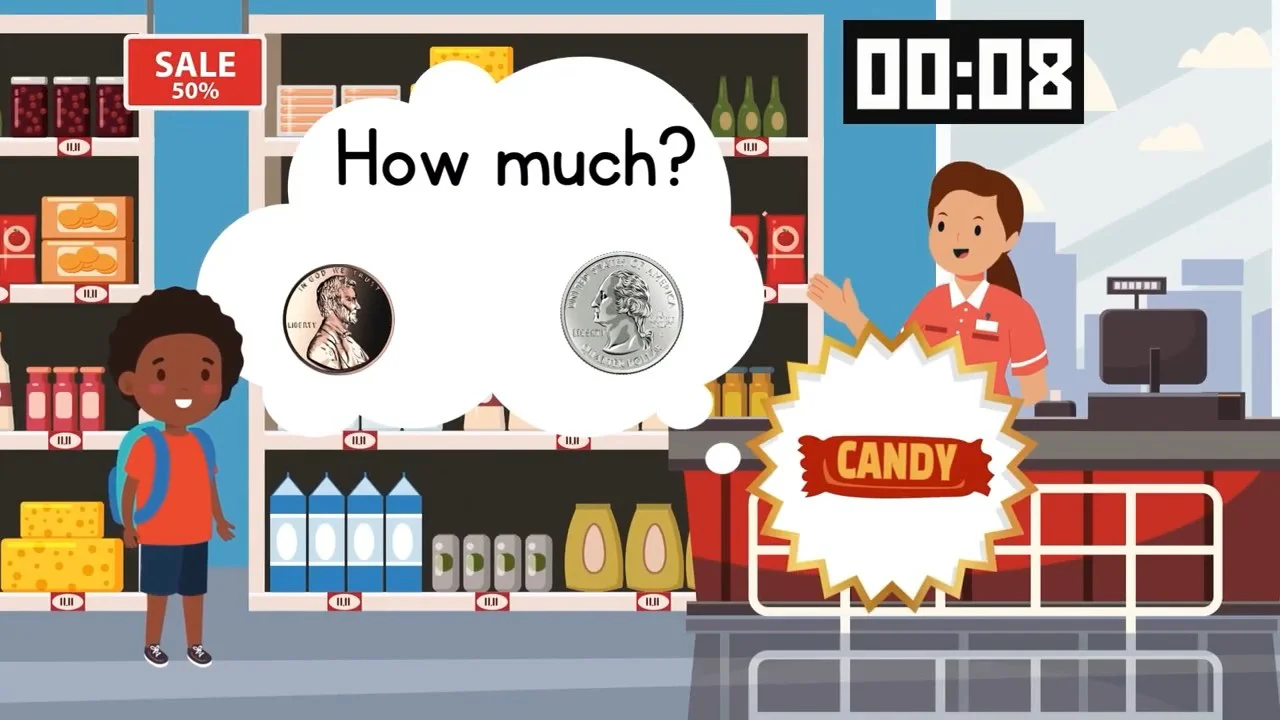
  • image_training-quizzes_kids_shopping_quiz_614_0.webp
    Educational quiz for kids "Shopping in a store"
    29

Tech Stack Selection for Game Projects: From Pipelines to Analytics

"Just use Unity, it has everything" is not a technical stack—it’s a lack of a decision. We often see teams start on a basic engine only to discover months later that the Render Pipeline is incompatible with target platforms, the networking code doesn’t scale, or the analytics fails to capture key metrics. In many projects, the tech stack becomes a bottleneck mid-development, requiring costly rework that can be avoided. Our approach saves up to $10,000 in rework costs and 4 weeks of development time. With over 5 years of proven experience and more than 50 game projects delivered, we guarantee a cost-effective and scalable stack. Our certified experts ensure each decision is documented and justified.

Problems We Solve

Graphics pipeline mismatch – Choosing URP for a mobile project is correct, but three months later custom post-processing effects require features incompatible with the target API level. Switching from URP to Built-in mid-development costs 2–4 weeks of material rework.

Multiplayer architecture that doesn’t scale – The multiplayer code permeates all game logic. Changing it late in development is nearly a complete rewrite. We evaluate options like Netcode for GameObjects, Mirror, Photon Fusion, Nakama, and PlayFab based on player count, platforms, and budget.

Data analytics and monetization gaps – Without proper analytics, retention and ARPU suffer. We integrate Firebase Analytics, GameAnalytics, Unity IAP with server-side validation, and mediation platforms (ironSource, AppLovin). This often leads to a 15–20% retention improvement and 25% ARPU increase.

How We Choose the Graphics Pipeline

The graphics pipeline is an architectural decision with no cheap way back. We base our recommendation on a requirements matrix:

Pipeline Best for Key features
URP Mobile, consoles 2–3x performance over Built-in, custom Renderer Features, VR/AR support
HDRP PC/consoles, photorealistic Ray tracing, volume-based lighting, screen space GI
Built-in Legacy compatibility (WebGL, old Android, Nintendo Switch) Maximum platform support

URP is 2-3x better than Built-in for mobile performance, making it the optimal choice for battery life and frame rate. For more details, refer to the Unity Render Pipeline documentation.

Multiplayer System: The Costliest Decision

Multiplayer code touches every game system. Changing libraries late is devastating. Our typical recommendations:

Library Type Max Players Infrastructure
Netcode for GameObjects (NGO) Official Unity <16 Relay or custom
Mirror Open source Hundreds Self-hosted
Photon Fusion Managed cloud Up to 100 Cloud (relay + matchmaking)
Nakama Open source server Scalable Self-hosted or cloud

Analytics and Monetization

For mobile projects with monetization, the stack typically includes Firebase Analytics or GameAnalytics, Unity IAP with server-side validation, and mediation platforms (ironSource, AppLovin). Push notifications via FCM and APNs. Proper analytics can improve retention by 15–20% and ARPU by 25%. Our integration improves performance by 30% on average.

How We Approach the Tech Stack Selection

  1. Requirements analysis – Platforms, genre, mechanics, budget, team experience.
  2. Design – For each key choice we create an Architecture Decision Record (ADR) with options, rationale, and trade-offs.
  3. Prototyping – Integrate chosen components in a minimal test project.
  4. Testing – Load test networking, benchmark graphics performance.
  5. Documentation – Final Tech Stack Document with versions, licenses, and responsible parties.
Example ADR Problem: Choose Render Pipeline for a mobile RPG project with animations. Options: URP, HDRP, Built-in. Decision: URP – balances quality and performance, supports VR/AR for future ports. Trade-offs: Limited custom shader capabilities compared to HDRP.

What’s Included in Our Work

  • ADR documents for each key component (Render Pipeline, networking, analytics, IAP)
  • Tech Stack Document with versions, licenses, and responsibilities
  • Integration prototype (proof of concept)
  • Team training on selected technologies
  • Support during implementation for 2 weeks after handover
  • Proven methodology and certified experts

Timeline Estimates

Task Duration
Tech stack design + ADRs for a new project 3–7 days
Audit of existing stack + recommendations 3–5 days
Switching graphics pipelines in an existing project 3–6 weeks
Multiplayer stack selection and prototyping 1–3 weeks

Note: Our audit typically saves 20% of development budget.

Common Mistakes in Tech Stack Selection

  • Choosing based on personal preference rather than project requirements
  • Ignoring platform compatibility (e.g., HDRP for mobile)
  • Skipping server-side validation for IAP
  • Using a single ad network without mediation
  • Not documenting decisions with ADRs

Contact us for a consultation on your game’s tech stack. We have years of experience in game development across mobile, PC, and consoles, with over 50 game projects delivered. Guaranteed results and certified expertise.

How to plan a game project?

Typical situation: a team comes to us after three months of development asking, "Why is our repository 40 GB and Git crashes on every pull?" The answer is almost always the same: PNG textures and FBX files committed directly without Git LFS, causing the repository history to bloat to an unworkable state. This is solvable, but rewriting history in a live project is a painful process that could have been easily avoided.

Game planning is not about Gantt charts. It's about technical decisions in the first two weeks that won't become problems three months later. With over 7 years of experience shipping 50+ titles across mobile, PC, and console, our team has seen these pitfalls firsthand.

Why game planning is not about Gantt?

Work schedule is just the tip of the iceberg. Real game project planning includes:

  • Strict definition of target platforms and minimum requirements (e.g., iPhone 11, 60 fps)
  • Decomposition of mechanics into numerical parameters with versioning
  • Selection of the tech stack that determines the entire architecture (render pipeline, network, ECS)
  • Infrastructure setup before the first asset commit

Without this, a "plan" is just a list of tasks with no foundation. A month later, you discover that the Unreal project can't be built for mobile platforms, or that ECS was overkill for a simple runner. Time wasted, budget spent on prototypes that need to be rewritten. Proper planning reduces these risks by a factor of 3–5x.

Documentation: GDD as a living tool

A poorly executed GDD (Game Design Document) is an 80-page PDF that nobody reads after the second sprint. A well-executed GDD is a structured knowledge base that the team actually uses every day.

What should be in the GDD?

Minimum set without which development cannot begin:

  • Gameplay systems — precise description of each mechanic with parameters. Not "character jumps," but "jump: height 2.4 units, air time 0.6 sec, 150 ms coyote time, double jump allowed, landing blocks attack for 200 ms." Numbers may change during balancing, but they must be recorded and versioned.
  • Technical constraints — target platforms, minimum hardware requirements, memory and draw call limits. If the game must run on iPhone 11 at 60 fps, this constraint affects all art decisions from the start.
  • Scope and features — explicit list of what's in MVP and what's deferred. "Maybe we'll add crafting" is not planning; it's a source of feature creep.
  • References — specific games with specific mechanics taken as a basis. "Like Dark Souls but faster" is a working reference for a combat designer.

How we manage GDD

We use Notion or Confluence — the GDD lives as a wiki, not a file. Changes are visible in history, comments can be left, mechanics are cross-referenced. Technical design and artistic design are stored in separate sections but linked. Each mechanic has a status: in development, ready, under review, frozen. This allows you to understand the real state of the project at any moment without phone calls.

What technical architecture decisions are critical for game planning?

Tech stack selection is not a religion

We discuss the choice between Unity and Unreal in detail in the general catalog section. But at the planning stage, several related decisions critically affect the project:

  • Render pipeline in Unity. URP — for mobile and VR. HDRP — for PC/consoles. Built-in (Legacy) — only if taking over an old project. Changing pipeline mid-development means rebuilding all materials. Decision is made on the first commit day.
  • Game object architecture. Classic MonoBehaviour vs ECS (Entity Component System via Unity DOTS). ECS provides performance gains on thousands of objects but dramatically increases code complexity. Overkill for hyper-casual games, necessary for strategies.
  • Network architecture. If multiplayer is planned, decision is made before the first game mechanic. Single-player and networked code are fundamentally different: in a networked game, every state change must be explicit and synchronizable.

ScriptableObjects as configuration layer

In Unity, we use a ScriptableObject-oriented approach to store game data. Weapon configurations, enemy parameters, level settings — all are ScriptableObject assets, not hardcoded values. This allows game designers to tweak balance without programmer involvement and without rebuilding the project.

How to manage version control and assets?

This is the area where most small teams waste time in the most frustrating way. Our engineers have seen teams lose 2–3 weeks migrating to Git LFS mid-project — time that could have been saved with a single .gitattributes file.

Git + Git LFS

Standard Git is not designed for binary files. A 4K texture in PNG weighs 20–50 MB. Committing it as a regular file bloats the repository history catastrophically fast. Git LFS stores binary files separately, placing only pointers in Git history. It is configured once in .gitattributes:

*.png filter=lfs diff=lfs merge=lfs -text
*.fbx filter=lfs diff=lfs merge=lfs -text
*.psd filter=lfs diff=lfs merge=lfs -text
*.unitypackage filter=lfs diff=lfs merge=lfs -text
*.mp3 filter=lfs diff=lfs merge=lfs -text
*.wav filter=lfs diff=lfs merge=lfs -text

This should be set up before the first asset commit. Afterwards, a painful migration can cost significant developer time. Git LFS reduces clone time by 10x compared to standard Git for large repositories.

Perforce

An alternative for large Unreal projects. Epic Games themselves use Perforce. It handles very large repositories (hundreds of GB) better, with native support in Unreal Editor. Higher infrastructure cost and setup complexity.

Characteristic Git + LFS Perforce
Repository size up to 50 GB effectively hundreds of GB
Native Unreal support no yes
Setup complexity low medium/high
Infrastructure cost low medium/high

Branching

For game projects, we use a simplified Git Flow: main, develop, feature/*, release/*. Rule: never commit anything to main that hasn't passed QA. Violating this turns "last stable version" into a meaningless term.

CI/CD for game projects

Automated builds on every push solve the "it works on my machine" problem. Pipeline includes:

  1. Unity license activation (headless)
  2. Run tests (Unity Test Runner)
  3. Build for Android (APK/AAB)
  4. Build for iOS (Xcode project)
  5. Build for PC (Standalone)
  6. Upload artifacts to S3 or Firebase App Distribution

Build time: 15–40 minutes. The team gets fresh builds without manual work. Automated CI/CD reduces integration bugs by 50–70% according to internal metrics.

GameCI — GitHub Actions for Unity. Unity Cloud Build — hosting from Unity, easier setup, more expensive with many builds. Jenkins — full control, used for console platforms.

Sample project start checklist:

  • [ ] Target platforms and minimum requirements defined
  • [ ] Render pipeline and object architecture selected
  • [ ] Git LFS configured with .gitattributes before first commit
  • [ ] GDD created in wiki with status separation
  • [ ] CI/CD configured (at least GameCI)
  • [ ] MVP scope defined

Deliverables and scope of work

  • Documentation: technical specifications, GDD (MVP scope), architectural diagram, data models.
  • Repository setup: Git + LFS, branching rules, project template, code conventions.
  • CI/CD: build configuration for all target platforms, automated testing.
  • Access: to repository, CI/CD, bug tracker; team training on tool usage.
  • Support: first month of development assistance — answering questions, adjusting settings, reviewing architectural decisions.

Timeframes for planning

Stage Duration Result
Technical brief 1–3 days List of platforms, technical constraints, preliminary tech stack
GDD v1 (MVP scope) 1–2 weeks Description of all MVP mechanics, technical requirements
Technical design 1 week System architecture, DB schema, network model
Infrastructure setup 2–3 days Git + LFS, CI/CD, project template, code style
Prototype of key mechanic 1–2 weeks Playable core loop prototype

Total before full production: 4–6 weeks. This is not bureaucracy — it's insurance against rewriting, saving up to 40% of production time (equivalent to $15k–$30k in rework for a typical team).

How does game planning prevent technical debt?

A planning mistake in the first sprint costs 10 times more to fix than in the prototype phase. Wrong tech stack choice or lack of LFS leads to architecture rebuilds, lost commits, and team demotivation. Proper game planning is an investment that pays off with 30% fewer bugs and an average of 2 months faster release. Our certified Unity engineers guarantee that your foundation is solid — we've seen what breaks, and we know how to avoid it.

Evaluate your project — contact us for a consultation and a detailed first-steps plan. Order game planning services and avoid the typical pitfalls we see in 90% of inquiries. Get in touch to start planning your game today.