


Without User Feedback, You Risk Your Budget
Every business owner knows how frustrating it is to lose money on a product the market rejected. In game development, this risk is especially high: you invest in a long cycle — design, graphics, programming — and audience reaction only becomes clear after release.
If the game doesn't "click," you have to rework not just individual elements but the entire concept.
Getting user feedback at an early stage is insurance for your budget.
Instead of paying for months of full-version development, you invest in a compact prototype that shows what matters most: whether the mechanics are interesting, whether players will want to return, and whether they will connect emotionally. This allows you to correct course before mistakes become expensive.
This is where the main paradox lies: the more confident you are in your idea, the more important it is to test it in real conditions. Your own opinion is always subjective, but metrics are stubborn things.
A few dozen early players will tell you more about your product than any internal discussions. The time and budget spent on validating the idea pay off many times over — you either gain confidence for launch or understand what needs to change.
We help businesses get through this stage without unnecessary costs. We create a game prototype, gather feedback from real users, and turn it into clear conclusions for your team. This way, you move into development with confirmed demand instead of a blind bet on luck.
What a Prototype Gives You: Fast Idea Validation and Budget Savings
A prototype is a reduced working version of your idea that lets you see real user reactions before the full budget is invested in the project.
Instead of months of development and significant investment, you get a fast, inexpensive way to test whether the concept interests the audience and what emotions it evokes. This is the first step that saves money and nerves.
Budget savings — the main practical effect. If the idea doesn't resonate with guests or users, you learn about it early, when costs are minimal, and you can adjust the concept without losing time and money. And if the idea works, you get solid confidence for investing in the full version, not blind hope.
The prototype gives you fast audience reaction. At an event, showroom, or corporate party, guests can try the game, leave feedback, and express emotions.
This is a live demand test: you immediately see which mechanics grab attention, how much time people are willing to spend with the game, and whether they return to it. Such feedback helps refine the product before release.
Reach and recognition — another result. Guests share impressions on social media, and the prototype becomes a news hook for press and partners. The brand gets extra mentions, and you gain an understanding of how well the idea resonates with a broad audience. The more interesting the prototype, the more people talk about your company.
Finally, the prototype collects leads. You can invite visitors to leave a contact to be the first to get the full version, place a pre-order, or sign up for testing. This turns live interest into a concrete database of engaged people you can work with after launch. These are not just reviews — they are ready-made requests from your target audience.
Prototype Formats: Choose According to Your Task
A prototype is needed to get an honest answer from users before large budgets and months of development are spent. But the prototype format depends directly on the question you want to answer: validate an idea, assess interest in a mechanic, or show a product to an investor. We have prepared three work formats that differ in scope, timelines, and depth of data.
To choose the right one, it's enough to understand what decision you need to make after the test. Below are typical scenarios and what each format gives you.
| Prototype Format | Who It's For | What It Gives the Client |
|---|---|---|
| Demo Scene | Need to quickly validate visual style and atmosphere | A clear answer: whether the style is appealing and whether it evokes the right emotions. Minimum investment — maximum certainty about the "visuals" |
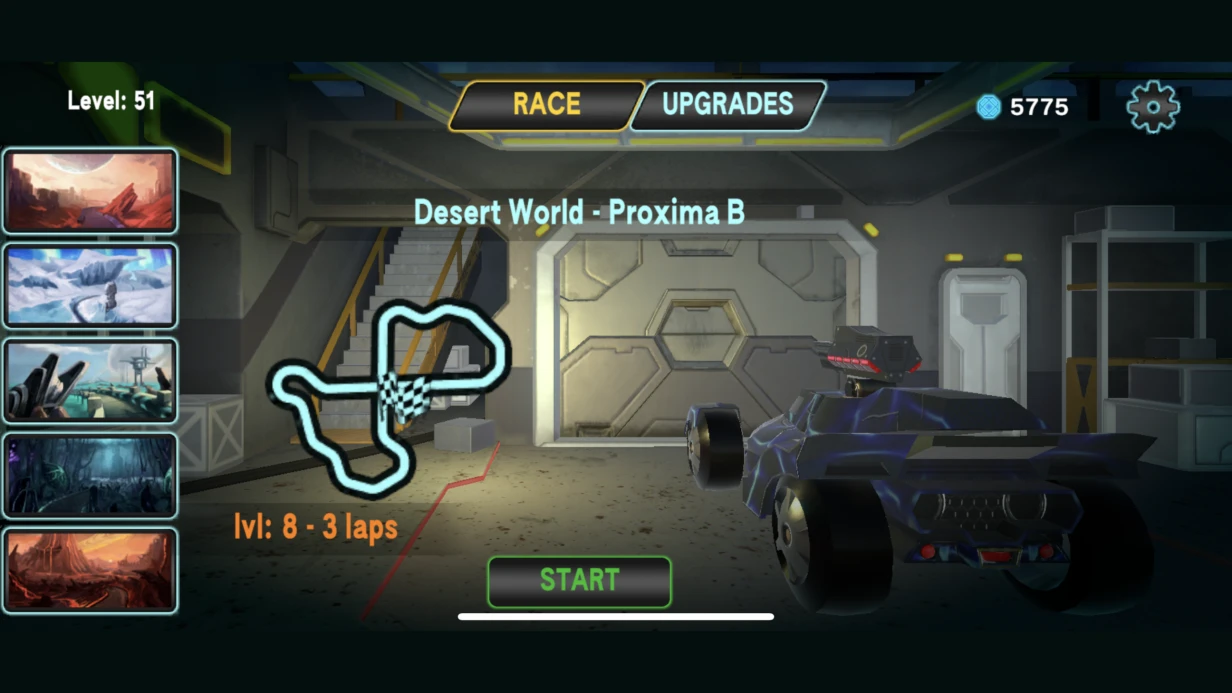
| Interactive Mechanic | Need to understand whether the core action is engaging and whether players will want to come back | Validation of the game's main "hook": how interesting and clear it is, and whether it creates the desire to continue. A decision on developing the mechanic or changing the approach |
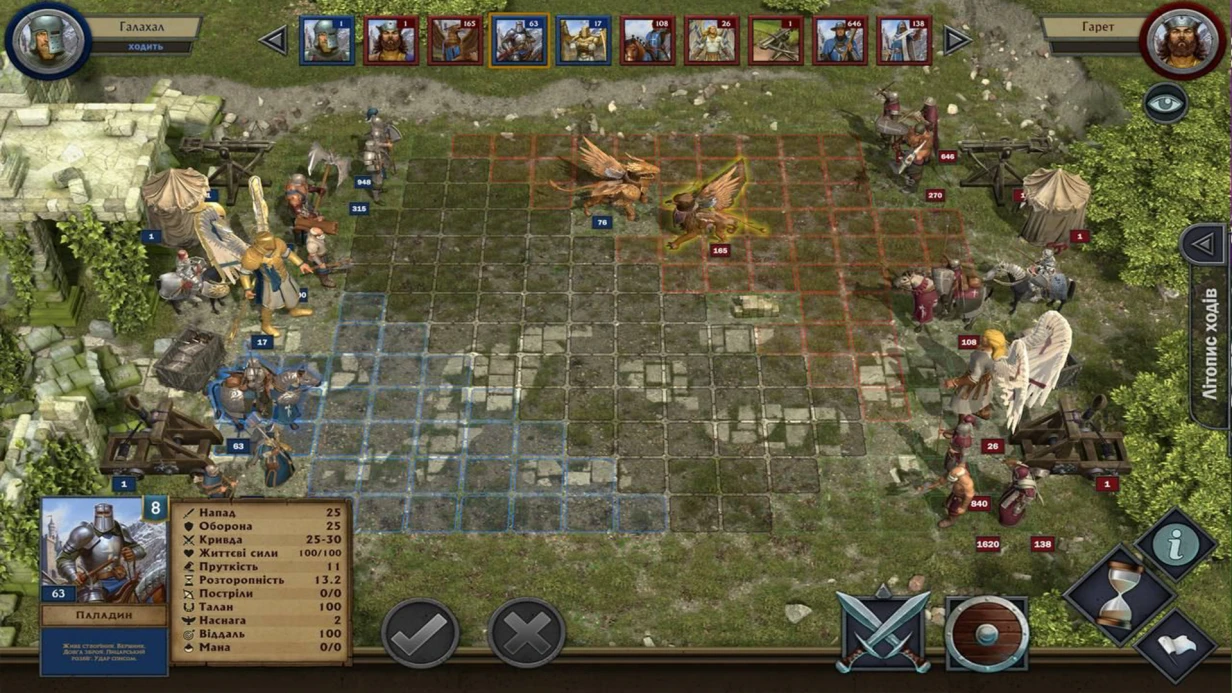
| Full Game Prototype | Need to evaluate the product as a whole or present it to a partner | The full cycle: first launch, progress, economy, and outcome. Ready-made data for refinement and a foundation for attracting investment |
To avoid a mistake in choosing, ask yourself: which risk exactly do you want to remove? If you doubt the visuals — take a demo scene; if gameplay — take a mechanic; if you need to test the whole product on real users — take a full prototype.
In any case, the result is not a "toy" but a structured report with user reactions and recommendations.
We will help you determine the optimal format for your budget and task: we will lock in the goals, choose the right prototype type, and prepare the test so that the feedback you receive gives clear decisions for the next step.
Work Stages: From Brief to Test Launch
At the start, it seems a prototype is just a quick version of the game. In practice, it is the creation process itself that determines whether you get useful user feedback or waste budget on a "raw" demo.
We have structured the work stages so you see results every week and can influence the project before significant money is invested.
Each step is synchronized with your main goal — to gather real user opinions and decide whether to develop the idea. Below is what the path from brief to test launch looks like.
- Brief and Immersion in the Task. We define who the game is for, what problem it solves, and what feedback you need. We discuss timelines and expectations for the test results.
- Prototype Plan and Checkpoints. We determine the scope: one key mechanic or a story branch. We agree on the plan so you understand what you will get at each stage and when.
- Creating a Playable Version. We implement the game's core — what the user will see and try. Even at this stage, you can assess how much the idea resonates.
- Internal Testing and Polish. We verify that the prototype runs stably and doesn't distract the user from the essence. We remove technical rough edges that could distort feedback.
- Launch for a Test Group. We set up recording of player actions: where they get stuck, what they skip, and whether they return to the game. You get not a general opinion but behavioral data.
- Feedback Analysis and Report. We collect responses and structure them by importance to your hypothesis. You get a conclusion: whether to invest in the full version and what to change first.
- Support and Refinement. If the test shows potential, we quickly make changes to the prototype for the next round of checks or prepare the foundation for full-scale development.
The entire cycle takes from two to five weeks, depending on the complexity of the mechanics. You don't wait months for a result — you get a basis for a decision: continue, change the concept, or close the project without unnecessary costs.
What's Included in the Deliverable: A Complete Analysis Package
We deliver not just a working version of the game, but a complete package for decision-making.
The project deliverable includes everything needed to assess user reaction, identify growth points, and launch further improvements without unnecessary questions or dependency on the contractor.
- Playable Prototype — a built version for testing on real devices. This is the foundation for collecting feedback: your users play and share their impressions.
- Player Behavior Report — what steps they completed, where they got stuck, which mechanics sparked interest and which caused frustration. You see what actually works, not what seems to work.
- User Session Recordings — a visual breakdown of player actions: where they hesitate, what they skip, and when they stop. No guesswork — only facts.
- Feedback Summary and Surveys — structured respondent answers across key criteria: enjoyment, clarity, difficulty, desire to return. You immediately see what needs fixing.
- Improvement Recommendations — a prioritized list of improvements with the expected effect for each item. You know which changes will produce rapid metric growth and which can be deferred.
- Technical Documentation and Instructions — a set of documents that allows your team to continue development, make changes, and scale the project without blind spots.
- Metric Plan for the Next Cycle — which indicators to track after launching updates so you can understand whether you've achieved your goals.
In the end, you get a transparent deliverable: from a working prototype to a complete set of documents you can use to build product development and confidently make decisions about the next iteration.
Case Study: How a Prototype Saved 40% of the Development Budget
The client — a coffee shop chain «Кофе&Way» — planned to launch a game project for its loyalty program. The full version required serious investment, but there was no confidence that guests would even want to play: previous mechanics had produced weak engagement.
We proposed not to develop a "big game" right away, but to build a prototype in three weeks — with one key mechanic and a clear scenario. The goal was simple: validate the hypothesis on a real audience and get user feedback before the budget was spent.
What the Prototype Delivered
Over 14 days of testing, 4,800 guests played the prototype. Of these, 31% reached the final screen, and 27% of those who reached it left a contact to enter a giveaway. That was enough to see that what attracted guests was not the story but the instant reward for every step.
- Collected more than 600 written comments from players.
- Identified unneeded mechanics that had been planned for the full version.
- Adjusted the technical specification before core development began.
- Reduced the project's final budget by 40% while retaining the key function — engagement in the loyalty program.
The client's loyalty program lead summed it up: «We came for a game and got a proven communication strategy. The prototype showed what guests are truly willing to return for — and that saved us almost half the budget».
This case is a typical example of how small investments in a prototype reduce the risks of a large project. You get not a guess but numbers: audience reaction, user behavior, and a ready foundation for the technical specification — before money goes into development.
How to Collect Feedback and Make the Launch Decision?
Collecting feedback after a prototype doesn't mean asking ten people and calculating an average score.
It means building an honest feedback channel: what exactly do you want to learn — whether the mechanic is liked, whether the audience is ready to play longer, what prevents them from returning tomorrow.
Answers to these questions come not from chat emotions but from structured data: scenarios, reasons for dropping off, repeated requests.
When analyzing feedback, it's important to separate random comments from stable patterns. One person saying "it didn't click" is noise. Three or four participants mentioning the same problem is a signal to act.
Look not only at words but also at behavior: how much time the player spent, at which level they stopped, and whether they returned the next day. Words can be polite, but behavior is always the truth.
To make a launch decision, fix your success criteria in advance. If your hypothesis is about engaging gameplay, then player retention and the desire to continue are enough.
If you are testing business value, look at the willingness to take an action inside the game — but don't expect it from an early prototype. The main thing is not to look for perfect feedback, but to understand which feedback allows you to move forward confidently.
We help organize this process: we select participants, record their actions, and formulate conclusions in business language. You get not scattered comments but a clear answer — launch, refine, or reconsider the concept. This is a decision based on data, not intuition.
Frequently Asked Questions About Prototypes and Feedback Collection
Before creating a prototype, many clients have doubts: won't it be a "raw" version, will there be enough time and budget. That's normal — a prototype should be a fast and inexpensive way to validate an idea. We answer three key questions we hear at every other discussion.
What if the prototype is "raw" and scares users away?
That's the point. A prototype doesn't need to be perfect: its job is to show the key mechanic and capture emotions. If users stumble over flaws, you learn about them before investing in full development. That's better than releasing an untested game and wasting your budget. We deliberately limit functionality to get maximum feedback in minimum time.
How long will prototype creation take?
A typical timeline is two to four weeks. It is set in the contract, so you know the completion date in advance and can plan the test launch. At the start, we agree on scope: which mechanics are included in the prototype and which remain out of frame.
You get a playable version you can show to a focus group, investors, or early users — and immediately start collecting feedback.
How much does a prototype cost?
The cost depends on scope and platform, but the price is fixed before work begins and doesn't change during the process.
You pay for a playable prototype and data about how it is perceived — that's a measurable result, not "work without guarantees." If feedback confirms the idea, we'll propose a development plan based on the collected data.
If not, you avoid large investments in a losing mechanic. Either way, the decision will be based on real user reactions, not guesswork.
Order a Prototype — Get Data for Your Decision
Contacting us is not the start of a long approval process, but a fast path to data. You order a prototype and within a few days receive a concrete plan for testing the idea on real users.
Contact details are on the "Contacts" page — the first response takes less than one working day.
Immediately after your inquiry, you get:
- Application confirmation and a dedicated manager — one responsible person handles the project.
- A brief with a checklist: 2–3 pages instead of dozens of emails and calls.
- A preliminary work plan with dates — you can see when we start and when we present results.
- Scenario alignment for your audience: what actions we'll test and how we'll measure response.
- A transparent estimate with a fixed cost — no hidden fees.
- A risk and key hypothesis assessment — you understand in advance what needs validation.
Then we launch the process: a short briefing, tool setup, prototype assembly, and a test launch with a small group of users. You get a report with numbers: how many people reached the goal, which moments caused difficulty, and whether the idea is worth developing. This is data for your decision — without long development cycles or unnecessary investment.
Don't put off validation: ordering a prototype now means saving months and budget on building something that may not resonate. Write to us through the form on the website or via messenger — we'll discuss the task and propose a plan today.
That way, you start the project with a clear understanding of what and why you're doing, and we'll handle the technical part.