

Preparing Marketing Materials and Screenshots for Mobile Games
Game developers often lose conversions due to unoptimized screenshots in stores. We know how to fix this. App Store requires screenshots for iPhone 6.7", 6.5", 5.5", and iPad Pro 12.9" — four different sizes with different aspect ratios. A competitor with a similar game but correctly made store screenshots with localized callout texts and a clear USP on the first slide gets 2-3 times higher conversion. Our experience preparing marketing materials for 50+ game projects over 5+ years confirms: a professional approach pays off.
Technical Requirements Often Ignored
App Store accepts screenshots in PNG or JPEG, max 10 per locale. Minimum resolution for iPhone 15 Pro Max is 1320×2868. Important: App Store displays screenshots cropped to the device's rounded corners — if a screenshot has a critical element in the corner, it will be cut off. For iPad, separate uploads are required, rotation (landscape/portrait) is supported, but you cannot upload only landscape without portrait. According to App Store Review Guidelines, screenshots must reflect actual gameplay.
Google Play requires a Feature Graphic (1024×500) — without it, your app won't appear in recommended lists. Phone screenshots: minimum 2, maximum 8, aspect ratio from 16:9 to 9:16. Recent versions of Play Console show a preview of how screenshots will appear in search — with automatic rounding and shadows.
Size limits. PNG screenshots for App Store must not exceed 500 MB total when uploaded via Transporter. In practice, uncompressed PNGs from a 4K render can weigh 15-20 MB each — optimization via pngquant or Squash is mandatory.
Comparison of App Store and Google Play Requirements
| Parameter |
App Store |
Google Play |
| Formats |
PNG, JPEG |
PNG, JPEG |
| Number of screenshots |
up to 10 per locale |
2-8 |
| Resolution (example) |
1320×2868 (iPhone 15 Pro Max) |
from 16:9 to 9:16 |
| Feature Graphic |
not required |
mandatory 1024×500 |
| Video |
up to 30 sec |
optional |
How to Prepare Screenshots That Increase Conversion?
We use a render from the engine at the required resolution, not simulator screenshots. The process looks like this:
- Render the scene via
Camera.Render() into a RenderTexture of the needed size, then Texture2D.ReadPixels() and EncodeToJPG/EncodeToPNG. This gives a frame without system UI, with debug overlays disabled, and at the correct FOV.
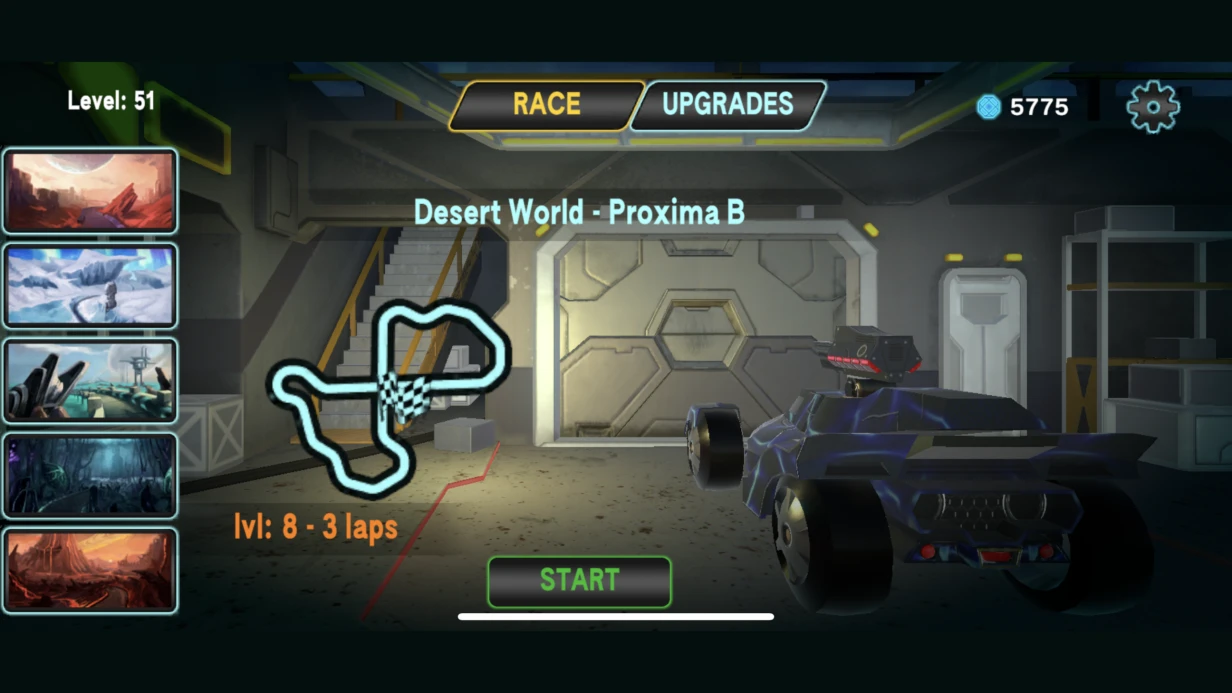
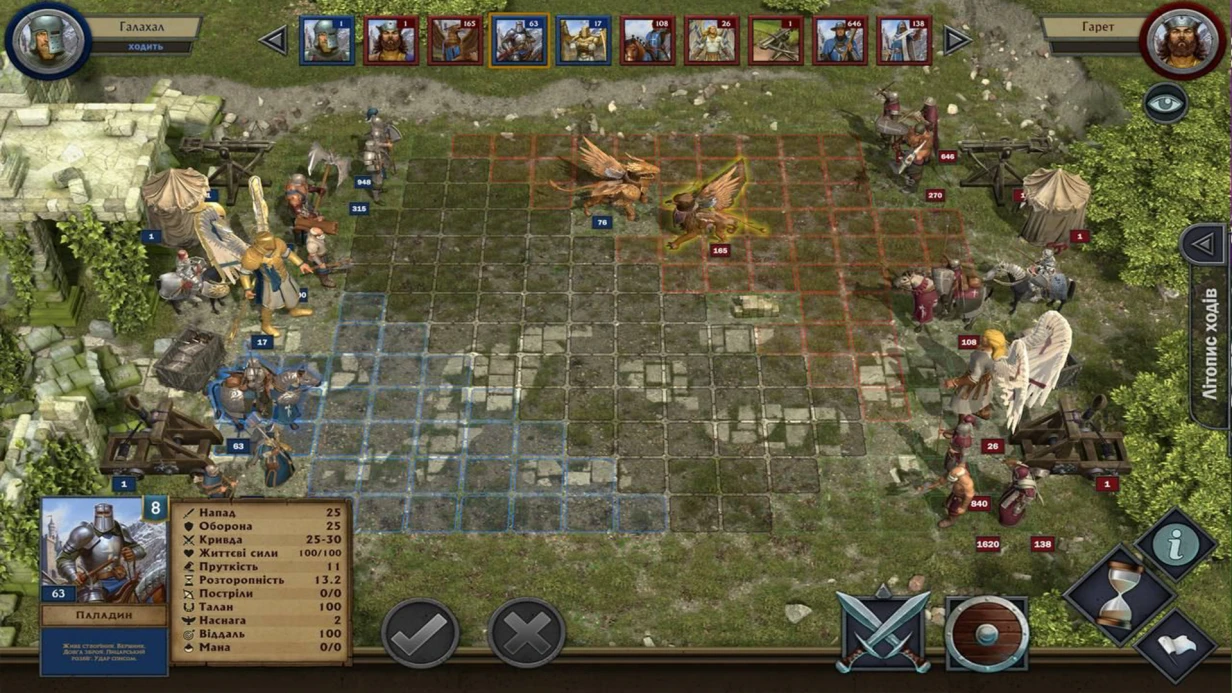
- Scene selection: first screenshot — the most spectacular gameplay frame or primary art driver (visible in search before click), second and third — key mechanics, last ones — social proof (rating, player count).
- Preparing callout texts in Figma with correct safe zones for each form factor. For localized versions — a template system: text layers are replaced without recomposing the entire layout.
- PNG optimization via pngquant or Squash to stay within store limits.
- Testing on real devices in dark and light themes.
This approach yields a 2-3x conversion boost compared to simulator screenshots.
Why Not Use Simulator Screenshots?
Simulator screenshots contain system UI, may have suboptimal compression, and don't show the game in its best light. Engine render gives a clean frame with correct FOV and post-processing settings. Additionally, we guarantee pixel-perfect compliance with each store's requirements.
Video Previews
App Store Preview video: up to 30 seconds, must be gameplay footage (not a trailer), muted by default (autoplay without sound). Resolution requirements match screenshots for the corresponding device. Video is encoded in H.264, AAC audio, MOV or MP4. The first 3 seconds are critical because users scroll quickly in App Store.
Rendering marketing video from Unity: Timeline + Cinemachine for camera staging, Recorder package for capture at the required resolution without fps drops. Post-processing (Color Grading, Bloom) is turned up full — marketing content is not limited by target hardware.
What's Included?
- Screenshots preparation for one platform: 2–4 days.
- Full set for App Store and Google Play (1 locale): 4–7 days.
- Multilingual set (5 locales): 2–3 weeks.
- Video preview: additional 3–7 days.
- Guarantee of compliance with store requirements and consultation on conversion optimization.
- Source files in Figma and recommendations for further localization.
Timelines
| Scope of Work |
Timeline |
| Screenshots for one platform (5-6 pcs) |
2–4 days |
| Full set (App Store + Google Play, 1 locale) |
4–7 days |
| Multilingual set (5 locales) |
2–3 weeks |
| + Video preview |
+3–7 days |
Cost is calculated after assessing the scope of localization and availability of ready art assets. Savings from proper preparation — conversion growth of 2-4%, which brings additional revenue. Contact us to evaluate your project — we'll calculate timelines and cost individually. Order a full set of materials and get a conversion increase in the first month.
Common Mistakes When Preparing Screenshots
- Using simulator screenshots without post-processing.
- Ignoring safe zones for callout texts across different form factors.
- Lack of text localization on screenshots.
- Unoptimized PNGs exceeding store limits.
- Missing Feature Graphic for Google Play.
Manual pre-release preparation as a source of delays
We automate the entire pre-release pipeline for mobile and XR games. A studio is about to release a game — a week before the date, the manager remembers they need to build an AAB, sign it, and upload to Google Play. The build engineer manually starts the build, waits an hour, forgets to enable IL2CPP, the build crashes on Android 12. Rebuilding takes another hour. Simultaneously, the icon needs to be redesigned to meet new Google requirements. As a result, the release is delayed by three days. Experience shows: manual pre-release preparation is the primary source of delays and bugs that do not manifest on the developer's machine.
How to set up CI/CD for mobile game builds?
Pipeline tools
GameCI — open-source Docker images for Unity builds, running on GitHub Actions, GitLab CI, or any other CI provider. Key components: unity-builder (builds for the target platform), unity-test-runner (runs Unity Test Framework before build), unity-return-license (returns the license — critical for Pro). Unity Cloud Build is simpler but less flexible and expensive for frequent builds. Fastlane is the standard for final steps: signing, uploading to stores, metadata.
Typical pipeline
jobs:
test:
name: Run Unity Tests
uses: game-ci/unity-test-runner@v4
with:
unityVersion: 2022.3.20f1
testMode: playmode
build-android:
name: Build Android
needs: test
uses: game-ci/unity-builder@v4
with:
targetPlatform: Android
androidKeystoreBase64: ${{ secrets.ANDROID_KEYSTORE_BASE64 }}
androidKeystorePass: ${{ secrets.KEYSTORE_PASSWORD }}
androidKeyaliasPass: ${{ secrets.KEY_PASSWORD }}
upload-to-play:
name: Upload to Google Play (Internal Track)
needs: build-android
uses: r0adkll/upload-google-play@v1
with:
serviceAccountJsonPlainText: ${{ secrets.SERVICE_ACCOUNT_JSON }}
packageName: com.yourcompany.yourgame
releaseFiles: build/Android/*.aab
track: internal
Secrets, not variables — all keys in CI secrets. AAB instead of APK has been mandatory for several years. Tracks: internal → closed → open → production. Promotion — manual or Fastlane supply promote.
iOS specifics
Unity builds an Xcode project, then xcodebuild. Need Distribution Certificate and Provisioning Profile (App Store). Fastlane Match solves the problem of certificate synchronization within the team:
lane :build_ios do
match(type: “appstore”, readonly: true)
build_app(workspace: “Unity-iPhone.xcworkspace”,
scheme: “Unity-iPhone”,
export_method: “app-store”)
upload_to_testflight
end
App Store Connect API Key replaces login/password, does not break with 2FA.
Step-by-step pipeline setup
- Audit Unity PlayerSettings (Graphics APIs, Scripting Backend, stripping).
- Create CI configuration with GameCI — define test, build, and deploy jobs.
- Integrate Fastlane for code signing and store uploads.
- Store all secrets (keystore, certificates, API keys) in encrypted CI variables.
- Run a test release on internal track, verify end‑to‑end.
Each step includes validation: build must pass on a clean runner, not just a local machine.
Why does App Store reject about a third of first submissions?
Apple rejects 30–40% of first submissions from new studios. Common reasons:
| Category |
Typical problem |
| Metadata |
Screenshots with third‑party brands, description mentioning other platforms |
| Technical |
Crash on iPad, lack of IPv6 (Apple requirement still valid) |
| Policies |
Sign in with Apple not implemented when using third‑party providers; no link to Privacy Policy |
Practice: before submission, go through the App Store Review Guidelines from start to finish — 2–3 hours, saving 2–3 weeks of resubmission loops.
Google Play is more lenient: typical reasons — outdated targetSdkVersion, excessive permissions, incorrect Data Safety Form.
Detailed breakdown of common rejections we solve
-
iPad crash: missing universal storyboard or 2x assets — we add device‑specific assets during build.
-
Missing IPv6: we verify network code works on IPv6‑only networks.
-
Third‑party screenshots: we generate store assets that only contain your IP.
-
Privacy Policy link not found: we ensure the link is active and matches the app bundle ID.
Deliverables of pre-release preparation
We deliver the following for your game release:
- CI/CD pipeline configured (GameCI + Fastlane, Unity Cloud Build — turnkey)
- Metadata and marketing assets (screenshots, icons, feature graphics)
- Store submission guidance with documentation of all accesses and credentials
- 72‑hour post‑release monitoring (Crashlytics, ANR rate, user reviews)
- Pipeline documentation and team training session (hands‑on)
- Age rating configuration (IARC, ESRB, PEGI, CERO) and localization of store metadata
Pipeline automation replaces the manual work of an entire department. For example, setting up Continuous Integration via GameCI and Fastlane reduces pre‑release preparation time threefold — from 8 working hours to 2.5.
Our pre-release workflow: from audit to store submission
| Phase |
What we do |
| Audit |
Analyze current build process, check PlayerSettings, identify bottlenecks |
| Pipeline setup |
Implement CI with GameCI + Fastlane, integrate secrets, configure tracks |
| Metadata creation |
Generate store screenshots, icons, video previews according to platform specs |
| Store submission |
Submit to Apple / Google / Steam, accompany until approval |
| Monitoring |
Track crash rate and ANR for first 72 hours, hotfix if needed |
Impact of pipeline automation on timelines and budget
Manual game release incurs significant engineering and testing costs. CI/CD automation pays for itself within the first two months, reducing release costs by 40–60%.
| Stage |
Manual |
Automated (our approach) |
| Building AAB |
1 hr (risk of error) |
20 min (reproducible) |
| Testing on 20 devices |
2–3 hr (manual run) |
20 min (parallel tests) |
| Upload to Google Play + metadata |
1–1.5 hr |
5 min (Fastlane) |
| Total per release |
4–5.5 hr |
45 min |
Result: we reduce the commit‑to‑publish cycle by 6–8 times. For projects with frequent hotfixes, this is the difference between a week‑long user wait and a one‑day fix. We guarantee the pipeline works reliably after setup. Our engineers hold Unity Certified Professional credentials.
Typical savings: $2,500–$5,000 per month on engineering time eliminated by automation — $30,000–$60,000 annually on a mid‑size project.
Post‑release: monitoring and updates
Crash rate < 1% (Firebase Crashlytics), ANR rate < 0.47% (Play Console) — otherwise visibility restrictions. Phased rollout is mandatory: first 10%, then 50%, then 100% of users.
Our track record: 30+ mobile game releases, 5+ years on the market. CI/CD automation pays for itself within the first two months, reducing release costs by 40–60%.
Timeline
Setup takes from 2 days (simple mobile game with existing Unity project) to 2 weeks (complex multi‑platform project with custom CI runners). We calculate exact hours during a free pipeline audit.
Contact our engineers for a free pipeline audit and a timeline estimate. Submit a request — we will analyze your pipeline and offer a solution within 2 days. Get a consultation from an engineer who has shipped 30+ titles.